Warm Sesame Oil Ear Drops (Karna Purana) for Dry, Itchy Ears and Hardened Earwax
Itchy ears are one of those small miseries nobody talks about. The canal feels dry and ticklish, sounds go slightly muffled, and the instinct is to go after it with a cotton swab, which usually packs the wax in deeper and scrapes the delicate skin on the way. Anyone who wears earbuds for hours, sleeps under a fan or air conditioner, or lives through a dry stretch of weather has felt some version of it. Ayurveda has a simple answer that has been part of the daily routine for centuries: a few drops of warm sesame oil in each ear, a practice called Karna Purana.
The Ayurvedic Perspective
In Ayurvedic thinking, the ear belongs to vata, the dosha built from air and space, and vata’s defining qualities are dry, light, rough, and cold. When vata accumulates in the ear region, the classical texts describe exactly the cluster people complain about today: dryness and itching, crackling or ringing sounds, a plugged feeling, and stiffness that spreads into the jaw and neck. The remedy is the opposite quality, something warm, heavy, and unctuous, which is what oil provides. Vagbhata lists ear oiling among the daily practices in the Ashtanga Hridayam (Sutrasthana 2), advising that the head and ears be kept habitually moist with oil, and the Charaka Samhita (Sutrasthana 5) makes the same recommendation, naming ear pain, ringing, and hearing trouble among what the habit is meant to prevent. Sesame oil is the traditional carrier because it is considered the single best oil for calming vata: warming, deeply penetrating, and stable.
What Modern Biology Says
The modern explanation is straightforward, even if the evidence behind it is thinner than you would hope. Earwax is a mix of skin cells, keratin, and glandular secretions, and it hardens when it dries out. Sesame oil is about 80 percent oleic and linoleic acid, long-chain fatty acids that work as emollients, softening that keratin matrix so it loosens and migrates out on its own the way it is supposed to, while also easing the dry, flaky skin that causes the itch. Its lignans, sesamin and sesamol, add antioxidant activity, though that matters more for the oil’s shelf stability than for your ear. On whether drops actually clear wax, the fairest summary is the 2018 Cochrane review of ear drops for wax removal, which pooled 10 small and mostly old trials covering 623 participants. Its clearest result came from one study of 117 ears: after about five days, 22 percent of treated ears cleared completely compared with 5 percent of untreated ones, a gap that only just reached statistical significance and was rated low certainty. The review saw no sign that oil-based drops beat water-based ones, but it also could not say which preparation is best, and not one of those trials tested sesame oil. The nearest thing to direct evidence for the oil is a 2001 crossover trial in 79 adults with dry nasal lining, where sesame oil eased dryness and crusting better than saline drops, with roughly 8 in 10 people improving on the oil against about 3 in 10 on saline. That was noses, not ears. In other words, softening is plausible and the trial evidence is preliminary, and sesame oil’s edge over olive oil rests on long tradition rather than on head to head studies.

How And When To Use It
Reach for this when the ears feel dry, ticklish, or slightly blocked, not when they hurt. Warm the oil by standing it in hot water, test a drop on your wrist, then lie on one side and put 3 to 5 drops in the upturned ear, letting it sit for 5 to 10 minutes before draining onto a cotton ball. Bedtime is the easiest slot, since you are already lying down. For softening wax, do it nightly for up to 5 to 7 days and expect the wax to work its way out gradually rather than to fall out in one dramatic piece. For ongoing dryness and itching, 1 to 2 drops a few times a week is plenty, and many people find the practice unexpectedly calming, which is precisely what the classical texts predicted for a vata remedy.
Cautions And A Note On Medical Care
A few limits matter here. Do not put anything in the ear if you have a perforated eardrum, tubes or grommets, a history of ear surgery, or any active pain, discharge, bleeding, sudden hearing loss, or dizziness, and never warm the oil past body temperature, since hot oil can burn the canal or set off vertigo. Anyone with diabetes, a weakened immune system, or repeated outer ear infections should have wax removed by a clinician instead, and a sesame allergy rules the whole thing out. If the muffled hearing or itching is still there after a week, or gets worse, see a doctor rather than adding more oil. This is traditional wisdom and not a substitute for medical care, but for ordinary dryness and stubborn wax, a teaspoon of warm sesame oil is about as gentle a place to start as exists.
References
These are the peer-reviewed human studies and reviews behind the modern-evidence claims above. They open in a new tab.
- Aaron et al., Cochrane Database of Systematic Reviews, 2018. Pooled 10 small trials with 623 participants; one study of 117 ears found 22 percent of ears cleared with drops after about five days versus 5 percent untreated, rated low-certainty evidence, with no evidence that oil-based drops beat water-based ones and no sesame oil arm in any trial.
- Johnsen et al., Archives of Otolaryngology Head and Neck Surgery, 2001. Randomized crossover trial in 79 people with dry nasal lining; sesame oil relieved dryness, stuffiness and crusting significantly better than saline, with about 8 in 10 improving on the oil versus about 3 in 10 on saline. Evidence that sesame oil eases dry mucosa, though in the nose rather than the ear canal.
Recipe
Warm Sesame Oil Ear Drops
A few drops of gently warmed plain sesame oil placed in the ear, the Ayurvedic practice of Karna Purana, to relieve dry, itchy ears and soften hardened earwax.
- Prep
- 5min
- Cook
- 0min
- Total
- 15min
- Servings
- 1applications
Ingredients
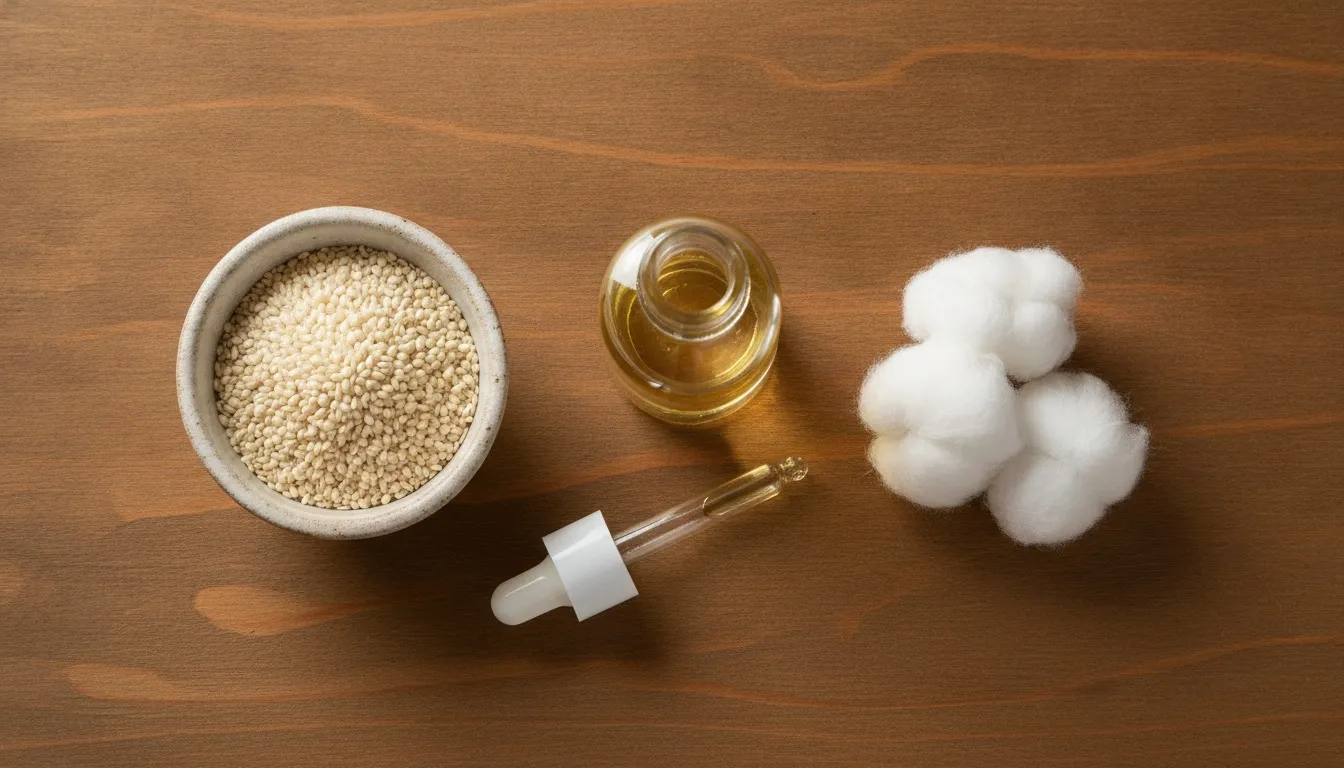
- 1 tsp plain cold-pressed sesame oil (gingelly or til oil, not the dark toasted kind)
- 2 pieces clean cotton ball
Instructions
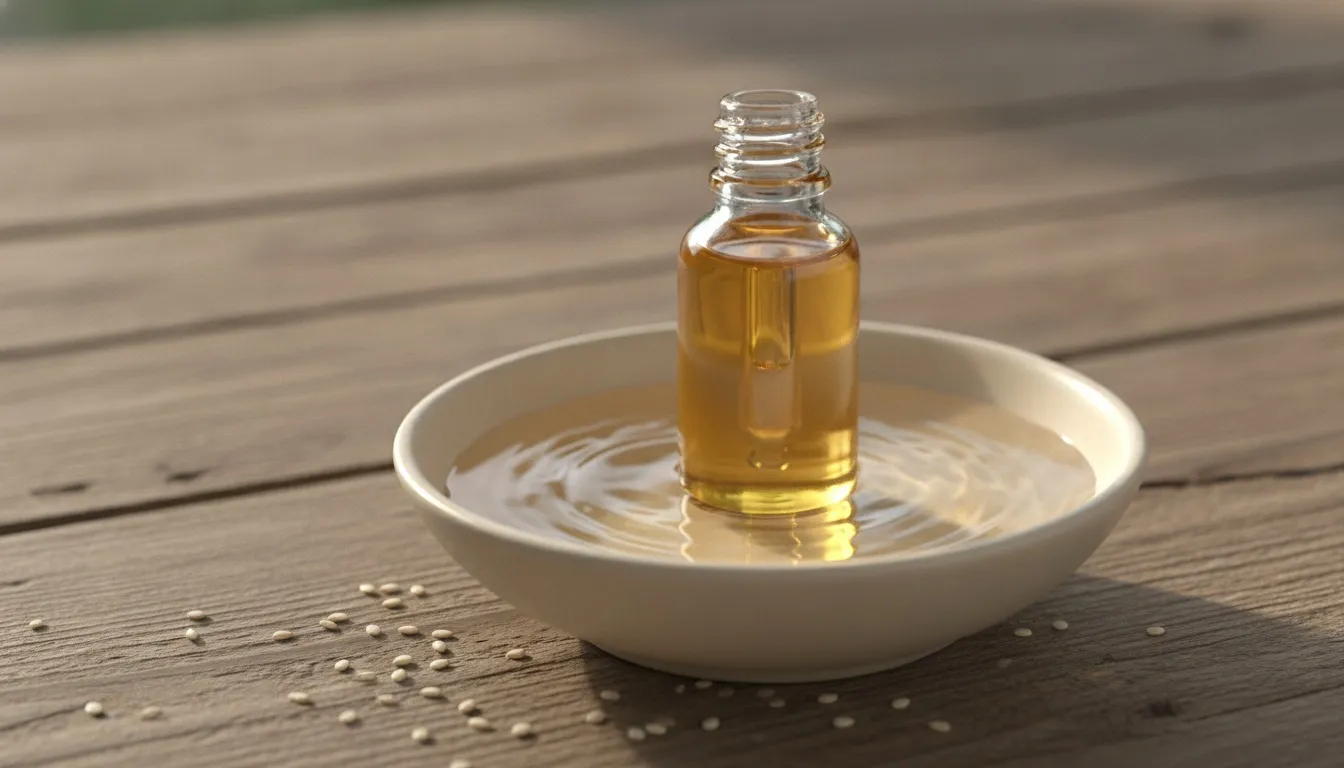
- 1 Pour the sesame oil into a small steel bowl or a clean glass dropper bottle. Stand it in a larger bowl of hot water for 2 to 3 minutes until the oil feels pleasantly warm. Do not heat the oil on the stove or in a microwave.
- 2 Test the temperature by letting one drop fall on the inside of your wrist. It should feel comfortably warm and nothing more. If it feels hot, let it sit until it cools.
- 3 Lie on your side with the ear you are treating facing up, or tilt your head sideways over a folded towel.
- 4 Place 3 to 5 drops into the ear, aiming for the wall of the canal rather than straight down into it. Gently tug the outer ear once or twice so the oil runs in.
- 5 Stay in that position for 5 to 10 minutes. Then sit up, let the excess oil drain onto a cotton ball held at the outer ear, and wipe only what you can see. Do not push anything into the canal.
- 6 Repeat on the other side with fresh oil. Do this at bedtime, once daily for up to 5 to 7 days when softening wax, or 1 to 2 drops per ear a few times a week as ongoing care for dryness and itching.
Notes
- Do not put oil in the ear if you have a perforated eardrum, grommets or tubes, past ear surgery, ear pain, discharge, bleeding, sudden hearing loss, or dizziness. Get the ear looked at first.
- Warm the oil only by standing the container in a bowl of hot water, never on direct heat or in a microwave, and test a drop on the inner wrist. Oil that is hotter than body temperature can burn the ear canal or trigger vertigo.
- Skip this if you have a sesame allergy, and never push cotton swabs, hairpins, or ear candles into the canal. Ear candling does not remove wax and has caused burns and eardrum injury.
- If you have diabetes, a weakened immune system, or a history of repeated outer ear infections, have wax removed by a clinician rather than treating it at home.
- Consult your doctor if symptoms persist beyond 7 days or worsen, or if hearing stays muffled after the wax softens. This is traditional wisdom and not a substitute for medical care.