Authentic Sabudana Khichdi Recipe (Non Sticky, Vrat Style)
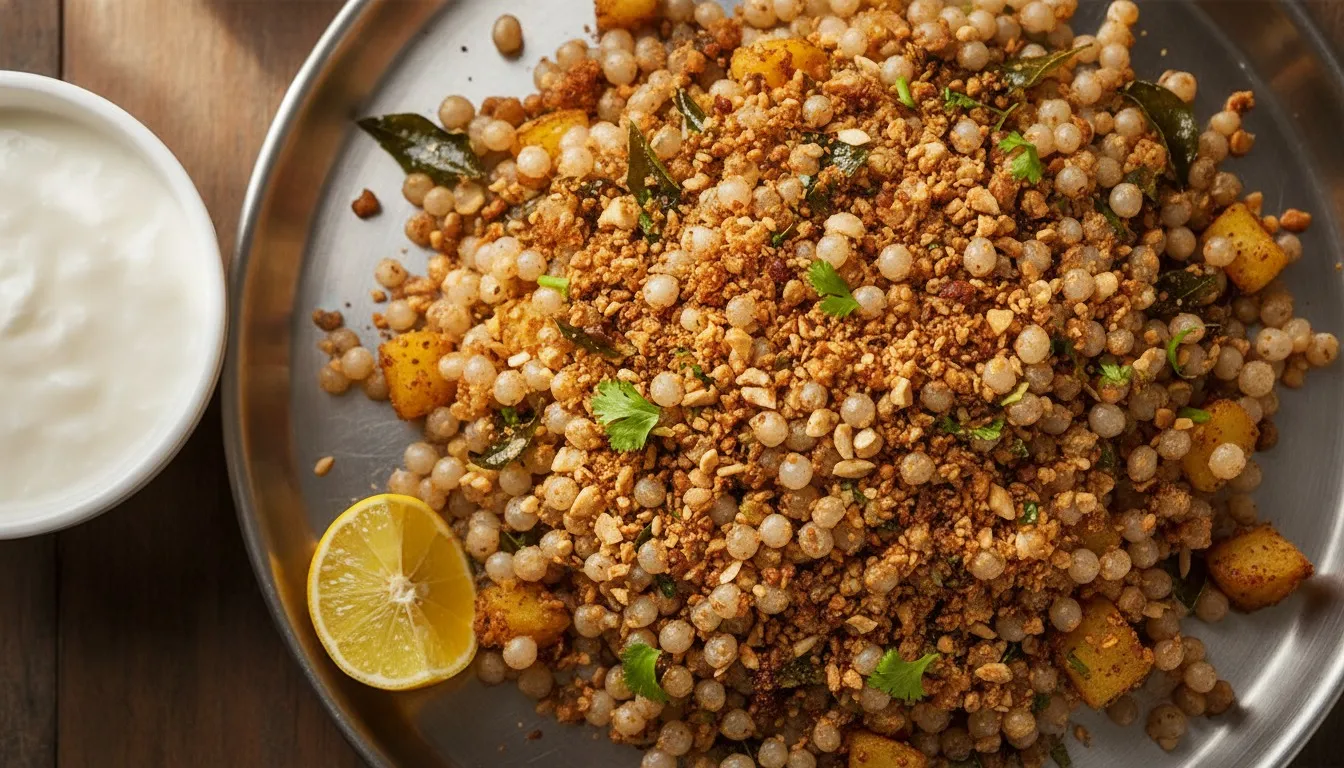
Sabudana khichdi is one of those dishes that looks effortless and then humbles you the first time you make it. Get the soak right and you are rewarded with pearls that stay separate, glossy and pleasantly chewy, each one coated in crushed roasted peanut and studded with soft potato. Get it wrong and you end up stirring a sticky grey paste. It has been having a real moment online, partly because the fasting months bring a fresh wave of vrat cooking every year, and partly because the non sticky version photographs beautifully and every food creator wants to prove they can nail it. The whole thing comes together in about fifteen minutes of actual cooking once the pearls have soaked.
About This Dish
The dish comes out of Maharashtra, where sabudana became a fasting staple because tapioca is not a grain and is therefore permitted on vrat days. Sabudana khichdi, sabudana vada and sabudana thalipeeth make up the classic trio eaten during Sawan Somvar, Navratri, Ekadashi and Mahashivratri. Tapioca itself arrived in India from South America by way of Portuguese and Dutch trade routes and took hold in Kerala and Tamil Nadu before travelling north and west. Southern kitchens know the same pearls as javvarisi or saggubiyyam and mostly turn them into payasam and vadam, so the savory Maharashtrian treatment feels like a happy borrowing in the other direction.
Ingredient Notes
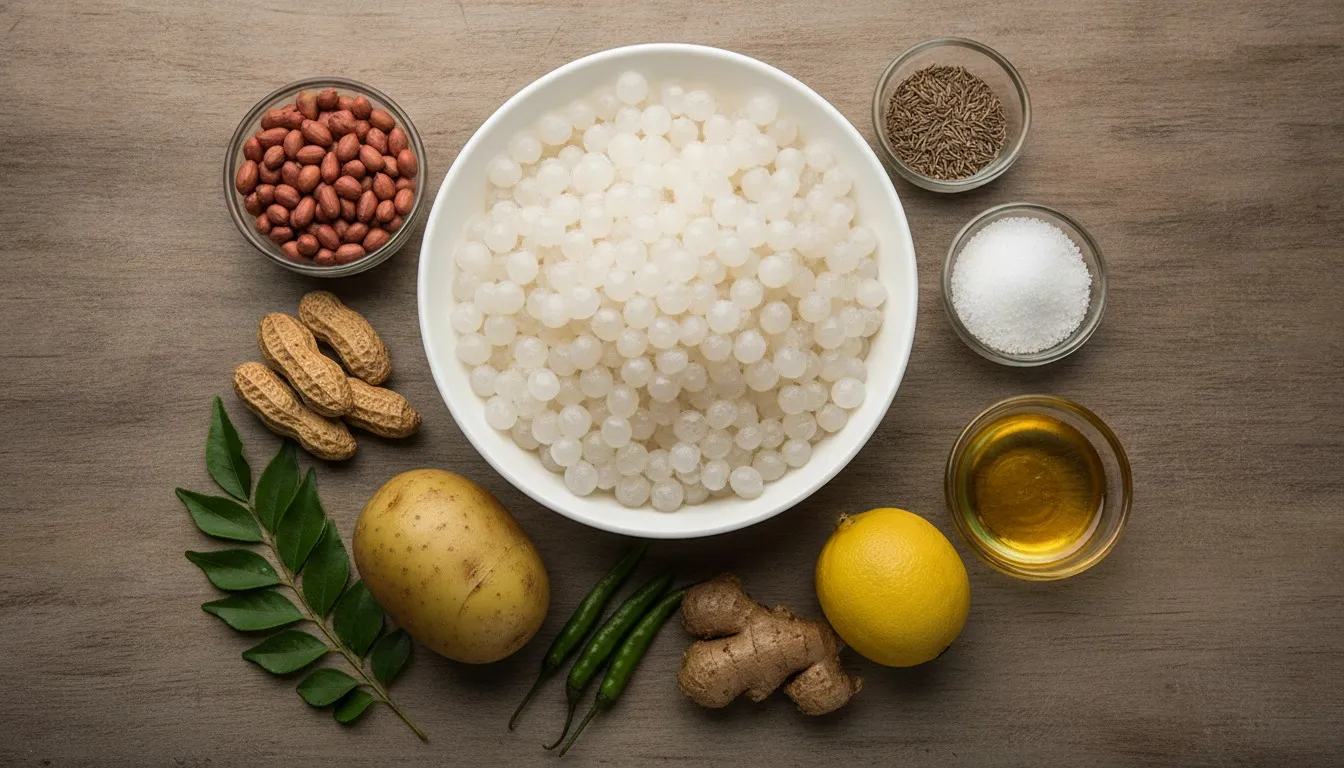
The pearls themselves are the ingredient that decides everything. Look for the small, uniform, glassy white ones usually labelled nylon sabudana, which soak evenly and hold their shape. Raw peanuts are worth roasting yourself rather than buying pre roasted, because the fresh nutty aroma carries the whole dish, and crushing them coarsely gives you both a coating powder and satisfying crunchy bits. Boiled potato is the safer choice for a beginner since it needs only a brief fry, though some cooks dice it raw and cook it through in the pan. Rock salt, or sendha namak, is what makes the dish suitable for a strict fast; plain fine salt works if you are just making breakfast. Ghee is the traditional fat here and gives the khichdi its rounded richness, and a spoon of fresh grated coconut at the end is a small addition that suits South Indian palates well.
Method And Tips
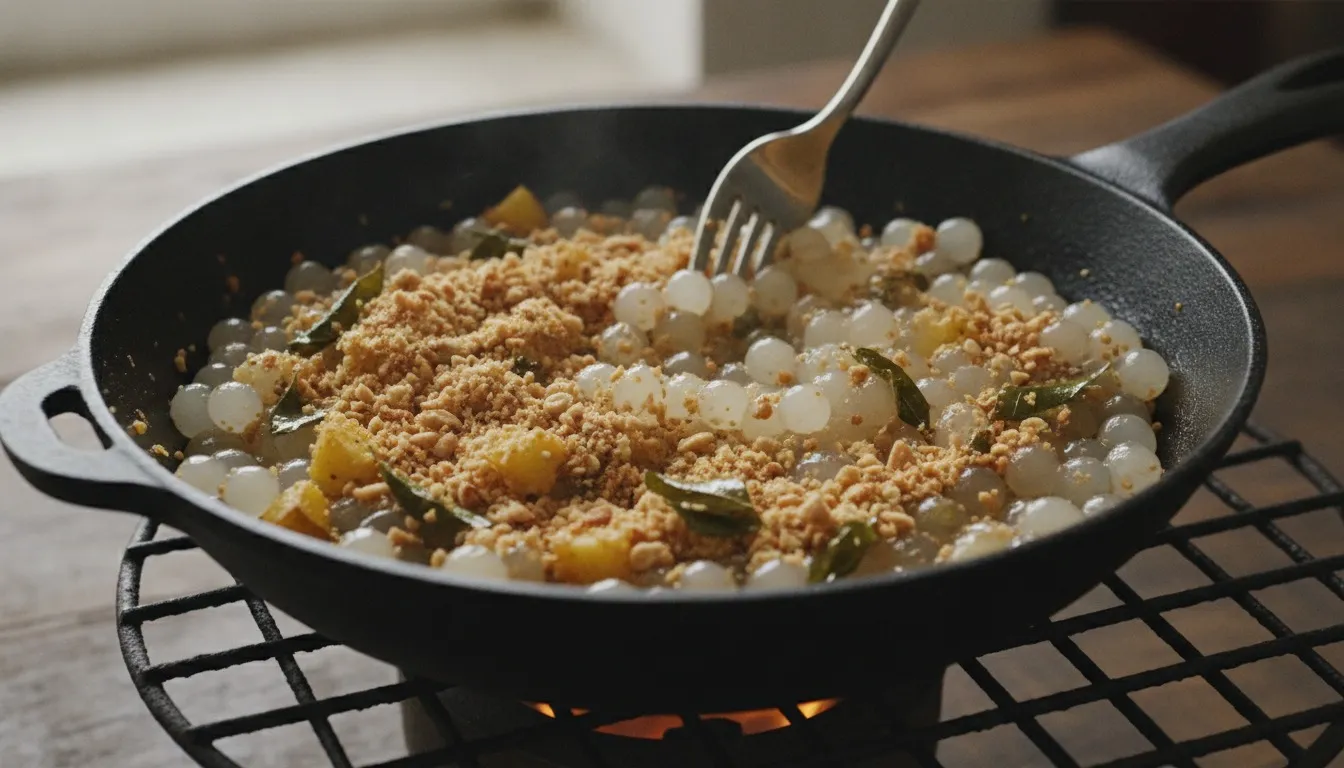
Three things separate a good sabudana khichdi from a gluey one. First, rinse the pearls until the water runs clear, because that cloudy milkiness is loose starch and it turns to glue in a hot pan. Second, soak with just three quarters of a cup of water per cup of pearls, so the water sits level with the top and nothing pools underneath; the pearls absorb what they need and nothing more. Third, once the sabudana goes into the pan, keep the heat low, use a fork rather than a spoon, and stop the moment the pearls turn translucent, which takes three to four minutes and no longer. Leave the pan uncovered the entire time, since trapped steam is what softens the pearls into paste. Tossing the drained sabudana with crushed peanuts and salt ten minutes before cooking is the quiet trick that keeps everything separate.
Serving Suggestions
Serve sabudana khichdi warm, with a bowl of chilled plain yogurt on the side and an extra wedge of lemon for anyone who likes it sharper. It makes a filling breakfast, a light supper, or the sort of tea time plate that disappears faster than you expect. Try it once with the soaking ratio measured properly and it becomes a dish you can make without thinking.
Recipe
Sabudana Khichdi
A Maharashtrian fasting favorite of soaked tapioca pearls tossed with crushed roasted peanuts, potato, cumin and green chili. Cooked right, the pearls stay separate, glossy and chewy rather than turning into a sticky lump.
- Prep
- 15min
- Cook
- 15min
- Total
- 30min
- Servings
- 3servings
- Calories
- 410kcal
Ingredients
- For soaking
- 1 cup sabudana (tapioca pearls)
- 3/4 cup water, for soaking
- For the khichdi
- 1/3 cup raw peanuts
- 2 tbsp ghee
- 1 tsp cumin seeds
- 2 green chilies, finely chopped
- 10 curry leaves
- 1 tsp fresh ginger, grated
- 1 medium potato, boiled, peeled and cut into 1/2 inch cubes
- 3/4 tsp rock salt (sendha namak) or fine sea salt
- 1 tsp sugar
- To finish
- 1 tbsp lemon juice
- 2 tbsp fresh coriander leaves, chopped
- 2 tbsp fresh grated coconut
Instructions
- 1 Put the sabudana in a bowl, cover with plenty of water, and rub the pearls between your fingers. Drain and repeat 3 to 4 times, until the water runs clear instead of milky. This washes off the loose surface starch, which is the number one reason khichdi turns gummy.
- 2 Drain the rinsed sabudana completely, return it to the bowl, and add exactly 3/4 cup fresh water. The water should sit just level with the top of the pearls and no higher. Cover the bowl and leave it on the counter for 5 to 6 hours, or overnight.
- 3 Check the soak by pressing one pearl between your thumb and finger. It should mash easily with no hard white dot in the center. If it still feels firm, sprinkle over 2 tablespoons of water, stir, and rest another 30 minutes.
- 4 Tip the soaked sabudana into a colander and let it drain for 10 minutes so any clinging moisture runs off. Spread the pearls out and fluff them with a fork so they sit loose and dry.
- 5 Dry roast the peanuts in a pan over medium heat for 5 to 6 minutes, shaking often, until they smell nutty and show brown spots. Cool them, rub off the papery skins, and crush them coarsely with a rolling pin or in a mortar. Leave some pieces chunky for texture.
- 6 Add the crushed peanuts, salt and sugar to the drained sabudana. Toss gently with a fork until every pearl is dusted with peanut powder, then set the bowl aside for 10 minutes. This coating is what keeps the pearls from sticking to each other in the pan.
- 7 Heat the ghee in a wide kadai or nonstick pan over medium heat. Add the cumin seeds and let them sizzle for about 10 seconds, then add the green chilies, curry leaves and grated ginger and stir for 20 seconds until fragrant.
- 8 Add the boiled potato cubes and saute for 2 to 3 minutes, turning them now and then, until the edges pick up a little golden color.
- 9 Turn the heat to low and add the peanut coated sabudana. Fold gently with a fork, lifting from the bottom rather than mashing, for 3 to 4 minutes, until the pearls turn translucent and glossy. Do not cover the pan and do not keep cooking past this point, or the pearls will collapse and clump.
- 10 Switch off the heat. Add the lemon juice, coriander leaves and grated coconut, and fold once or twice. Cover and rest for 2 minutes, then serve warm with a bowl of plain yogurt.
Notes
- Buy the small round pearls sold as nylon sabudana. The larger, chalkier variety needs longer soaking and is much more likely to turn sticky.
- The soaking ratio matters more than the soaking time. Too much water leaves the pearls waterlogged and they will never separate, no matter how carefully you cook them.
- Never put a lid on the pan while the sabudana is cooking. Trapped steam is what turns a good khichdi into a paste.
- For a strict vrat, use rock salt (sendha namak) and skip the curry leaves if your family tradition avoids them. Regular fine salt is fine for an everyday breakfast.
- Leftovers firm up in the fridge. Sprinkle a teaspoon of water over the portion and warm it in a pan over low heat, or microwave it covered for 40 seconds.