Milagu Rasam (Pepper and Cumin Rasam) for a Head Cold, Sore Throat, and Blocked Nose
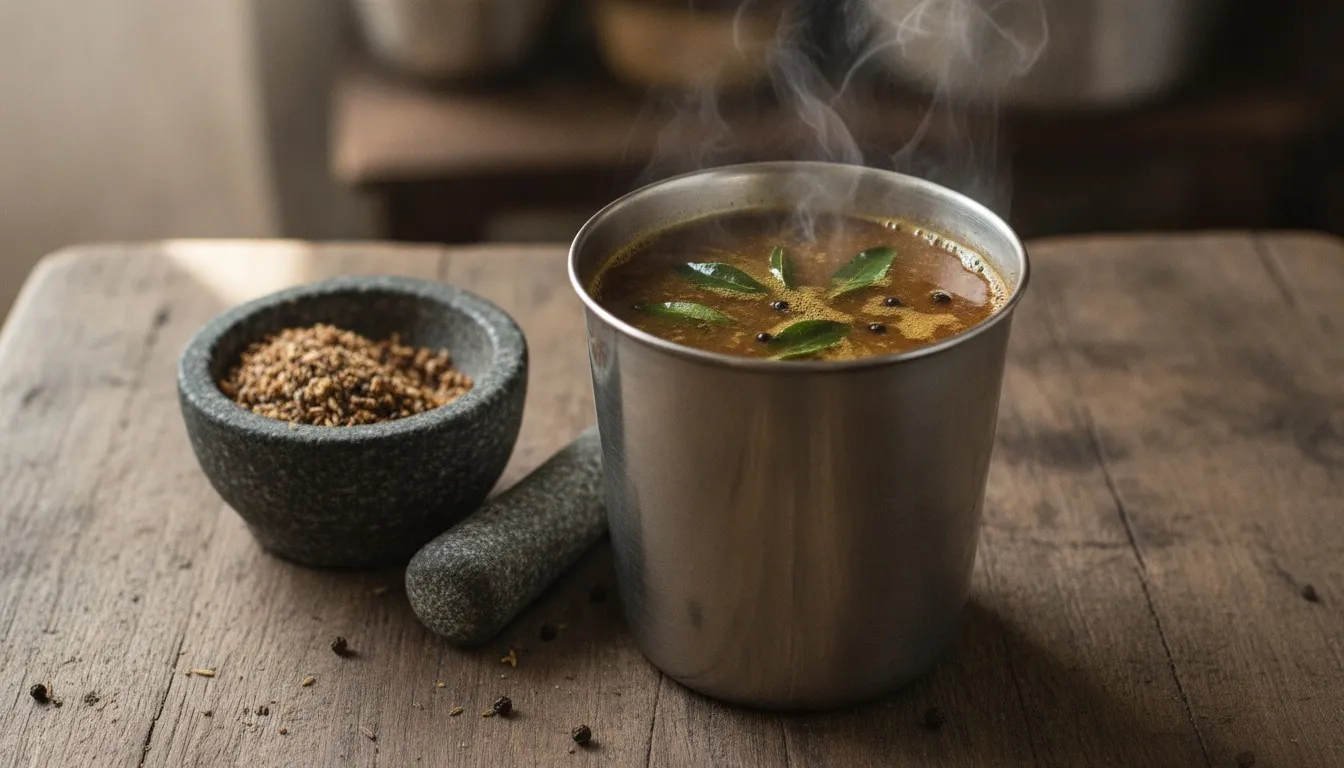
The first day of a head cold has a familiar shape. The throat turns scratchy, the nose blocks and runs by turns, food stops appealing, and a chilled, heavy feeling settles in that makes cooking anything ambitious impossible. Most people reach for something hot to drink at that point, which is exactly the instinct South Indian kitchens turned into a recipe generations ago. Milagu rasam, a thin peppery broth built on crushed black pepper, cumin, garlic, and tamarind, is what gets made in Tamil homes the moment someone starts sniffling. It takes half an hour, uses only spice-rack staples, and can be sipped from a tumbler or poured over hot rice when nothing else tempts you.
The Ayurvedic Perspective
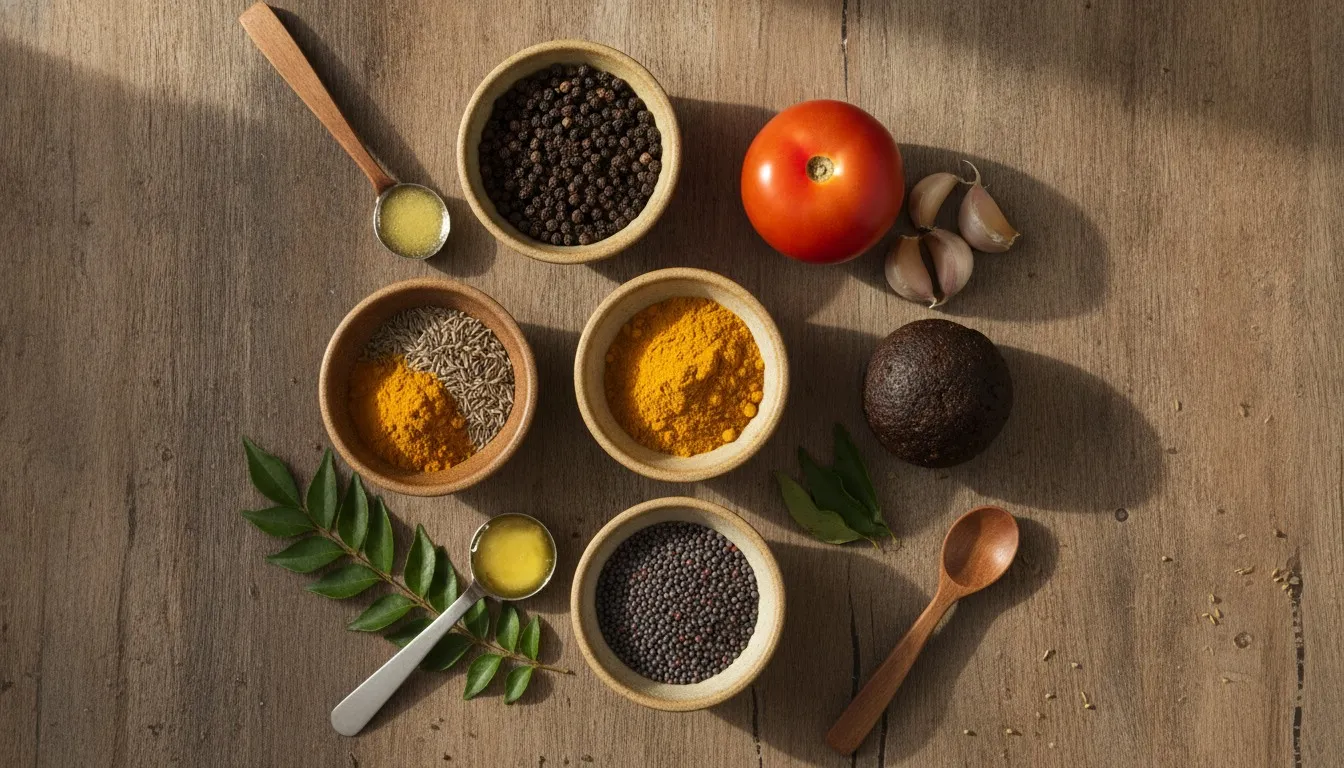
Ayurveda calls an ordinary head cold pratishyaya and frames it as kapha accumulating and blocking the channels of the head and chest, which is why everything feels thick, cold, and stuck. It usually arrives alongside agnimandya, a dip in digestive fire, which is the classical explanation for the flat appetite and heaviness that come with a cold. The answer in that framework is katu rasa and ushna virya, pungent taste and heating potency, delivered warm and in liquid form so it moves quickly. Maricha, black pepper, is listed in the Charaka Samhita among the deepaniya group that kindles digestion and among the kasahara and shwasahara groups used for cough and breathlessness. Jiraka, cumin, is a classical deepana and pachana, and Lashuna, garlic, is described in the Bhavaprakasha Nighantu as reducing both kapha and vata. Rasam itself descends from the yusha and kashaya style of thin medicinal broths, and its Ayurvedic logic has been documented in the published ethnobotanical literature on saaru and rasam.
What Modern Biology Says
The pepper does something measurable, though it helps to know exactly what kind of evidence sits behind that. Piperine, its pungent alkaloid, is an agonist at the human TRPV1 receptor, the same channel capsaicin acts on, and laboratory work on cells carrying that human receptor found piperine triggers it even more strongly than capsaicin does. That is cell-based pharmacology rather than a trial in people, but it is a plausible explanation for why a mouthful of peppery broth makes the eyes water and the nose stream and then feel briefly open. Cumin brings cuminaldehyde and crushed garlic brings allicin, and the human evidence for either against colds is thin. The 2014 Cochrane review of garlic for the common cold found only one trial worth including, rated the evidence very low quality, and reported that once a cold had started, people recovered in about the same time with garlic as with placebo. The firmest human evidence here is really for the format rather than the spices. Saketkhoo and colleagues, in Chest in 1978, measured 15 healthy volunteers and found that hot fluids sipped from a cup sped up nasal mucus clearance while cold water slowed it down, with the effect faded by thirty minutes. Sanu and Eccles, in Rhinology in 2008, gave 30 people with colds the same drink either hot or at room temperature: the hot version brought immediate and sustained relief from runny nose, cough, sneezing, sore throat, chilliness, and tiredness, where the room-temperature version helped with only the first three. Worth knowing that in that trial the objective airflow measurements did not move at all; what improved was how open people felt their noses were. A 2025 systematic review of soup for respiratory infections pooled four small trials and found modest reductions in symptom severity and illness duration, but rated the certainty of that evidence low to moderate. No clinical trial has ever tested rasam itself. What it adds up to is real symptomatic comfort with a plausible mechanism; whether a hot bowl of anything actually shortens a cold is still an open question.
How And When To Use It
Reach for this at the first scratch in the throat rather than on day four, and make a fresh pot each day rather than reheating. About one cup, sipped warm and slowly, two to three times a day for up to four days is the household norm. The feeling of a clearer nose comes on quickly and does not last long, usually twenty to thirty minutes, so timing a cup before bed helps with sleeping through a blocked nose. When appetite is gone entirely, pour it over hot rice with a few drops of ghee, which is the traditional way to get something eaten on a day when nothing else appeals. Keep the pepper coarsely crushed rather than finely powdered, and stop heating the moment the froth rises.
Cautions And A Note On Medical Care
A few people should be careful with this one. Black pepper and tamarind are both sharp on the stomach lining, so skip it during active acid reflux, gastritis, or an ulcer, and cut the pepper back if spicy food usually gives you heartburn. Garlic can add to the effect of blood thinners such as warfarin, so check with your doctor before eating garlic-heavy food daily if you take anticoagulants, and keep the salt light if you are on a sodium-restricted diet or blood pressure medication. See a doctor if symptoms persist beyond 7 days or worsen, and sooner for a fever above 100.4F lasting more than three days, chest pain, wheezing, or any difficulty breathing. This is traditional wisdom and not a substitute for medical care, but on the first shivery evening of a cold, a hot tumbler of milagu rasam is a very good place to start.
References
These are the peer-reviewed human studies and reviews behind the modern-evidence claims above. They open in a new tab.
- Saketkhoo, Januszkiewicz and Sackner, Chest, 1978. In 15 healthy volunteers, hot fluids sipped from a cup temporarily sped up nasal mucus clearance and cold water slowed it, with the effect gone by thirty minutes. This is the classic evidence for the hot-liquid format that rasam uses.
- Sanu and Eccles, Rhinology, 2008. In 30 people with colds, a hot drink relieved runny nose, cough, sneezing, sore throat, chilliness and tiredness, while the same drink at room temperature relieved only the first three. Objective nasal airflow did not improve; only the subjective sense of a clear nose did.
- Lissiman, Bhasale and Cohen, Cochrane Database of Systematic Reviews, 2014. Only one trial of 146 people met inclusion criteria and the evidence was rated very low quality. Once a cold had already started, recovery took about the same time with garlic as with placebo, which is why the article does not claim garlic will speed recovery.
- Lucas, Leach, Kimble and Cheyne, Nutrients, 2025. Four small randomised trials of medicinal and vegetable soups found modest reductions in symptom severity and illness duration of roughly one to two and a half days, but the authors rated overall certainty as low to moderate. The closest published evidence to a broth like rasam.
- McNamara, Randall and Gunthorpe, British Journal of Pharmacology, 2005. Laboratory patch-clamp work on cells expressing the human TRPV1 receptor showing that piperine is a full agonist at that channel, with greater efficacy than capsaicin. This is the source for the mechanism claim, and it is cell-based, not a study in people.
Recipe
Milagu Rasam for a Head Cold
A thin, peppery South Indian broth of crushed black pepper, cumin, garlic, and tamarind, sipped warm for a sore throat, a blocked nose, and the flat appetite that comes with a head cold.
- Prep
- 10min
- Cook
- 20min
- Total
- 30min
- Servings
- 4servings
Ingredients
- For the crushed spice base
- 1.5 tsp whole black peppercorns
- 1.5 tsp cumin seeds (jeera)
- 4 cloves garlic cloves, peeled
- For the rasam
- 1 lime-sized ball tamarind, soaked in 1/2 cup warm water
- 1 medium ripe tomato, roughly chopped
- 1/4 tsp turmeric powder
- 1 pinch asafoetida (hing)
- 1 sprig curry leaves
- 1/2 tsp rock salt or sea salt
- 3 cups water
- For the tempering and garnish
- 1 tsp ghee
- 1/2 tsp mustard seeds
- 1 chilli dried red chilli, broken
- 2 tbsp fresh coriander leaves, chopped
Instructions
- 1 Soak the tamarind in 1/2 cup warm water for 10 minutes, then squeeze it well with your fingers and strain, keeping the extract and discarding the pulp and fibre.
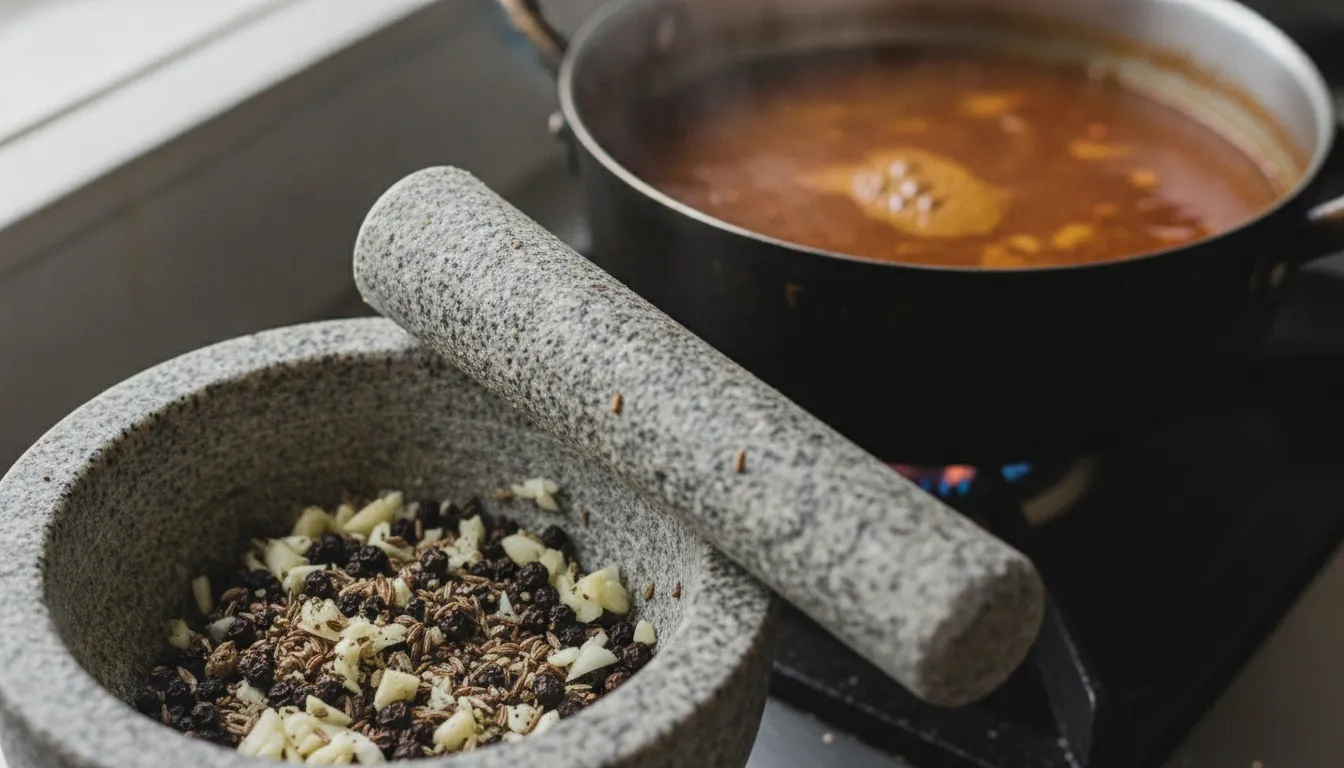
- 2 Coarsely crush the peppercorns, cumin seeds, and garlic cloves together in a mortar and pestle, or pulse them for a few seconds in a small mixer. Leave the mixture gritty rather than fine, since the broken pieces release aroma slowly into the broth.
- 3 Put the tamarind extract, chopped tomato, turmeric, asafoetida, curry leaves, and salt into a pot. Simmer gently for 8 to 10 minutes, mashing the tomato against the side of the pot, until the raw smell of the tamarind is gone.
- 4 Stir in the crushed pepper, cumin, and garlic mixture along with 3 cups of water. Heat on a low flame only until a white froth rises to the surface, then turn off the heat immediately. Do not let it boil hard, because the aromatic oils in the pepper and cumin cook off quickly.
- 5 Heat the ghee in a small pan, add the mustard seeds, and wait for them to crackle. Add the broken red chilli, let it darken for a few seconds, then pour the whole tempering into the rasam and cover the pot for two minutes.
- 6 Stir in the chopped coriander leaves. Sip about one cup warm, straight from a tumbler, at the first sign of a scratchy throat or a blocking nose, and repeat two to three times a day for up to four days. When your appetite is low, pour it over hot rice with a few drops of ghee and eat it as a light meal.
Notes
- Black pepper and tamarind are both sharp on the stomach lining. Skip this if you have active acid reflux, gastritis, or a stomach ulcer, and use less pepper if spicy food usually gives you heartburn.
- Garlic can add to the effect of blood thinners such as warfarin. One or two cloves in a pot of rasam is a normal culinary amount, but check with your doctor before eating garlic-heavy food daily if you take anticoagulants.
- Rasam is salty by design. Keep the salt light if you are on a sodium-restricted diet or taking blood pressure medication.
- Make a mild, low-pepper version for young children, and do not give the full-strength peppery version to children under two.
- Consult your doctor if symptoms persist beyond 7 days or worsen, and sooner if there is a fever above 100.4F lasting more than three days, chest pain, wheezing, or any difficulty breathing. This is traditional wisdom and not a substitute for medical care.