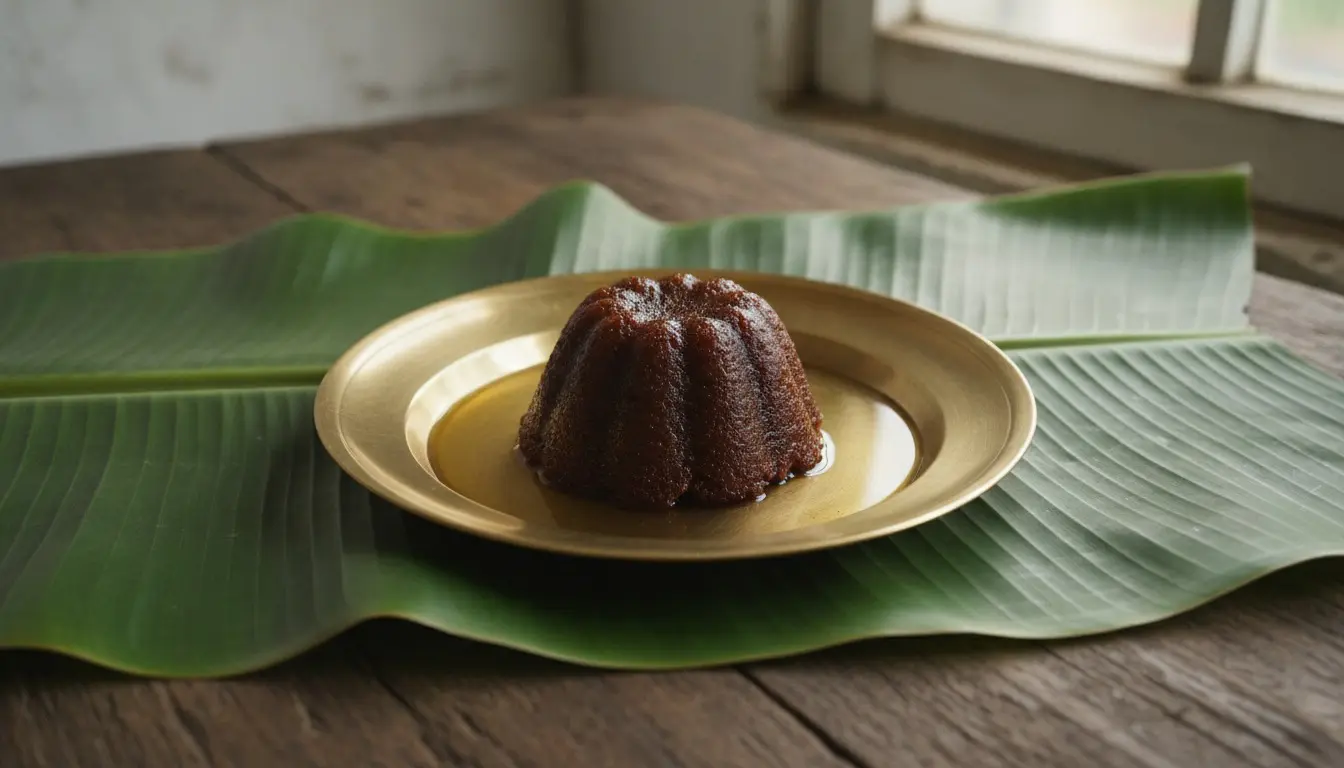
Authentic Ada Pradhaman Recipe (Kerala Onam Payasam)
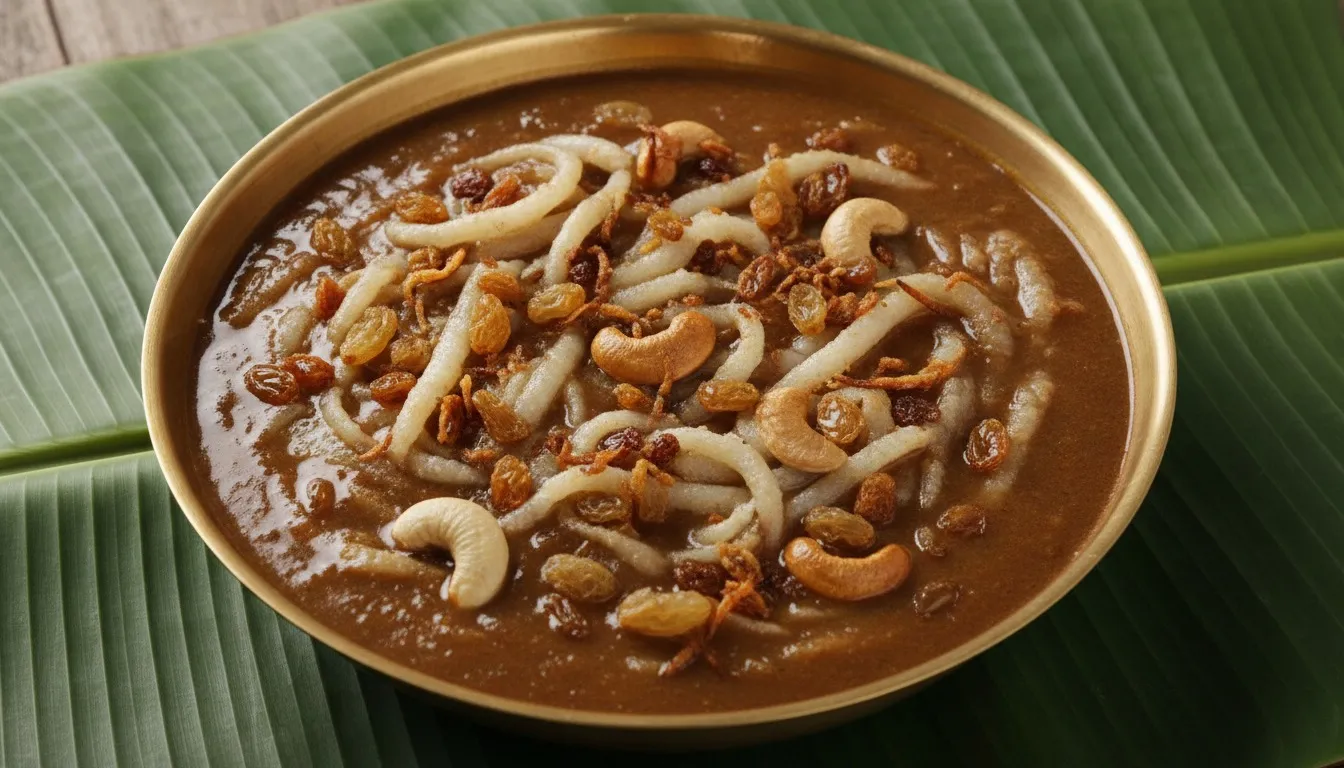
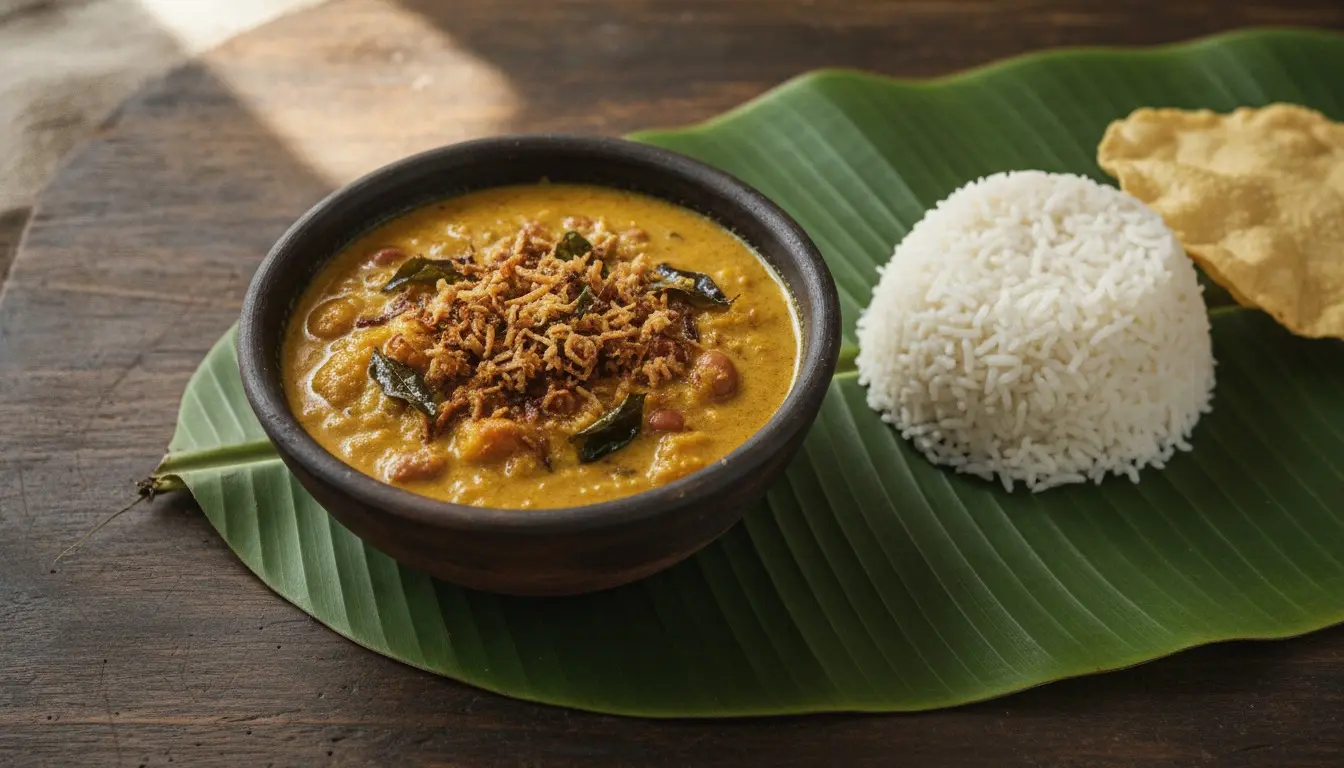
Ada Pradhaman is the dessert that quietly ends every Kerala sadya, spooned onto the banana leaf after the rice and the curries have been cleared. Ribbons of rice ada are simmered in dark jaggery until they turn a deep mahogany brown, then loosened with coconut milk into something glossy, thick and impossibly fragrant. It has been having a real moment online as home cooks rediscover Onam sadya cooking, and short videos of that final pour of thick coconut milk into the bubbling jaggery have travelled far beyond Kerala. What makes it special is that there is no dairy milk, no condensed milk and no thickener at all: the body comes entirely from rice, jaggery and coconut. Get the ratios right and it is one of the most rewarding desserts in the South Indian repertoire.
About This Dish
Pradhaman is the older, richer branch of the payasam family, distinguished by its coconut milk and jaggery base rather than milk and sugar. In Kerala tradition, a sadya may carry several payasams, but a pradhaman is the one that signals a real feast, which is why it appears at Onam, Vishu and wedding sadyas. Ada refers to the rice pasta itself, thin sheets of rice batter steamed in banana leaves, then dried and cut into ribbons. Temple kitchens in Kerala have made versions of this for centuries, and the Ambalappuzha temple in particular built its reputation on payasam offerings. Store bought dried ada has made the dish accessible everywhere without changing what it tastes like.
Ingredient Notes
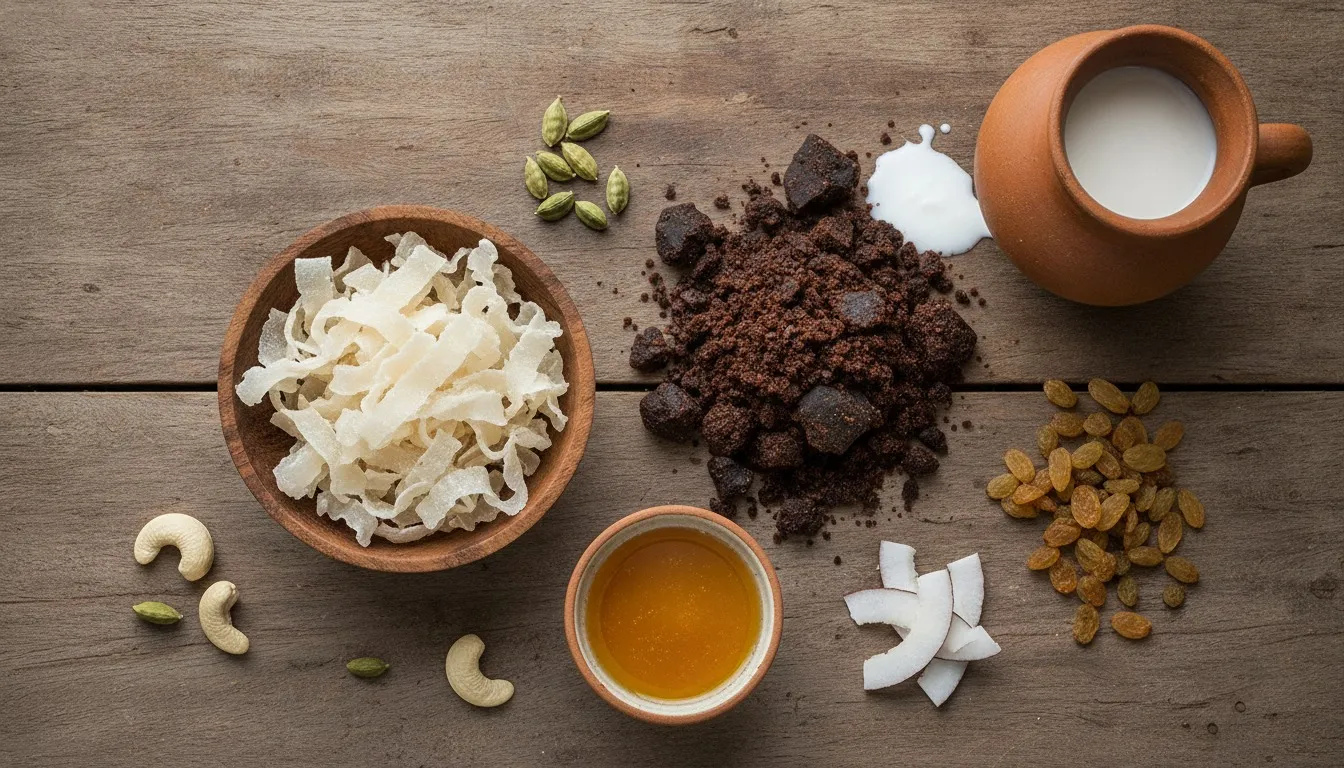
Rice ada is the one ingredient worth seeking out properly. It is sold dried in Indian grocery stores and online, sometimes labeled palada, and it cannot be swapped for poha or rice flakes, which simply melt away. Jaggery should be the dark, soft, slightly sticky kind rather than the pale hard blocks; the color and the faint molasses edge are what make the finished pradhaman look and taste the way it should. For coconut milk, freshly extracted milk from grated coconut is traditional, but two cans of full fat canned coconut milk work beautifully: scoop the thick cream off the top for the first extract and dilute what remains for the thin. Ghee is not optional here, since it is what carries the aroma and gives the ada its shine. A pinch of dry ginger powder alongside the cardamom is a very Kerala touch that keeps the sweetness from feeling flat.
Method And Tips
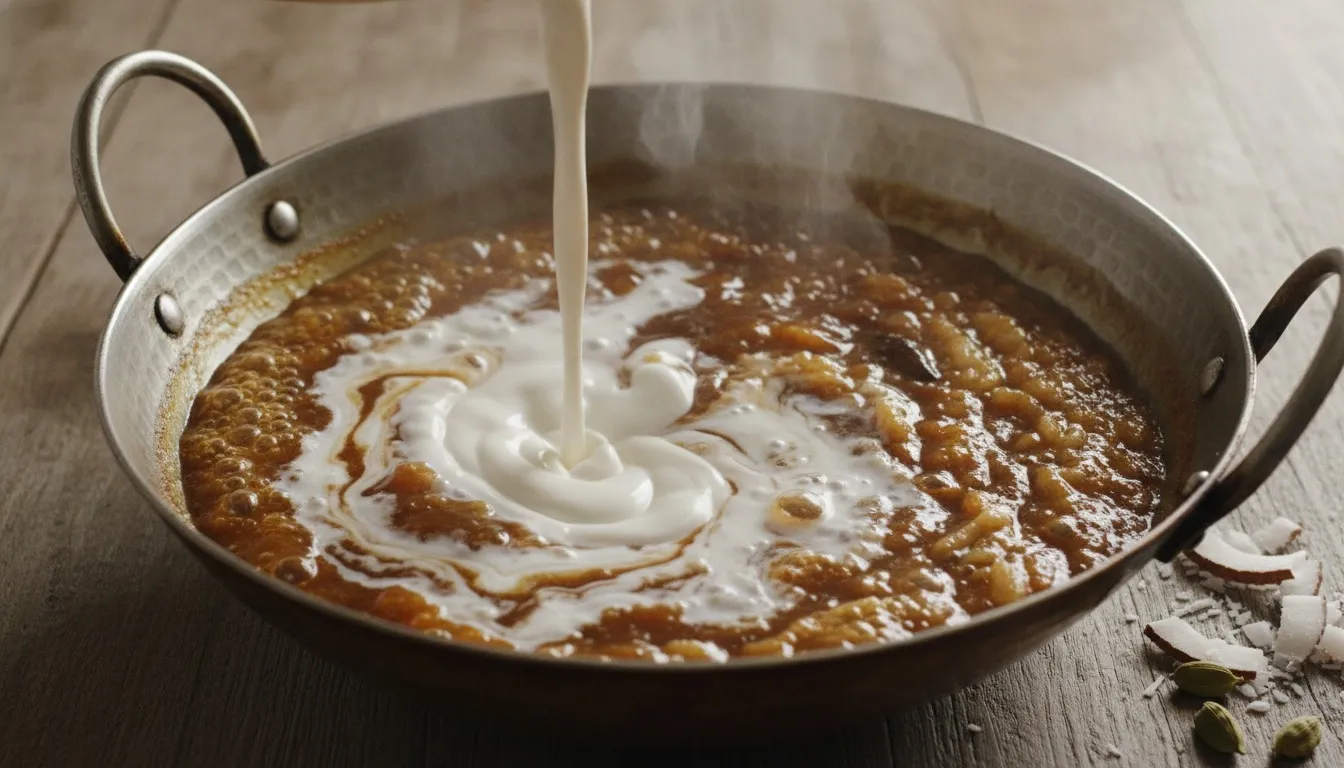
The technique that separates a good ada pradhaman from a mediocre one is patience during the jaggery stage. After the cooked ada goes into the strained syrup, it needs a full 10 to 12 minutes on medium low heat to absorb that syrup and darken; rushing this leaves you with pale ada floating in sweet liquid rather than a unified pudding. Always strain the melted jaggery, because unrefined blocks carry sand and grit that will otherwise end up in the bowl. The second rule is about the thick coconut milk: it goes in at the very end, on the lowest heat, and must never boil, or it will curdle into grainy specks that no amount of stirring will fix. Finally, remember that this dessert thickens dramatically as it cools, so switch off the stove while it still looks slightly runnier than you want it.
Serving Suggestions
Serve ada pradhaman warm in small bowls or, if you are laying out a full sadya, ladled directly onto the banana leaf to be eaten with the fingers or a spoon. It is rich enough that modest portions go a long way, and it pairs well after a meal of rice, sambar, avial and thoran. If Onam is coming around, make this the dish you commit to, because it earns its place at the end of the leaf every single time.
Recipe
Ada Pradhaman
A traditional Kerala payasam of rice ada simmered in dark jaggery syrup and coconut milk, finished with ghee fried coconut chips, cashews and raisins. It is the signature dessert of the Onam sadya.
- Prep
- 15min
- Cook
- 40min
- Total
- 55min
- Servings
- 6servings
- Calories
- 385kcal
Ingredients
- For the ada
- 1 cup store bought rice ada
- 6 cups water, for boiling
- For the pradhaman
- 2 cups dark jaggery, grated or crushed
- 1/2 cup water
- 2.5 cups thin coconut milk (see notes)
- 1 cup thick coconut milk (see notes)
- 1/2 tsp ground cardamom
- 1/4 tsp dry ginger powder
- 2 tbsp ghee
- For the garnish
- 2 tbsp ghee
- 3 tbsp fresh coconut, cut into thin slivers
- 3 tbsp cashews
- 2 tbsp golden raisins
Instructions
- 1 Break the rice ada into rough 1 inch pieces if it comes in long ribbons. Bring 6 cups of water to a rolling boil in a saucepan, drop in the ada, and cook on medium heat for 10 to 12 minutes until the pieces are soft all the way through with no chalky center.
- 2 Drain the ada into a colander and rinse under cool running water for a few seconds. This washes off surface starch and keeps the pieces separate rather than gummy. Leave it to drain fully while you make the syrup.
- 3 In a heavy bottomed pan or kadai, combine the jaggery and 1/2 cup water. Heat on medium, stirring, until the jaggery melts completely, about 5 minutes. Strain the syrup through a fine mesh sieve to catch grit and sand, then return it to the rinsed pan.
- 4 Bring the strained syrup back to a boil and let it bubble for 3 to 4 minutes until it thickens slightly and turns glossy.
- 5 Add the drained ada to the syrup along with 2 tablespoons of ghee. Cook on medium low heat for 10 to 12 minutes, stirring every couple of minutes, until the ada soaks up the syrup, darkens to a deep brown, and the mixture pulls away from the sides of the pan.
- 6 Pour in the 2.5 cups of thin coconut milk. Stir well and simmer on low heat for 10 to 12 minutes, stirring often so nothing catches on the bottom, until the mixture thickens to the consistency of a loose pudding.
- 7 While that simmers, heat the remaining 2 tablespoons of ghee in a small pan. Fry the coconut slivers until golden, then remove them. Fry the cashews until light gold, then remove. Finally add the raisins and pull them off the heat the moment they puff up.
- 8 Stir the cardamom and dry ginger powder into the pradhaman. Lower the heat to its minimum, pour in the 1 cup of thick coconut milk, and stir gently for 1 to 2 minutes just until warmed through. Do not let it come to a boil at this stage or the coconut milk will split.
- 9 Turn off the heat and stir in the fried coconut, cashews and raisins along with the ghee from the frying pan. Serve warm. The pradhaman thickens noticeably as it cools, so pull it off the heat while it still looks a little loose.
Notes
- Coconut milk shortcut: open two 13.5 oz cans of full fat coconut milk without shaking them. Scoop the thick cream off the top of both cans to get roughly 1 cup of thick coconut milk. Combine the remaining thin liquid with enough water to make 2.5 cups of thin coconut milk.
- Use dark, soft jaggery rather than the pale hard variety. The color and the faint smoky note of dark jaggery are what give ada pradhaman its signature look and depth.
- Rice ada is sold dried in Indian grocery stores and online, usually labeled rice ada or palada. Do not substitute poha or rice flakes, which dissolve completely.
- If the pradhaman thickens too much after cooling, loosen it with a few tablespoons of warm coconut milk or milk and reheat gently on low heat.
- Leftovers keep in the refrigerator for up to 3 days. Reheat slowly on the stove, never at a boil.