Authentic Mathanga Erissery Recipe (Kerala Pumpkin and Cowpea Curry)
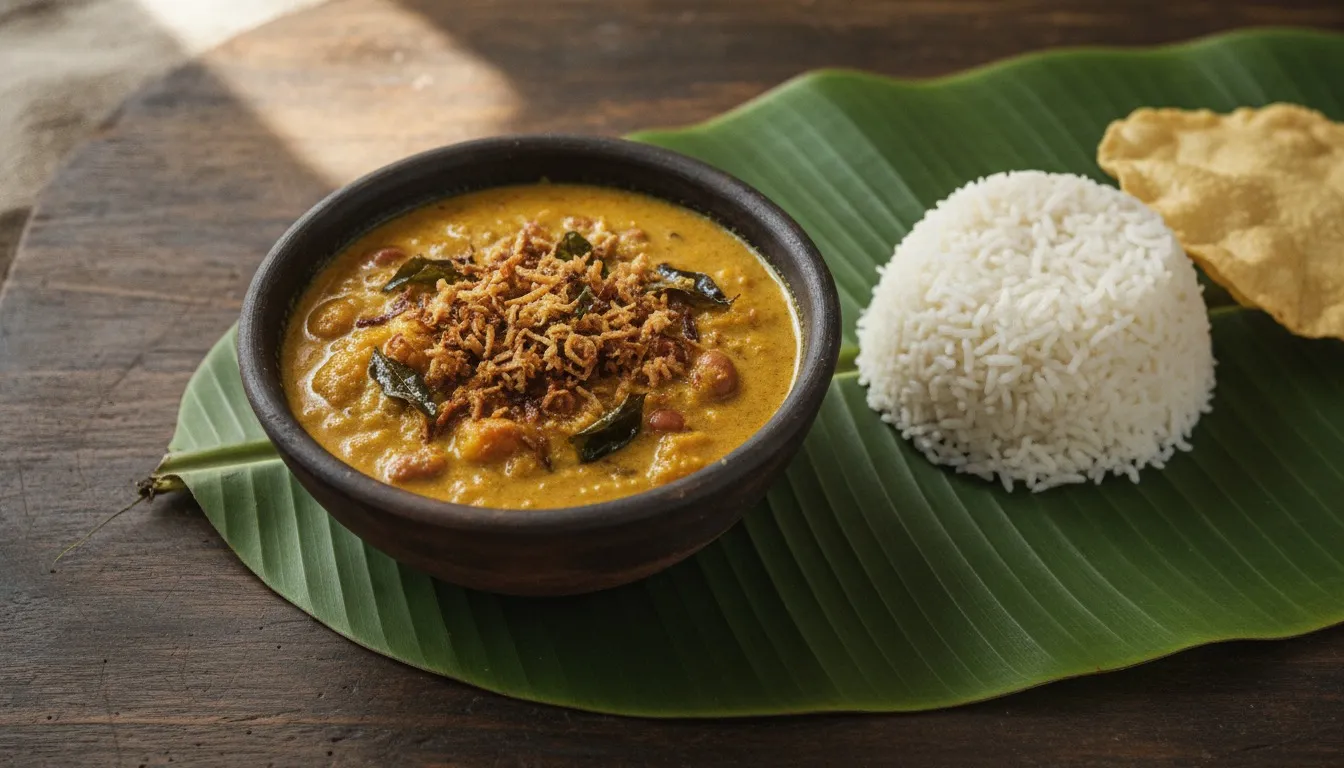
Of all the dishes on an Onam sadya banana leaf, erissery is the one that quietly steals the meal. Soft cubes of pumpkin, earthy red cowpeas, and a ground coconut paste come together into something mild and faintly sweet, and then a spoonful of coconut roasted almost to the edge of burnt gets poured over the top and changes everything. That toasted coconut is the whole trick, and it is the reason this dish has been having such a moment online, with sadya prep videos zooming in on the exact shade of brown to aim for. It is also one of the easier sadya dishes to pull off, which makes it a good first Kerala festival recipe. Nothing here needs special equipment or a practiced hand.
About This Dish
Erissery is not one recipe so much as a Kerala technique: a vegetable or legume cooked soft, bound with ground coconut, and finished with a tempering that includes coconut browned in coconut oil. Different households make it with raw banana, yam, or ash gourd, but the pumpkin and cowpea version, mathanga erissery, is the one that earns its place on the Onam sadya leaf. Mathanga is Malayalam for pumpkin and vanpayar for the small red cowpeas traditionally used. The dish belongs to the older, temple-adjacent style of Kerala cooking, where sweetness from a vegetable was allowed to lead and chillies stayed in a supporting role. It is served alongside rice, near the middle of the leaf, where it gets mixed with a little parippu and ghee.
Ingredient Notes
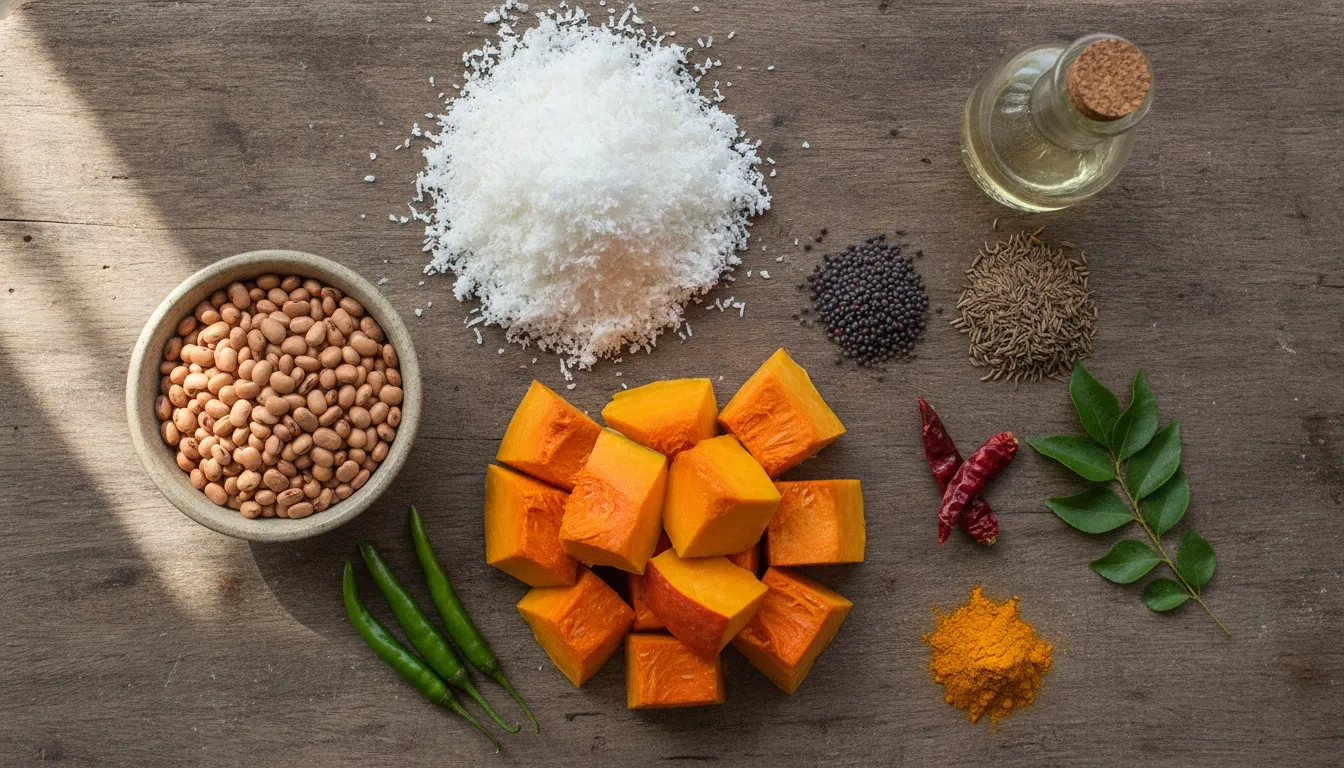
Pumpkin is the ingredient that decides how the dish turns out. Red pumpkin or kabocha squash holds its shape and brings real sweetness; a watery squash will collapse into mush before it absorbs any flavor. Red cowpeas are worth seeking out at an Indian grocery, but black-eyed peas are the accepted substitute and behave almost identically once soaked. Fresh grated coconut is ideal, and frozen grated coconut, thawed, is the practical everyday choice and works in both the paste and the tempering. Skip desiccated coconut for the roasting step, since it scorches before it browns evenly. Coconut oil is not optional here in any meaningful sense, because its aroma is half of what makes erissery taste like erissery.
Method And Tips
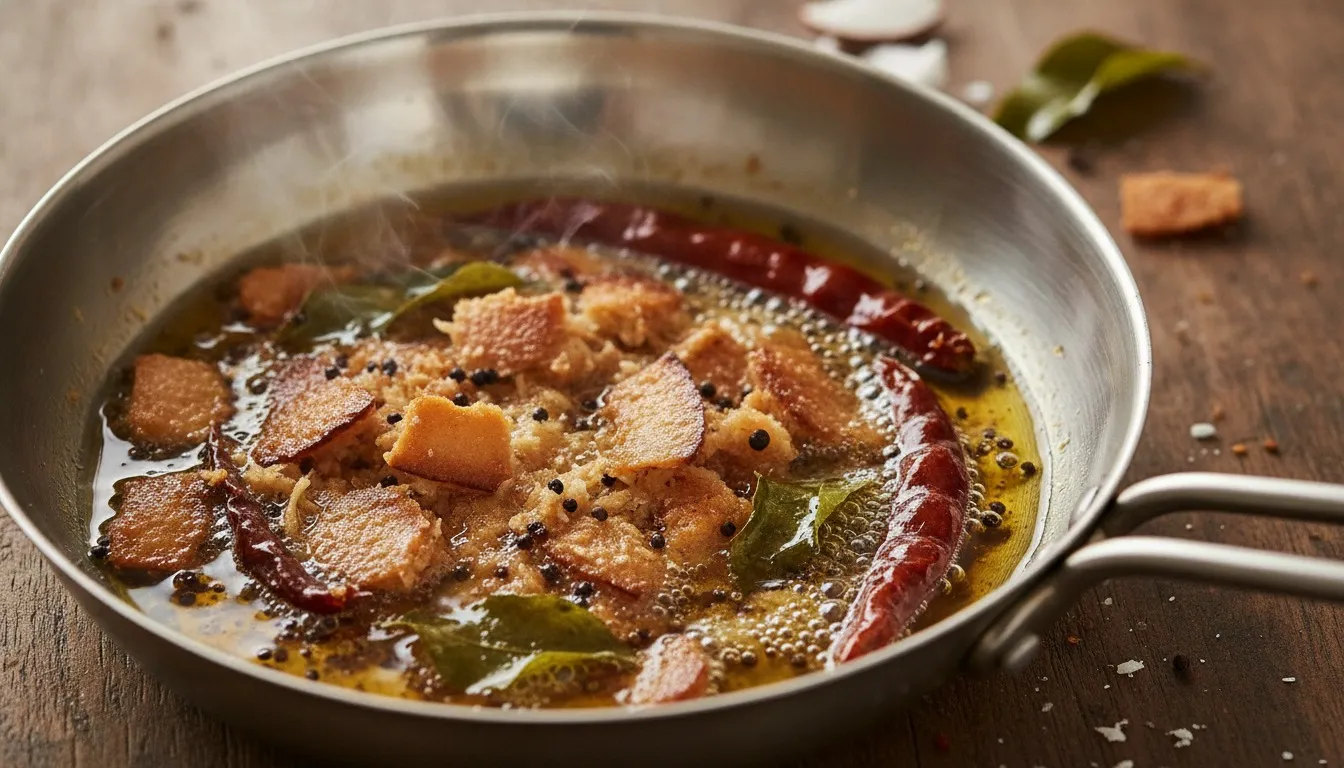
The two things that separate a good erissery from a flat one are how the pumpkin is mashed and how far the coconut is roasted. Mash roughly half the cooked pumpkin and leave the rest in cubes, so every spoonful has both creaminess and bite. Then, once the coconut paste goes in, keep the heat low and stop at a bare simmer, because boiling coconut hard makes it grainy. For the tempering, lower the flame and roast the grated coconut slowly, stirring the whole time, until it is a deep golden brown and the kitchen smells nutty. Most first attempts stop too early out of caution, and the result tastes noticeably plainer. Letting the finished curry rest for ten minutes under a lid lets that roasted aroma work its way through.
Serving Suggestions
Serve mathanga erissery with steamed rice, ideally Kerala matta rice, alongside parippu curry, avial, and a spoonful of pickle. It is just as good on an ordinary weeknight with plain rice and a papadam, and it reheats beautifully the next day with a splash of hot water stirred in. Make it once before Onam to get the roasted coconut right, and it will be on the leaf every year after that.
Recipe
Mathanga Erissery
A traditional Kerala Onam sadya curry of pumpkin and red cowpeas simmered in a ground coconut and cumin paste, finished with coconut roasted to a deep nutty brown in coconut oil.
- Prep
- 15min
- Cook
- 30min
- Total
- 45min
- Servings
- 4servings
- Calories
- 215kcal
Ingredients
- For the curry
- 1/2 cup dried red cowpeas or black-eyed peas
- 1 lb red pumpkin or kabocha squash, peeled and cut into 1 inch cubes
- 1/2 tsp turmeric powder
- 1 tsp salt
- 3/4 cup water
- For the coconut paste
- 3/4 cup fresh or frozen grated coconut
- 1 tsp cumin seeds
- 2 green chillies
- 1/4 cup water, for grinding
- For the tempering and roasted coconut
- 1 tbsp coconut oil
- 1/2 tsp mustard seeds
- 2 dried red chillies, broken in half
- 1 sprig curry leaves
- 1/4 cup fresh or frozen grated coconut
Instructions
- 1 Rinse the cowpeas well and soak them in plenty of water for at least 6 hours or overnight. They will roughly double in size.
- 2 Drain the soaked cowpeas and add them to a pressure cooker with 1 and 1/2 cups fresh water and 1/4 teaspoon of the salt. Cook for 3 to 4 whistles, about 12 to 15 minutes, then let the pressure release naturally. The peas should be tender enough to crush between two fingers but still holding their shape. Without a pressure cooker, simmer them covered in a saucepan for 40 to 45 minutes, topping up water as needed.
- 3 While the peas cook, put the cubed pumpkin in a wide pot with the turmeric, the remaining 3/4 teaspoon salt, and 3/4 cup water. Cover and cook over medium heat for 10 to 12 minutes, until a fork slides through the pumpkin easily.
- 4 Mash about half the pumpkin against the side of the pot with the back of a spoon, leaving the rest in cubes. That mix of creamy and chunky is what erissery should feel like.
- 5 Grind the 3/4 cup grated coconut, cumin seeds, and green chillies with 1/4 cup water into a thick, slightly coarse paste. A few seconds of texture left in the coconut is better than a perfectly smooth puree.
- 6 Add the cooked cowpeas along with any liquid left in the cooker to the pumpkin and stir gently to combine.
- 7 Stir in the coconut paste. Simmer uncovered over low heat for 4 to 5 minutes, just until the raw smell of the coconut goes and the curry thickens. Do not let it come to a hard boil, or the coconut can split. Taste and adjust the salt, then turn off the heat.
- 8 For the tempering, heat the coconut oil in a small pan over medium heat. Add the mustard seeds and wait until they finish crackling, about 30 seconds.
- 9 Add the broken dried red chillies and curry leaves and let them sizzle for a few seconds, then lower the heat and add the 1/4 cup grated coconut. Roast, stirring constantly, for 3 to 4 minutes until the coconut turns a deep golden brown and smells nutty. This browned coconut is the signature of erissery, so take it further than feels comfortable, but pull it off the heat before it goes dark and bitter.
- 10 Pour the tempering over the curry, stir it in gently, cover the pot, and let it rest for 10 minutes before serving so the roasted coconut aroma settles through the whole dish.
Notes
- Red pumpkin, kabocha, or a firm orange winter squash all work well. Avoid very watery varieties, which fall apart before they take on flavor.
- Red cowpeas, called vanpayar in Kerala, have the best texture, but ordinary black-eyed peas are the standard substitute and are easier to find.
- In a hurry, use one 15 oz can of black-eyed peas, drained and rinsed, and skip the soaking and pressure cooking entirely.
- Frozen grated coconut is the best year-round option outside of coconut-growing regions. Thaw it before grinding and before roasting.
- Erissery thickens as it sits. Loosen it with a few tablespoons of hot water before serving if it has gone too stiff.