Besan and Turmeric Ubtan (Udvartana Paste) for Dull, Dry Skin
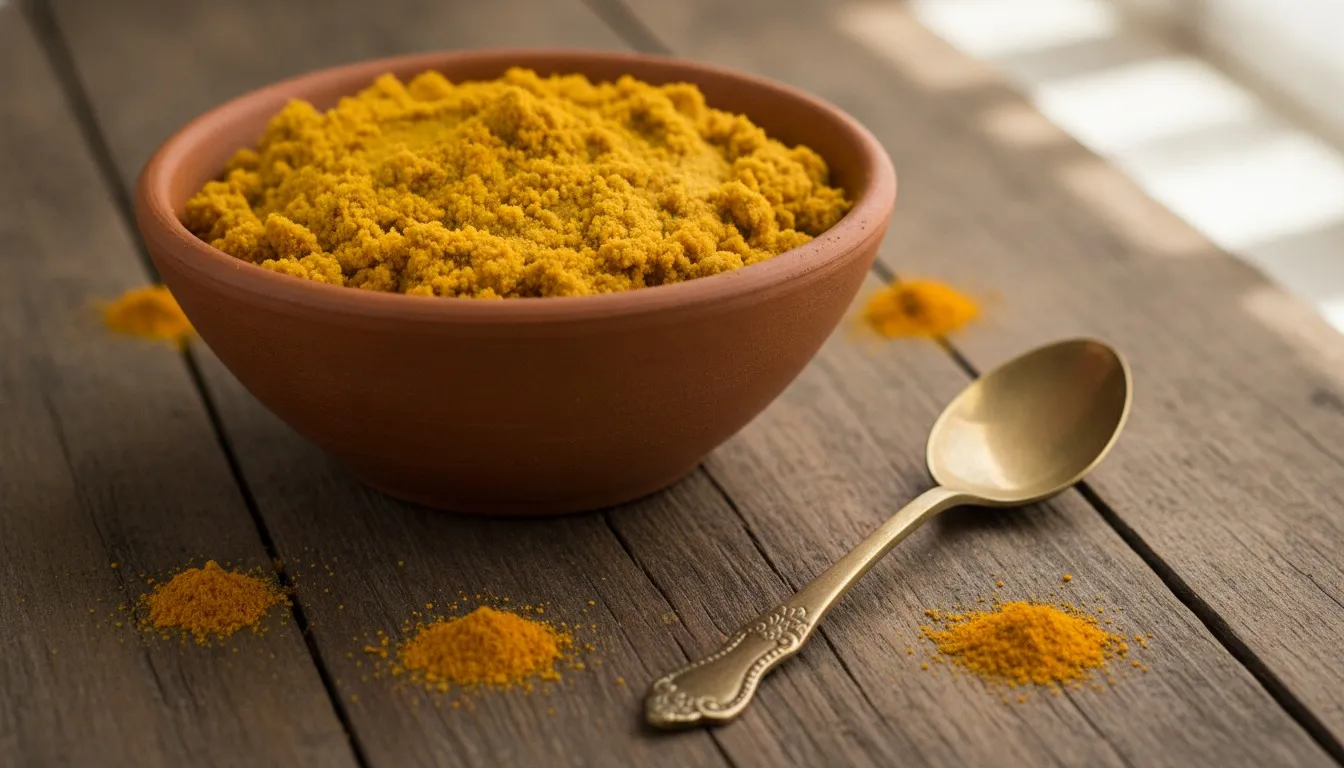
Some weeks the face in the mirror just looks tired. The skin is a little grey and uneven, it feels rough along the cheeks and jaw, and moisturiser seems to sit on top instead of sinking in. Heat, sweat, sun, hard water, and a build up of dead surface cells will do that to almost anyone, and it usually has nothing to do with anything serious. Long before there were exfoliating serums, Indian households reached for ubtan, a soft paste of gram flour, turmeric, and milk mixed in a steel bowl and rubbed over the skin.
The Ayurvedic Perspective
In Ayurvedic terms, skin that looks dull, heavy, and congested is read as kapha and ama settling at the surface, while skin that feels tight, rough, and flaky is read as vata drying it out from within. Most everyday dullness is a mix of both, which is why scrubbing alone tends to backfire and heavy oil alone tends to feel greasy without fixing the texture. The classical answer is udvartana, the rubbing of a flour based paste over the body against the direction of the hair. Charaka Samhita, in Sutrasthana 14.23, credits udvartana with pacifying kapha, reducing excess fat, relieving fatigue, and improving the texture and clarity of the skin, and Ashtanga Hridayam folds the same practice into dinacharya, the daily routine. The gram flour does the cleansing and lifting, the turmeric cools the pitta component behind redness and irritation, and the milk keeps the whole thing from stripping vata skin further.
What Modern Biology Says
The modern reading is more modest than the internet suggests. Gram flour contains saponins, plant compounds with mild soap like behaviour, alongside starch and protein that give it just enough grit to loosen dead cells without the tearing you get from a coarse sugar or salt scrub. That is a fair read of what is in the flour, but it is worth being straight about the fact that nobody has run a clinical trial on besan, or on ubtan as a whole. Turmeric supplies curcuminoids, which are anti inflammatory and antioxidant in the lab, though a 2016 systematic review in Phytotherapy Research found only early and limited clinical evidence for turmeric on skin. The firmness result people usually point to is a four week placebo controlled study in 28 women, and it repays a close reading: the gel tested was a four ingredient formula containing 0.1% tetrahydrocurcumin alongside rosemary, gotu kola, and DMAE, a known cosmetic firming agent, so the gain cannot be credited to turmeric on its own, and three of the women dropped out with mild contact dermatitis. Milk is usually sold as the lactic acid in the recipe, but fresh milk carries lactose rather than much free lactic acid, and at a pH near 6.7 it is nowhere close to acidic enough to behave like an alpha hydroxy acid. The human trials that did move the needle used far stronger material: 5 to 12% lactic acid twice daily for three months, or 25% acid lotions for about six months. Even then, a four week comparison of 8% acids found no significant difference between lactic acid and the others on water loss or redness. So treat the milk as soothing and mildly moisturising, not as a peel, and expect a modest, temporary gain in smoothness and brightness rather than a permanent change in skin tone.
How And When To Use It
Reach for this on an evening when skin feels rough and looks flat, roughly two to three times a week rather than daily. Mix it fresh each time, since the milk will not keep, and use it in the evening so freshly exfoliated skin is not walking straight into afternoon sun. The single most common mistake is leaving the pack on until it cracks and then scraping it off, which irritates skin instead of smoothing it, so rinse while it is still slightly tacky. Most people notice softer skin the same evening and a more even look after two or three weeks of regular use.
Cautions And A Note On Medical Care
A few safety notes are worth taking seriously. Curcumin is a confirmed contact allergen with documented cases of allergic contact dermatitis, so patch test on the inner forearm a day ahead and stop at the first sign of redness or itching. Skip the pack entirely on broken, sunburned, freshly shaved, or actively inflamed skin, keep it away from the eyes, and resist the online versions that add lemon juice, which stings and raises sun sensitivity. Turmeric will leave a faint yellow tint for a few hours and will happily ruin a good towel, so plan accordingly. See a doctor if irritation persists beyond 3 days or worsens, or if a skin problem shows no improvement after 2 to 3 weeks. This is traditional wisdom and not a substitute for medical care, and if you have the three ingredients in your kitchen already, it costs almost nothing to try.
References
These are the peer-reviewed human studies and reviews behind the modern-evidence claims above. They open in a new tab.
- Sommerfeld B, Phytomedicine, 2007. Four weeks of a gel containing 0.1% tetrahydrocurcumin plus rosemary, gotu kola, and DMAE improved measured skin firmness in 28 women versus placebo, but the formula had four actives, so the effect cannot be credited to turmeric alone; three women withdrew with mild contact dermatitis.
- Vaughn AR, Branum A, Sivamani RK, Phytotherapy Research, 2016. Reviewed 18 human studies of oral and topical turmeric and concluded there is only early evidence of benefit for skin, with the published studies limited in quality and size.
- Smith WP, Journal of the American Academy of Dermatology, 1996. Twelve percent lactic acid applied twice daily for three months increased epidermal and dermal firmness and thickness and improved smoothness; 5% produced surface and epidermal changes only. Shows lactic acid works, at strengths milk does not supply.
- Ditre CM et al., Journal of the American Academy of Dermatology, 1996. A pilot study in which 25% glycolic, lactic, or citric acid lotion applied to one forearm for about six months produced roughly a 25% increase in skin thickness with denser collagen; high concentration, long duration, and not comparable to a rinse-off milk paste.
- Berardesca E et al., British Journal of Dermatology, 1997. Eleven subjects applied 8% glycolic, lactic, tartaric acid, or gluconolactone twice daily for four weeks; no significant differences in water loss or redness were seen between the acids, and lactic acid did not confer the barrier protection that gluconolactone and tartaric acid did.
Recipe
Besan and Turmeric Ubtan
A soft paste of gram flour, turmeric, and milk, rubbed gently over the face and rinsed off. It lifts dull, flaky surface skin and leaves the face smoother, and it is the everyday kitchen form of the Ayurvedic udvartana rub.
- Prep
- 3min
- Cook
- 0min
- Total
- 18min
- Servings
- 1applications
Ingredients
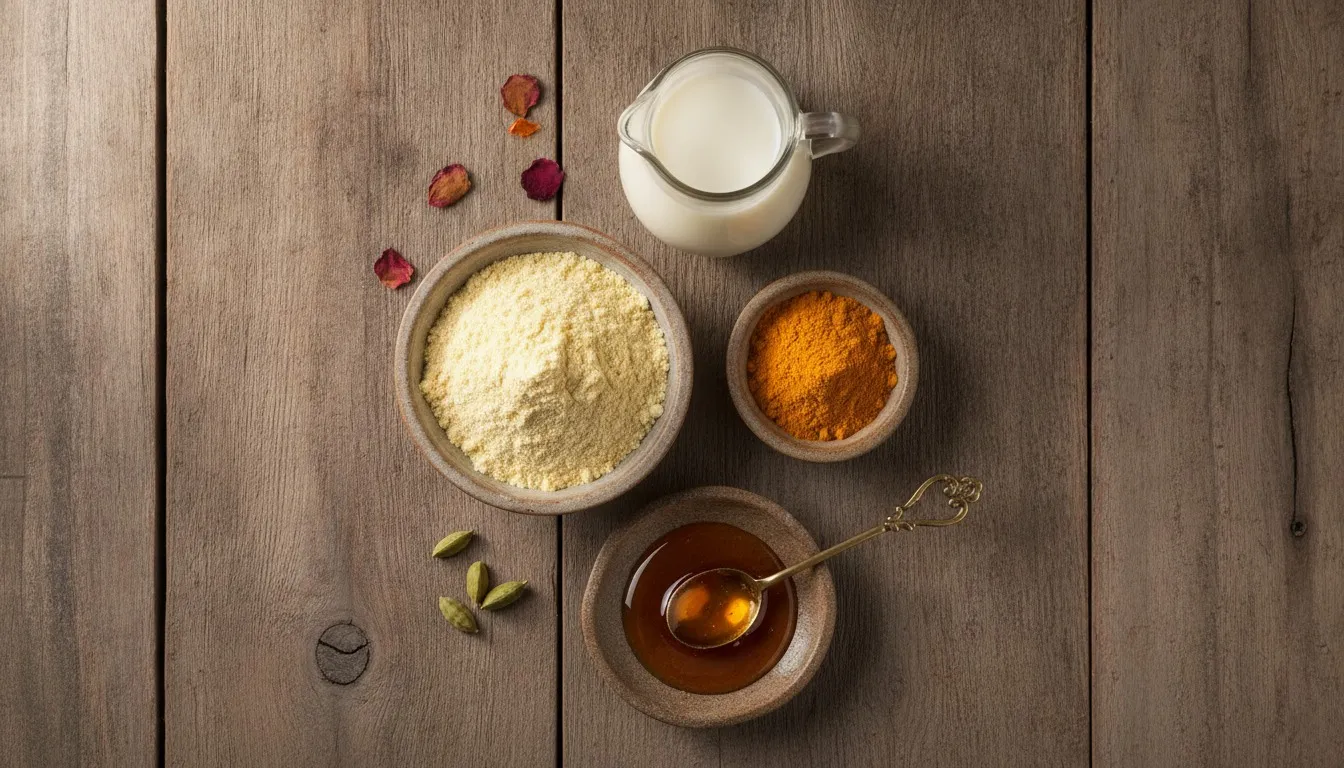
- 2 tbsp besan (gram flour), sifted
- 1/4 tsp turmeric powder
- 2 tbsp whole milk, at room temperature (use plain yogurt instead if skin is oily)
- 1/2 tsp honey, optional, for very dry skin
Instructions
- 1 At least 24 hours before the first use, mix a pinch of besan and turmeric with a few drops of milk and dab it on the inner forearm. Leave it for a day and go ahead only if there is no redness or itching.
- 2 Sift the besan into a small bowl to break up lumps, then stir in the turmeric so the colour is evenly distributed.
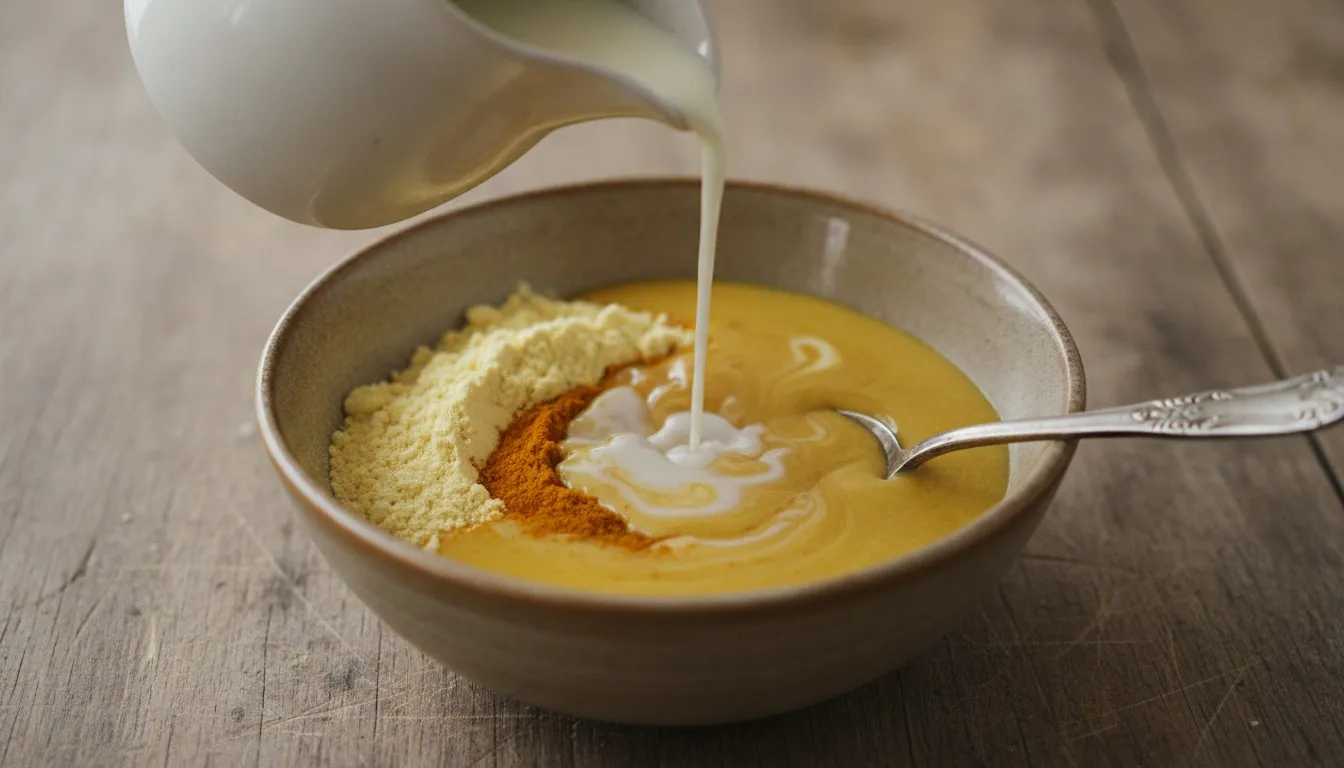
- 3 Add the milk a little at a time, stirring, until you have a smooth paste about the thickness of thick yogurt. Stir in the honey now if you are using it.
- 4 Wash and pat the face dry. Using clean fingertips, spread the paste over the face and neck in small upward circles, avoiding the area around the eyes.
- 5 Leave it on for 10 to 15 minutes. Do not let it dry to a hard crust, and mist or pat with a little water if it starts to feel tight.
- 6 Wet the fingertips and rub gently in circles for about 30 seconds to loosen the paste, then rinse off completely with lukewarm water and pat dry with an old towel.
- 7 Follow immediately with a light coconut oil or your usual moisturiser while the skin is still slightly damp. Use the pack 2 to 3 times a week, in the evening rather than before going out in strong sun.
Notes
- Patch test first. Curcumin is a documented contact allergen with confirmed cases of allergic contact dermatitis. Dab a little paste inside the forearm, wait 24 hours, and skip the remedy if there is any redness, itching, or swelling.
- Turmeric temporarily stains skin, nails, fabric, and towels, usually fading within a day. Use an old towel, keep the amount to a quarter teaspoon, and rinse thoroughly along the hairline and jaw.
- Do not use on broken, sunburned, freshly shaved, or actively inflamed skin, and keep the paste away from the eye area. Do not add lemon juice, which stings and raises sun sensitivity.
- Rinse the pack off while it is still slightly damp. Letting it dry rock hard and then scrubbing it away pulls at the skin and makes dryness worse.
- Consult your doctor if irritation, rash, or dryness persists beyond 3 days or worsens, or if a skin problem shows no improvement after 2 to 3 weeks. This is traditional wisdom and not a substitute for medical care.