Warm Rock Salt Potli (Lavana Pinda Sweda) for a Stiff Neck and Everyday Muscle Aches
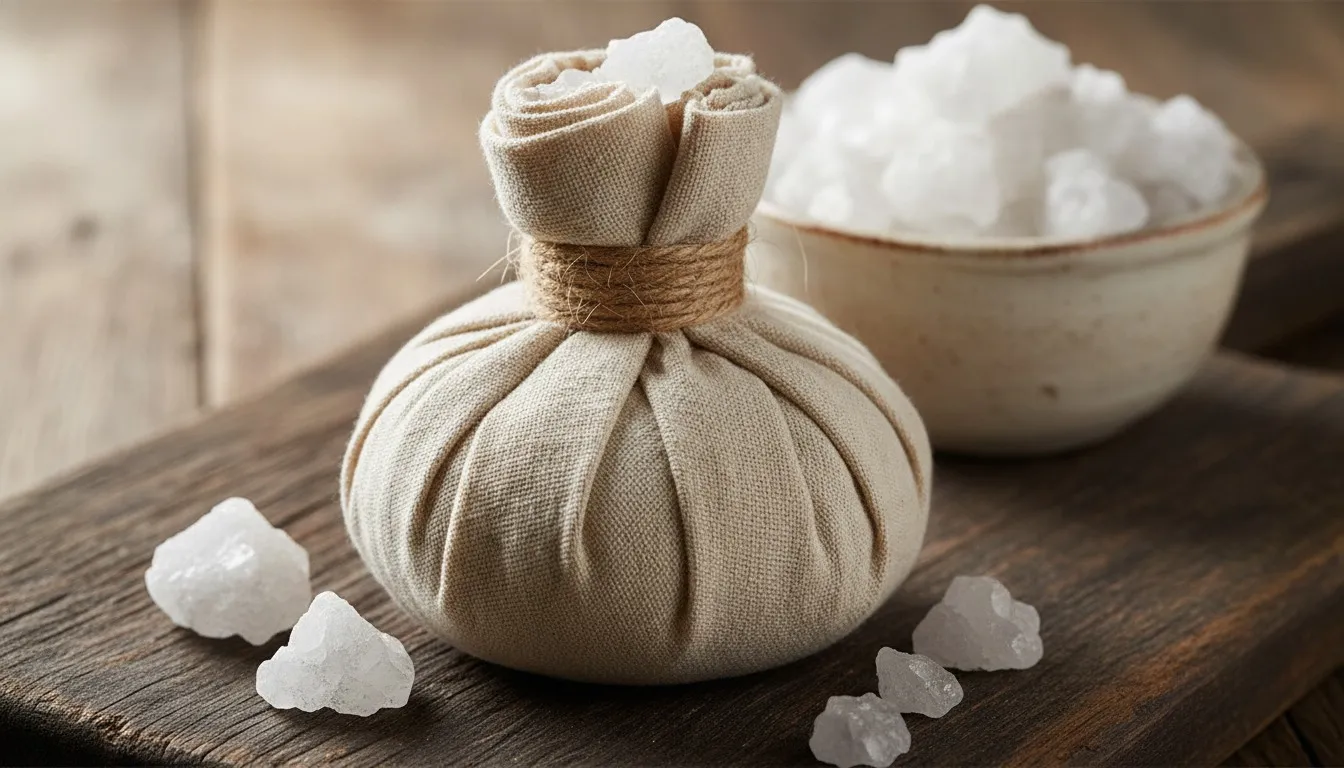
Some mornings the neck simply does not want to turn. A night on the wrong pillow, an afternoon hunched over a laptop, a long drive, or a few hours in cold air conditioning, and the muscles running from the base of the skull out to the shoulders lock into a dull, catching ache. Nothing is torn and nothing is broken; the muscle is just guarding and refusing to lengthen. Almost everyone has felt it, and most people reach for a hot water bottle. In Indian kitchens the older answer is a pouch of coarse rock salt, warmed in a pan and pressed over the sore spot until the tightness lets go.
The Ayurvedic Perspective
Ayurveda files a stiff, cold, painful muscle under aggravated vata, the principle of movement, dryness, and cold. When vata accumulates in the muscles and joints, the result is exactly what people describe: stiffness, heaviness, a sensation of coldness, and restricted movement. The classical correction is swedana, therapeutic warming, and the Charaka Samhita devotes a whole chapter to it in Sutrasthana 14, the Swedadhyaya, which names sankara sweda, a heated bolus or tied bundle pressed on the body, among its thirteen fire-based methods and recommends warming precisely for stiffness, heaviness, coldness, and body ache. Rock salt, saindhava lavana, became the standard filling for a dry bolus because it holds heat steadily and is classed as warming and softening. The treatment is still given in Kerala Ayurveda clinics under the name lavana pinda sweda, and the household version is the same idea stripped down to salt and a square of cotton. Warmth counters cold, and the slow pressing action counters stiffness.
What Modern Biology Says
Stripped of tradition, this is a well-made dry heat pack, and the physiology is unglamorous but real. Mineral salt crystals hold and release heat slowly, so a salt bundle stays warm longer than a damp towel and delivers a gentler, more even heat than a metal or plastic bottle. Applied heat raises the temperature of skin and shallow muscle, which widens local blood vessels and increases blood flow, reduces the firing of muscle spindles and gamma motor neurons so a spasming muscle can release, and makes connective tissue more extensible so a joint moves further. It also blunts pain signalling through thermoreceptor activation, which is why warmth feels immediately soothing rather than only helping later. The clinical evidence backs the heat rather than the salt, and it is thinner than you might expect. A Cochrane review of superficial heat and cold for low back pain found moderate evidence that heat wrap therapy produced a small, short-lived reduction in pain and disability over about five days. For the neck the picture is weaker still: a 2026 systematic review of heat for non-specific neck pain found only two small studies with 67 participants between them, reported improvements in pain and disability, and concluded the evidence is too limited and too low in quality to recommend for or against heat, while noting no serious side effects. A randomised trial in chronic non-specific neck pain did find better pain, disability, and range of motion when low-level continuous heat was added to physical therapy, though heat there was an add-on rather than the treatment on its own. For the traditional form there is almost nothing to go on: a randomised trial of Ayurvedic poultice therapy, upanaha sweda, in low back pain compared two poultice protocols against each other with no untreated control, so it cannot show that poultices beat doing nothing, and it used a warm medicated paste rather than a dry salt bolus. No published human trial of the salt potli itself turned up. Sensible reading: warmth is a low-risk, plausibly helpful comfort measure for a tight muscle with modest short-term evidence behind it, not a cure for anything structural.
How And When To Use It
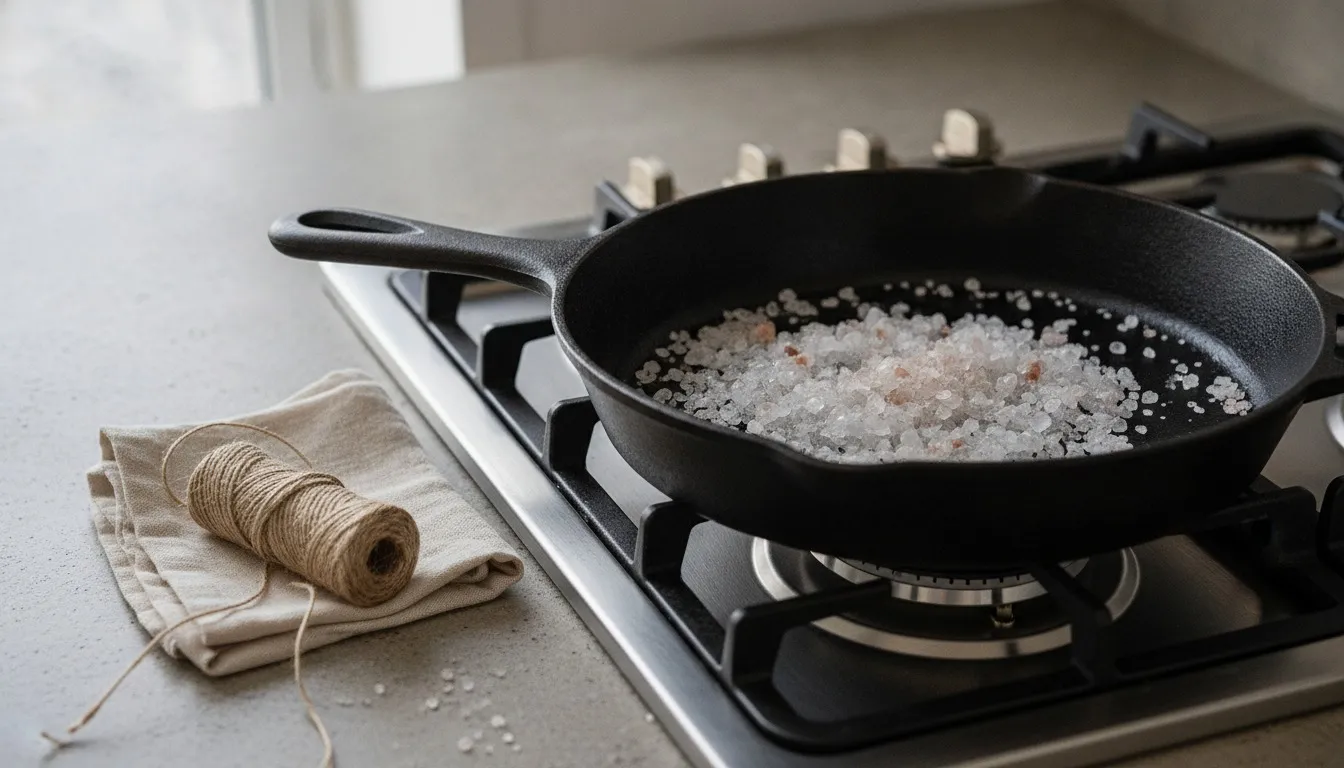
This is an evening remedy, or a reach-for-it-when-it-catches remedy. Warm one cup of coarse rock salt in a dry pan, tie it into a cotton square, oil the skin lightly with sesame oil, and press the bundle over the neck and shoulders in a slow, dabbing rhythm for 10 to 15 minutes, always keeping it moving instead of resting it in one place. Once or twice a day for two or three days is plenty for an ordinary stiff neck. Relief usually arrives during the session and lasts a few hours, so it works best when the warming is followed by gentle neck rolls and shoulder circles while the muscle is loose; in the back pain trials, heat combined with exercise did better than heat alone, though that comes from a single study.
Cautions And A Note On Medical Care
The one thing to respect here is the temperature. Salt gets hotter than it looks, so test the bundle on the inner forearm for three seconds before it touches the neck, and use a folded towel as a buffer if it feels sharp. Skip heat entirely on numb or poorly sensing skin, on diabetic neuropathy or poor circulation, over broken skin, rashes, or varicose veins, and for the first 48 hours after any fall or sprain, when cold is the better choice. Swedana is traditionally avoided in pregnancy, with fever, and in anyone very weak or unwell, and no one should doze off with a warm potli on the body. See a doctor if the pain lasts more than a week or worsens, and promptly if neck pain follows an accident or comes with numbness or tingling down an arm, arm weakness, severe headache, or fever. This is traditional wisdom and not a substitute for medical care, but for the ordinary crick that comes from a bad pillow and a long screen day, a cup of salt and a piece of cloth are worth the ten minutes. The same salt can be reheated for a couple of weeks and then thrown away, and it should not go back into the cooking jar.
References
These are the peer-reviewed human studies and reviews behind the modern-evidence claims above. They open in a new tab.
- French et al., Cochrane Database of Systematic Reviews, 2006. Nine trials, 1,117 people. Moderate evidence that heat wrap therapy gives a small short-term reduction in pain and disability over about five days in acute and subacute low back pain; one trial found adding exercise helped further. This is the strongest evidence that applied heat itself does something, though it is back pain rather than neck pain.
- Wilfling et al., Journal of Pain Research, 2026. Only two studies with 67 participants in total, both using dry heat wraps or heat cells. Pain and disability improved, but the authors concluded the evidence is too limited and too low in quality to recommend for or against heat, while noting there were no serious side effects.
- Petrofsky et al., Journal of Back and Musculoskeletal Rehabilitation, 2017. 92 people with chronic non-specific neck pain. Low-level continuous heat, given alongside physical therapy, reduced pain and neck disability and increased neck range of motion. Heat was an add-on to therapy, not a standalone treatment, so the effect of heat by itself is not isolated.
- Kumar, Sanapeti and Prasad, Ayu, 2019. Compared two Ayurvedic poultice protocols for low back pain and found the stage-tailored protocol relieved pain and stiffness better. Both groups got a poultice and there was no untreated control, so it shows one protocol beating another, not that poultices beat doing nothing. It also used a warm medicated paste, not a dry salt bolus.
Recipe
Warm Rock Salt Potli
A cotton bundle of coarse rock salt, warmed in a dry pan and pressed over a stiff neck, tight shoulders, or an achy lower back. It is the simplest form of the Ayurvedic warming therapy called swedana, and it uses only salt and a piece of cloth.
- Prep
- 5min
- Cook
- 5min
- Total
- 10min
- Servings
- 1applications
Ingredients
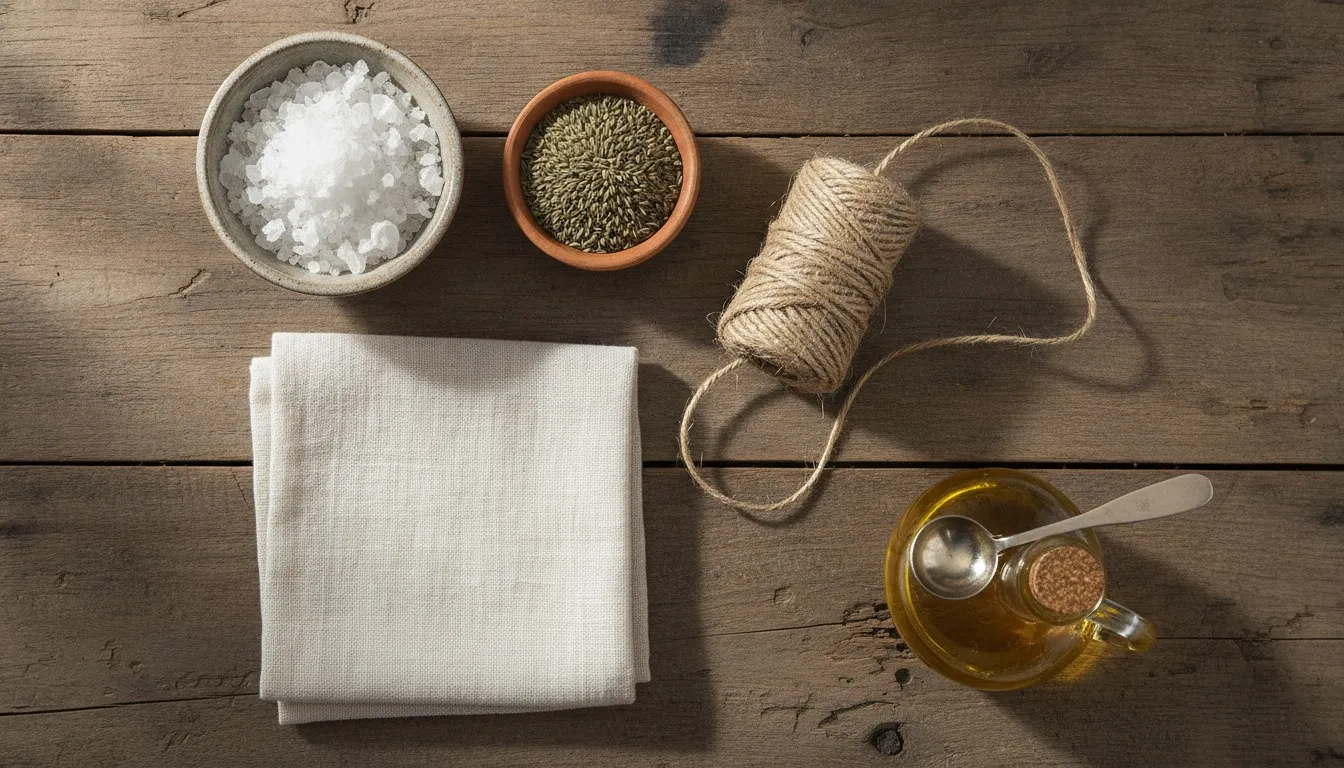
- 1 cup coarse rock salt (sendha namak), or coarse sea salt
- 1 tbsp carom seeds (ajwain), optional
- 1 piece clean cotton or muslin cloth, about 12 inches square
- 1 piece kitchen string or a strong rubber band
- 1 tsp sesame oil (gingelly oil), for the skin
Instructions
- 1 Warm the rock salt in a dry, heavy pan over medium-low heat for 4 to 5 minutes, stirring often, until it is hot to hover a hand over but not smoking. Add the carom seeds in the last minute if using, and turn off the heat as soon as they smell fragrant.
- 2 Pile the hot salt into the centre of the cotton cloth, gather the four corners, and tie them tightly with string so you have a firm bundle with a twisted handle to hold.
- 3 Rub a teaspoon of sesame oil into the stiff area first, over the back of the neck and the tops of the shoulders, so the skin is lightly filmed and the heat spreads evenly.
- 4 Test the potli on your inner forearm for three seconds. If it is too hot to hold there comfortably, let it sit for a minute or add a folded towel between the bundle and your skin.
- 5 Press and dab the bundle over the stiff muscle in a slow, continuous rhythm, lifting it every second or two rather than resting it in one place. Work along the neck, across the shoulders, and out to the shoulder blades.
- 6 Continue for 10 to 15 minutes, or until the bundle cools. Reheat the same salt in the pan once if you want a second round.
- 7 Use it in the evening or whenever the muscle feels tight, then keep the area covered and stay out of a draught or air conditioning for the next half hour. Follow with gentle neck rolls and shoulder circles, which is when the muscle moves most easily.
- 8 Let the salt cool completely and store it in a jar. The same salt can be reheated for a couple of weeks, then discarded once it clumps or darkens. Do not cook with it afterwards.
Notes
- Heat burns are the real risk. Test the potli on your own inner forearm for three seconds first, keep it moving rather than parked in one spot, and always work over a layer of clothing or a thin towel if the bundle feels sharp.
- Do not use heat on skin that is numb or has reduced sensation, on anyone with diabetic nerve damage or poor circulation, or on broken skin, rashes, varicose veins, or a fresh bruise.
- Skip heat for the first 48 hours after an injury, sprain, or fall, and on any area that is red, hot, and swollen. Cold is the right choice there, not warmth.
- Classical texts and modern practice both avoid swedana during pregnancy, with fever, active bleeding, or severe weakness. Never fall asleep with a warm potli on the body.
- Consult your doctor if pain persists beyond 7 days or worsens, or at once if you have neck pain after an accident, numbness or tingling down an arm, arm weakness, severe headache, or fever with a stiff neck.
- This is traditional wisdom and not a substitute for medical care.