Soft Onion Uttapam Recipe (South Indian Uthappam)
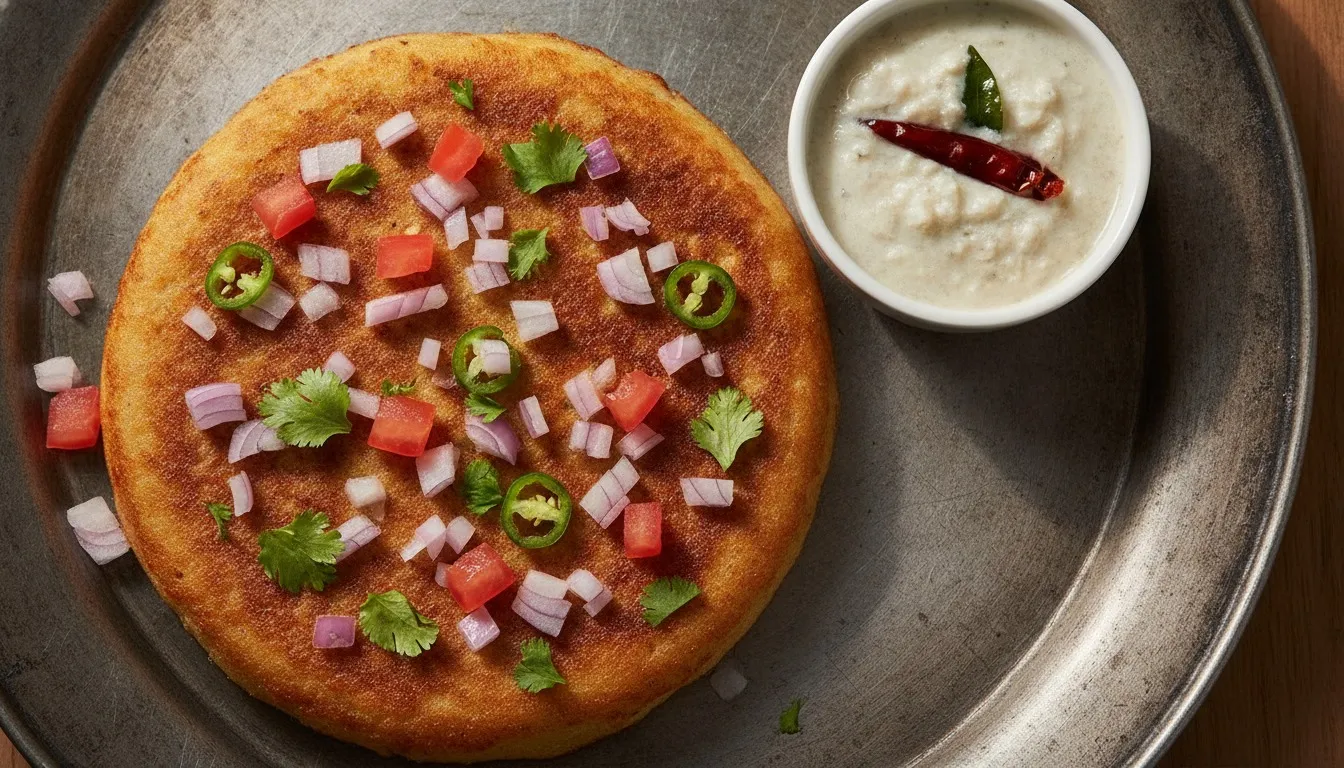
If you have ever stared at a bowl of leftover dosa batter and wanted something more comforting than a plain crepe, onion uttapam is the answer. Think of it as the soft, thick cousin of the dosa: golden and crisp at the edges, fluffy in the middle, and crowned with a colorful layer of onion, tomato, green chili, and coriander. It has been having a real moment across food reels and Pinterest, showing up in every ‘South Indian beyond idli and dosa’ roundup, and for good reason. It is forgiving to make, endlessly customizable, and turns a humble batter into a breakfast that feels special.
About This Dish
Uttapam, also spelled uthappam, is a classic of Tamil Nadu and greater South Indian home cooking, where the same fermented rice and urad dal batter is coaxed into dosas, idlis, and these thick savory cakes depending on the day and the mood. The name is often traced to the Tamil words for a batter cake cooked on a hot surface, and versions of it appear in old temple town kitchens and tiffin centers alike. Where a dosa is spread paper thin for crispness, the uttapam is deliberately kept thick so it stays soft and can hold a topping. Over generations it became the natural home for leftover batter and whatever vegetables were in the kitchen.
Ingredient Notes
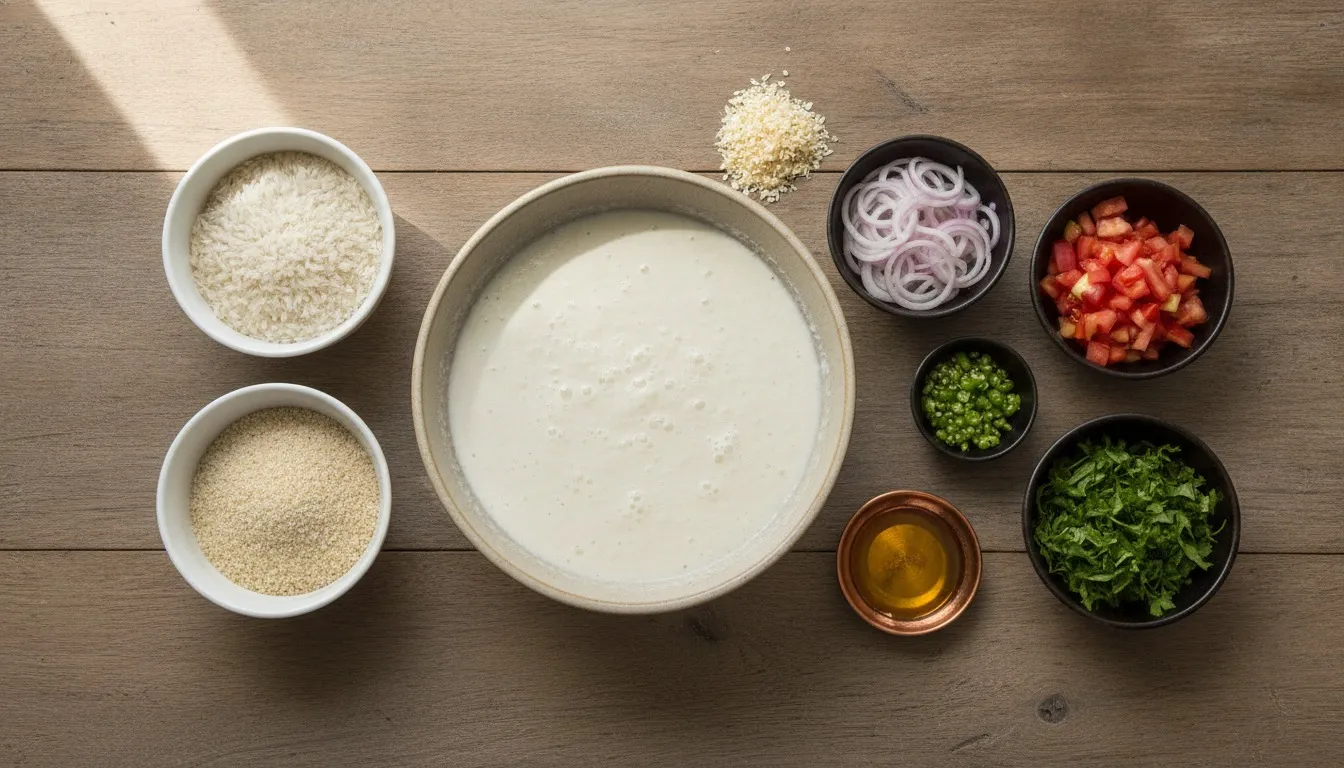
The batter is the heart of the dish: idli rice and urad dal in roughly a three to one ratio, with a pinch of fenugreek seeds for aroma and better fermentation, and a little poha to keep the uttapam tender. If grinding your own batter feels like a project, store-bought idli or dosa batter works perfectly, which is exactly why this dish trends whenever people have batter to use up. The topping is flexible: onion is essential and should be generous, tomato adds juiciness, green chili brings heat, and coriander freshens everything. A handful of grated carrot or a little ginger are welcome additions, though they are optional rather than traditional.
Method And Tips
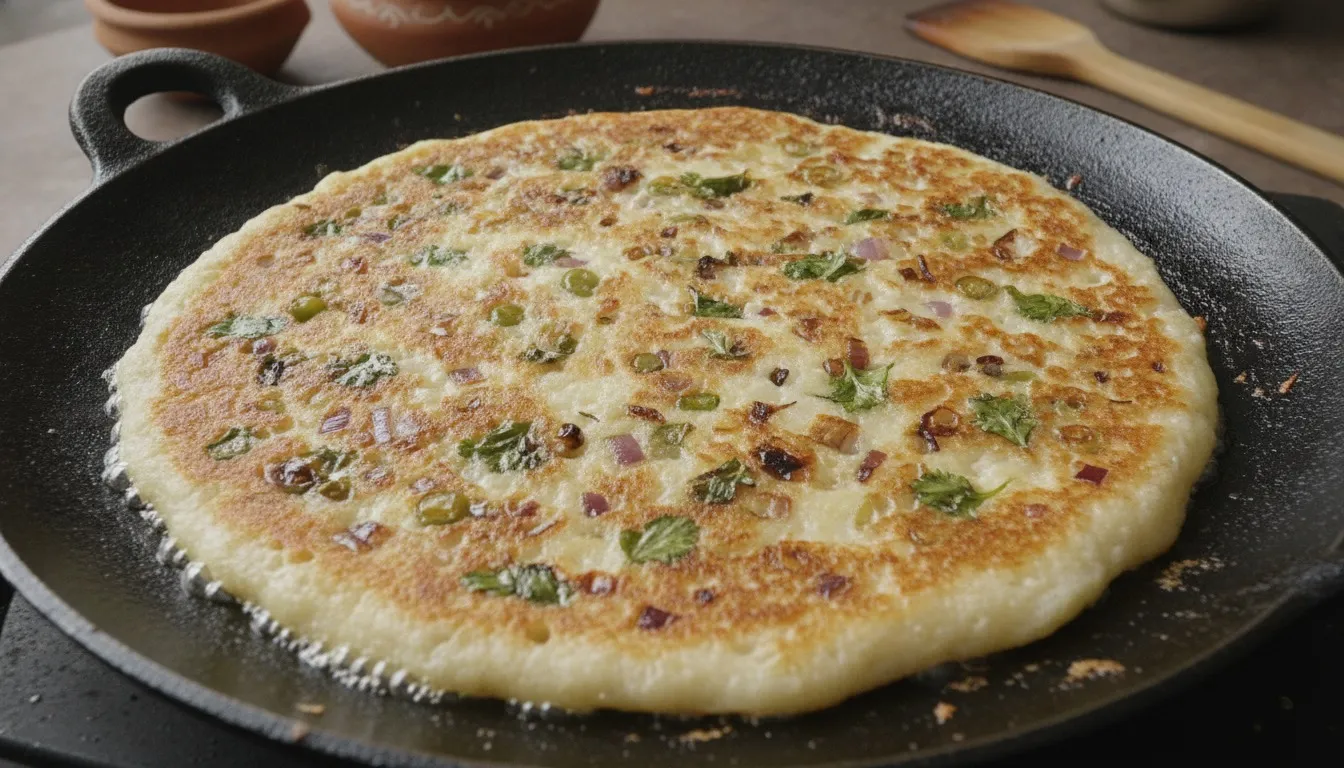
The two things that separate a great uttapam from a soggy one are thickness and patience. Spread the batter into a thick round rather than a thin sheet, then press the topping in gently so it anchors into the surface instead of sliding off when you flip. Cook on medium-low heat and keep the pan covered, which lets the thick center steam through while the base turns evenly golden. Drizzle ghee around the edges for flavor and crisp lace, and only flip once you see holes forming on top. If your first one sticks, the tawa was not hot enough or was over-oiled; wipe it, reheat, and the rest will release cleanly.
Serving Suggestions
Serve onion uttapam hot, straight from the tawa, with coconut chutney, tomato chutney, or a bowl of sambar for dunking. A spoon of idli podi mixed with ghee on the side makes it even better. It is hearty enough for a weekend breakfast and easy enough for a quick weeknight dinner, so keep some batter fermenting and give this South Indian favorite a try.
Recipe
Onion Uttapam
Thick, soft South Indian breakfast rounds made from fermented rice and urad dal batter and topped with a fresh mix of onion, tomato, green chili, and coriander, cooked golden on a hot tawa.
- Prep
- 20min
- Cook
- 20min
- Total
- 40min
- Servings
- 4servings
- Calories
- 300kcal
Ingredients
- For the batter
- 3 cups idli rice
- 1 cup urad dal
- 1/2 tsp fenugreek seeds
- 1/4 cup poha (flattened rice)
- 1 tsp salt
- 2 cups water, for grinding and adjusting
- For the topping
- 2 medium onion, finely chopped
- 1 medium tomato, deseeded and finely chopped
- 2 green chilies, finely chopped
- 1/4 cup coriander leaves, chopped
- 3 tbsp ghee, for cooking
Instructions
- 1 Rinse the idli rice with the fenugreek seeds in one bowl and the urad dal in another. Cover both with plenty of water and soak for 4 to 5 hours. Soak the poha separately in a little water for the last 15 minutes.
- 2 Grind the urad dal first with about 3/4 cup chilled water into a light, fluffy batter, then transfer to a large bowl. Grind the drained rice, fenugreek, and soaked poha together with roughly 1/2 cup water into a slightly coarse batter.
- 3 Combine both batters in the large bowl and mix well with your hand for a minute to help fermentation. The batter should be thick but pourable. Cover and leave in a warm spot to ferment for 8 to 12 hours, until doubled and bubbly.
- 4 Gently stir the salt into the fermented batter without knocking out too much air. If it is too thick, add a few tablespoons of water so it drops off the ladle in a thick, smooth stream.
- 5 In a small bowl, toss together the chopped onion, tomato, green chilies, and coriander so the topping is ready to go.
- 6 Heat a cast-iron or nonstick tawa over medium heat until hot. Pour one ladle of batter in the center and spread it gently into a thick round about 6 inches wide. Do not spread it thin like a dosa; uttapam should stay thick and soft.
- 7 Immediately sprinkle a generous handful of the onion topping over the top and press it lightly into the batter with the back of the ladle. Drizzle about 1 tsp ghee around the edges.
- 8 Lower the heat, cover with a lid, and cook for 1 to 2 minutes until the base is golden brown and small holes appear on top. Flip, drizzle a little more ghee, and cook the topping side for 1 to 2 minutes until the onions soften and char lightly.
- 9 Serve the uttapam hot off the tawa. Repeat with the remaining batter and topping, stirring the batter gently between each one.
Notes
- No time to ferment from scratch? Use about 3 cups of ready idli or dosa batter and start from the topping step.
- For the most authentic flavor, cook with gingelly (sesame) oil instead of ghee, the traditional fat for dosa and uttapam in Tamil homes.
- Keep the heat on medium-low and always cover the pan so the thick center cooks through without the base burning.
- Add 1/4 cup grated carrot or a little grated ginger to the topping if you like, but keep the onion generous since it carries the flavor.