Authentic Kalkandu Sadam Recipe (Tamil Rock Sugar Pongal)
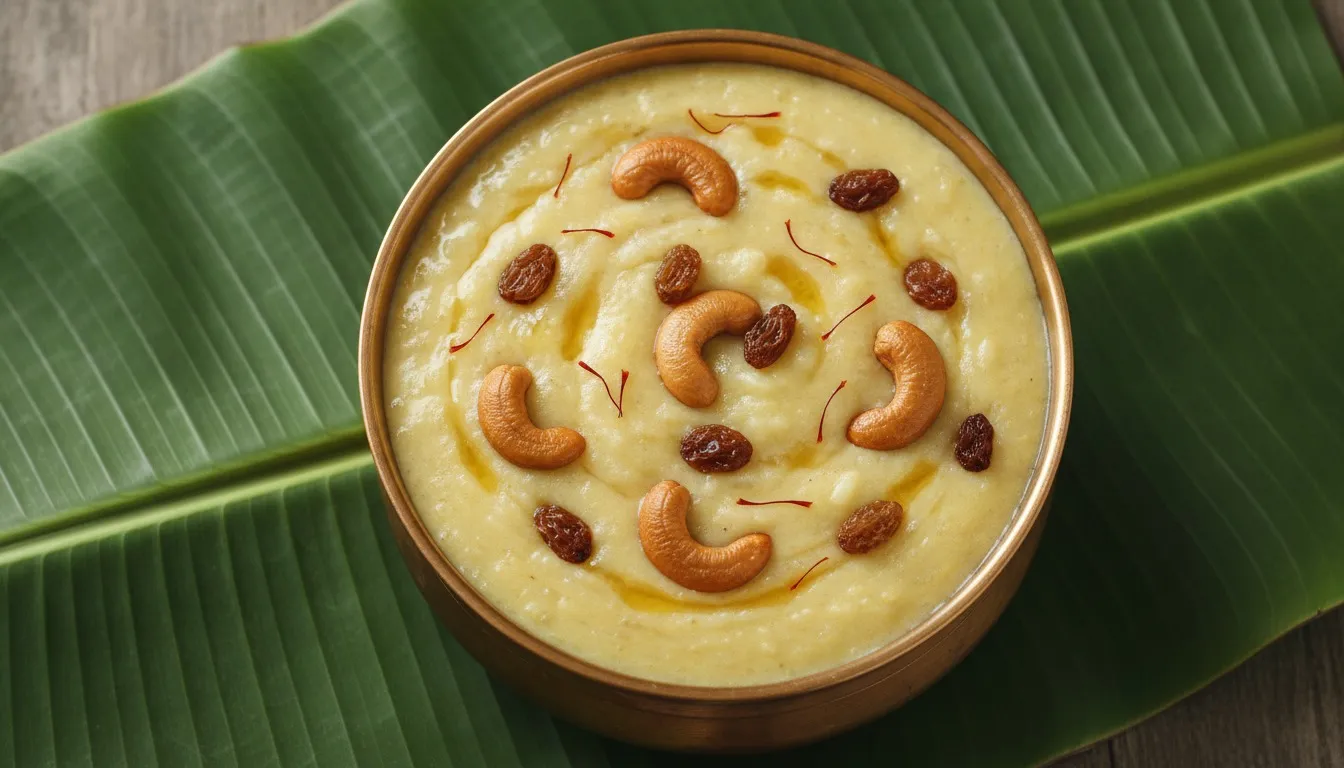
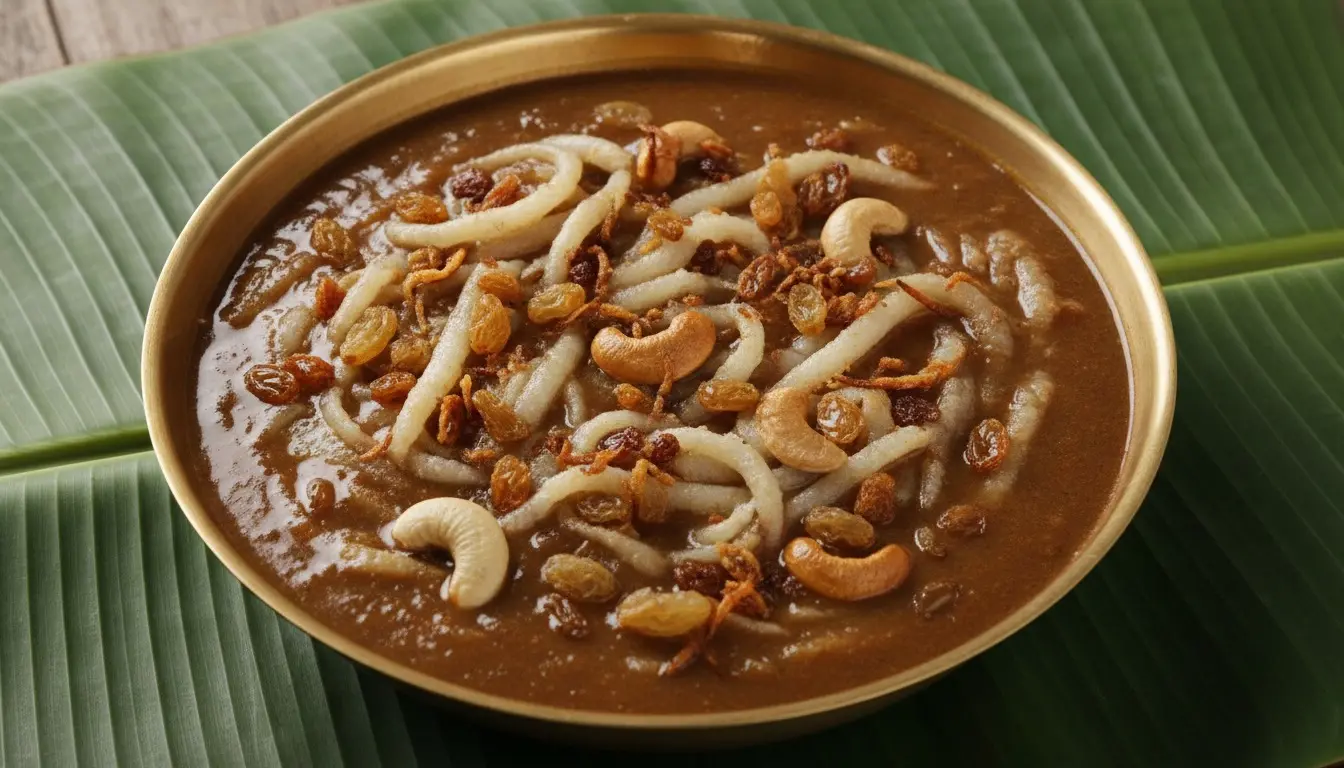
Kalkandu sadam is the sweet that shows up on a Tamil banana leaf when there is something to celebrate. Rice and a little moong dal are cooked down in whole milk until they collapse into a soft, creamy mass, then sweetened with crushed kalkandu, the pale rock sugar crystals sold in every Indian grocery. It sits somewhere between a payasam and a pudding, thick enough to eat with a spoon but never stodgy. Searches for it climb every year when Aadi Perukku comes around, because it is the dessert that closes out the Aadi 18 lunch. It also happens to be one of the easiest festival sweets in the Tamil repertoire, which is a good part of why it keeps circulating on Instagram and Pinterest.
About This Dish
Kalkandu, sometimes written as kalkandam, is unrefined sugar crystallized slowly from cane or palm syrup, and it has been used in South Indian temple offerings and Siddha medicine for centuries. Its flavor is gentler and less sharp than white sugar, which is exactly why it is the sweetener of choice here. Kalkandu sadam belongs to the wider pongal family, the same class of dishes as ven pongal and sakkarai pongal, but where sakkarai pongal leans on jaggery and gets its darkness from it, this one stays pale and milky. It is offered at Perumal temples, made for Aadi Perukku along the Kaveri, and set out on Fridays in many households. Some families make it for Tamil New Year and Navaratri as well.
Ingredient Notes
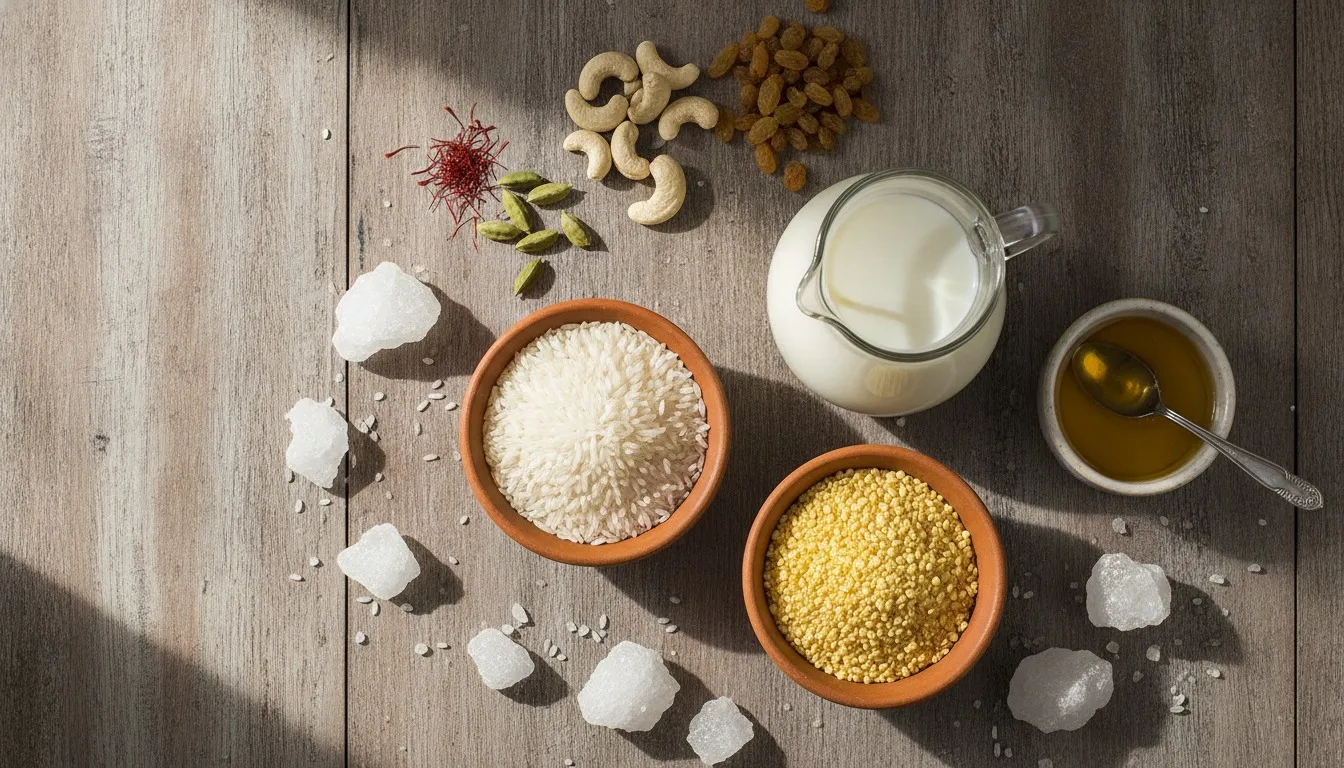
Use raw rice rather than parboiled or basmati. Sona masoori or any short grain variety breaks down properly and gives the dish its texture, while long grain rice stays separate and never turns creamy. The moong dal is a small addition, just two tablespoons, but it lends body and a faint nuttiness that milk alone will not give you. Whole milk matters here: lower fat milk produces a thin, watery result, so use the real thing. Kalkandu is worth seeking out at an Indian grocery, though plain white sugar in the same volume is a workable substitute if you are stuck. Buy whole green cardamom pods and grind the seeds yourself if you can, since pre-ground cardamom loses its perfume quickly.
Method And Tips
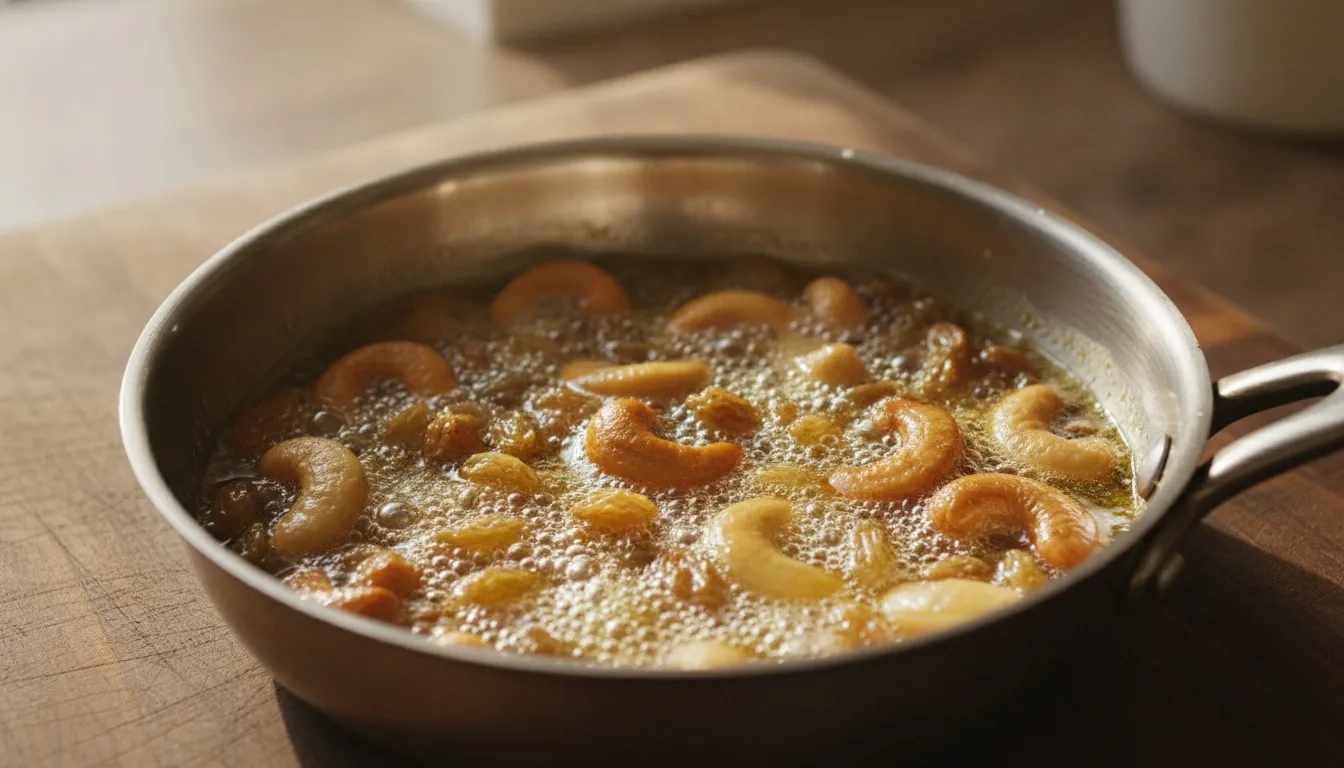
The single most important rule is to cook the rice completely before any sweetener goes near the pot. Sugar of any kind halts the softening of starch, so a grain that is still firm when the kalkandu goes in will stay firm no matter how long you simmer it. Mash the cooked rice and dal properly, too. A lazy mash leaves whole grains and the finished dish reads as sweet rice rather than pongal. Keep the heat low once the milk is back in the pot and stir often, because milk and rice together will catch on the bottom and scorch in a moment of inattention. Fry the cashews and raisins in ghee separately and add them at the very end so they stay crisp and plump rather than going soft in the pongal.
Serving Suggestions
Serve kalkandu sadam warm, straight from the pot, as the last thing on a festival plate after tamarind rice, curd rice, and a poriyal or two. It is just as good chilled the next day, spooned cold from the fridge, though you will want to thin it with milk first. Make it once for a festival and it tends to become the thing people ask for the rest of the year.
Recipe
Kalkandu Sadam
A creamy Tamil festival sweet of raw rice and moong dal cooked soft in whole milk and sweetened with crushed kalkandu, or rock sugar. Ghee-fried cashews, raisins, cardamom, and saffron finish it.
- Prep
- 20min
- Cook
- 30min
- Total
- 50min
- Servings
- 4servings
- Calories
- 400kcal
Ingredients
- For the pongal
- 1/2 cup raw rice, preferably sona masoori or another short grain
- 2 tbsp split yellow moong dal
- 2 cups whole milk, divided
- 1 cup water
- 3/4 cup kalkandu (rock sugar candy), coarsely crushed
- 1/4 tsp ground cardamom
- 1 generous pinch saffron strands
- For the ghee tempering
- 2 tbsp ghee
- 2 tbsp cashews, broken in half
- 2 tbsp golden raisins
Instructions
- 1 Rinse the rice and moong dal together in two or three changes of water until the water runs mostly clear. Cover with warm water and soak for 20 minutes, then drain well.
- 2 While the rice soaks, crush the kalkandu into a coarse powder using a mortar and pestle, or pulse it briefly in a dry grinder. Large intact crystals take a long time to dissolve, so break them down now.
- 3 Warm 2 tablespoons of the milk, drop the saffron strands into it, and set it aside to bloom. The saffron will turn the milk a deep orange in about 10 minutes.
- 4 Add the drained rice and dal to a pressure cooker along with 1 cup of the milk and 1 cup of water. Stir once, close the cooker, and cook on medium heat for 4 whistles. Let the pressure release naturally.
- 5 Open the cooker and mash the cooked rice and dal thoroughly with the back of a ladle. Keep mashing for a minute or two until the mixture looks creamy and no whole grains remain.
- 6 Set the pot over low heat, pour in the remaining milk, and stir. Simmer for 3 to 4 minutes, stirring often, until the mixture loosens into a soft, pourable porridge.
- 7 Add the crushed kalkandu and stir constantly on low heat for 3 to 4 minutes until every crystal has dissolved. Do not add the kalkandu earlier: once sweetener goes in, the rice stops softening, so it has to be fully cooked first.
- 8 Stir in the ground cardamom and the bloomed saffron milk. Simmer for 2 more minutes, then turn off the heat.
- 9 Heat the ghee in a small pan over medium heat. Fry the cashews until they turn golden, about 1 minute, then add the raisins and fry for another 20 seconds until they puff up.
- 10 Pour the ghee along with the cashews and raisins over the pongal and fold everything together. Let it rest for 5 minutes, then serve warm.
Notes
- Kalkandu sadam thickens noticeably as it cools. Loosen it with a splash of hot milk before serving and it will come right back to a spoonable consistency.
- If you cannot find kalkandu, substitute an equal volume of plain white sugar. The flavor is slightly less rounded but the dish still works.
- The moong dal is traditional and adds body, but you can leave it out and use 1/2 cup rice on its own if that is what you have.
- For a stovetop version without a pressure cooker, simmer the soaked rice and dal in the milk and water in a heavy pot for 30 to 35 minutes, stirring often so the milk does not catch on the bottom.