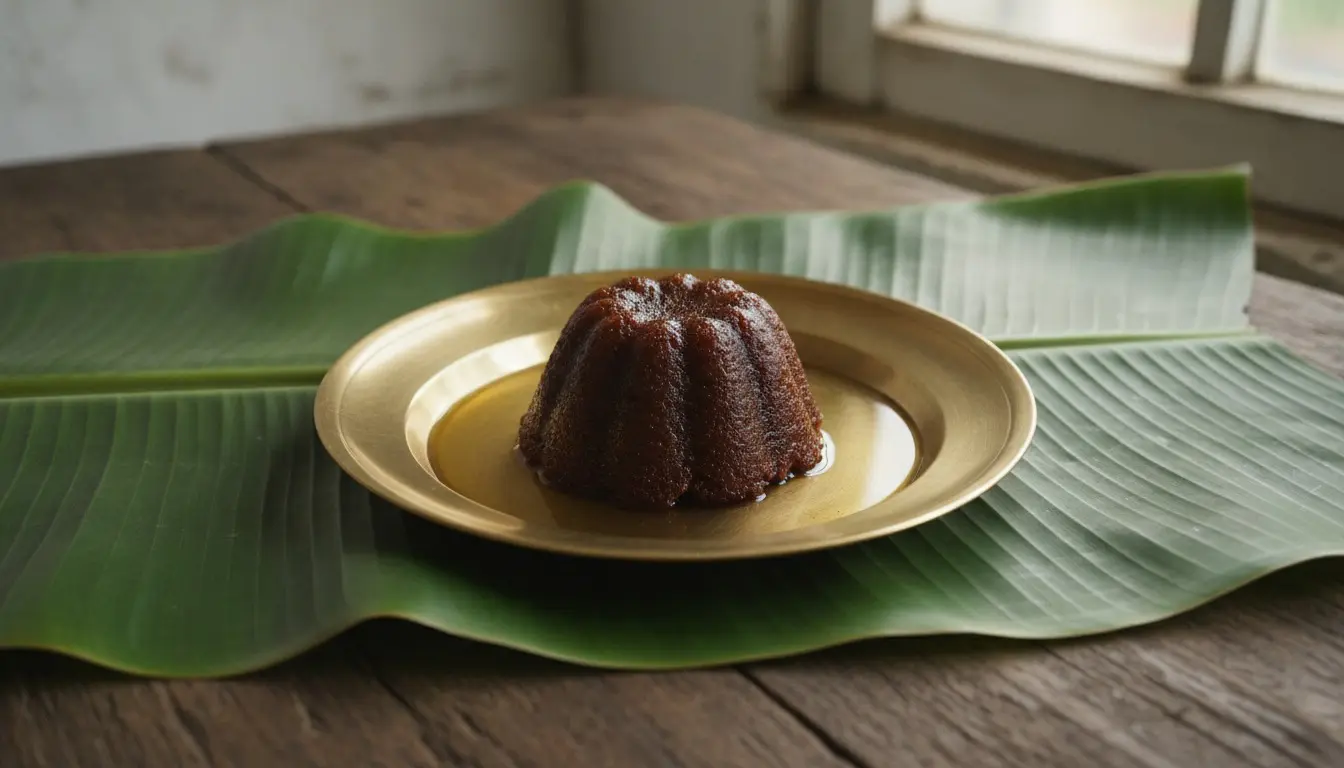
Jaggery and Rock Salt on the Tongue for Hiccups
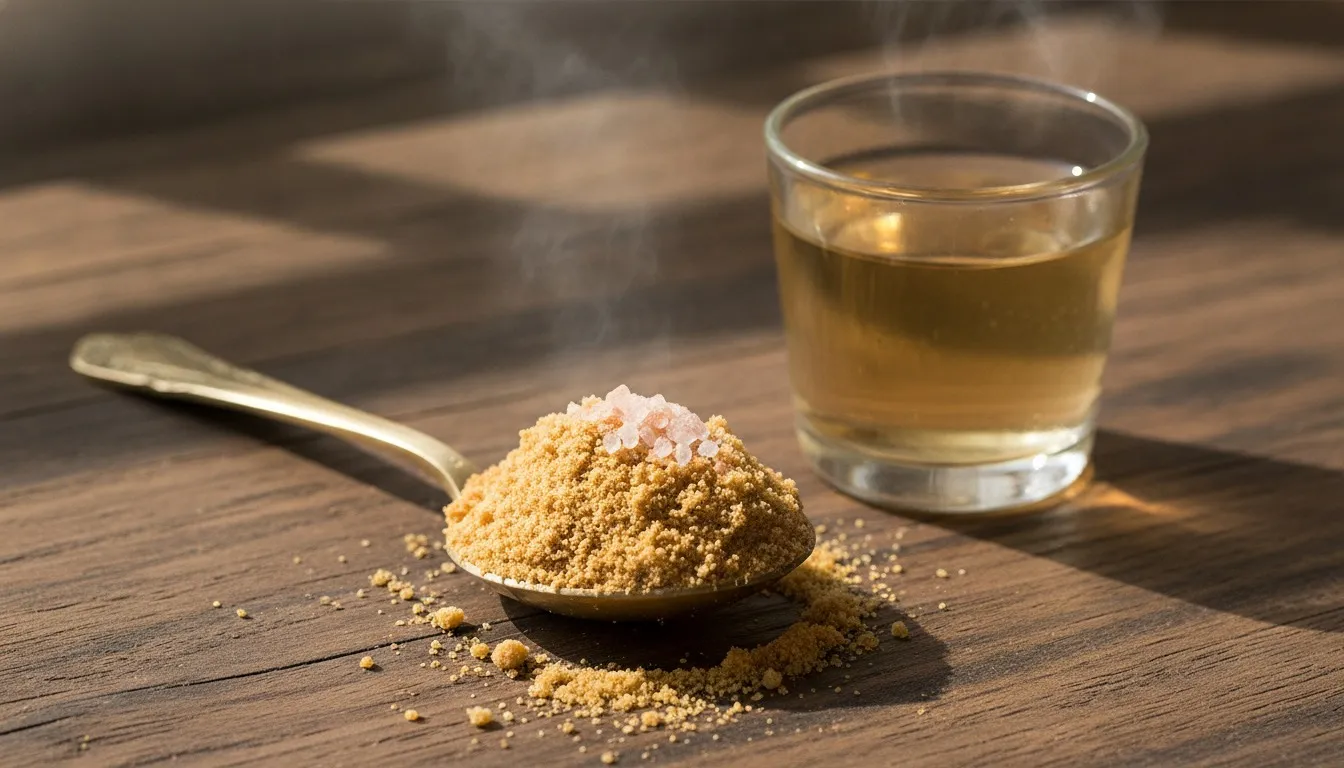
Hiccups arrive at the worst moments: mid-conversation, halfway through a meal, right after a cold drink swallowed too fast on a hot afternoon. They are harmless and they almost always stop on their own, which is exactly why everyone has a favorite trick and no one can prove theirs works. Indian kitchens have been reaching for the same one for a very long time, and it takes about two minutes: a teaspoon of finely powdered jaggery with a pinch of rock salt, swallowed dry.
The Ayurvedic Perspective
Ayurveda calls hiccups hikka and blames udana vayu, the upward-moving form of vata that governs breath, speech, and the muscles of the chest and throat. When udana vayu is disturbed, usually by eating too fast, eating too much, or taking something very cold or very dry, it moves in jerks instead of smoothly, and the diaphragm follows. Charaka Samhita Chikitsa Sthana 17, the chapter on hikka and shwasa, sorts hiccups into five types and marks the two mild kinds as kshudra hikka, from exertion, and annaja hikka, from food and drink. Those are the ones a kitchen remedy is meant for. The classical treatment principle for them is madhura and snigdha: sweet, grounding, warming things taken by mouth, which is why every household version of this remedy is built on jaggery, sugar candy, or honey. Rock salt gets added because Ayurveda regards saindhava lavana as the gentlest of the salts and the one that supports digestion rather than aggravating it.
What Modern Biology Says
Modern physiology has a plausible explanation for this one, though the active ingredient is not a compound at all. Hiccups are produced by a reflex arc that runs through the phrenic and vagus nerves with a relay in the brainstem, and the old clinical trick is to swamp that loop with competing sensation from the back of the throat. The idea goes back to a 1967 JAMA case series in which stimulating the pharynx with a catheter passed through the nose stopped hiccups in 84 of 85 patients, though most of those patients were under anesthesia and there was nothing to compare them against. Dry granular sugar is the kitchen version of the same idea: in a 1971 New England Journal of Medicine report, a teaspoon of dry granulated sugar swallowed without water stopped hiccups in 19 of 20 patients. There is one larger and more recent piece of indirect support: a 2021 JAMA Network Open questionnaire study of 249 validated respondents with recurrent hiccups found that a forced suction-and-swallow device, which stimulates those same two nerves, was reported to stop hiccups about 92 percent of the time with no adverse effects. Now the honest limits, and there are several. The sugar report was small, uncontrolled, and its patients had all been hiccupping for at least six hours, so it does not really speak to the ordinary bout that would have passed on its own. The 2021 study had no control group, ran on self-reported scores, and one of its authors holds the patent on the device. A 2013 Cochrane review concluded there is not enough good evidence to recommend any particular treatment for hiccups that will not stop. And jaggery itself has never been tested in a trial at all.
How And When To Use It
Reach for this at the first bout, not after ten minutes of holding your breath. Sit upright, put the whole spoonful on the middle of your tongue, press it against the roof of your mouth for a second, and swallow it dry without chasing it with water. Give it 30 to 60 seconds before deciding it did not work. If hiccups are still going, follow with five or six slow sips of warm water, exhaling gently between sips. One repeat after two minutes is fine, and then stop. Warm water rather than cold matters here, since a cold drink is often what started the whole thing.
Cautions And A Note On Medical Care
Two practical cautions. Dry granules are a choking risk, so this is a remedy for adults sitting upright and paying attention, not for young children, not for anyone with swallowing difficulty, and not lying down. Jaggery is unrefined cane sugar and behaves like sugar in the bloodstream, so count the teaspoon if you are watching blood glucose, and leave out the rock salt if you are on a sodium-restricted diet. Hiccups that run past 48 hours, keep returning, or arrive alongside heartburn, chest pain, trouble swallowing, or unexplained weight loss are a different problem and belong with a doctor, so consult your doctor if symptoms persist beyond 2 days or worsen. This is traditional wisdom and not a substitute for medical care. For the ordinary kind, though, keep a small block of jaggery within reach of the stove and try it the next time they start.
References
These are the peer-reviewed human studies and reviews behind the modern-evidence claims above. They open in a new tab.
- Engleman, Lankton and Lankton, New England Journal of Medicine, 1971. A one-page uncontrolled report: a teaspoon of dry granulated sugar stopped hiccups in 19 of 20 patients, all of whom had already been hiccupping for six hours or more, which is the closest thing to evidence for the sugar version of this remedy.
- Salem et al., JAMA, 1967. Hiccups stopped in 84 of 85 patients when the pharynx was stimulated with a catheter passed through the nose, though most patients were anesthetized and there was no control group; this is the origin of the idea that throat stimulation reliably breaks the hiccup reflex.
- Alvarez et al., JAMA Network Open, 2021. An uncontrolled online questionnaire in which 249 validated respondents with recurrent hiccups reported that a forced suction-and-swallow device stopped their hiccups about 92 percent of the time with no adverse effects; it supports the general idea of throat stimulation, not jaggery specifically.
- Moretto et al., Cochrane Database of Systematic Reviews, 2013. Found insufficient evidence to guide the treatment of long-lasting hiccups with either drugs or non-drug methods, which is a useful reminder of how thin the trial evidence is for every hiccup remedy.
Recipe
Jaggery and Rock Salt Hiccup Spoon
A teaspoon of finely powdered jaggery with a pinch of rock salt, swallowed dry and followed by slow sips of warm water, to stop an ordinary bout of hiccups.
- Prep
- 2min
- Cook
- 0min
- Total
- 2min
- Servings
- 1doses
Ingredients
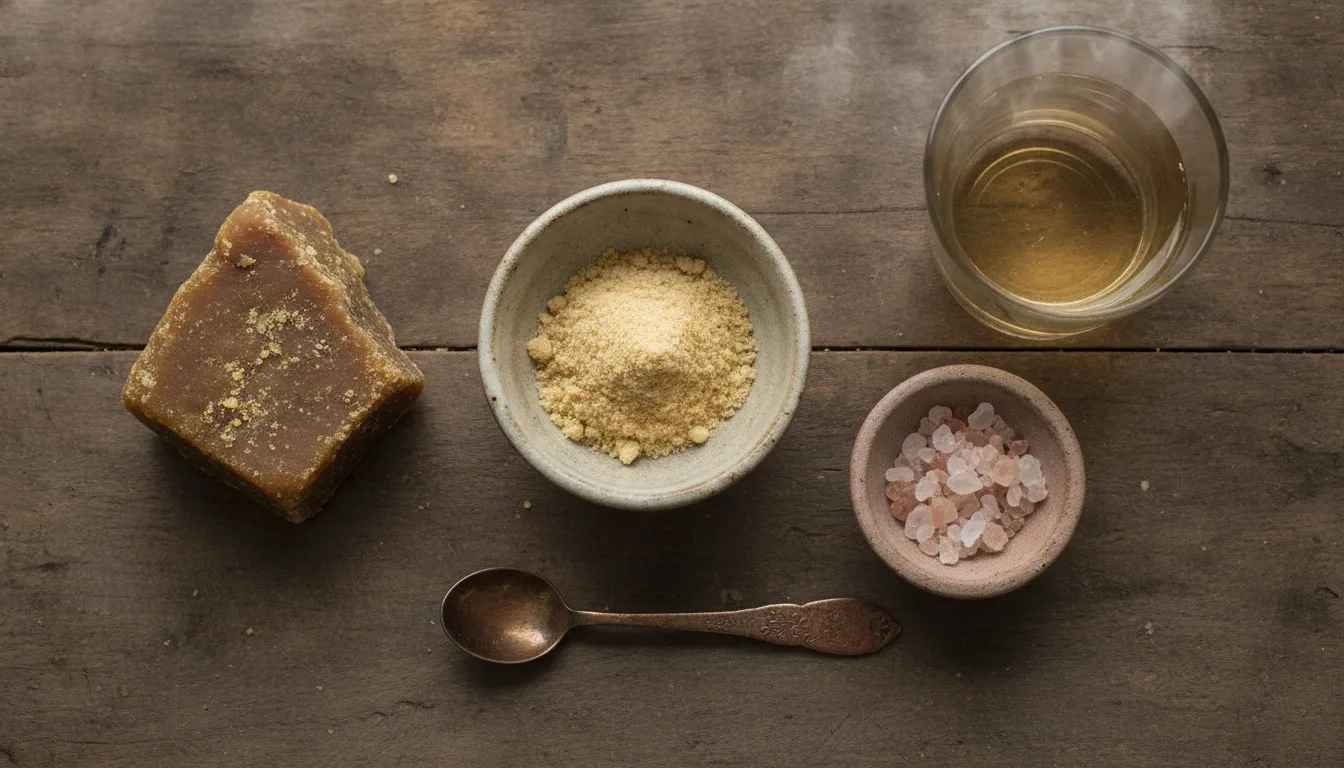
- 1 tsp jaggery, grated or crumbled fine
- 1 pinch rock salt (sendha namak), finely ground
- 1/2 cup warm water
Instructions
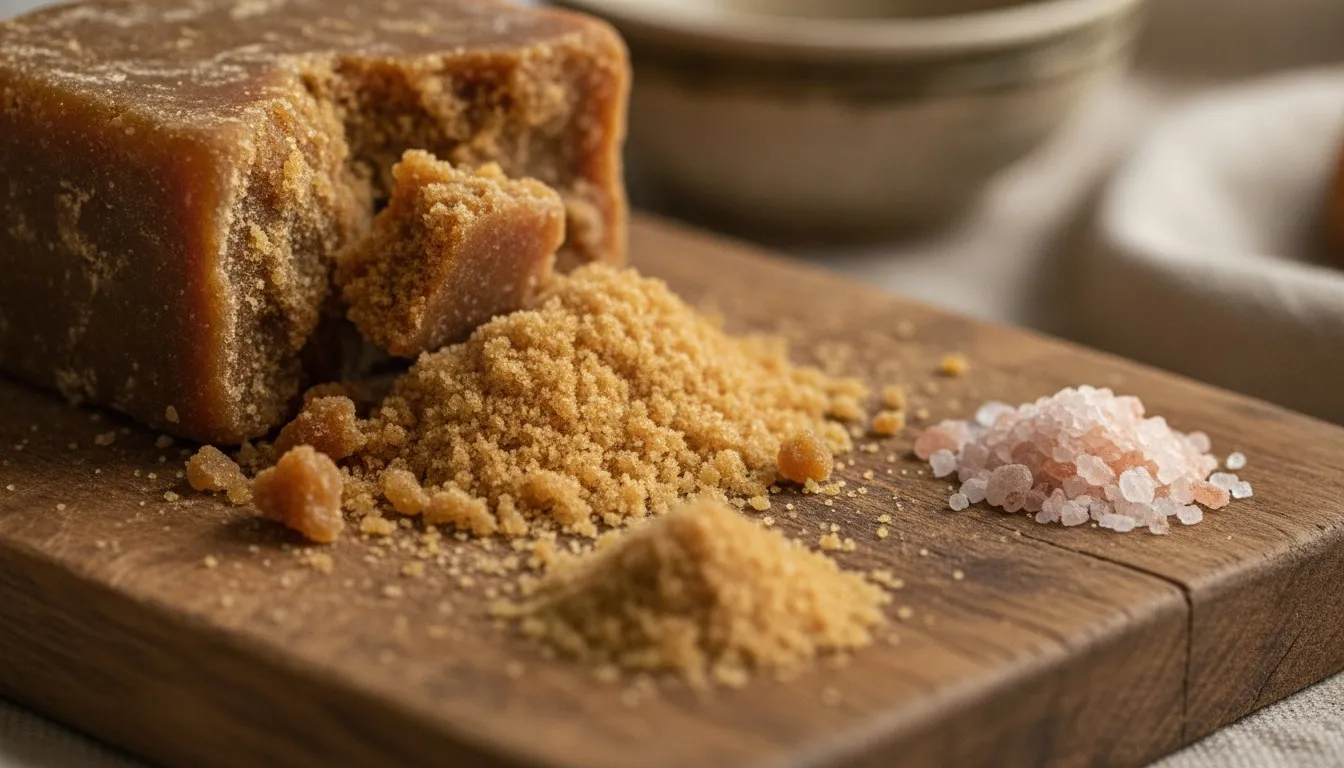
- 1 Grate or crumble the jaggery until it is loose and sandy with no hard lumps. A box grater or the back of a spoon against a firm block of jaggery both work. Lumps are the thing to avoid, since the whole point is fine granules that spread across the tongue.
- 2 Add the pinch of rock salt to the jaggery in a teaspoon and stir it through with the tip of a knife so the salt is evenly distributed.
- 3 At the first bout of hiccups, sit upright, place the whole spoonful on the middle of your tongue, and press it up against the roof of your mouth for a moment before swallowing it dry. Do not drink anything yet.
- 4 Wait about 30 to 60 seconds, breathing normally. Most bouts stop within this window.
- 5 If hiccups are still going, sip the warm water slowly, five or six small sips in a row, breathing out gently between sips. Warm rather than cold water is the traditional choice, since cold drinks are a common trigger in the first place.
- 6 Repeat once more after two minutes if needed, then stop. Do not take more than two spoonfuls in one bout.
Notes
- Swallow the jaggery sitting upright and take it slowly. Dry granules are a choking risk, so this remedy is not suitable for young children, for anyone with difficulty swallowing, or for anyone who is drowsy or lying down.
- Jaggery is unrefined cane sugar and raises blood glucose the same way table sugar does. If you are managing blood sugar, count the teaspoon accordingly, and skip this remedy if you have been advised to avoid sugar entirely.
- The pinch of rock salt is very small, but leave it out if you are on a sodium-restricted diet or have been told to limit salt for blood pressure or kidney reasons.
- Do not repeat more than twice in one bout. If hiccups keep coming back, this remedy is not the answer and something else is driving them.
- Hiccups lasting more than 48 hours, or coming with heartburn, chest pain, trouble swallowing, vomiting, or unexplained weight loss, are not ordinary hiccups. Consult your doctor if symptoms persist beyond 2 days or worsen.
- This is traditional wisdom and not a substitute for medical care.
- Plain granulated sugar works by the same mechanism if there is no jaggery in the house. Jaggery is the traditional choice and dissolves a little more slowly, which is a small advantage.