Ginger, Rock Salt, and Lime Pre-Meal Appetizer (Deepana) for Low Appetite and Sluggish Digestion
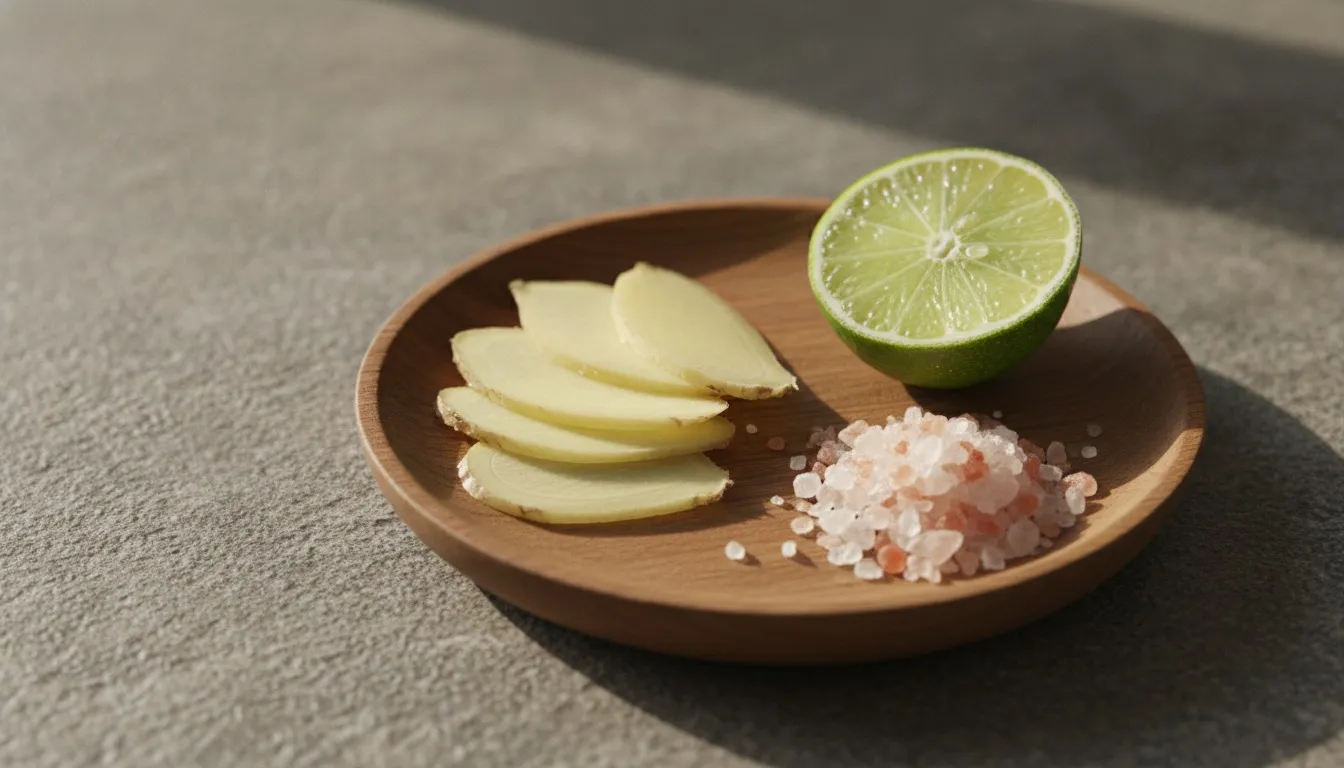
Some days the food is on the table and you simply have no interest in it, or a heavy, dull feeling in the stomach kills your hunger before you have taken a bite. It happens after a run of rich meals, during hot or rainy weather, when you are tired or a little under the weather, or for no obvious reason at all. Most of us have felt it, and reaching for a snack usually makes it worse. A very old kitchen answer is to chew a thin slice of fresh ginger with a pinch of rock salt and a squeeze of lime a little before you eat.
The Ayurvedic Perspective
Ayurveda calls the digestive fire agni, and it treats a weak or missing appetite as a sign that agni has dropped, often alongside a Vata or Kapha imbalance and a buildup of ama, the sticky residue of food that was not fully digested. The classical response is deepana, kindling that fire, and pachana, helping burn off ama. Fresh ginger (Ardraka) with rock salt (saindhava lavana) taken just before meals is one of the best known household deepana practices, and ginger’s warming, appetite-stimulating nature is described in texts such as the Bhavaprakasha, within the broader agni framework laid out in the Charaka Samhita and Ashtanga Hridayam. The idea is simple: light the fire first, then feed it.
What Modern Biology Says
Modern chemistry gives the same practice a mechanism. Ginger’s pungency comes from gingerols and shogaols, which act on the gut’s smooth muscle and on serotonin and TRPV1 receptors that help drive stomach contractions. In a randomized double-blind trial, 24 healthy volunteers who took about 1.2 grams of ginger showed faster gastric emptying and stronger antral (lower-stomach) contractions than with placebo, and a similar study in people with functional dyspepsia found quicker gastric half-emptying after ginger, though the ginger did not by itself ease their dyspepsia symptoms. A 2019 systematic review in Food Science and Nutrition pulls these motility findings together. The evidence is consistent but comes from small trials, and the salt and lime mainly work by sparking saliva and taste to prime you for the meal, so this is best seen as a gentle, sensible nudge rather than a proven treatment.
How And When To Use It
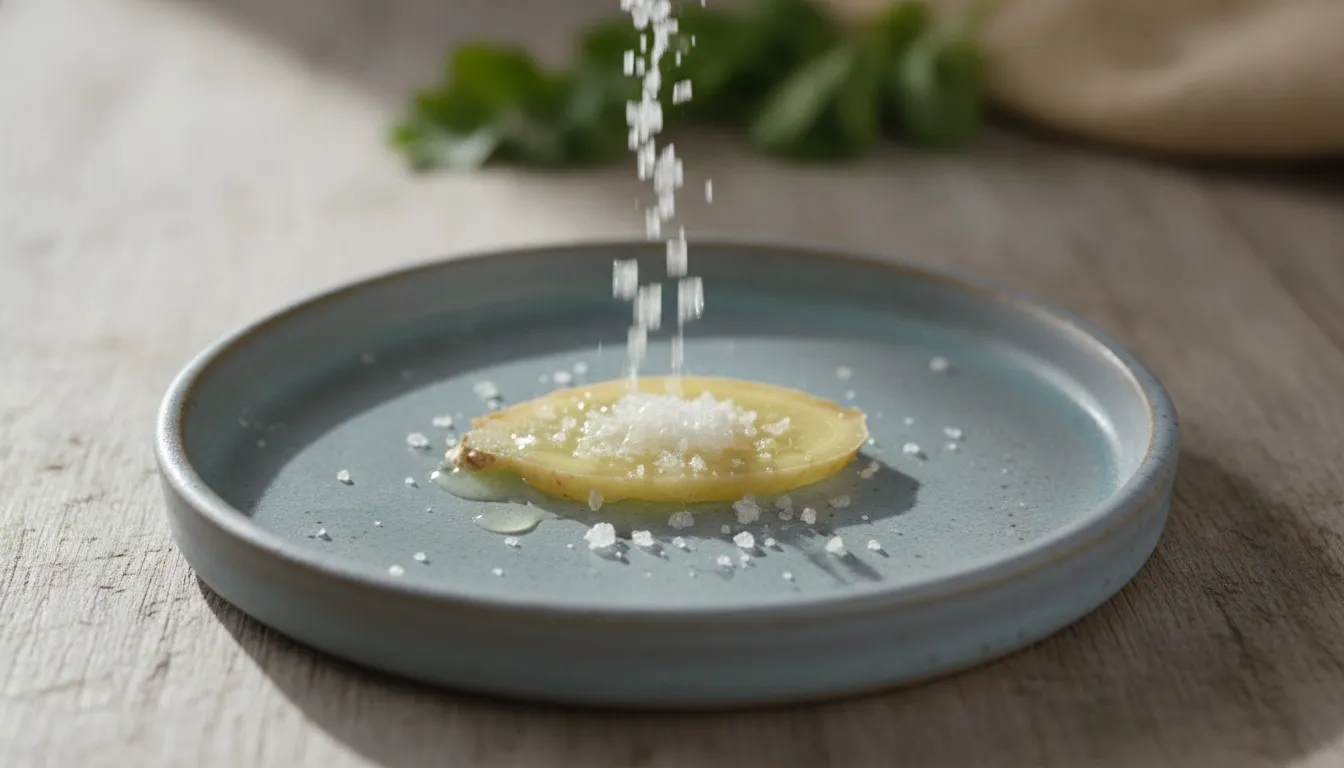
Reach for this when your appetite feels low or your digestion feels heavy and slow, not when you are already nauseous or acidic. Cut a thin slice of fresh ginger, dust it with a small pinch of rock salt, add a few drops of lime, and chew it slowly about 15 to 30 minutes before lunch or dinner, once or twice a day. You should notice a little warmth and a bit more interest in your food within a few minutes. Keep the portion small; this is a spark before the meal, not a dish in itself.
Cautions And A Note On Medical Care
A few cautions matter. If you take blood thinners like warfarin or have gallstones, use ginger only in small culinary amounts and clear it with your doctor first, since ginger can affect clotting and bile flow. Ginger, salt, and lime can aggravate reflux or an ulcer, so go very light or skip it if you have GERD, and keep the salt small if you watch your blood pressure or sodium. See a doctor if poor appetite lasts beyond two weeks or comes with weight loss, fever, or pain. This is traditional wisdom and not a substitute for medical care, but as a small pre-meal ritual it is an easy, time-tested one to try.
References
These are the peer-reviewed human studies and reviews behind the modern-evidence claims above. They open in a new tab.
- Wu et al., European Journal of Gastroenterology & Hepatology, 2008. Randomized double-blind trial in 24 healthy volunteers; 1.2 g ginger cut gastric half-emptying time roughly in half versus placebo and increased antral contractions.
- Hu et al., World Journal of Gastroenterology, 2011. Randomized double-blind study in 11 functional dyspepsia patients; ginger sped gastric emptying but did not improve dyspepsia symptoms or gut peptide levels.
- Nikkhah Bodagh et al., Food Science & Nutrition, 2019. Systematic review of Zingiber officinale trials concluding ginger accelerates gastric emptying and stimulates antral contractions, while cautioning that the studies are small and limited.
Recipe
Ginger, Rock Salt, and Lime Digestive Appetizer
A thin slice of fresh ginger dusted with rock salt and a squeeze of lime, chewed 15 to 30 minutes before meals to stimulate a low appetite and prime sluggish digestion.
- Prep
- 2min
- Cook
- 0min
- Total
- 2min
- Servings
- 1doses
Ingredients
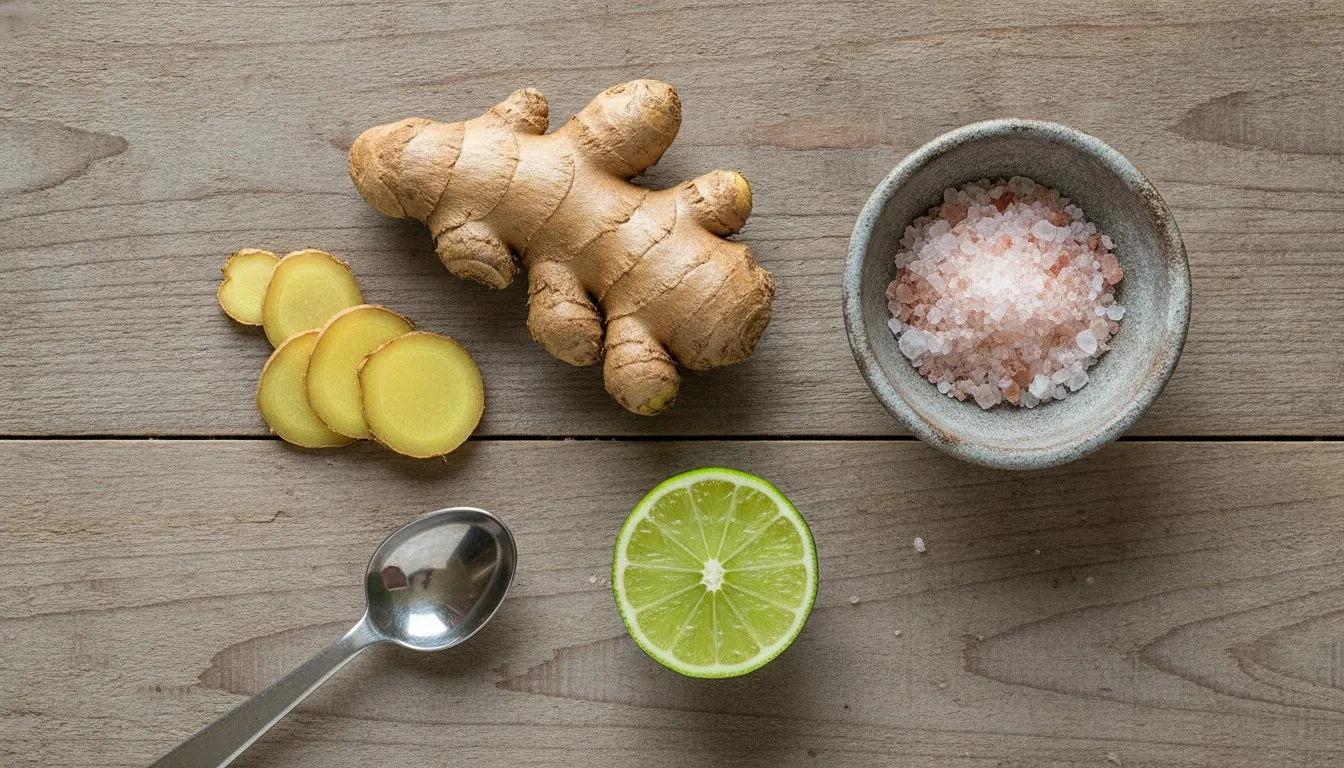
- 1 thin slice fresh ginger, peeled
- 1 pinch rock salt (saindhava or pink salt)
- 1/4 tsp fresh lime or lemon juice
Instructions
- 1 Peel and cut one thin slice of fresh ginger, or coarsely grate about half a teaspoon if you prefer it softer to chew.
- 2 Sprinkle a small pinch of rock salt over the ginger and add a few drops (about 1/4 teaspoon) of fresh lime or lemon juice.
- 3 Chew the ginger slowly about 15 to 30 minutes before your main meal, once or twice a day before lunch or dinner.
- 4 Expect a warming, slightly tingly feeling and a bit more interest in your food within a few minutes; sip a little warm water afterward if the taste is too sharp.
Notes
- If you take blood thinners such as warfarin, or you have gallstones, use ginger only in small culinary amounts and check with your doctor first, as ginger can affect clotting and bile flow.
- Ginger, salt, and lime can worsen acid reflux or heartburn in some people; if you have GERD or an active ulcer, skip this or try it in a very small amount.
- Rock salt still counts as sodium, so keep the pinch small if you are on a salt-restricted diet or manage high blood pressure.
- Consult your doctor if poor appetite persists beyond two weeks, or if it comes with unexplained weight loss, fever, pain, or nausea.
- This is traditional wisdom and not a substitute for medical care.