Dry Ginger and Jaggery Tea (Sonth Chai) for Period Cramps
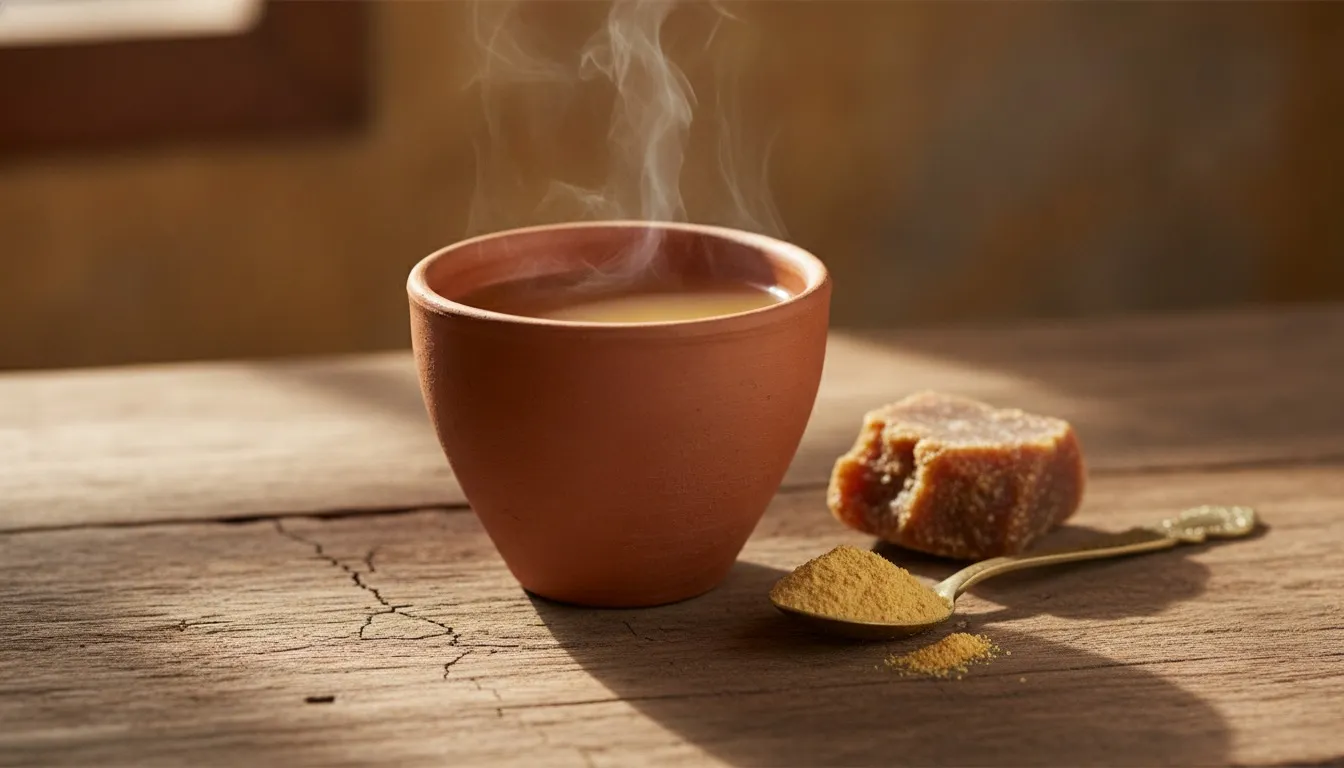
The first day of a period has a particular shape to it: a low, gripping ache across the lower belly, a dull pull into the back and thighs, and a general sense of being cold and heavy and wanting to curl up. For most people it is not dangerous, just miserable, and it arrives on a predictable schedule every month. Long before ibuprofen existed, Indian kitchens had an answer that took eight minutes and three things already on the shelf: dry ginger powder simmered in water and softened with a spoon of jaggery. It is still one of the most sensible everyday remedies in the whole repertoire, partly because it is comforting and partly because ginger, unusually for a kitchen spice, has actually been put through randomized trials for this exact complaint.
The Ayurvedic Perspective
Ayurveda calls painful menstruation Kashtartava and places the fault squarely with apana vata, the downward moving current of vata that governs the pelvis, elimination, and the outward flow of menstrual blood. When apana vata is aggravated or obstructed, by cold food, irregular meals, stress, travel, or simply the dry windy end of a season, it stops moving smoothly downward and starts to churn, and that churning is felt as cramping, clotting, and a dragging sensation rather than an easy flow. The classical correction is warmth, unctuousness, and anything that coaxes vata back into its natural downward direction. Shunthi, dry ginger, is described in the Charaka Samhita and catalogued in the Bhavaprakasha Nighantu as heating, digestion kindling, and vata anulomana, meaning it restores the correct downward movement, which is precisely the job here. Jaggery (guda) is classically vata pacifying and grounding, and it also blunts the sharp heat of ginger so the drink sits comfortably on an empty stomach. Modern Ayurvedic practitioner sources, from Banyan Botanicals to Maharishi Ayurveda, still put warm ginger tea at the top of their list for the vata type period.
What Modern Biology Says
The modern explanation lines up unusually well with the traditional one. Menstrual cramps are driven by prostaglandins, especially PGF2alpha, released as the uterine lining breaks down. Prostaglandins make the uterine muscle contract hard, squeeze its own blood supply, and produce exactly the kind of pain that feels like a cramp. Ginger’s gingerols, and the shogaols that form when ginger is dried, inhibit the cyclooxygenase and lipoxygenase enzymes that manufacture those prostaglandins, which is the same pathway that ibuprofen and mefenamic acid block. There is real human trial data behind this, though it is a modest body of work. A 2015 systematic review in Pain Medicine pooled four placebo controlled trials and found that 750 to 2000 mg of ginger powder a day during the first three to four days of the cycle reduced pain scores significantly more than placebo, and a much larger 2024 meta-analysis of twelve trials reached the same conclusion. The handful of small trials that pitted ginger directly against anti-inflammatory painkillers, pooled in a 2021 meta-analysis in Cureus, did not find a significant difference between the two, but those comparisons involved very few participants, so the fair reading is that no difference was detected rather than that ginger has been shown to match an NSAID. Honesty about the limits matters here: a 2016 review formally graded the overall certainty of this evidence as low, the individual studies are small and largely conducted in young student populations, the results vary considerably from trial to trial, and a spice this pungent is hard to blind properly. So this is encouraging preliminary evidence rather than settled proof. Jaggery’s contribution is traditional rather than clinical, though it does supply small amounts of iron and magnesium.
How And When To Use It
Reach for this when cramps are the ordinary, predictable, first day kind. Timing matters more than most people expect: the trials generally had participants starting at the very beginning of the period, or in some cases a day or two before it was due, rather than waiting for pain to build, because it is easier to slow prostaglandin production than to undo it. One cup made with half a teaspoon of dry ginger powder delivers roughly a gram of ginger, and two cups a day for the first three days lands squarely in the studied range while staying well under the 4 gram daily ceiling generally considered safe. Sip it warm and slowly rather than gulping it, and have it with or shortly after food if your stomach is sensitive. Expect a gentle easing over 30 to 60 minutes and a warmer, less clenched feeling in the lower belly, not the sharp switch off of a painkiller. A hot water bottle on the lower abdomen while you drink it is the traditional pairing and stacks well.
Cautions And A Note On Medical Care
A few people should give this a pass or check first. Anyone on warfarin, clopidogrel, aspirin, or another blood thinner should speak to their doctor before using ginger regularly, since it affects platelet function and there are case reports of raised INR. Ginger also stimulates bile flow, so it is not for anyone with gallstones or gallbladder disease, and its heat can aggravate reflux or an active ulcer. If you are watching your blood sugar, drop the jaggery or use the smallest amount that makes the tea drinkable. Most importantly, this remedy is for ordinary cramps: pain severe enough to stop you functioning, pain outside your period, very heavy bleeding, or a sudden change in your usual pattern deserves a proper evaluation, since those can signal endometriosis, fibroids, or infection. Consult your doctor if symptoms persist beyond 3 days or worsen. This is traditional wisdom and not a substitute for medical care, but on an ordinary first day, with a hot water bottle and a warm cup in hand, it is a small kindness worth trying.
References
These are the peer-reviewed human studies and reviews behind the modern-evidence claims above. They open in a new tab.
- Daily et al., Pain Medicine, 2015. Pooled four placebo-controlled trials and found ginger significantly reduced menstrual pain scores; this is the source of the 750 to 2000 mg per day during the first 3 to 4 days of the cycle figure, though the authors call the evidence only suggestive.
- Moshfeghinia et al., Journal of Integrative and Complementary Medicine, 2024. The largest and most recent synthesis, pooling 12 trials: ginger reduced pain intensity more than placebo and showed no detectable difference from NSAIDs, but with high heterogeneity, risk of bias in the source trials, and little safety reporting.
- Negi et al., Cureus, 2021. Found ginger better than placebo for pain severity, but the ginger versus NSAID comparison rested on only two small trials with a confidence interval too wide to establish equivalence.
- Chen et al., Evidence-Based Complementary and Alternative Medicine, 2016. Ginger beat placebo by about 1.55 cm on a 10 cm pain scale and matched mefenamic acid, but the authors formally graded the overall certainty of the evidence as low and urged caution.
Recipe
Dry Ginger and Jaggery Tea
A warm decoction of dry ginger powder (sonth or sukku) sweetened with a little jaggery, sipped during the first days of a period to ease mild cramping and the heavy, dragging feeling that comes with it.
- Prep
- 2min
- Cook
- 6min
- Total
- 8min
- Servings
- 1doses
Ingredients
- 1.25 cups water
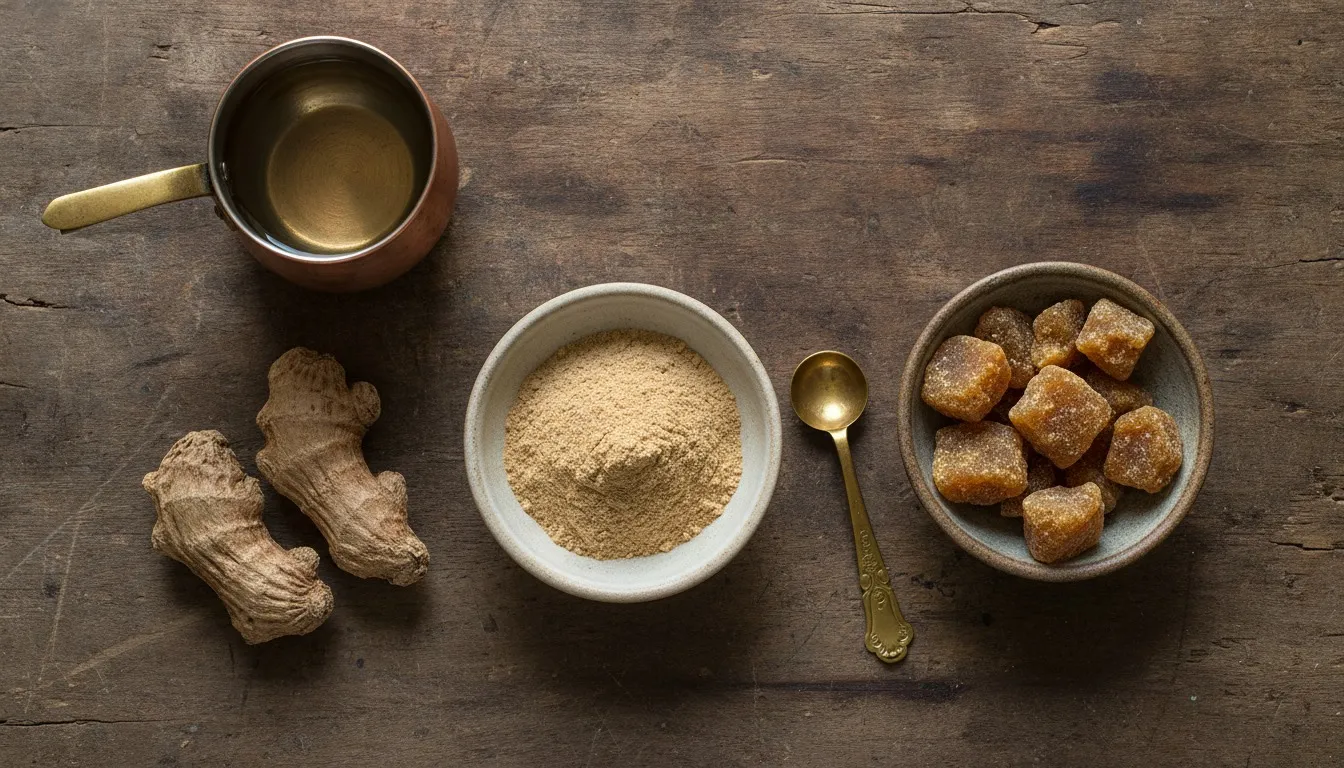
- 1/2 tsp dry ginger powder (sonth, sukku, or plain ground ginger)
- 1 tsp jaggery, grated or crumbled
Instructions
- 1 Pour 1.25 cups of water into a small saucepan and bring it to a gentle boil.
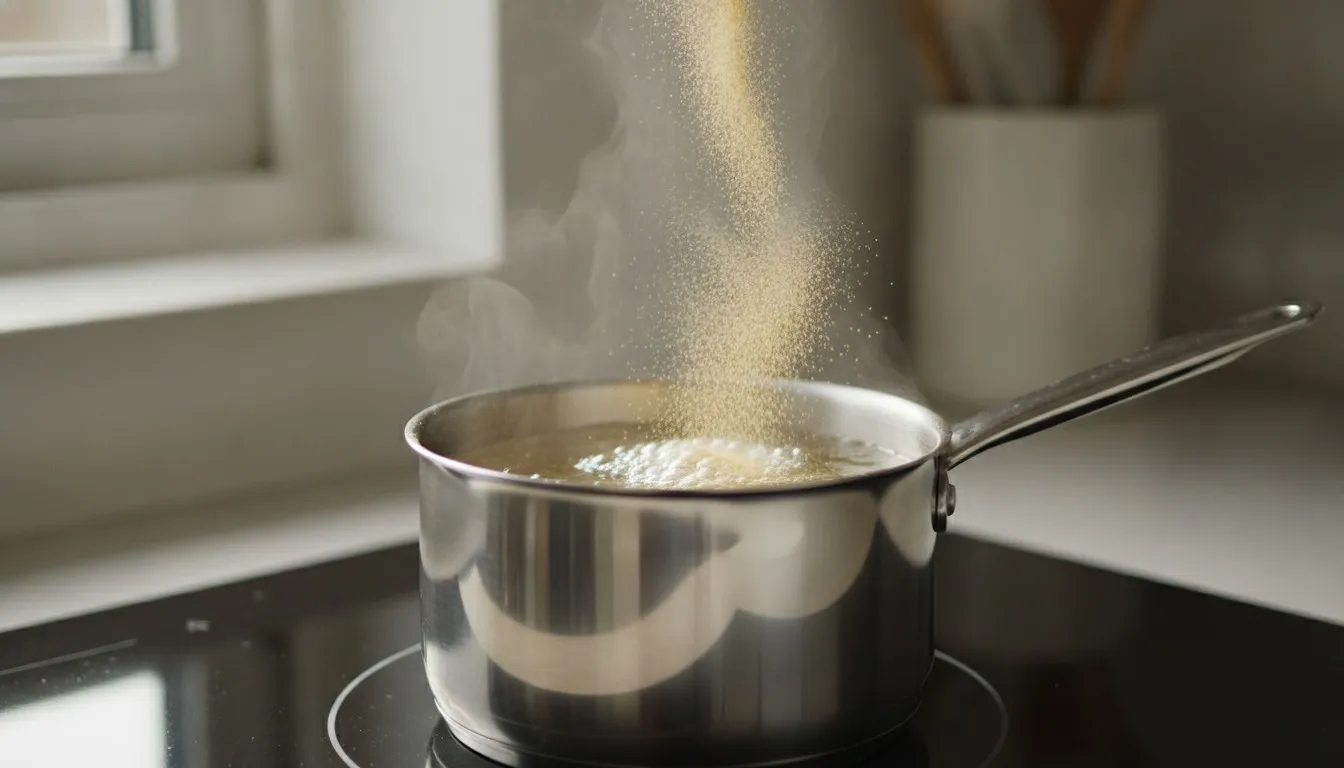
- 2 Stir in 1/2 teaspoon of dry ginger powder, lower the heat, and let it simmer uncovered for about 5 minutes, until the liquid reduces to roughly 1 cup and turns cloudy and pale gold.
- 3 Turn off the heat and stir in 1 teaspoon of grated jaggery until it dissolves completely.
- 4 Let it sit for a minute so the fine ginger sediment settles, then pour the tea into a cup, leaving the gritty bit at the bottom of the pan behind. Straining through a fine tea strainer works just as well.
- 5 If dry ginger powder is not on hand, use 1 teaspoon of freshly grated ginger instead and simmer it the same way, though the dried powder is what the clinical studies actually used.
- 6 Sip it warm and slowly at the first sign of cramping, ideally starting the day your period is due rather than waiting for the pain to peak.
- 7 Repeat up to twice a day for the first 3 days of your period, which keeps the total ginger at roughly 2 grams a day, well within the range used in trials.
Notes
- If you take warfarin, clopidogrel, aspirin, or any other blood thinner, talk to your doctor first. Ginger can affect platelet function and case reports describe raised INR with regular ginger use.
- Keep total ginger under 4 grams a day, which is roughly 2 level teaspoons of dry ginger powder. Larger amounts can cause heartburn, mouth irritation, and loose stools.
- Skip this if you have gallstones or gallbladder disease, since ginger stimulates bile flow, and go easy if you have reflux or an active stomach ulcer, since the tea is heating and can sting.
- Jaggery is sugar. If you are managing your blood sugar, leave it out or use the smallest amount that makes the tea drinkable.
- This is for ordinary cramps only. Pain that stops you functioning, pain outside your period, very heavy bleeding, fever, or cramps that suddenly change in character need a doctor, not a kitchen remedy, since these can point to endometriosis, fibroids, or infection.
- Consult your doctor if symptoms persist beyond 3 days or worsen.
- This is traditional wisdom and not a substitute for medical care.