Ajwain (Carom Seed) Steam Inhalation for a Blocked, Stuffy Nose
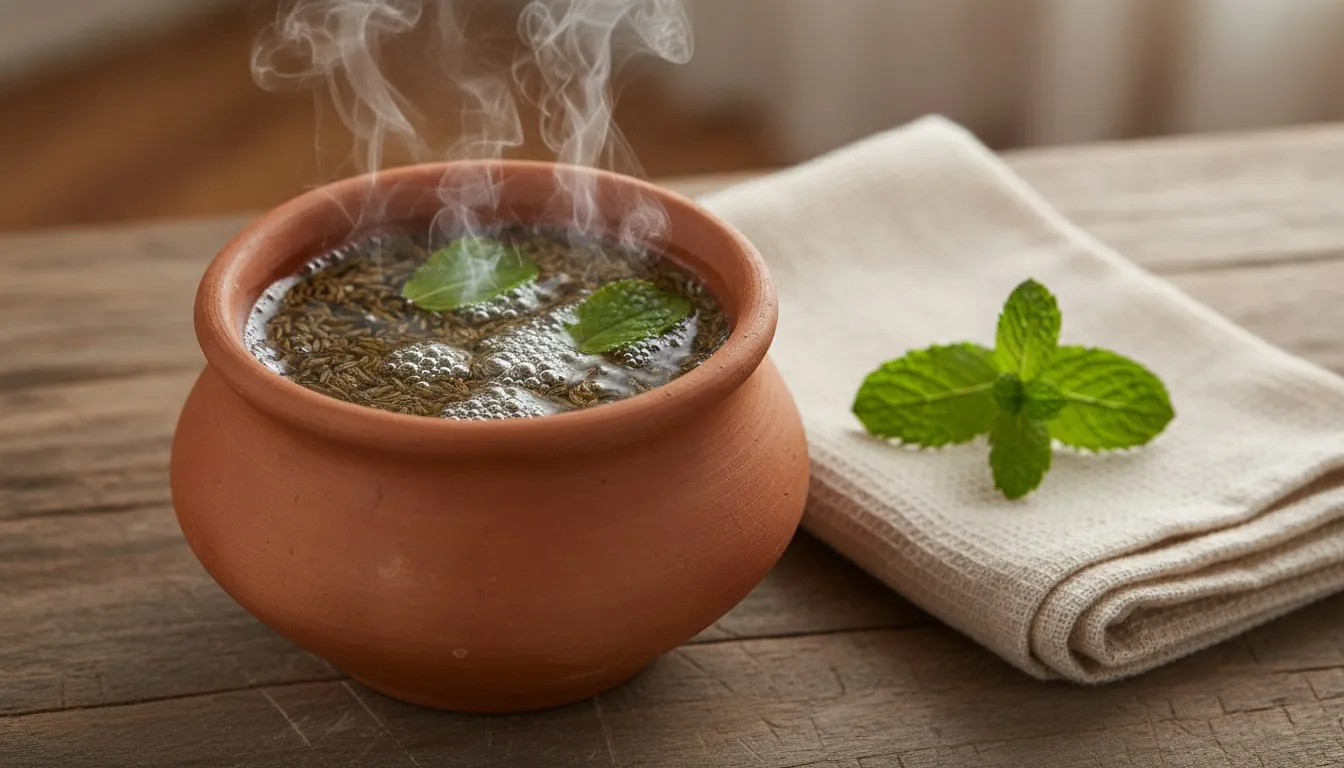
A stuffy, blocked nose is one of the most common miseries of a mild cold, and almost everyone has spent a night breathing through their mouth because their nose simply would not clear. It makes it hard to sleep, dulls your sense of taste, and leaves your head feeling heavy and full. Long before decongestant sprays, Indian kitchens reached for a pot of hot water and a spoonful of ajwain, the humble carom seed, and let the fragrant steam do the work. It is one of the simplest home remedies there is, using only water and a spice most cooks already keep on the shelf.

The Ayurvedic Perspective
In Ayurveda, the drippy, congested phase of a common cold is understood as pratishyaya, and a blocked, heavy nose points to aggravated kapha collecting in the channels of the head and sinuses, often with a vata element that keeps things from draining. The traditional response is swedana, the therapeutic use of warmth and sudation, and in particular a localized steam known as nadi sweda. Warm, pungent, aromatic herbs are used to soften and mobilize the stuck kapha so the passages can open and clear. Ajwain, called yavani in the classics, is a warming and drying spice considered good for pacifying kapha and vata, which is why simmering it into steam became a household form of swedana passed down through generations and rooted in the classical management of pratishyaya described in texts such as the Charaka Samhita and Ashtanga Hridayam.
What Modern Biology Says
Modern chemistry gives a clear picture of why the steam brings relief. Ajwain seeds are especially rich in thymol, an essential-oil compound with well-studied antimicrobial and mild anti-inflammatory properties, and if you add mint you also introduce menthol. Menthol activates the TRPM8 cold receptor in the lining of the nose, which creates a powerful subjective sense of clearer, easier airflow. Tellingly, a 1990 trial by Eccles and colleagues in people congested with a cold found that menthol produced this feeling of easier breathing without actually lowering measured nasal resistance. The warm, humidified air itself helps loosen thick mucus. It is worth being honest about the evidence: a Cochrane review of heated, humidified air for the common cold found the trials mixed and inconclusive, so the benefit here is short-term comfort rather than a cure. Even so, the aromatic compounds involved are well characterized, and researchers are now testing herbal steam directly, including a 2025 randomized trial protocol evaluating a polyherbal steam inhalation for rhinitis in children.
How And When To Use It
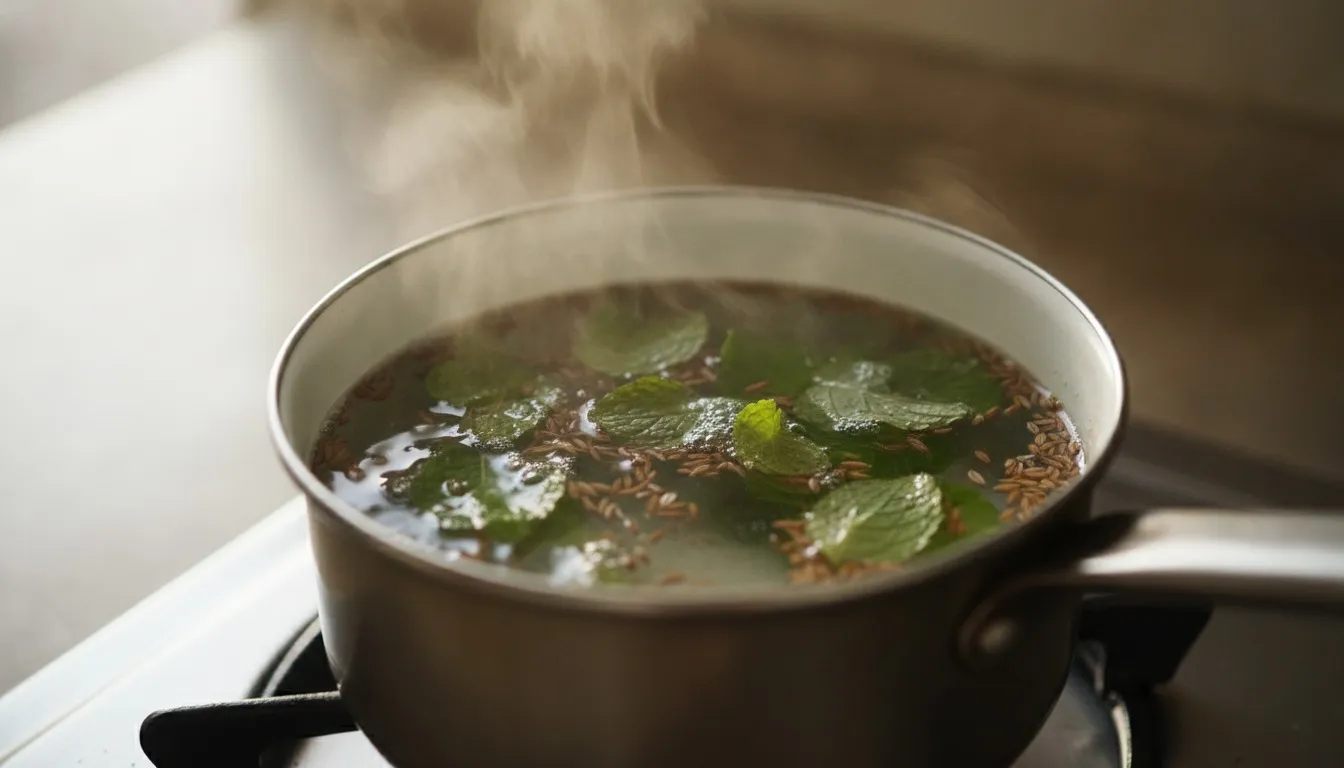
Reach for this at the first sign of a blocked nose, or in the evening when congestion tends to feel worst and disrupt sleep. Simmer a tablespoon of ajwain in a small pot of water for a couple of minutes, add a few mint leaves and a pinch of turmeric if you like, then take the pot off the heat and set it on a stable table. Let it cool for a minute so the steam is warm rather than scalding, tent a towel over your head, close your eyes, and breathe gently through your nose for five to ten minutes. You can do this up to twice a day while symptoms last, and most people feel their nose open up within minutes, though the effect is temporary and you may need to repeat it.
Cautions And A Note On Medical Care
A few safety notes matter. Hot water and steam can scald, so keep your distance, keep your eyes closed, and rest the pot where it cannot be knocked over, especially around children, who should never lean over boiling water alone. Stop if you feel dizzy or short of breath, and if you have asthma or reactive airways, check with your doctor first, since strong vapors can occasionally trigger symptoms. See a doctor if the congestion lasts beyond a week to ten days, or comes with high fever, facial pain, or thick discolored discharge. This is traditional wisdom and not a substitute for medical care, but as a gentle, low-cost way to breathe a little easier through a mild cold, a pot of ajwain steam is well worth trying.
References
These are the peer-reviewed human studies and reviews behind the modern-evidence claims above. They open in a new tab.
- Eccles, Jawad & Morris, J Pharm Pharmacol, 1990. In people congested with a cold, menthol produced a subjective sensation of easier nasal breathing while measured nasal resistance did not fall relative to placebo.
- Singh et al., Cochrane Database of Systematic Reviews, 2017. Systematic review of steam/heated humidified air trials for the common cold; found mixed, low-certainty results and insufficient evidence to recommend it as a treatment.
- JMIR Research Protocols, 2025. Randomized trial protocol using a polyherbal steam inhalation (tulsi, vasa, nirgundi, nilgiri) as the control arm for childhood rhinitis, showing herbal steam inhalation is now being formally tested.
Recipe
Ajwain Steam Inhalation
A simple aromatic steam made by simmering carom (ajwain) seeds in water, with an optional handful of mint, breathed in under a towel to ease a blocked, stuffy nose during a mild cold.
- Prep
- 2min
- Cook
- 5min
- Total
- 12min
- Servings
- 1applications
Ingredients
- 1 tbsp ajwain (carom seeds)
- 4 cups water
- 8 leaves fresh mint leaves (optional, for menthol)
- 1 pinch turmeric powder (optional)
Instructions
- 1 Add the water to a small pot and bring it to a boil.
- 2 Add the ajwain seeds, along with the mint leaves and pinch of turmeric if using. Let it simmer for 2 to 3 minutes so the aromatic oils release into the steam.
- 3 Turn off the heat and carefully move the pot to a stable, flat surface such as a table, out of reach of children. Let it cool for about a minute so the steam is warm and comfortable, not scalding.
- 4 Drape a towel over your head to form a loose tent, close your eyes, and keep your face at least a forearm's length above the water. Breathe the steam gently in through your nose for 5 to 10 minutes.
- 5 Use it at the first sign of a blocked nose, or in the evening before bed. You can repeat it up to twice a day while symptoms last.
Notes
- Keep a safe distance from the water and keep your eyes closed. Steam and hot water can scald. Rest the pot or bowl on a stable, flat surface where it cannot tip.
- Not for young children to do unsupervised, and never let a child lean over a pot of boiling water alone. Do not use for infants.
- Stop if you feel dizzy, lightheaded, or short of breath, or if the vapor irritates your airways. If you have asthma or reactive airways, check with your doctor first, since strong aromatic vapors can occasionally trigger symptoms.
- Consult your doctor if congestion persists beyond 7 to 10 days, or if it comes with high fever, facial pain or pressure, or thick discolored discharge, or if it worsens.
- This is traditional wisdom and not a substitute for medical care.