Tulsi (Holy Basil) Tea for Everyday Stress and Mild Mental Fatigue
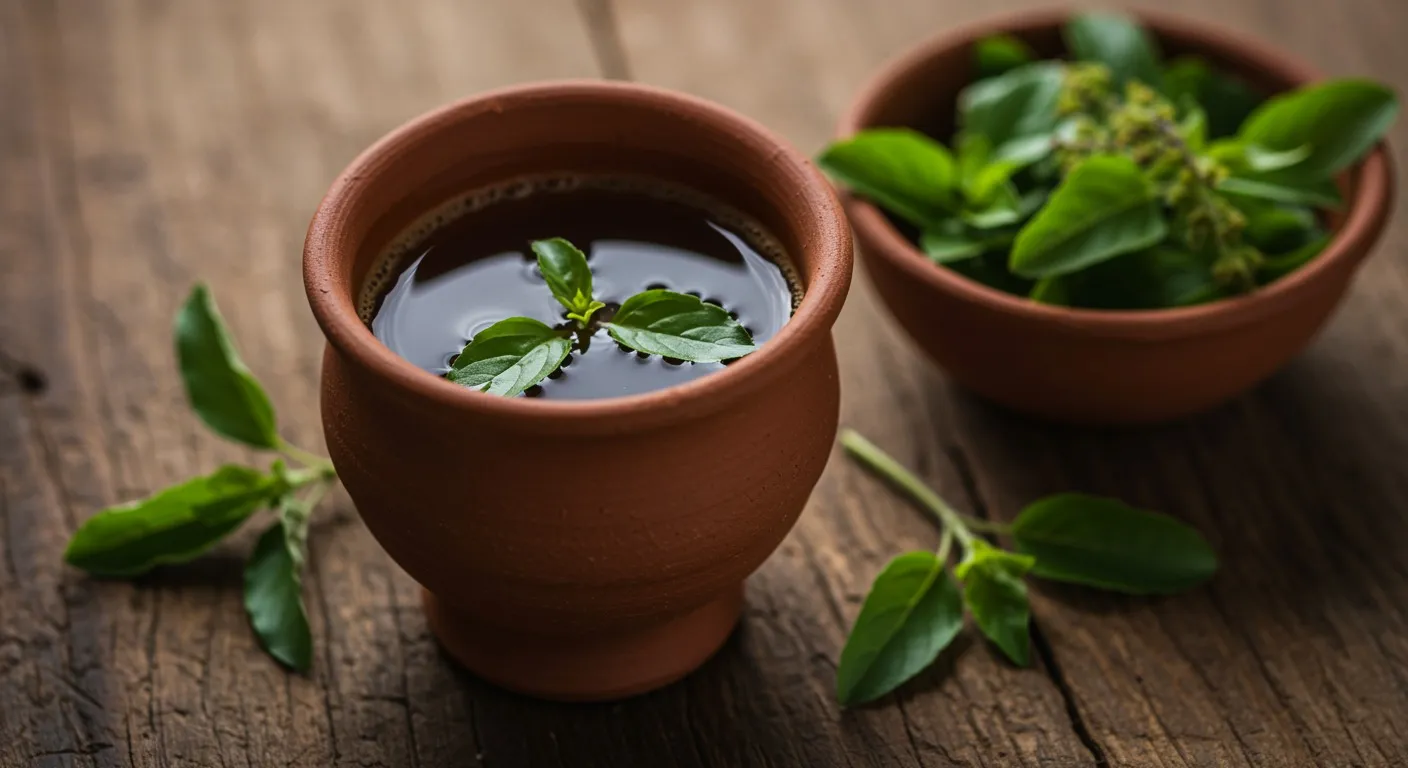
Most of us know the feeling of carrying a low hum of stress through the day: a slightly tight chest by mid-morning, foggy thinking after lunch, a mind that will not settle in the evening. It is rarely dramatic enough to label, yet it quietly drains how present and clear we feel. In Ayurveda, the kitchen-and-courtyard answer for this kind of everyday strain is tulsi, the holy basil plant that sits in a clay pot near the door of countless Indian homes. A simple cup of tulsi tea, steeped from a handful of fresh leaves, is one of the most accessible adaptogenic rituals tradition offers.
The Ayurvedic Perspective
Classical Ayurveda places tulsi among the herbs that calm the mind and lift mental sluggishness without sedating the body. The Charaka Samhita and the later Bhavaprakasha describe tulsi as warming and light, helpful for soothing vata (the air principle linked to anxiety and scattered thinking) and clearing kapha (the heavy, sluggish quality that shows up as mental fog). It is classically said to support ojas, the subtle vital essence that gets depleted when stress runs unchecked. Daily, mindful consumption of tulsi is considered a sattvic practice, meaning one that nudges the mind toward clarity and steadiness. The tea form is the gentlest way to receive these qualities, and it is the form a grandmother is most likely to hand you.
What Modern Biology Says
The chemistry behind tulsi has been studied carefully in recent years. The leaves contain eugenol (the same warming compound found in clove), ursolic acid, rosmarinic acid, linalool, and the tulsi-specific ocimumosides A and B. A 2017 systematic review by Jamshidi and Cohen in Evidence-Based Complementary and Alternative Medicine pooled 24 human studies and found consistent benefits on stress and anxiety scores, metabolic markers, and immune parameters. Two clinical trials in particular, Saxena (2012) and Bhattacharyya (2008), showed meaningful drops in self-reported stress and anxiety after several weeks of regular tulsi use. The mechanism is thought to involve modulation of the HPA stress axis along with antioxidant activity. The evidence is preliminary but unusually consistent for a traditional botanical.
How And When To Use It
Reach for tulsi tea in the gap moments of the day: the mid-afternoon dip, the unwinding hour after work, the quiet stretch before bed. One cup of fresh-leaf tea is a comfortable starting dose, and two cups across a day is reasonable for most adults. The aroma is lightly clove-like and the taste is mildly peppery, so honey is optional rather than required. Effects build with regular use over one to two weeks rather than from a single cup, which is consistent with how adaptogens work in the human stress system.
Cautions And A Note On Medical Care
If you take a blood thinner such as warfarin, aspirin, or clopidogrel, talk to your doctor before adding tulsi as a daily drink, since the herb may add to the thinning effect. If you take medication for diabetes, monitor your blood sugar and check with your doctor, because tulsi can gently lower glucose. Traditional Ayurveda also advises against tulsi during pregnancy or active fertility efforts, so it is best avoided in those situations. If stress, fatigue, or low mood persists beyond two to four weeks, or worsens at any point, please see a clinician rather than relying on tea alone. This is traditional wisdom and not a substitute for medical care, but on an ordinary, low-stakes day, a quiet cup of tulsi is a small, time-tested way to feel a little more like yourself.
Recipe
Tulsi (Holy Basil) Calming Tea
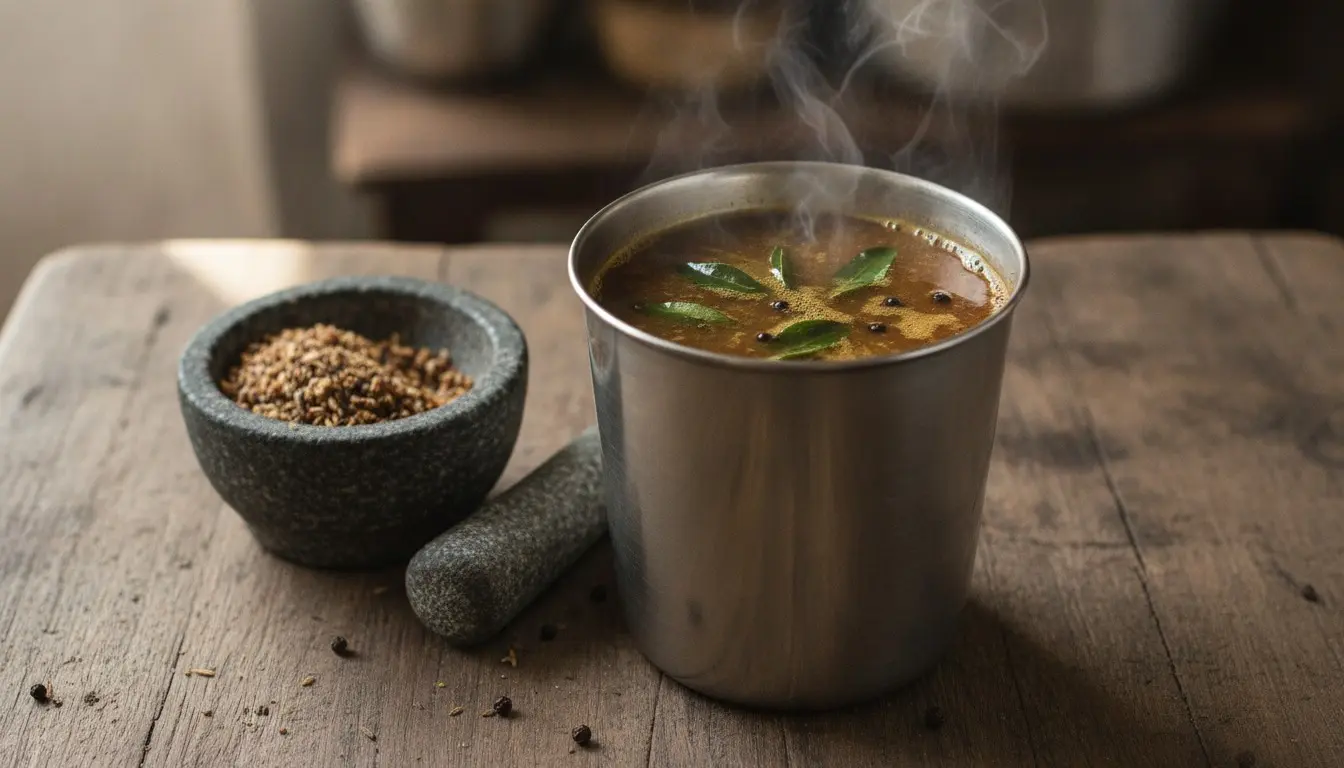
A warm cup of tulsi tea steeped from fresh holy basil leaves, a classical Ayurvedic adaptogen sip for everyday stress and mild mental fatigue.
- Prep
- 2min
- Cook
- 7min
- Total
- 9min
- Servings
- 1doses
Ingredients
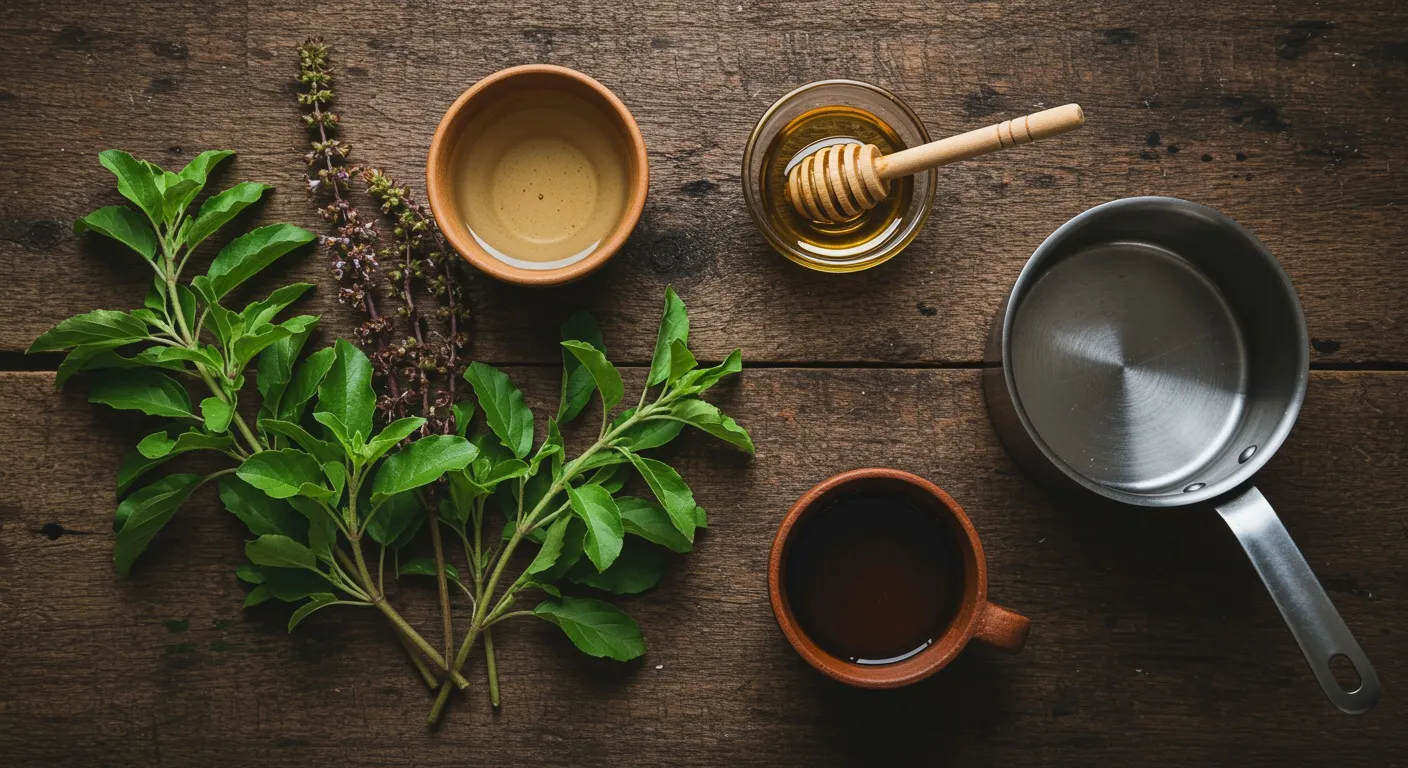
- 10 leaves fresh tulsi (holy basil) leaves
- 1 cup water
- 1/4 tsp honey (optional, added after the tea cools slightly)
Instructions
- 1 Rinse 10 fresh tulsi leaves under cool water and gently bruise them with your fingers or the back of a spoon to release their aroma. If you only have dried tulsi, use 1 teaspoon instead.
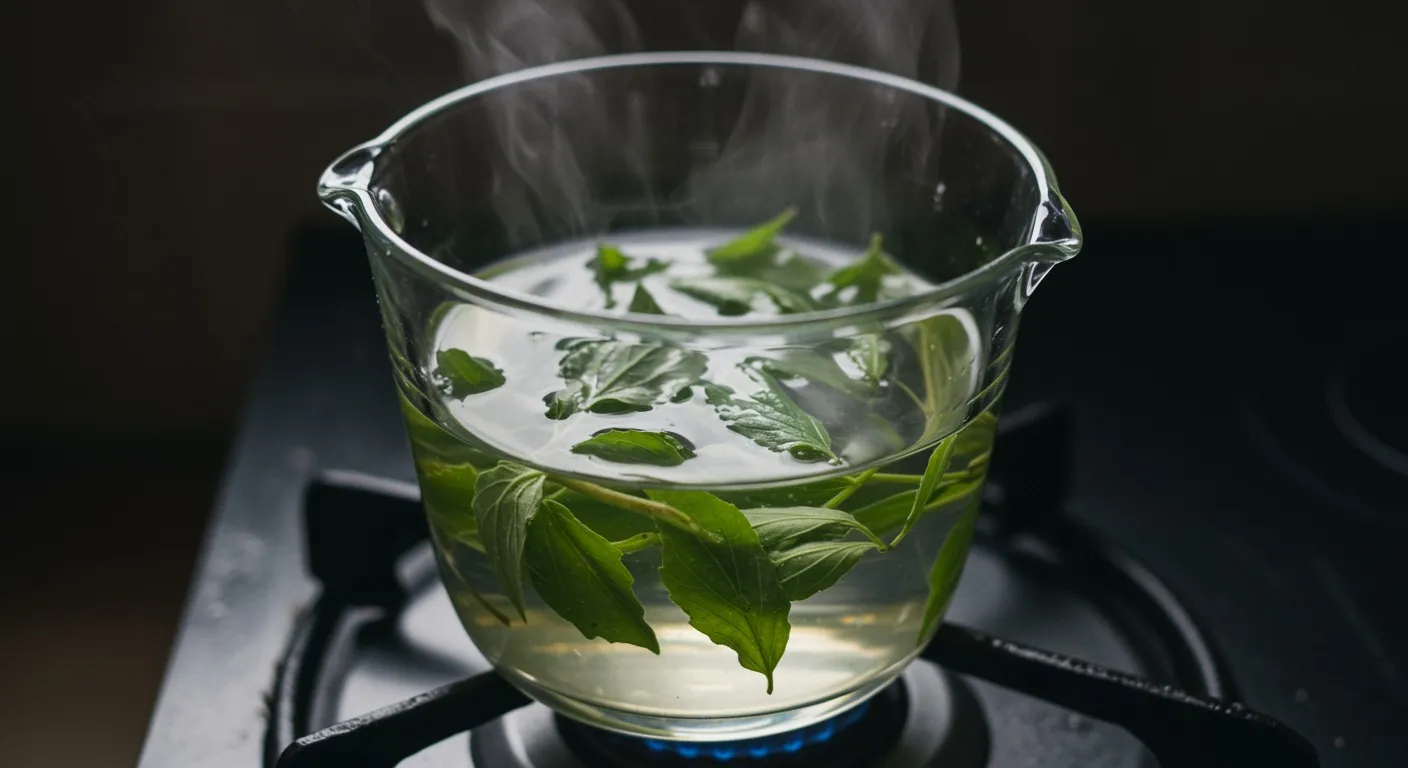
- 2 Bring 1 cup of water to a gentle boil in a small saucepan.
- 3 Add the bruised tulsi leaves, lower the heat, and simmer for 5 to 7 minutes until the water turns a light amber color and smells lightly clove-like.
- 4 Turn off the heat and let the tea rest covered for 1 to 2 minutes so the volatile oils settle into the water.
- 5 Strain into a cup. If you like, stir in a quarter teaspoon of honey once the tea has cooled slightly (avoid adding honey to boiling tea). Sip slowly during a mid-afternoon slump, after a stressful day, or in the early evening to settle the mind before sleep.
Notes
- Tulsi may enhance the blood-thinning effect of warfarin, aspirin, or clopidogrel. If you take any blood thinner, talk to your doctor before drinking tulsi tea daily.
- Tulsi may lower blood sugar. If you take diabetes medication, monitor your blood sugar and consult your doctor before regular use.
- Traditional Ayurveda advises against tulsi during pregnancy or active fertility efforts. Avoid if pregnant or trying to conceive.
- Consult your doctor if stress, fatigue, or low mood persist beyond two to four weeks or worsen.
- This is traditional wisdom and not a substitute for medical care.