Authentic Thayir Sadam (South Indian Curd Rice) Recipe
Curd rice has been having a moment online, with summer-cooling Instagram reels and Pinterest boards showcasing this gentle, gut-friendly South Indian comfort food. Known as thayir sadam in Tamil, daddojanam in Telugu, and bagala bath in Kannada, the dish takes soft mushy rice, fresh yogurt, and a fragrant tempering of ghee and curry leaves and turns them into the most soothing bowl in the South Indian repertoire. It is the meal you reach for when the weather is hot, when your stomach feels off, or when you simply want something quiet and home-cooked. The version below is the everyday homestyle one, exactly the way most Tamil and Andhra grandmothers still make it.
About This Dish
Curd rice is far older than most of the curries on a typical South Indian plate. It shows up in early Tamil Sangam literature, in temple food traditions across Tamil Nadu and Andhra Pradesh, and in daily meals from Madurai to Mangalore. In many South Indian homes it is the closing course of the day’s lunch or dinner, served right after sambar rice and rasam rice to settle the stomach. At temples like Tirupati and Srirangam, daddojanam is offered as prasadam to thousands of devotees every day. It is comfort food with deep cultural roots, not a modern invention.
Ingredient Notes
Use a short-grain or medium-grain rice like sona masoori, which cooks up soft and slightly sticky, exactly the texture you want here. Long-grain basmati does not work as well because the grains stay separate and the rice never gets that creamy quality. The yogurt should be fresh, thick, and just barely tangy. A splash of whole milk lengthens the shelf life and keeps the rice from turning sharp by the next meal. Ghee is the traditional fat for the tempering and gives the dish its signature aroma; coconut oil also works if you prefer a coastal note. A pinch of asafoetida and a good sprig of curry leaves are essential for proper flavor.
Method And Tips
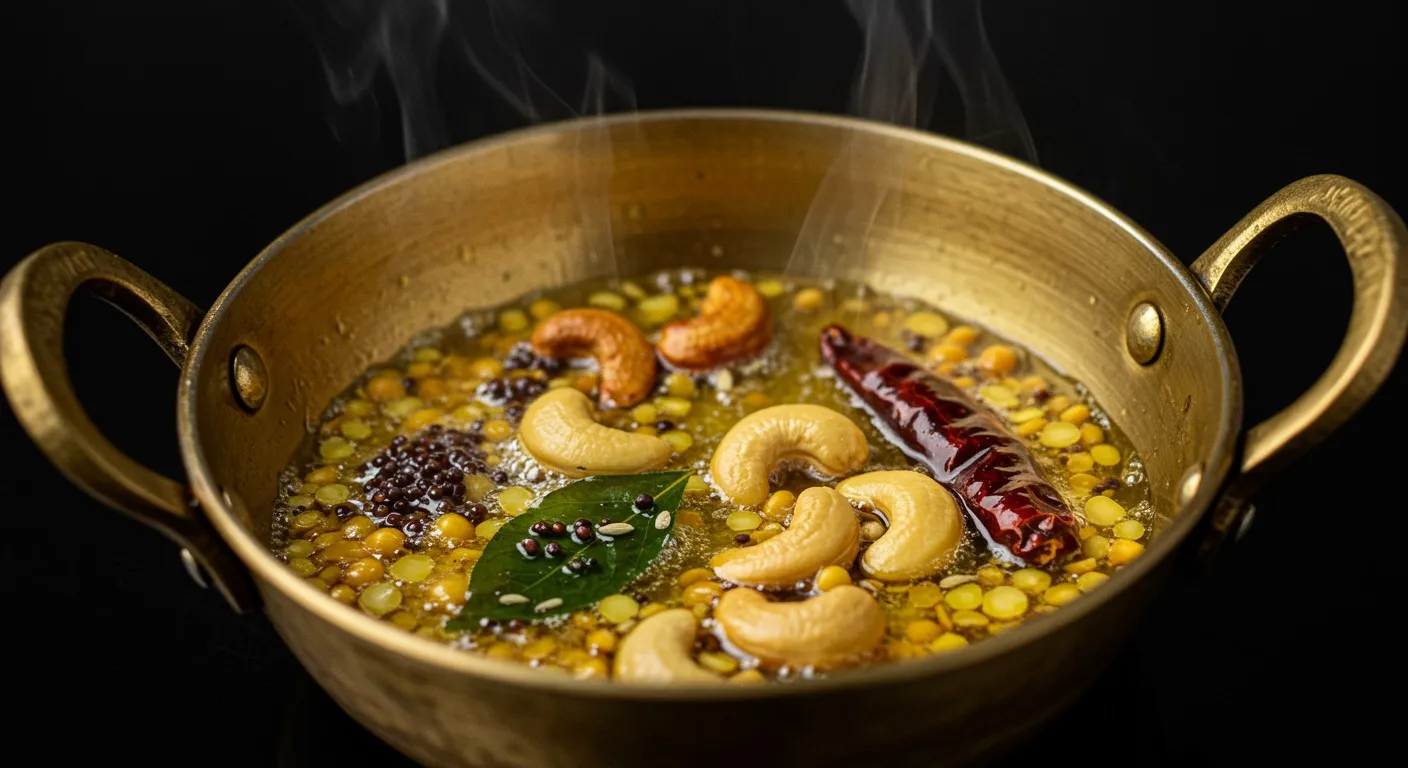
The two technique points that matter most are texture and temperature. Cook the rice softer than you normally would, then mash it lightly while warm so it absorbs the milk and yogurt evenly. Cool the rice fully before adding the yogurt, because mixing yogurt into hot rice makes the dish sour and grainy by the next meal. The tempering should crackle hard, then be poured over the rice while still warm but not smoking, so the ghee aroma blooms into the curd without curdling it. A useful tip: if you plan to eat the curd rice the next day, hold back some of the yogurt and add an extra tablespoon of milk, because the rice will keep absorbing liquid and firm up as it sits.
Serving Suggestions
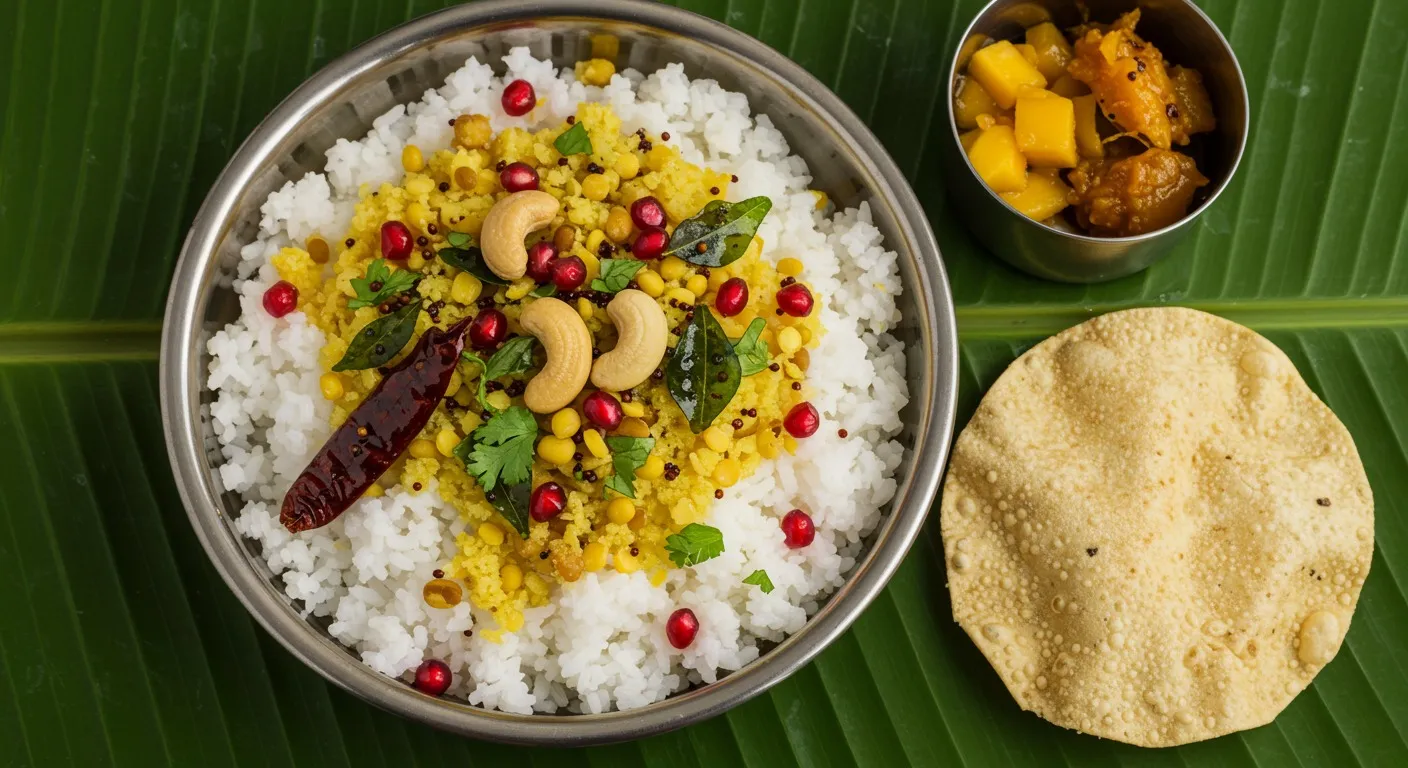
Serve thayir sadam at the end of a South Indian meal or on its own with a sharp mango pickle, a spoon of lemon pickle, or crisp appalam on the side. A few pomegranate arils or finely grated carrot scattered on top add color and crunch when serving guests. Make a bowl the next time the weather turns warm, and see why generations of South Indian families have called it the gentlest, kindest dish on the table.
Recipe
Thayir Sadam (South Indian Curd Rice)
Soft cooked rice mixed with fresh yogurt and milk, finished with a fragrant ghee tempering of mustard seeds, urad dal, curry leaves, and cashews. The classic South Indian cooling meal, called thayir sadam in Tamil, daddojanam in Telugu, and bagala bath in Kannada.
- Prep
- 10min
- Cook
- 20min
- Total
- 30min
- Servings
- 3servings
- Calories
- 285kcal
Ingredients
- For the rice base
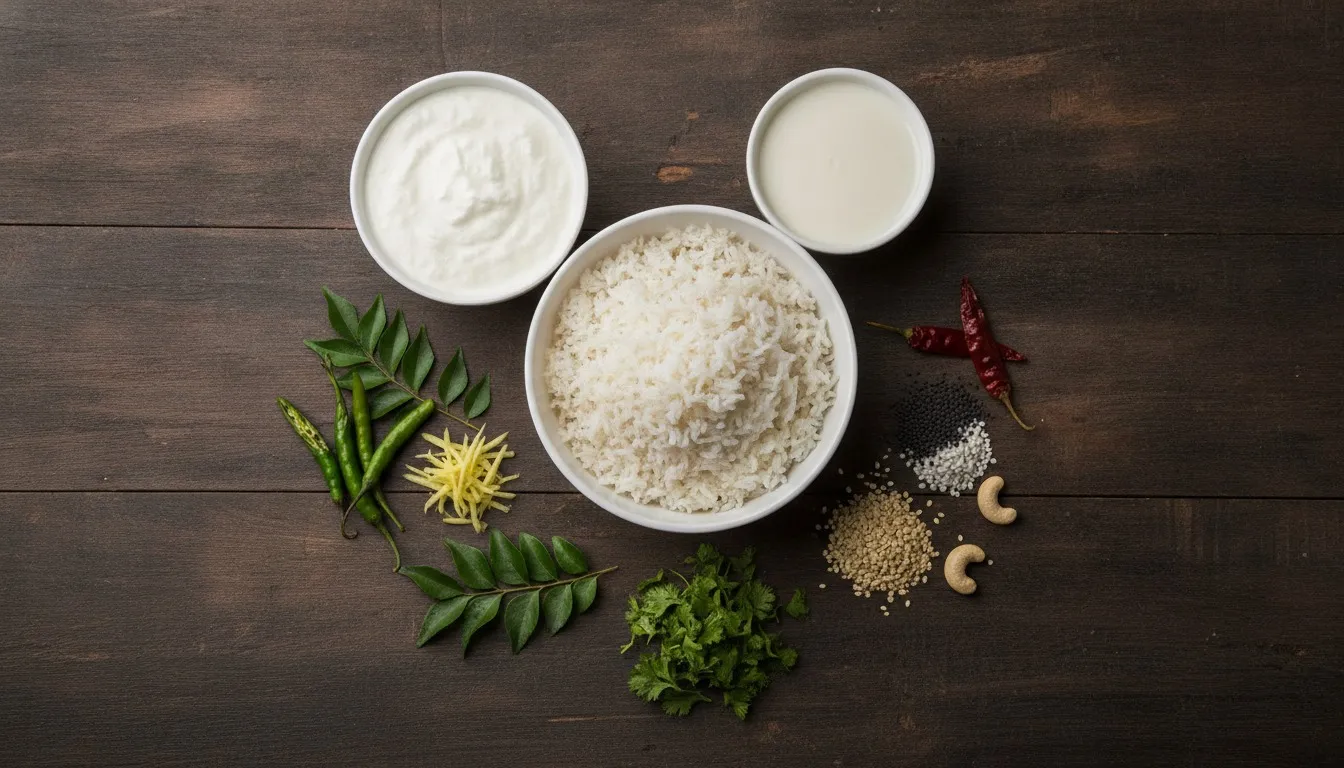
- 1/2 cup sona masoori rice (or any short-grain white rice)
- 1.5 cups water
- 1/2 cup whole milk
- 1 cup thick plain whole-milk yogurt, fresh (not sour)
- 1 tsp fresh ginger, finely minced
- 1 green chili, finely chopped
- 2 tbsp fresh coriander leaves, chopped
- 1 tsp salt
- For the tempering
- 1 tbsp ghee
- 1/2 tsp mustard seeds
- 1 tsp urad dal (split black gram)
- 1 dried red chili, broken in half
- 1 sprig curry leaves
- 1 pinch asafoetida (hing)
- 2 tbsp raw cashews, split or broken
Instructions
- 1 Rinse the rice in 2 to 3 changes of water until the water runs mostly clear, then transfer it to a pressure cooker with 1.5 cups of water. Pressure cook on medium heat for 5 whistles, until the rice is very soft and mushy.
- 2 Let the pressure release naturally. Open the cooker and lightly mash the rice with the back of a spoon or a potato masher while it is still warm, so the grains break down into a soft, creamy mass.
- 3 Pour in the whole milk and stir until the rice absorbs it and looks creamy. Set the rice aside and let it cool completely to room temperature. This usually takes about 15 minutes and is the most important step in the recipe.
- 4 Once the rice is fully cooled, add the yogurt a few tablespoons at a time, stirring to break up any lumps until the mixture is smooth and creamy. Add salt to taste, the minced ginger, the chopped green chili, and the coriander leaves, and stir to combine.
- 5 Heat the ghee in a small tempering pan over medium heat. When the ghee is shimmering, add the mustard seeds and let them crackle for a few seconds.
- 6 Add the urad dal and cashews and fry for about 30 seconds, until both turn light golden brown. Watch closely so the dal does not burn.
- 7 Add the broken dried red chili, the curry leaves, and a generous pinch of asafoetida. Let the curry leaves crisp up for 5 to 10 seconds, then take the pan off the heat.
- 8 Let the tempering rest for about 30 seconds so it is warm but no longer smoking, then pour the entire contents of the pan over the curd rice and fold gently to distribute. Serve right away with mango pickle and papadam, or chill briefly before serving.
Notes
- Use fresh, sweet curd. Sour yogurt will overpower the dish; if your yogurt is even slightly tangy, add an extra splash of milk to balance it.
- Skip basmati for this recipe. Short-grain rice like sona masoori or ponni gives the soft, creamy texture this dish is known for.
- Cool the rice fully before adding the yogurt. Hot rice splits the yogurt and turns the dish sour by the next meal.
- If you are packing curd rice for lunch the next day, hold back a few tablespoons of yogurt and add an extra splash of milk. The rice keeps absorbing liquid and firms up as it sits.
- For a festive presentation, scatter pomegranate arils and finely grated carrot over the top just before serving.