Mustard Oil and Rock Salt Gum Massage for Sore, Tender Gums
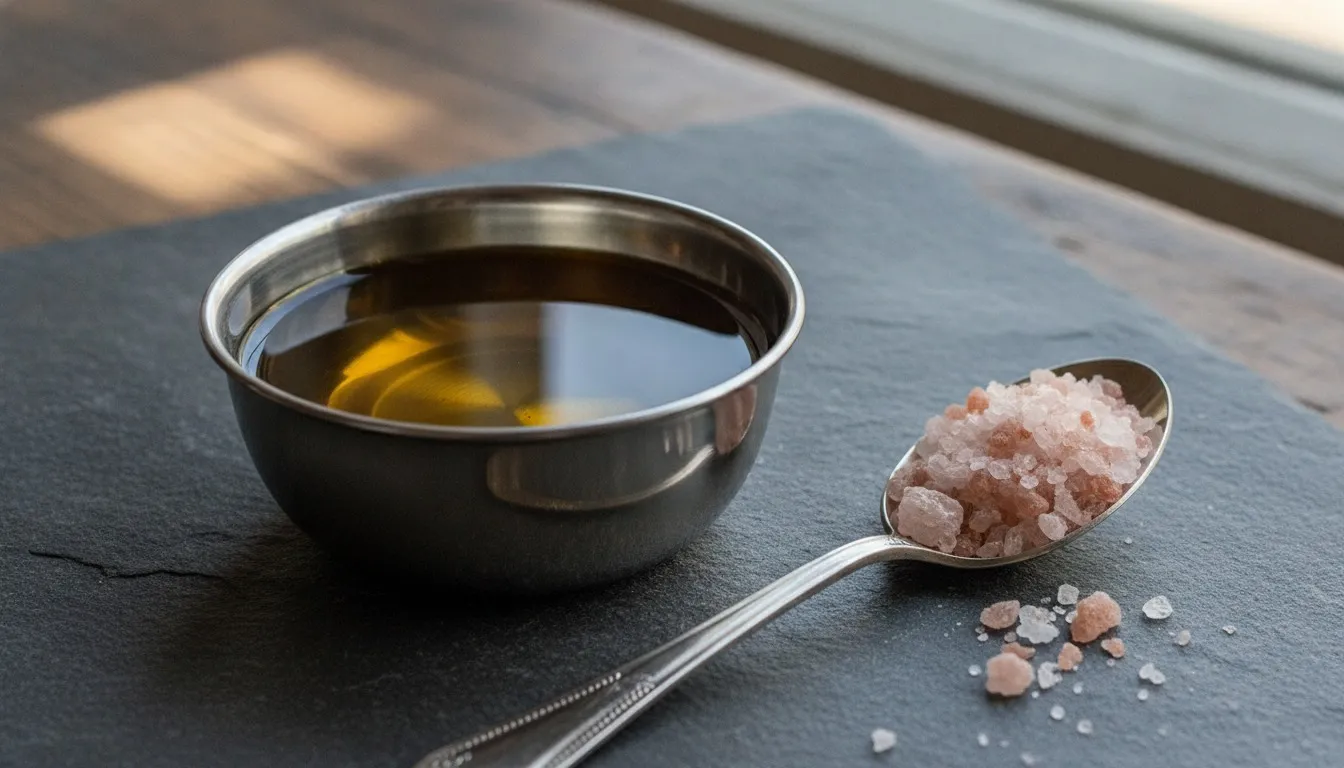
Gums that feel tender when you brush, look a little puffy along the edges, or leave a pink tinge in the sink are one of those small complaints most adults meet sooner or later. Nothing hurts badly enough to book a dentist, but the mouth feels off, and morning breath lingers longer than it should. Long before mouthwash arrived in a bottle, Indian households handled this with a fingertip, a spoonful of mustard oil, and a pinch of rock salt from the same jar used for cooking. It takes two minutes and everything needed is already in the kitchen.
The Ayurvedic Perspective
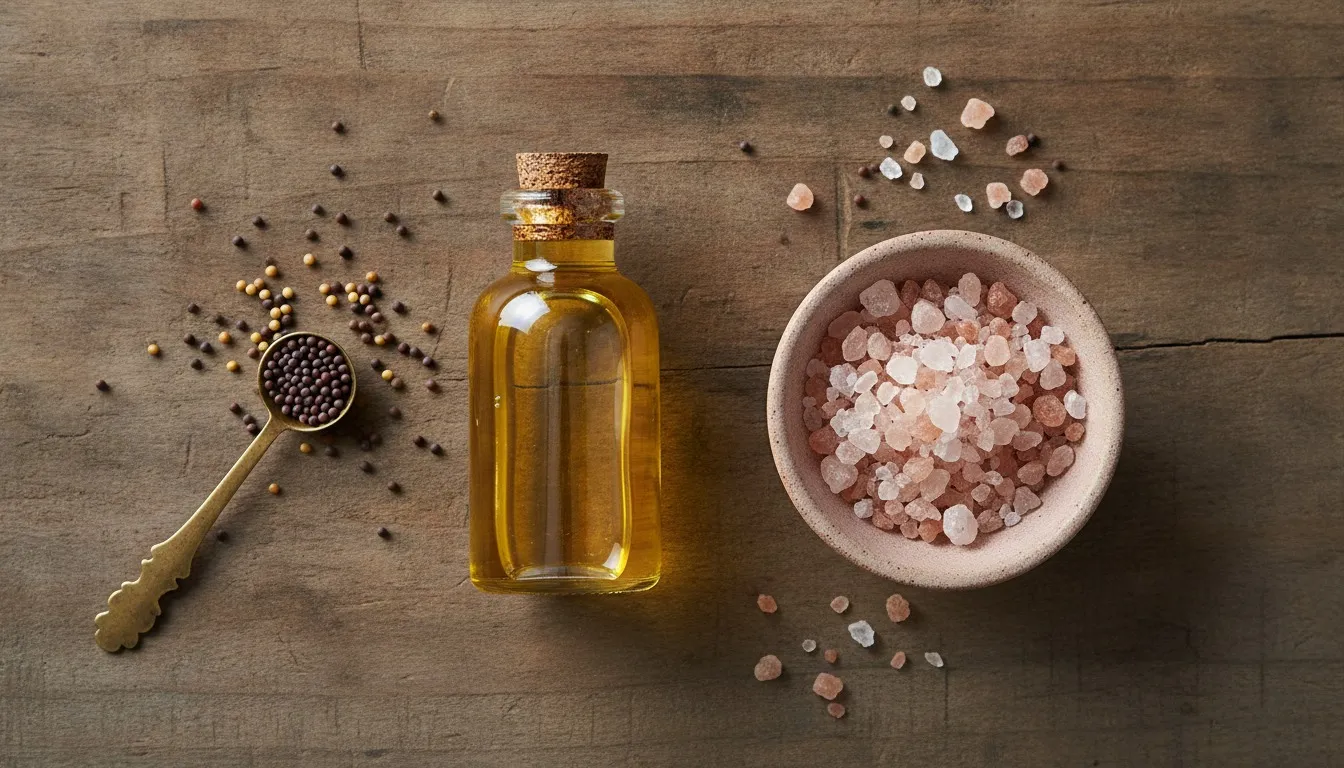
Ayurveda reads soft, spongy, easily bleeding gums as a kapha problem with a rakta, or blood, component: heavy, sticky residue collecting at the gum line while local circulation grows sluggish, leaving the tissue waterlogged and inflamed. The classical answer to kapha is warmth, pungency, and movement, and that is exactly what this remedy delivers. Charaka Samhita places dantadhavana, the cleaning and care of the teeth and gums, among the very first acts of dinacharya, the daily routine described in Sutrasthana chapter 5, sitting alongside gandusha, the practice of holding oil in the mouth. Mustard oil, sarson taila, is the classical warming and kapha reducing oil of North India, and saindhava lavana, rock salt, is its long standing partner in household tooth powders. The friction of the fingertip does the moving, the oil does the warming, and the salt draws out the sogginess.
What Modern Biology Says
Mustard oil owes much of its bite to allyl isothiocyanate, a sulphur compound released from the seed’s glucosinolates, and in the laboratory that compound does kill the bacteria that build dental plaque. The massage plausibly helps in its own right, since gentle friction along the gum margin raises blood flow through tissue that has gone stagnant. The honest position on the human evidence, though, is that it is thin. The trial usually pointed to, a triple blind randomised controlled trial in the Journal of Indian Society of Periodontology in 2014, did not use mustard oil at all: it tested sesame, olive, and coconut oil in 32 people, eight to a group, massaged into the gums daily for three weeks. Plaque scores, gingival scores, and salivary Streptococcus mutans counts all fell, but they fell in every group, the chlorhexidine gel comparison included, with no significant difference between them and no untreated group to measure against. Mustard itself has been through two randomised toothpaste trials, one running twelve months and one running four weeks, and both found modest reductions in plaque and bleeding on probing against placebo. Both, however, used white mustard, Sinapis alba, as milled seed or extract in a toothpaste, a different species and a different delivery from the Brassica juncea oil sitting in an Indian kitchen. No published human trial has tested mustard oil and rock salt gum massage as such. So: plausible chemistry, a long tradition, and no good trial of the actual remedy.
How And When To Use It
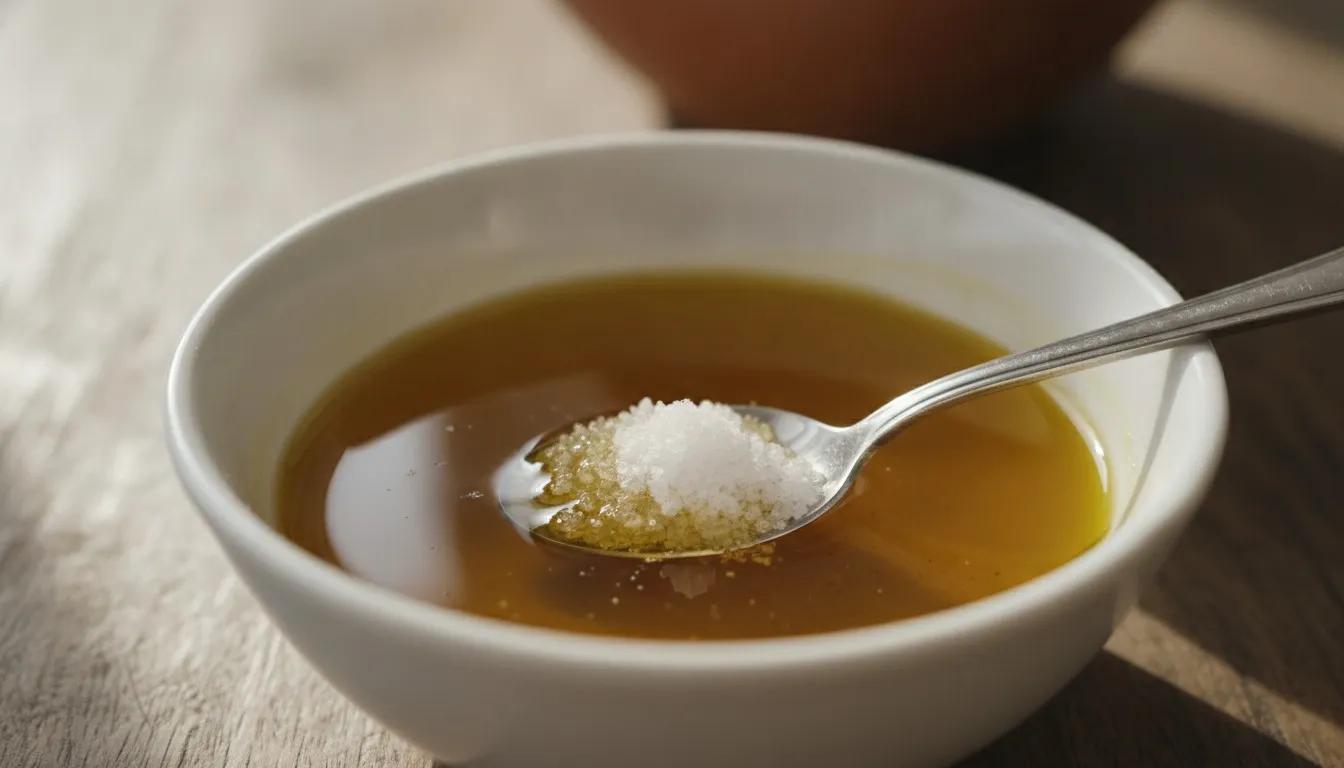
Reach for this when the gums feel tender or look puffy, not when something is really wrong. Once a day is plenty, best done first thing in the morning about ten minutes before brushing, using roughly a teaspoon of warm oil with a single pinch of finely powdered rock salt. Two minutes of light circular massage, one minute with the mouth closed, then spit and rinse. Give it two to three weeks, roughly the window the oil massage trial used, and expect gradual improvement rather than an overnight change: less tenderness when brushing, a firmer feel at the gum line, and a cleaner mouth on waking.
Cautions And A Note On Medical Care
A few limits are worth respecting. Grind the salt properly, because coarse crystals dragged along the gums will scratch tissue and abrade enamel, and press lightly rather than scrubbing. Always spit the oil out, and skip this on an open ulcer or a fresh extraction site. Gums that bleed freely, throb, stay swollen past a couple of weeks, or accompany a loose tooth belong to a dentist, and anyone taking blood thinners who notices bleeding gums should have them looked at rather than managed at home. This is traditional wisdom and not a substitute for medical care. For everyday tenderness, though, it costs almost nothing to try, and the two minutes slot neatly into a morning you are already spending at the sink.
References
These are the peer-reviewed human studies and reviews behind the modern-evidence claims above. They open in a new tab.
- Journal of Indian Society of Periodontology, 2014. Three weeks of daily gum massage with sesame, olive, or coconut oil, compared with chlorhexidine gel, in 32 people. Plaque, gingival scores, and salivary Streptococcus mutans fell in all four groups with no significant difference between them, and there was no untreated control. It did not test mustard oil.
- International Journal of Molecular Sciences, 2024. Twelve months of a toothpaste containing milled white mustard (Sinapis alba) seed and extract in 133 patients, with significant reductions in plaque and bleeding on probing, most of it in the first six months. Different mustard species and a toothpaste rather than an oil massage.
- Dentistry Journal, 2025. Four weeks of 0.5 percent white mustard extract toothpaste in 113 people beat placebo on plaque index (p = 0.041) and bleeding on probing (p = 0.037), though the margin over placebo was small. Again white mustard in a toothpaste, not mustard oil on the gums.
Recipe
Mustard Oil and Rock Salt Gum Massage
A warm fingertip massage of cold pressed mustard oil with a pinch of fine rock salt, worked gently along the gum line to ease tenderness, puffiness, and stale morning breath.
- Prep
- 2min
- Cook
- 0min
- Total
- 5min
- Servings
- 1applications
Ingredients
- 1 tsp cold pressed mustard oil (sarson ka tel), gently warmed
- 1 pinch rock salt (sendha namak), finely ground to a powder
- 1 cup warm water, for rinsing
Instructions
- 1 Warm the mustard oil slightly. It should feel comfortably warm on the back of your hand, never hot. A few seconds in a spoon held over low heat is enough.
- 2 Grind the rock salt to a fine powder so no gritty crystals remain, then stir a single pinch into the oil in a small dish.
- 3 Wash your hands, dip a clean index finger into the mixture, and rub it along the outer gum line in small, slow circles. Use light pressure only, the kind you would use on a closed eyelid.
- 4 Work your way around the upper and lower gums, front and back, for about 2 minutes in total, redipping the finger as needed.
- 5 Keep the mouth closed and still for 1 minute, then spit everything out. Do not swallow the oil.
- 6 Rinse with warm water and brush as usual about 10 minutes later. Do this once a day, ideally first thing in the morning, for two to three weeks.
Notes
- Use only a small pinch of finely ground rock salt. Coarse crystals scrubbed hard can scratch gum tissue and wear enamel, which makes the problem worse rather than better.
- Spit the oil out. Do not swallow it, and do not use this on children who cannot reliably spit.
- This is an addition to brushing and flossing, not a replacement for either.
- Gums that bleed heavily, throb, or stay swollen for more than two weeks, and any loose tooth, need a dentist, not a home remedy. Anyone on blood thinners who has bleeding gums should get them checked rather than treat them at home.
- Skip it if you have an open mouth ulcer or a fresh extraction site, and stop if the salt stings or the gums feel raw afterwards.
- Consult your doctor or dentist if symptoms persist beyond two weeks or worsen.
- This is traditional wisdom and not a substitute for medical care.