Warm Sesame Oil Nose Drops (Pratimarsha Nasya) for a Dry, Stuffy Nose
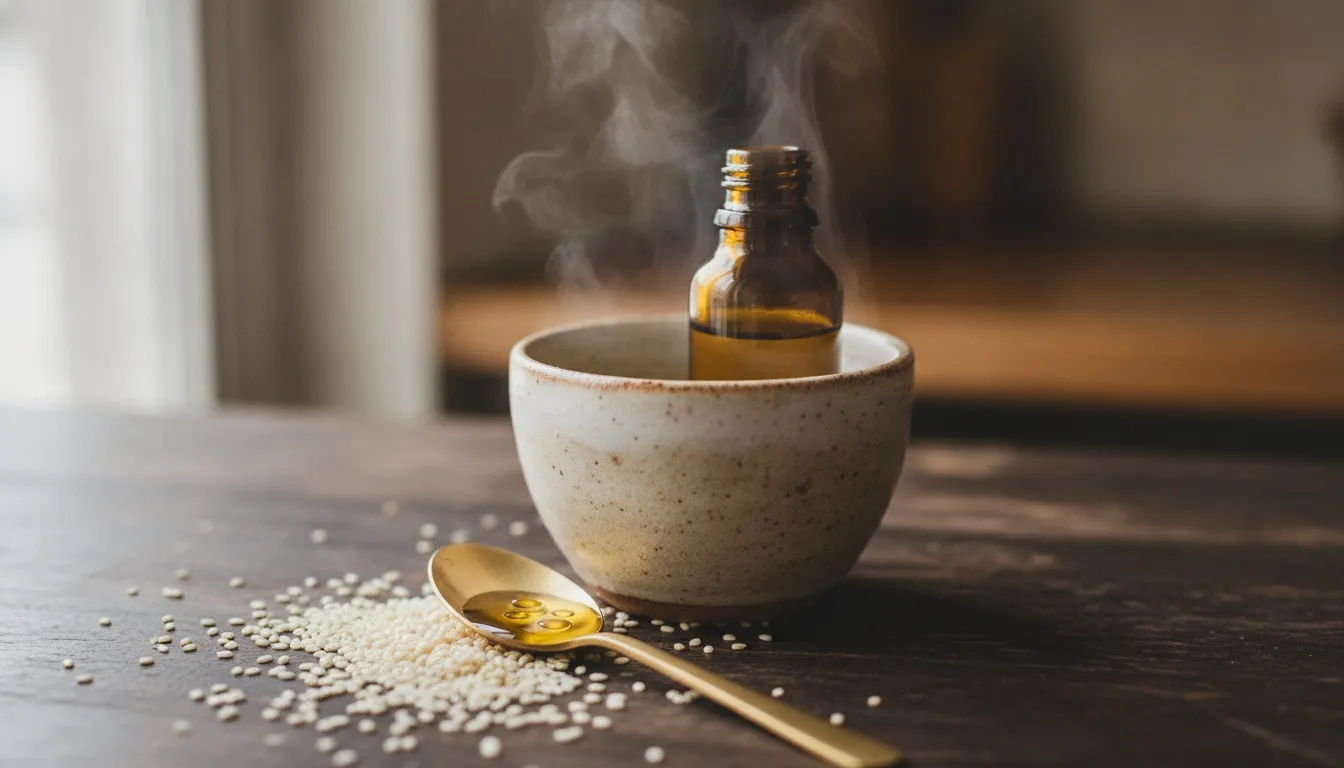
There is a particular kind of stuffy nose that no amount of blowing will fix. The nose feels blocked, tight, and raw, there are little crusts in the morning, and yet nothing actually comes out. Anyone who sleeps under air conditioning, works in a heated office, travels a lot, or lives through a dusty stretch of summer knows the feeling. It is not a cold and it is not an allergy, it is a nasal lining that has simply dried out. The old Ayurvedic answer sits in almost every South Indian kitchen already: a couple of drops of warm sesame oil, placed inside each nostril.
The Ayurvedic Perspective
Ayurveda reads this dryness as vata settling in the head and the upper breathing passages, where its cold, light, rough qualities strip the moisture from delicate tissue and leave it tight and brittle. When a little kapha stagnation sits on top, you get the heavy, blocked sensation without any real discharge. The classical texts describe the nose as the doorway to the head, nasa hi shiraso dvaram, which is why oil applied there is understood to nourish the entire region rather than just the nostril. The remedy is called Pratimarsha Nasya, the mild everyday form of nasal oiling, and it appears in the Ashtanga Hridayam and the Charaka Samhita as part of dinacharya, the daily routine, sitting alongside oil pulling and tongue scraping. The texts are unusually clear that this small one to two drop version is gentle enough to do every day without supervision, and sesame oil, warm and unctuous, is the oil chosen precisely because it is the direct opposite of everything vata dryness does.
What Modern Biology Says
Modern chemistry offers a straightforward explanation. Sesame oil is about 80 percent unsaturated fat, mostly oleic and linoleic acid, carrying the lignans sesamin and sesamolin plus vitamin E, and that blend spreads into a thin, stable film over the nasal mucosa that is thought to slow evaporation and let an irritated lining recover. The film itself has not been measured directly in these studies, but the symptom relief has actually been tested in people. A randomized crossover trial of 79 adults with nasal dryness from dry winter air, published in Archives of Otolaryngology, Head and Neck Surgery in 2001, compared intranasal sesame oil against isotonic saline and found the oil significantly better for dryness, crusting, and stuffiness, with eight in 10 people reporting improvement on sesame oil compared with three in 10 on saline. Side effects were few and short lived. A smaller Swedish study published in Rhinology in 2000 followed 40 people with dry noses, half of whom had previously had nasal irradiation, and found dryness, crusting, and blockage all eased while they used sesame oil, although that one had no comparison group, so it can only hint rather than prove. This is a modest evidence base, two small studies rather than a large meta-analysis, and it speaks only to dryness and crusting, not to infection or allergy, but it lines up remarkably well with what the classical texts were already recommending.

How And When To Use It
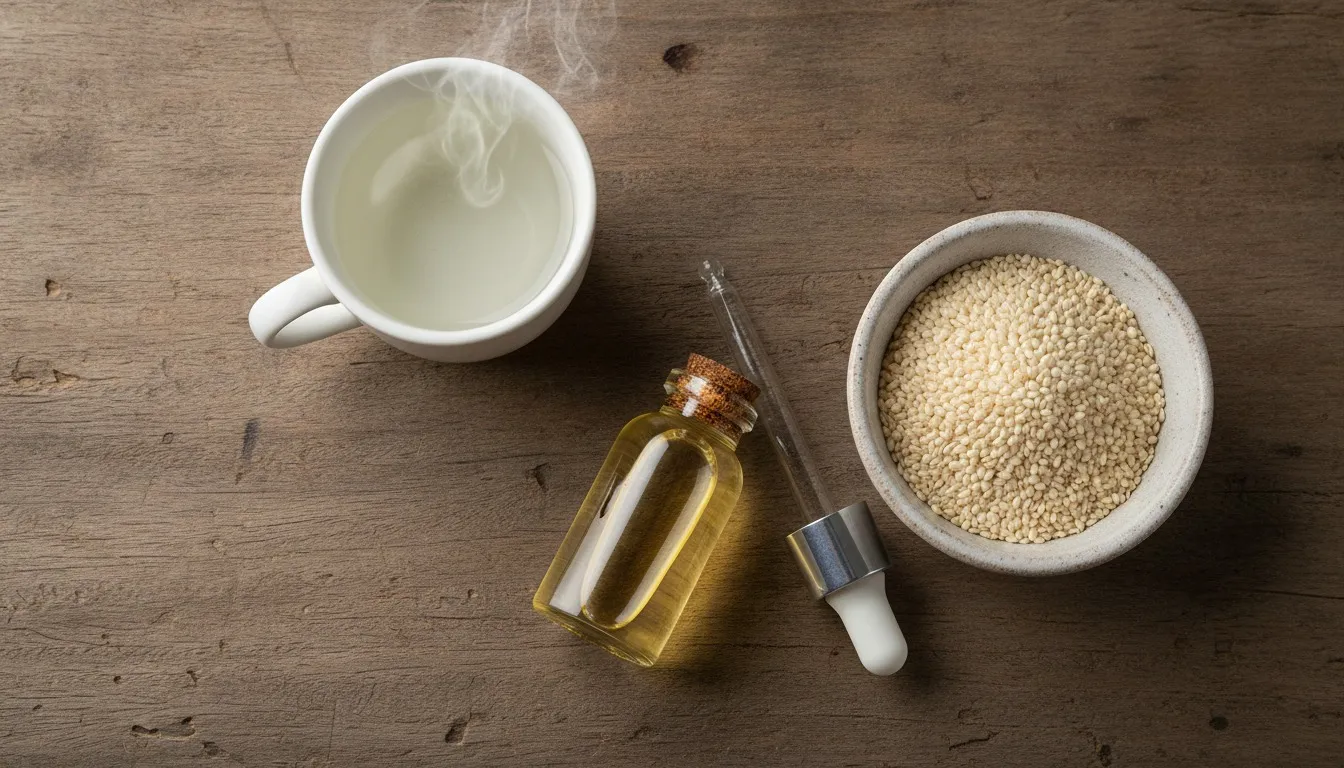
Reach for this when the nose feels dry, tight, or crusted rather than runny: after a flight, during a dusty week, or through any stretch of nights in air conditioning. Warm a teaspoon of cold-pressed sesame oil by standing the bottle in hot water for two or three minutes, then place two drops in each nostril with a clean little finger and sniff softly, never forcefully. Morning on an empty stomach is the traditional time, before food or a bath, and a second application in the evening is fine. Used daily, most people find the crusting and the blocked-but-empty feeling ease within three to five days, and many keep it up through the whole dry season as a habit rather than a treatment.
Cautions And A Note On Medical Care
A few sensible limits. Use only plain cold-pressed, food-grade sesame oil, never the toasted dark oil sold for cooking flavor and never an essential oil, and always sniff gently instead of snorting, since forcing oil deep into the airway can irritate the lungs in rare cases of heavy repeated use. Skip it entirely during an acute sinus infection with fever or facial pain, during a nosebleed, after nasal surgery, or if you are allergic to sesame, and note that the classical texts advise against Nasya in pregnancy, so check with your doctor first. If the dryness, blockage, or crusting lasts beyond ten days, or if you see blood or thick discolored discharge, that is a doctor’s visit, not a kitchen remedy. This is traditional wisdom and not a substitute for medical care. But for the ordinary, maddening dryness of a modern indoor life, two drops of warm sesame oil is one of the simplest things Ayurveda ever asked anyone to do.
References
These are the peer-reviewed human studies and reviews behind the modern-evidence claims above. They open in a new tab.
- Johnsen et al., Archives of Otolaryngology Head and Neck Surgery, 2001. Randomized crossover trial in 79 adults with dry nasal mucosa: sesame oil beat saline for dryness, stuffiness, and crusting (P<.001), with eight in 10 reporting improvement on the oil versus three in 10 on saline. This is the closest direct evidence for putting sesame oil in a dry nose.
- Bjork-Eriksson et al., Rhinology, 2000. Open, uncontrolled study in 40 people (20 from a dry-nose clinic, 20 who had prior nasal irradiation) who sprayed sesame oil for 20 days: dryness, crusting, and blockage all fell significantly, but with no comparison group the result is only suggestive.
Recipe
Warm Sesame Oil Nasya Drops
Two drops of body-warm sesame oil in each nostril, the daily Ayurvedic practice known as Pratimarsha Nasya, to relieve a nose made dry, crusty, and stuffy by air conditioning, heating, dust, or travel.
- Prep
- 3min
- Cook
- 0min
- Total
- 3min
- Servings
- 1applications
Ingredients
- 1 tsp cold-pressed sesame oil (gingelly or til oil), not toasted
- 1 cup hot water, for warming the oil in a cup
Instructions
- 1 Pour about a teaspoon of cold-pressed sesame oil into a small clean glass bottle or bowl. Stand it in a cup of hot water for 2 to 3 minutes, until the oil feels pleasantly warm, not hot, on the back of your wrist.
- 2 Blow your nose gently first, so the oil reaches the lining rather than sitting on top of dried mucus.
- 3 Sit down and tilt your head back slightly, no more than a comfortable angle. Do not hang your head off the edge of a bed.
- 4 Dip your clean little finger in the warm oil and place 2 drops just inside one nostril, then massage the inside wall of the nostril gently with the fingertip. Repeat on the other side. A clean dropper works just as well as a finger.
- 5 Sniff softly, the way you would smell a flower, so the oil spreads along the passage. Do not snort or inhale forcefully.
- 6 Stay seated for a minute, then massage the bridge and sides of the nose with a fingertip. Spit out anything that drains into the throat rather than swallowing it.
- 7 Do this once in the morning on an empty stomach, before food or a bath, and if you like once more in the evening. It can be used daily through a dry season, or as needed after flights, dusty days, or nights in air conditioning. Most people notice the crusting and blocked feeling ease within 3 to 5 days of daily use.
Notes
- Use plain cold-pressed, food-grade sesame oil (gingelly or til oil), never toasted or dark sesame oil, and never an essential oil.
- Place the drops gently and sniff softly. Do not inhale hard or tip the head far back, since forcing oil deep into the airway can, in rare cases with repeated heavy use, irritate the lungs.
- Skip this during an acute sinus infection with fever or facial pain, during a nosebleed, after nasal surgery or injury, and if you have a known sesame allergy.
- Classical texts advise against Nasya during pregnancy and just after meals or a bath, so save it for an empty-stomach morning and check with your doctor if you are pregnant. Not for infants or young children.
- Consult your doctor if the dryness, blockage, or crusting persists beyond 10 days, if there is blood, thick discolored discharge, or facial pain, or if symptoms worsen. This is traditional wisdom and not a substitute for medical care.