Authentic Karnataka Ragi Rotti Recipe (Finger Millet Flatbread)
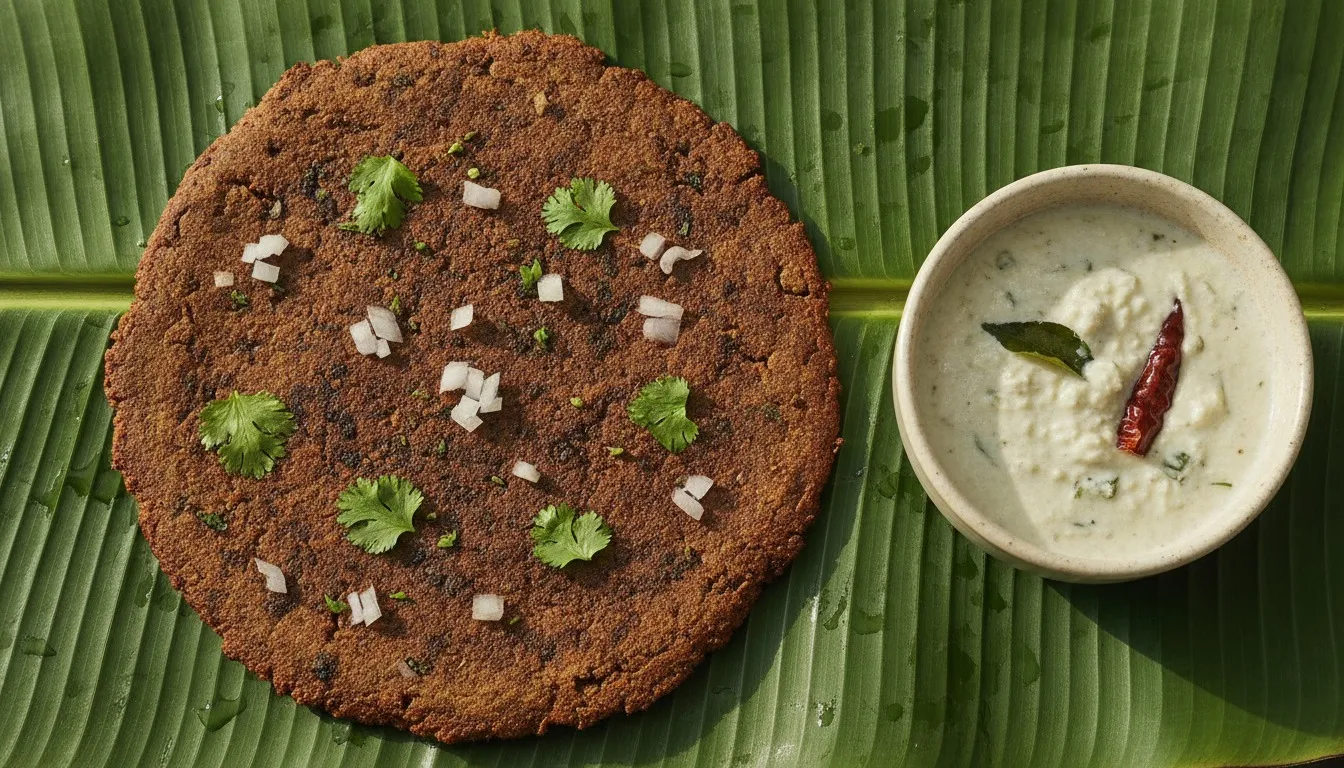
Ragi rotti is one of those humble, everyday breads from Karnataka that has quietly become a star as millets have their moment online. As more home cooks look for gut-friendly, gluten-free, and diabetes-friendly breakfasts, finger millet has moved from a rural staple to a trending health food, and ragi rotti is the tastiest gateway into cooking with it. It is a soft, savory flatbread studded with onion, coconut, green chili, and curry leaves, patted thin by hand and roasted on a hot tawa until it picks up golden, crisp edges. Unlike a rolled roti, this one is spread with your fingertips, which gives it its signature rustic, lacy look.
About This Dish
This rotti comes from the heart of Karnataka, where ragi has been a dietary cornerstone for generations, especially in the southern and rural parts of the state. Finger millet grows well in dry conditions and stores for years, which made it a dependable grain long before it became fashionable. Families traditionally ground their own ragi and turned it into mudde, ambli, and these hand-patted rottis for breakfast or a light supper. What was once considered simple village food is now celebrated for exactly the qualities that kept it on the table: it is nourishing, filling, and rich in calcium and fiber.
Ingredient Notes
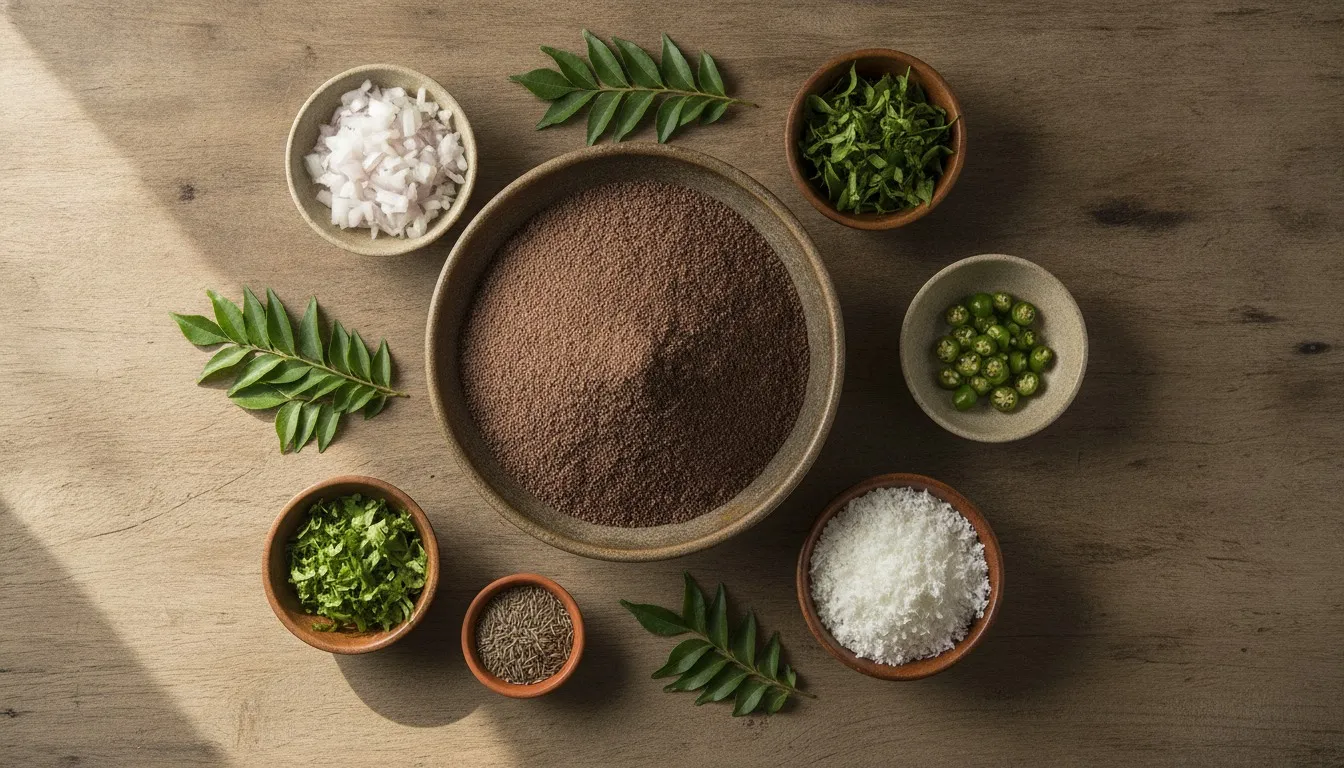
The base is just ragi flour, and everything else builds flavor and texture around it. Finely chopped onion is essential, both for taste and because the moisture it releases helps the dough spread smoothly. Grated coconut keeps the rottis from turning dry and chewy, so do not skip it, though a quarter cup is plenty. Green chilies, chopped coriander, curry leaves, and cumin bring the aromatics, and you can dial the chili up or down to taste. If you want to sneak in more vegetables, a little grated carrot works beautifully, and a spoon of sesame seeds adds a nutty crunch. Fresh ragi flour matters here, since older flour can taste musty.
Method And Tips
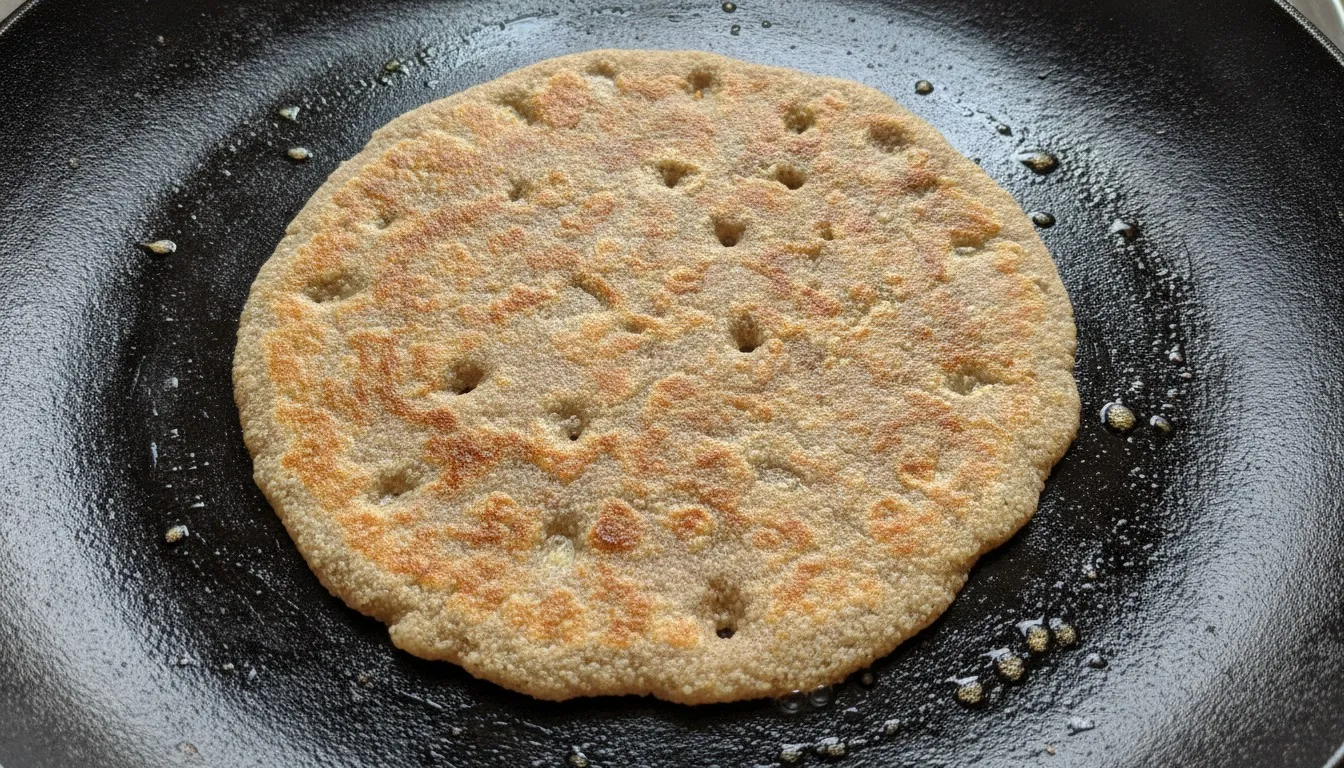
The technique that makes or breaks this rotti is the water and the patting. Use very hot, almost boiling water to bring the dough together, because heat softens the ragi and gives you a tender, pliable rotti instead of a hard one. Pat the dough thin and even with wet fingers on a greased sheet or directly on a cold tawa, and poke a few holes so it cooks through without staying raw in the center. Cook the first side covered so the rotti steams and sets, then finish the second side uncovered for those crisp, spotty edges. Keep your fingers wet, work gently, and do not rush the flip.
Serving Suggestions
Serve ragi rotti hot off the tawa, when it is at its softest and most fragrant, with a bowl of coconut chutney, peanut chutney, or even a dollop of white butter. It makes a satisfying breakfast or a light, wholesome dinner, and it is an easy way to bring more millet into your week. Give it a try, and you may find it becomes a regular on your table the way it has been in Karnataka kitchens for generations.
Recipe
Karnataka Ragi Rotti
A soft, rustic finger millet flatbread from Karnataka, patted by hand directly on the tawa with onion, coconut, green chili, and curry leaves. Naturally gluten free and best eaten hot with chutney.
- Prep
- 15min
- Cook
- 20min
- Total
- 35min
- Servings
- 4servings
- Calories
- 230kcal
Ingredients
- For the dough
- 2 cups ragi flour (finger millet flour)
- 1 cup onion, finely chopped
- 1/4 cup grated coconut, fresh or frozen
- 2 green chilies, finely chopped
- 2 tbsp coriander leaves, chopped
- 1 tbsp curry leaves, chopped
- 1 tsp cumin seeds
- 3/4 tsp salt
- 1.25 cups hot water
- For roasting
- 3 tbsp coconut oil or ghee
Instructions
- 1 In a large mixing bowl, combine the ragi flour, chopped onion, grated coconut, green chilies, coriander leaves, curry leaves, cumin seeds, and salt.
- 2 Rub and squeeze the mixture between your fingers for a minute or two. This crushes the onion and releases its moisture, which helps flavor the dough.
- 3 Pour in the hot water a little at a time, stirring first with a spoon since the water is hot, then mixing by hand once it is cool enough to touch. Add just enough water to bring it together into a soft, smooth dough that is not sticky. You may not need all the water.
- 4 Divide the dough into 7 to 8 equal portions and roll each into a ball. Keep them covered so they do not dry out.
- 5 Grease a sheet of parchment paper or a clean plastic sheet lightly with coconut oil. Place one dough ball on it and, with wet fingertips, pat and press it outward into a thin, even round about 6 inches across. Re-wet your fingers as needed to keep the dough from sticking.
- 6 Make 3 or 4 small holes through the rotti with your finger. These help it cook evenly and let the oil seep in.
- 7 Heat a tawa or heavy skillet over medium heat. Lift the sheet, flip it rotti-side down onto the hot tawa, and let it sit for about 30 seconds, then gently peel away the sheet.
- 8 Drizzle a little coconut oil or ghee around the edges and into the holes. Cover with a lid and cook for 2 to 3 minutes until the base is set and lightly browned.
- 9 Flip the rotti, drizzle a little more oil, and cook the second side uncovered for about 1 to 2 minutes until golden brown spots appear and the rotti is cooked through.
- 10 Repeat with the remaining dough, wiping and re-greasing the sheet between rottis. Serve hot with coconut chutney or peanut chutney.
Notes
- For softer rottis, use water that is genuinely hot, almost boiling. Hot water is the single most important factor for a tender ragi rotti.
- If patting directly on the sheet feels tricky, you can pat the dough straight onto a cold, greased tawa and then set it on the heat.
- Add-ins are flexible: a handful of grated carrot, a teaspoon of sesame seeds, or a little grated ginger all work well.
- Ragi flour can turn rancid, so use fresh flour for the best taste and smell.
- Leftover dough keeps in the fridge for a day, but the rottis are best cooked and eaten fresh and hot.