Saffron Milk (Kesar Doodh) for Mild Low Mood and Everyday Stress

Some evenings just sit heavy. The day went sideways, your mind keeps replaying it, and you feel a little flat or low without anything being seriously wrong. Almost everyone knows that gray, end-of-day mood that is not an illness, just a dip. Long before there were words like serotonin, Indian kitchens reached for a warm cup of saffron milk, kesar doodh, as a gentle way to soften the edges of a stressful day.
The Ayurvedic Perspective
In Ayurveda, that restless, heavy, or flat feeling is often read as an aggravation of vata, the air and movement energy that, when disturbed, scatters the mind and unsettles sleep, sometimes with a pitta-style irritability layered on top. Saffron, known as Kumkuma or Kashmira, is described in classical texts including the Bhavaprakasha Nighantu as a tridoshic rasayana, a rejuvenating substance gentle enough to balance all three doshas. It is traditionally called hridya, meaning good for both the physical heart and the emotional heart. Warming it in milk is not incidental: milk is the classic anupana, or carrier, chosen to pacify vata and ground the body. Taken in the evening, the combination is meant to settle an agitated mind and prepare it for rest.
What Modern Biology Says
Modern chemistry gives saffron’s reputation some real backing. Its color and aroma come from crocin, crocetin, and safranal, carotenoid and volatile compounds that appear to support serotonin signaling and act as antioxidants in the body. A 2019 meta-analysis of randomized controlled trials found saffron significantly more effective than placebo for mild to moderate low mood, and several trials reported effects comparable to standard medication at a standardized dose of about 30 mg per day. A 2025 placebo-controlled trial in healthy adults experiencing low mood likewise reported improvements in mood and general wellbeing. The honest caveat is that most studies used concentrated, standardized extracts rather than a few threads steeped in milk, so the kitchen version is gentler and far less precise, more of a soothing ritual than a measured dose.

How And When To Use It
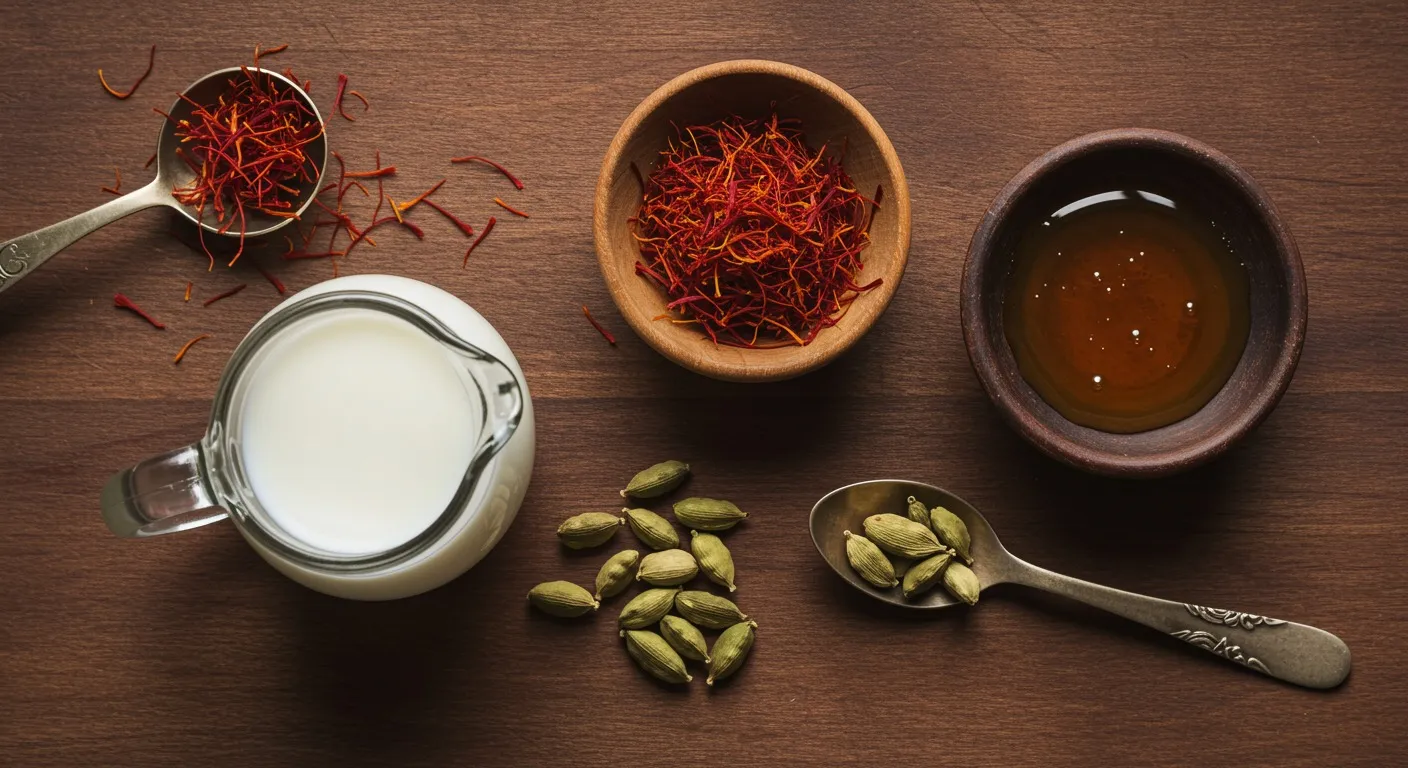
Reach for saffron milk on the ordinary low-energy, low-spirits evenings rather than expecting it to fix a hard day instantly. Warm one cup of milk, steep five saffron threads for five to eight minutes until the milk turns soft gold, and sip it slowly about half an hour to an hour before bed. Once a day is plenty, and a pinch of cardamom or a little honey can make it more comforting. Many people find the warmth, the routine, and the quiet few minutes of sipping are as settling as the saffron itself.
Cautions And A Note On Medical Care
A few cautions matter. Keep saffron modest, no more than about 15 threads or roughly 30 mg in a whole day, since very large amounts can be toxic. Avoid it in pregnancy because higher doses can stimulate the uterus, and check with your doctor first if you take mood, anxiety, or blood-thinning medication, as saffron may add to their effects. Most importantly, a passing low mood is one thing, but persistent sadness, hopelessness, or sleep trouble lasting more than two weeks deserves a real medical conversation, not a kitchen remedy. This is traditional wisdom and not a substitute for medical care. If a warm, fragrant cup at the end of a long day sounds good to you, this gentle one is worth a try.
References
These are the peer-reviewed human studies and reviews behind the modern-evidence claims above. They open in a new tab.
- Toth et al., Planta Med, 2019. Meta-analysis of randomized trials found oral saffron significantly more effective than placebo for mild to moderate depression and non-inferior to standard antidepressants, with most trials using about 30 mg per day.
- Lopresti et al., Journal of Nutrition, 2025. 12-week placebo-controlled trial in 202 adults with subclinical low mood; 28 mg/day saffron extract produced a significantly greater improvement in mood and general wellbeing than placebo.
Recipe
Saffron Milk (Kesar Doodh)
A warm cup of milk gently steeped with a pinch of saffron threads, a soothing Ayurvedic evening drink traditionally used to lift mild low mood and ease everyday stress.
- Prep
- 2min
- Cook
- 8min
- Total
- 10min
- Servings
- 1doses
Ingredients
- 1 cup milk (dairy or unsweetened plant milk)
- 5 threads saffron threads
- 1 pinch green cardamom powder (optional)
- 1 tsp honey or jaggery for sweetness (optional)
Instructions
- 1 Pour 1 cup of milk into a small saucepan and warm it over medium heat until it just begins to steam and bubble at the edges, without letting it boil over.
- 2 Lightly crush 5 saffron threads between your fingertips and add them to the warm milk along with a pinch of cardamom powder if using.
- 3 Lower the heat and let the saffron steep for 5 to 8 minutes, stirring occasionally, until the milk turns a soft golden color and smells fragrant.
- 4 Take the milk off the heat, let it cool to a comfortable sipping temperature, then stir in honey or jaggery only if you want it sweet.
- 5 Sip it slowly in the evening, ideally about 30 to 60 minutes before bed, to unwind after a stressful day. Use no more than once a day.
Notes
- Keep saffron modest: no more than about 15 threads, roughly 30 mg, total per day. Very high doses, around several grams, can be toxic.
- Avoid saffron during pregnancy, since larger amounts can stimulate the uterus; this remedy is intended for healthy non-pregnant adults.
- If you take prescription mood, anxiety, or blood-thinning medication, talk to your doctor before using saffron regularly, as it may add to their effects.
- Skip this if you have a known milk allergy or significant lactose intolerance; the saffron can be steeped in warm water instead.
- Persistent low mood, hopelessness, or sleep problems lasting more than two weeks deserve a medical evaluation, not a home remedy. Consult your doctor if symptoms persist beyond 2 weeks or worsen.
- This is traditional wisdom and not a substitute for medical care.