Authentic Raw Mango Rasam Recipe (Mamidikaya Charu)
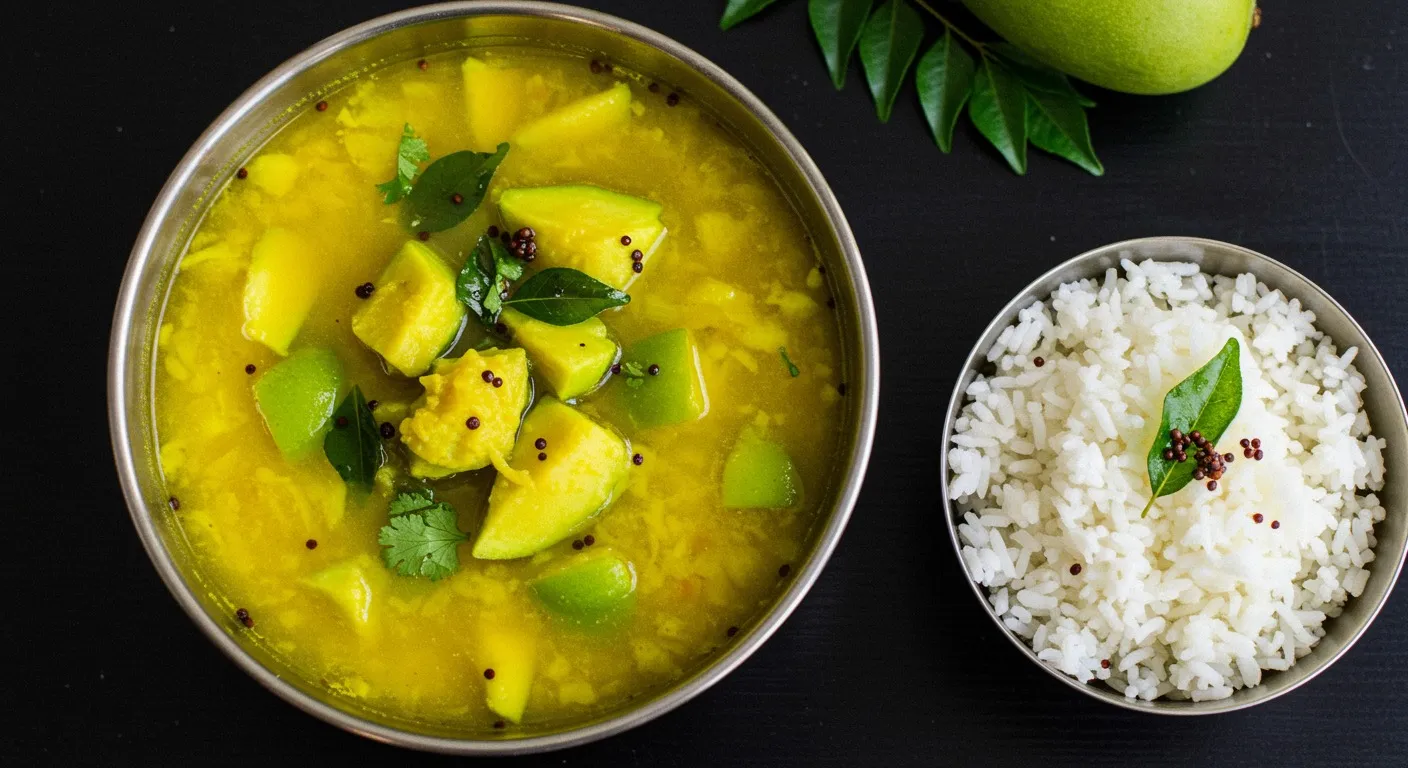
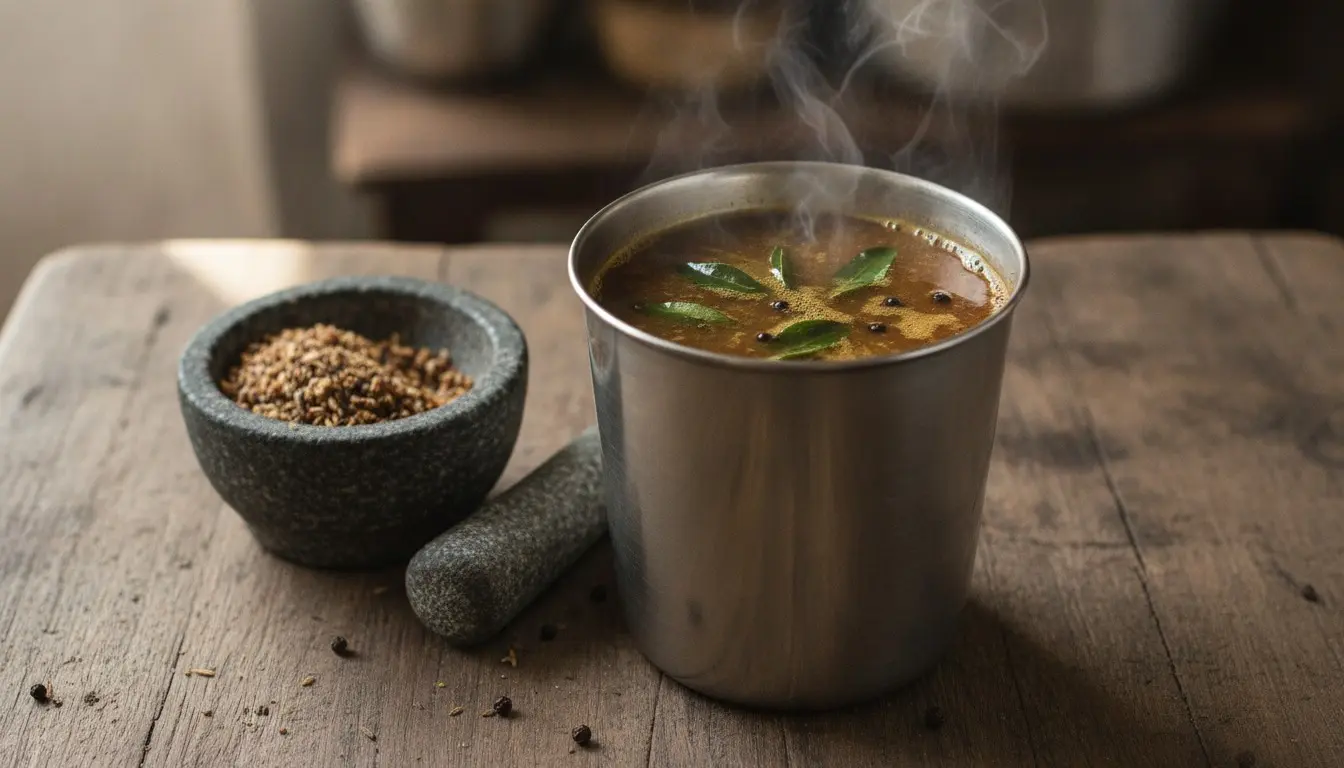
Raw mango rasam is one of those dishes that quietly takes over the kitchen the moment green mangoes show up at the market. Known as mamidikaya charu in Telugu, mangai rasam in Tamil, and mavinakayi saru in Kannada, it is a thin, tangy soup that manages to be both cooling and deeply comforting. It has been having a real moment online, popping up across recipe blogs, YouTube, and Pinterest as one of the most-shared seasonal mango recipes. The appeal is obvious: it is fast, it uses one star ingredient, and it tastes like summer in a bowl.
About This Dish
Rasam itself is ancient, a staple of South Indian homes where a tangy, spiced broth is served alongside rice at nearly every traditional meal. While tamarind is the usual souring agent, coastal and southern households have long swapped in seasonal raw mango when it is plentiful, letting the fruit do the work tamarind normally does. In Mangalore and across Andhra and Tamil Nadu, this mango version is treated as a seasonal treat, sometimes even served at weddings and festive lunches when mangoes are at their peak.
Ingredient Notes
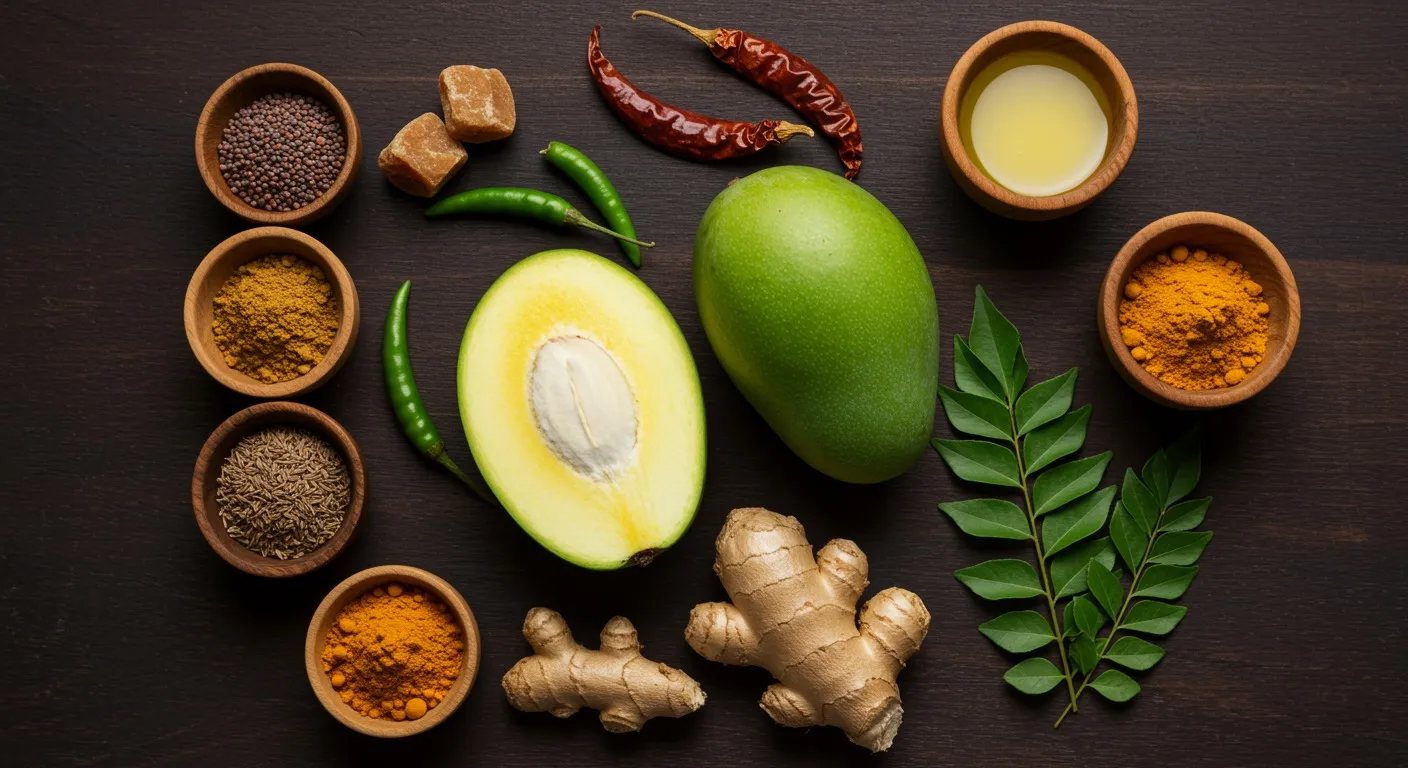
The heart of this recipe is a firm, sour raw mango, the kind used for pickles and chutneys rather than a sweet ripe one. A small piece of jaggery balances the sharpness without making the rasam sweet, and a little tomato adds body and color. The tempering is where the fragrance comes from: mustard seeds, cumin, dried red chili, curry leaves, and asafoetida bloomed in ghee. If you keep homemade rasam powder on hand, a spoonful deepens the flavor, but it is entirely optional. Ghee gives the richest tempering, though coconut oil is a lovely coastal alternative if you prefer that profile.
Method And Tips
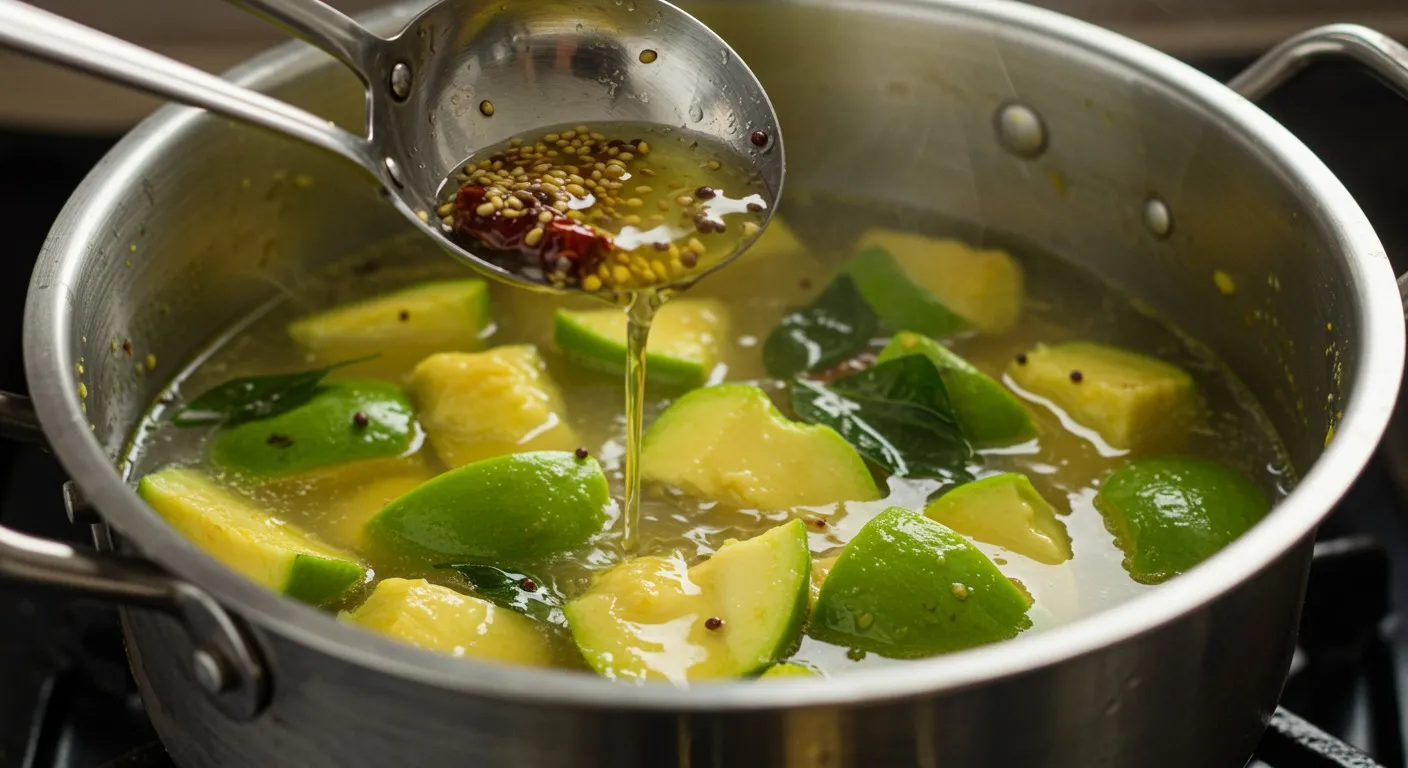
The single most important technique is restraint with heat. Once the water goes in, the rasam should only simmer gently and turn frothy, never reach a hard rolling boil, which flattens its fresh, lively taste. Cook the mango first until it is truly soft so it melts into the broth, and add the tempering at the very end so the spices stay aromatic. A final five minutes covered off the heat lets everything settle into a rounded, balanced flavor.
Serving Suggestions
Serve raw mango rasam piping hot over a mound of steamed rice with a spoon of ghee, or pour it into a cup and sip it on its own as a digestive, cooling soup on a warm afternoon. It pairs beautifully with a simple poriyal and pappadum for a light meal. Give it a try when raw mango season comes around, and it may well earn a permanent spot in your summer rotation.
Recipe
Raw Mango Rasam
A light, tangy South Indian soup made from boiled green mango, simmered with turmeric, green chili, and a touch of jaggery, then finished with a ghee tempering of mustard seeds, cumin, and curry leaves. Cooling for summer and equally good poured over hot rice.
- Prep
- 10min
- Cook
- 20min
- Total
- 30min
- Servings
- 4servings
- Calories
- 90kcal
Ingredients
- For the rasam base
- 1 medium raw green mango, peeled and chopped
- 4 cups water
- 3 green chilies, slit
- 1 inch piece ginger, crushed
- 1 small tomato, chopped
- 1/2 tsp turmeric powder
- 1 tbsp jaggery, grated
- 1 tsp salt
- 2 tbsp fresh coriander, chopped
- For the tempering
- 2 tbsp ghee
- 1 tsp mustard seeds
- 1 tsp cumin seeds
- 2 dried red chilies, broken
- 1 sprig curry leaves
- 1/4 tsp asafoetida (hing)
Instructions
- 1 Peel the raw mango and chop the flesh off the seed into rough chunks. Place the chunks in a pot with 1 cup of water, the slit green chilies, and the turmeric.
- 2 Cover and simmer over medium heat for 8 to 10 minutes, until the mango is completely soft and falling apart. Lightly mash it with the back of a spoon, keeping the chilies in the pot.
- 3 Add the crushed ginger, chopped tomato, grated jaggery, salt, and the remaining 3 cups of water. Stir well to dissolve the jaggery and salt.
- 4 Bring to a gentle simmer and cook for 6 to 8 minutes, until the tomato softens and the rasam turns frothy at the surface. Do not let it boil hard, as a rolling boil dulls the fresh flavor.
- 5 While the rasam simmers, make the tempering. Heat the ghee in a small pan over medium heat and add the mustard seeds. When they splutter, add the cumin seeds, broken red chilies, curry leaves, and asafoetida.
- 6 Let the spices sizzle for a few seconds until fragrant, then pour the hot tempering directly into the simmering rasam.
- 7 Turn off the heat, stir in the chopped coriander, and cover for 5 minutes so the flavors settle. Serve hot over steamed rice or sip it warm as a soup.
Notes
- Taste and adjust the jaggery: very sour mangoes need a little more to balance, while milder mangoes need less. The rasam should taste tangy first, with sweetness in the background.
- For a deeper aroma, add 1 teaspoon of homemade rasam powder along with the second batch of water.
- Keep the heat at a gentle simmer once water is added. Rasam is never boiled hard, or it loses its bright, fresh character.