Pomegranate (Dadima) Juice for Mild Nausea, Queasiness, and Poor Appetite
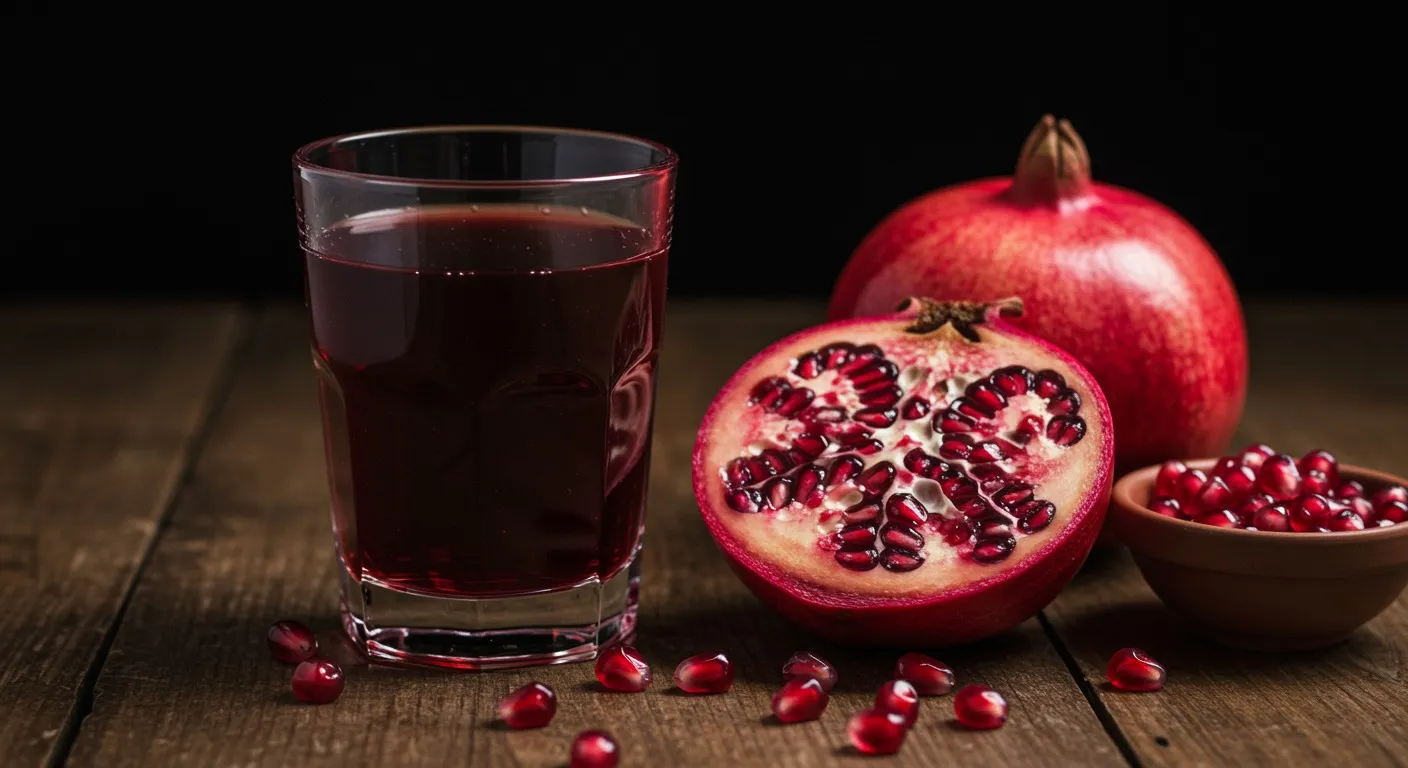
Almost everyone knows that uneasy, off-color feeling when the stomach turns mildly queasy or food simply stops sounding appealing, whether after a too-rich meal, a long hot day, or a wave of low energy. It is rarely serious on its own, but a flat appetite and lingering nausea can drag down a whole day. One of the oldest kitchen answers in the Indian household is a small glass of fresh pomegranate juice, known in Ayurveda as dadima, sipped slowly to coax the stomach back to comfort.
The Ayurvedic Perspective
In Ayurvedic terms, mild nausea and a stalled appetite often point to weak or disturbed agni, the digestive fire, frequently tangled up with aggravated vata and kapha. Pomegranate is classed as deepana, meaning it kindles appetite, and pachana, meaning it supports digestion, while its absorbent grahi quality makes it soothing when the gut feels loose or unsettled. Because the sweet-sour fruit is considered tridoshic, it nudges the system back toward balance without strongly heating pitta the way a sharp spice might. The Charaka Samhita and later Ayurvedic nighantus name dadima among the rochana, the appetite-restoring foods, recommended for aruchi (loss of taste for food) and chardi (nausea and vomiting). This is why it shows up so often as a before-meal or after-meal sip in traditional homes.
What Modern Biology Says
On the modern side, pomegranate is one of the most studied fruits for its polyphenols, especially ellagitannins like punicalagin and ellagic acid, which give the juice its faint astringency. A 2006 human study in The Journal of Nutrition showed these compounds are not absorbed whole but are transformed by gut bacteria into urolithin metabolites that circulate in the blood and can linger in the urine for up to two days. Other human work points to effects on the gut microbiome: a small 2023 randomized trial in Foods found that a standardized pomegranate extract nudged up several beneficial gut bacteria and raised short-chain fatty acids, though it used a concentrated extract rather than plain juice. The astringent tannins can have a gentle toning effect on irritated gut lining, and the lively sweet-sour taste naturally stimulates saliva and appetite. It is worth being honest here: the direct human evidence for pomegranate easing nausea or boosting appetite is limited and leans on tradition, so this is a gentle supportive measure rather than a proven medicine.
How And When To Use It
Reach for this when you feel mildly queasy after a heavy or oily meal, or when nothing on the plate appeals and you want to wake up your appetite. Half a cup to a small glass of fresh, unsweetened juice is plenty for one dose, taken about 30 minutes before a meal to spark appetite or shortly after a meal to settle the stomach. A pinch of roasted cumin and, if you like, a tiny pinch of rock salt sharpen the digestive effect in true Ayurvedic style. Once a day is fine; there is no need to drink it by the bottle.
Cautions And A Note On Medical Care
A few cautions keep this simple remedy safe. Pomegranate juice can block the same liver enzymes as grapefruit, so if you take statins, blood pressure medication, or blood thinners, check with your doctor before drinking large amounts regularly, and keep added honey away from children under one year old. Because the fruit is mildly binding, overdoing it can nudge you toward constipation, so one small glass is the sweet spot. If nausea or a poor appetite lingers beyond two or three days, worsens, or arrives with repeated vomiting, fever, or signs of dehydration, see a doctor, since this is traditional wisdom and not a substitute for medical care. Otherwise, this is a bright, pleasant, kitchen-simple thing to try the next time your stomach feels off.
References
These are the peer-reviewed human studies and reviews behind the modern-evidence claims above. They open in a new tab.
- Seeram et al., The Journal of Nutrition, 2006. Human study in 18 volunteers showing pomegranate juice ellagitannins are not absorbed whole but are converted by gut bacteria into urolithin metabolites that circulate in plasma and persist in urine up to 48 hours.
- Sivamani et al., Foods, 2023. Randomized controlled trial in 28 adults; a standardized pomegranate extract increased several beneficial gut bacteria and raised short-chain fatty acids (propionate up 162 percent), though it used a concentrated extract rather than plain juice.
Recipe
Pomegranate Appetizer Juice
A small glass of fresh pomegranate juice, brightened with a pinch of roasted cumin and rock salt, taken to ease mild nausea and wake up a flat appetite.
- Prep
- 10min
- Cook
- 0min
- Total
- 10min
- Servings
- 1doses
Ingredients
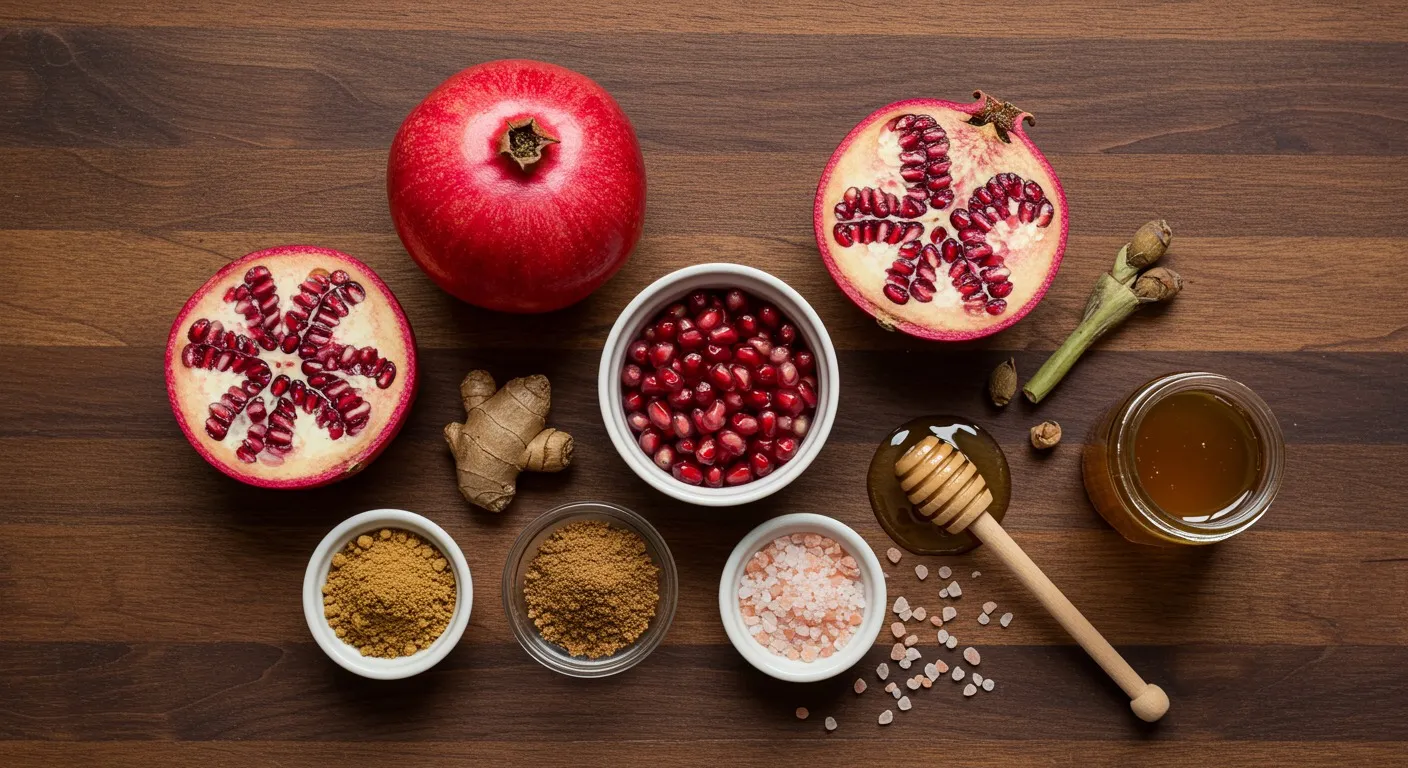
- 1 medium fresh pomegranate, arils removed (or 1/2 cup ready pomegranate juice)
- 1 pinch roasted cumin powder
- 1 pinch rock salt (optional)
- 1/2 tsp honey, only if extra sweetness is wanted (optional)
Instructions
- 1 Halve the pomegranate and tap out the arils, or measure out about 1/2 cup of fresh unsweetened pomegranate juice.
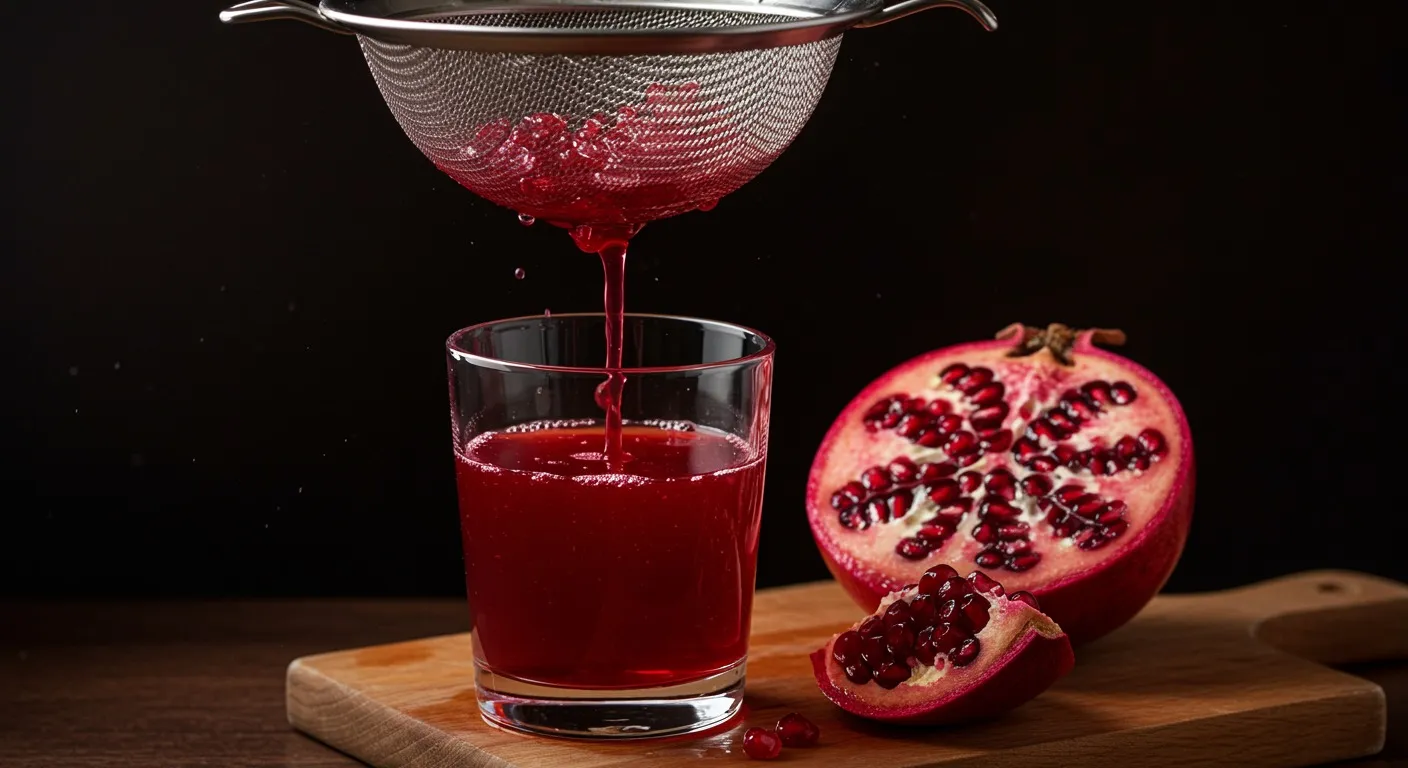
- 2 Blend or press the arils briefly, then strain through a sieve to get a smooth juice; do not over-blend the white seeds, which add bitterness.
- 3 Stir in a pinch of roasted cumin powder and, if you like, a tiny pinch of rock salt to sharpen the digestive effect.
- 4 If the fruit is very tart, stir in up to 1/2 teaspoon of honey, but skip the honey for children under 1 year old.
- 5 Sip the small glass slowly, ideally about 30 minutes before a meal to revive appetite, or after a heavy meal to settle mild queasiness.
Notes
- Pomegranate juice can inhibit the same liver enzymes as grapefruit, so if you take statins, blood pressure medication, or blood thinners, check with your doctor before drinking large amounts regularly.
- Its astringent, binding quality can worsen constipation if you overdo it; one small glass is plenty.
- Choose fresh or 100 percent unsweetened juice; commercial drinks loaded with added sugar offer little of the benefit.
- Skip any added honey for children under 1 year of age because of the risk of infant botulism.
- Consult your doctor if nausea or poor appetite persists beyond 2 to 3 days or worsens, or if it comes with repeated vomiting, fever, or signs of dehydration.
- This is traditional wisdom and not a substitute for medical care.