Peanut Jaggery Ladoo Recipe (Verkadalai Urundai)
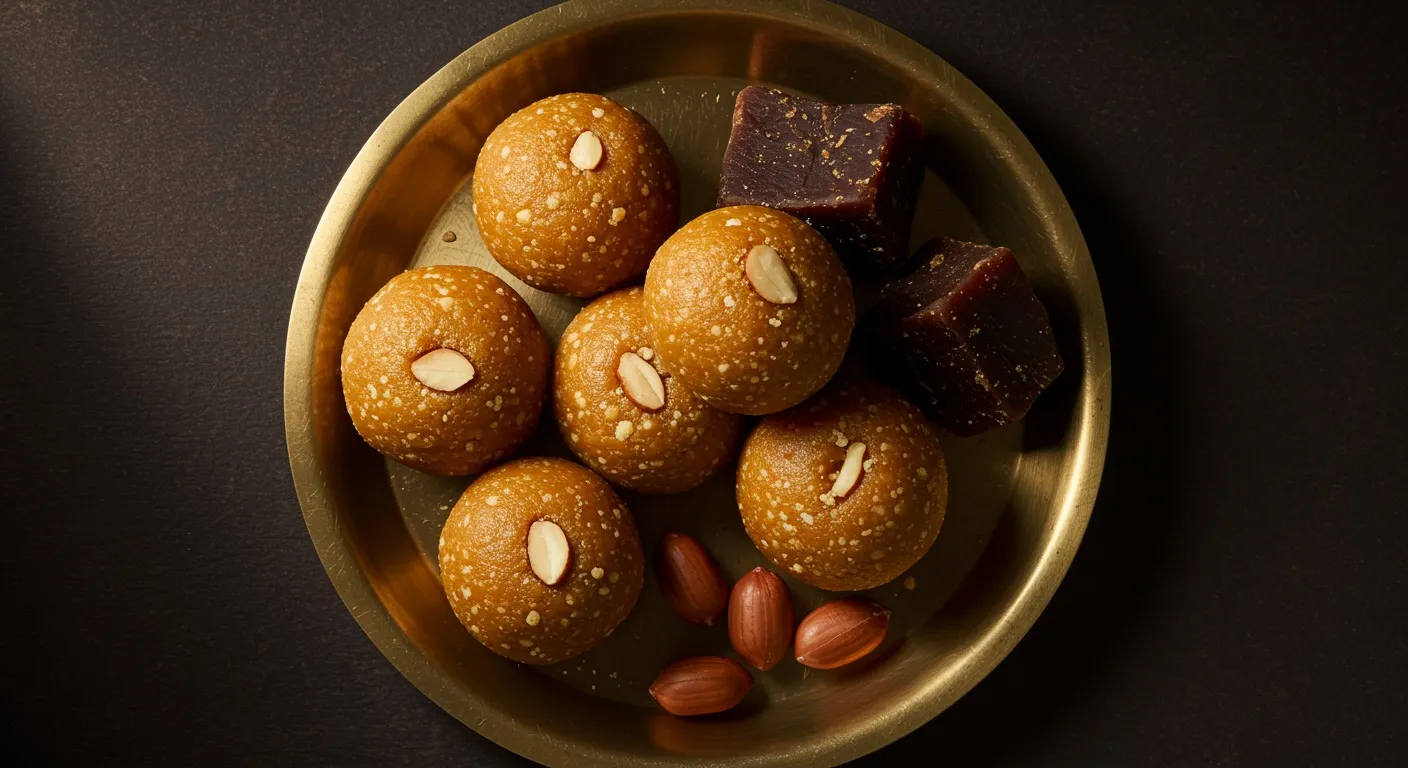
Peanut jaggery ladoo is having a real moment online, and it is easy to see why. When a four-ingredient blend of ghee, jaggery, peanuts, and coconut started making the rounds as a celebrity wellness snack, home cooks everywhere realized they were looking at a sweet that South Indian kitchens have made for generations. This is verkadalai urundai, the humble peanut and jaggery ladoo sold at tea stalls and rolled at home for festivals. It needs no refined sugar, no syrup thermometer, and no special skill. A handful of pantry staples and about twenty-five minutes is all it takes.
About This Dish
Verkadalai urundai, also called kadalai urundai in Tamil and shengdana ladoo in Maharashtra, is one of the oldest sweets in the Indian repertoire. Peanuts and jaggery were inexpensive, energy dense, and available year round, which made these ladoos a staple snack for children and a popular offering during festivals like Karthigai Deepam, Pongal, and Diwali. In Tamil Nadu they are still a fixture at small tea shops, sold right next to the filter coffee. The combination is naturally vegan and free of refined sugar, which is part of why it keeps finding new fans. Few sweets manage to be this nostalgic and this practical at the same time.
Ingredient Notes
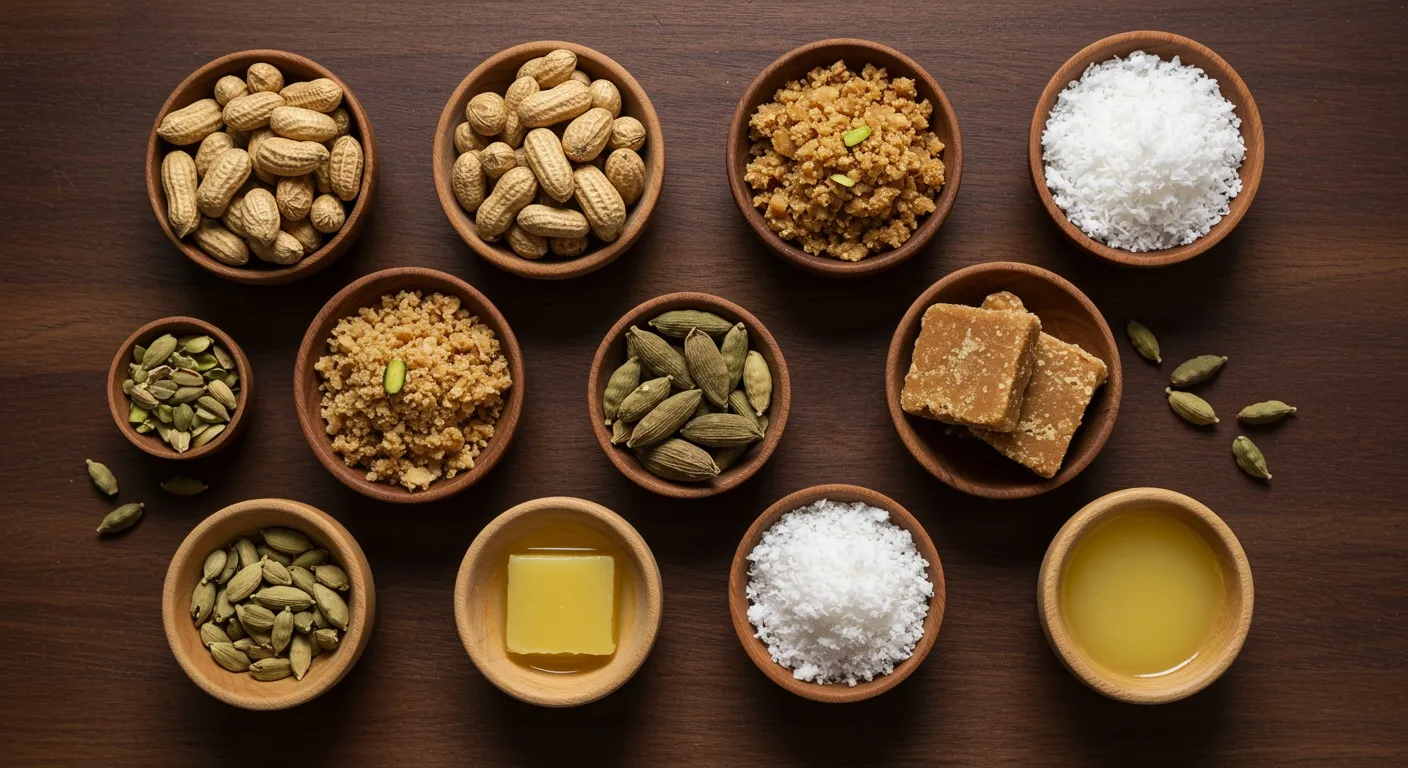
The base is simply raw peanuts and jaggery, with coconut, ghee, and cardamom rounding it out. Raw peanuts roasted fresh give the best flavor, but unsalted roasted peanuts work too if you warm them through first. Use soft, dark jaggery and grate or powder it finely so it blends smoothly, because rock-hard jaggery will not bind well. Desiccated or dry grated coconut adds a gentle sweetness and the coconut note that ties this version to the viral combination. A small amount of warm ghee helps the ladoos hold their shape and adds richness, though the natural oil in the peanuts does most of the binding. A pinch of cardamom is traditional, and some South Indian cooks add a spoon of roasted sesame seeds for extra crunch.
Method And Tips
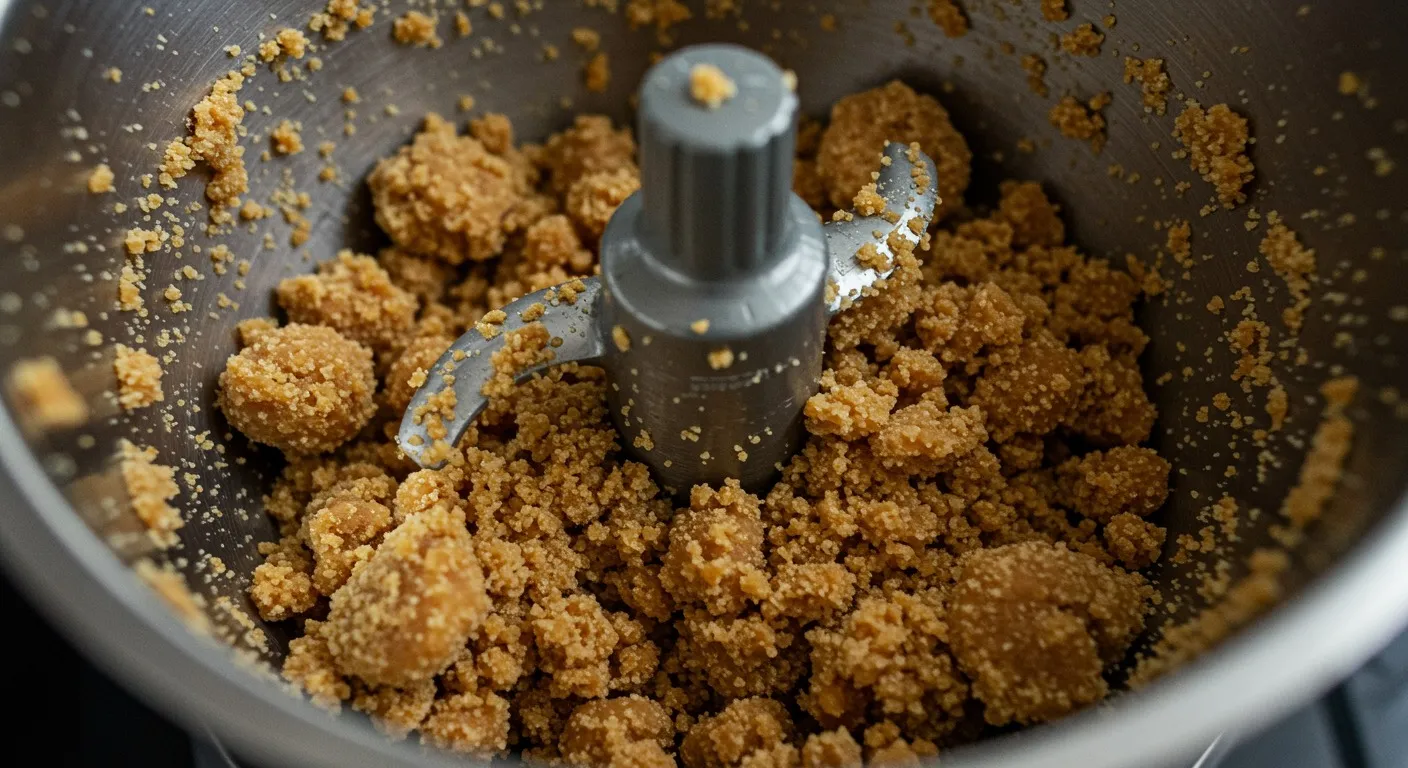
The technique is forgiving but rewards a little care. Roast the peanuts low and slow until the skins darken and crackle, then cool them completely and rub off the skins so the ladoos are not bitter. When you grind, pulse in short bursts, because over-grinding warms the peanuts and turns them to peanut butter, which makes the mixture oily and hard to roll. Add the jaggery and coconut and pulse again only until everything looks like coarse, slightly sticky sand. Shape the ladoos while the mixture is still a touch warm, pressing firmly so they hold. If a ball refuses to come together, drizzle in a teaspoon more warm ghee and try again.
Serving Suggestions
Serve peanut jaggery ladoo with afternoon coffee or tea, tuck one into a lunchbox, or set them out on a festival platter. Stored in an airtight container at room temperature, they stay fresh for about a week. They come together faster than almost any other Indian sweet, so they are a perfect place to start if you have never rolled a ladoo before. Make a batch once and you will understand why this little sweet keeps coming back into fashion.
Recipe
Peanut Jaggery Ladoo (Verkadalai Urundai)
A traditional South Indian sweet of roasted peanuts, jaggery, and coconut rolled into bite sized ladoos. Naturally free of refined sugar and made with just a few pantry ingredients.
- Prep
- 15min
- Cook
- 10min
- Total
- 25min
- Servings
- 12ladoos
- Calories
- 130kcal
Ingredients
- 1 cup raw peanuts
- 3/4 cup grated or powdered jaggery
- 1/4 cup desiccated coconut
- 1 tbsp ghee, slightly warmed, plus more if needed
- 1/2 tsp cardamom powder
- 1 pinch salt
Instructions
- 1 Dry roast the peanuts in a heavy pan over medium-low heat, stirring often, for 5 to 6 minutes until the skins darken and crackle and the peanuts smell nutty. Transfer to a plate and let them cool completely.
- 2 In the same pan, dry roast the desiccated coconut over low heat for 1 to 2 minutes until lightly golden and fragrant, then set aside to cool. Watch it closely so it does not brown too much.
- 3 Once the peanuts are cool, rub them between your palms or inside a clean kitchen towel to loosen the skins, then discard the skins.
- 4 Add the de-skinned peanuts to a blender or mixie jar and pulse in short bursts to a coarse powder. Do not over-grind, or the peanuts will release oil and turn pasty.
- 5 Add the jaggery, roasted coconut, cardamom powder, and pinch of salt. Pulse again in short bursts until the mixture is evenly combined and looks like coarse, slightly sticky sand.
- 6 Drizzle the warm ghee over the mixture and stir it in. The warmth and ghee help everything bind together.
- 7 Take a small portion in your hand and press and roll it firmly into a round ladoo. If it will not hold its shape, mix in a teaspoon more warm ghee and try again.
- 8 Shape the rest of the mixture into about 12 ladoos. Let them cool fully, then store in an airtight container.
Notes
- Use soft, dark jaggery and grate or powder it finely so it blends smoothly. Rock-hard jaggery will not bind well.
- Pulse the peanuts in short bursts. Over-grinding warms them into peanut butter and the ladoos turn oily.
- Shape the ladoos while the mixture is still slightly warm, as it holds together best then.
- For a Maharashtrian style version, add 2 tablespoons of roasted white sesame seeds along with the coconut.
- Stored in an airtight container at room temperature, the ladoos stay fresh for about a week.