Crispy Onion Rava Dosa Recipe (Instant South Indian Breakfast)
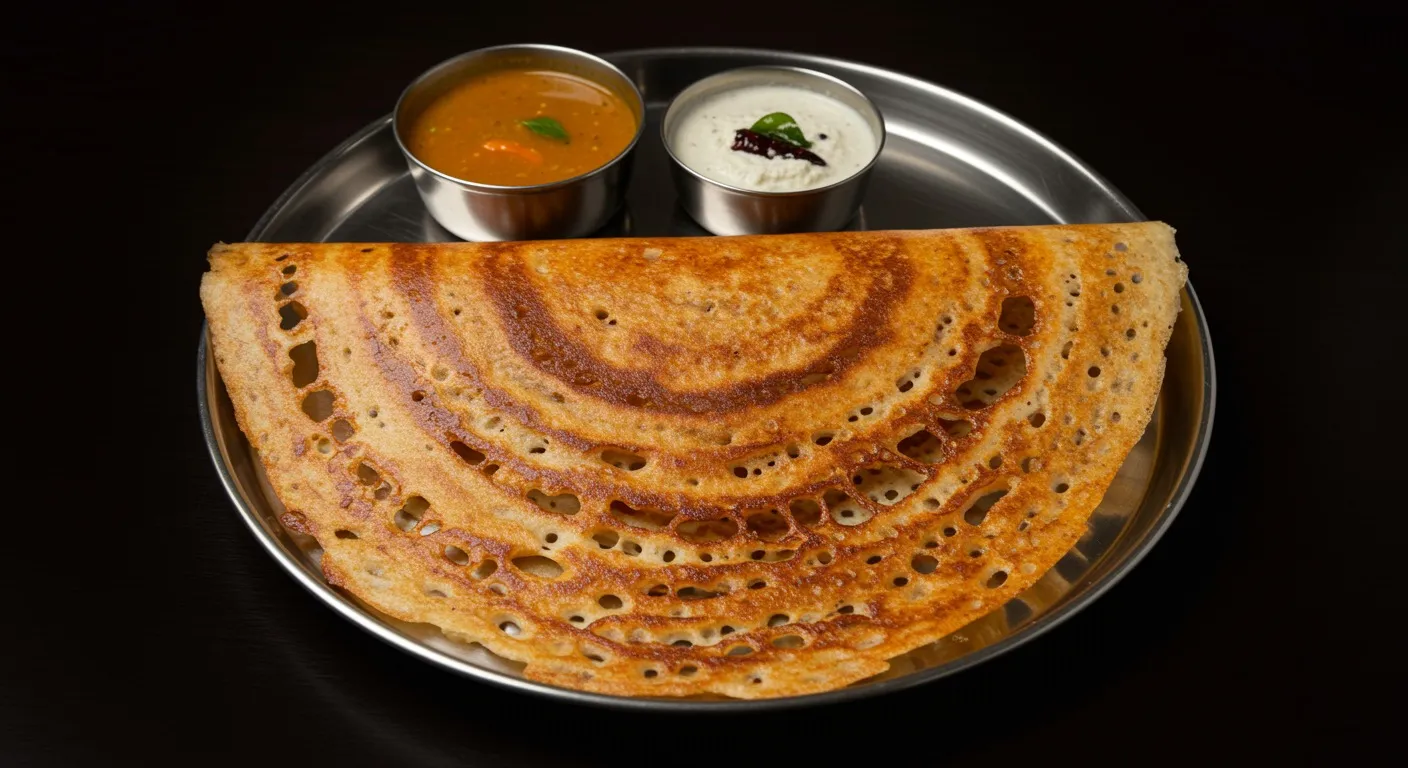
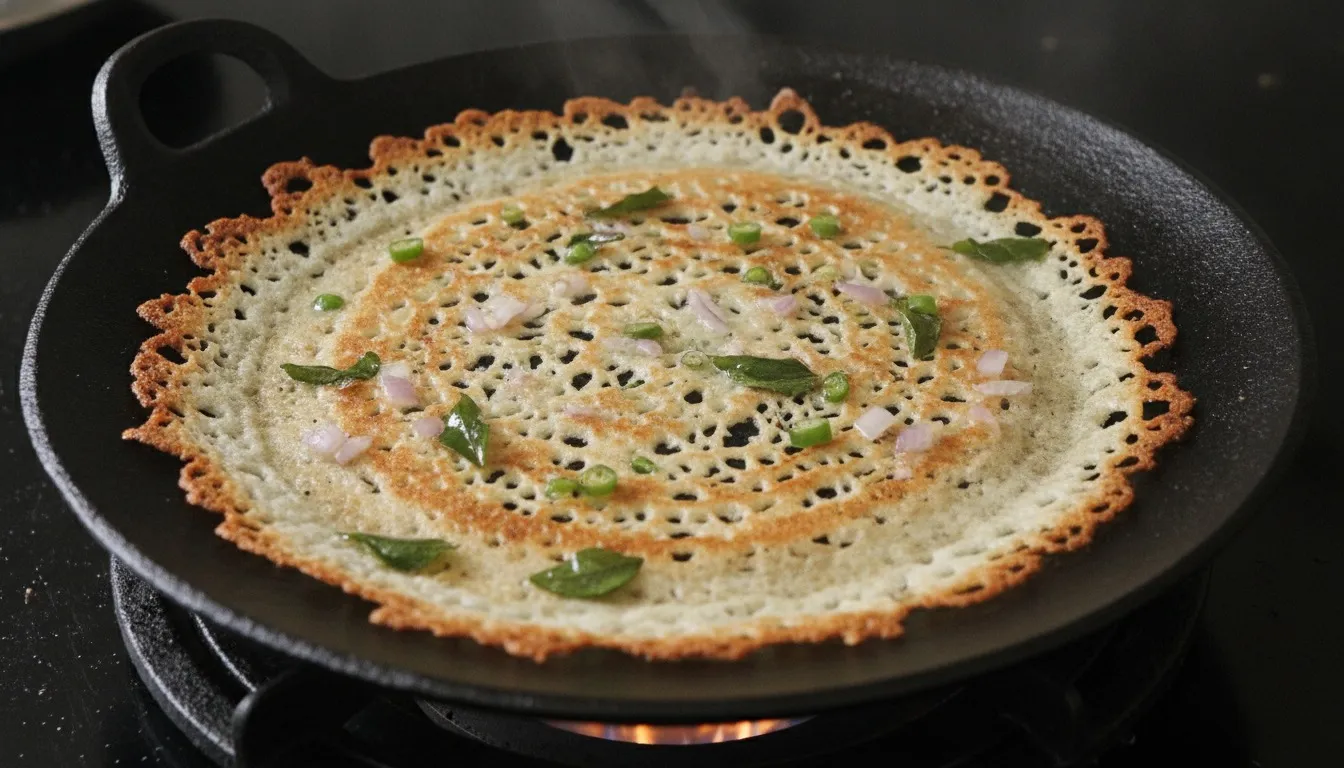
Onion rava dosa is the dosa to make when you want that crackly, lace-edged crispness but have no fermented batter waiting in the fridge. It has been having a real moment online, popping up across reels and recipe feeds as the fail-proof, no-grind, no-ferment breakfast, and it is easy to see why. You stir together a thin semolina batter, rest it for twenty minutes, and pour it onto a hot pan where it sets into a golden, holey, almost see-through dosa. The onion, ginger, and curry leaves give it a savory crunch in every bite. It feels special yet comes together faster than a classic dosa ever could.
About This Dish
Rava dosa belongs to the deep tradition of South Indian tiffin cooking, where dosas of every kind anchor the breakfast table. While the classic rice and urad dal dosa needs soaking, grinding, and overnight fermentation, the rava version was embraced as a quick alternative that uses semolina, rice flour, and a little maida for structure. It became a beloved fixture in Tamil Nadu and Karnataka tiffin centers and home kitchens alike, prized because it could be made on demand. The onion variation, with its sweet bite of sauteed onion through the lacy crust, is the most popular form served in restaurants.
Ingredient Notes
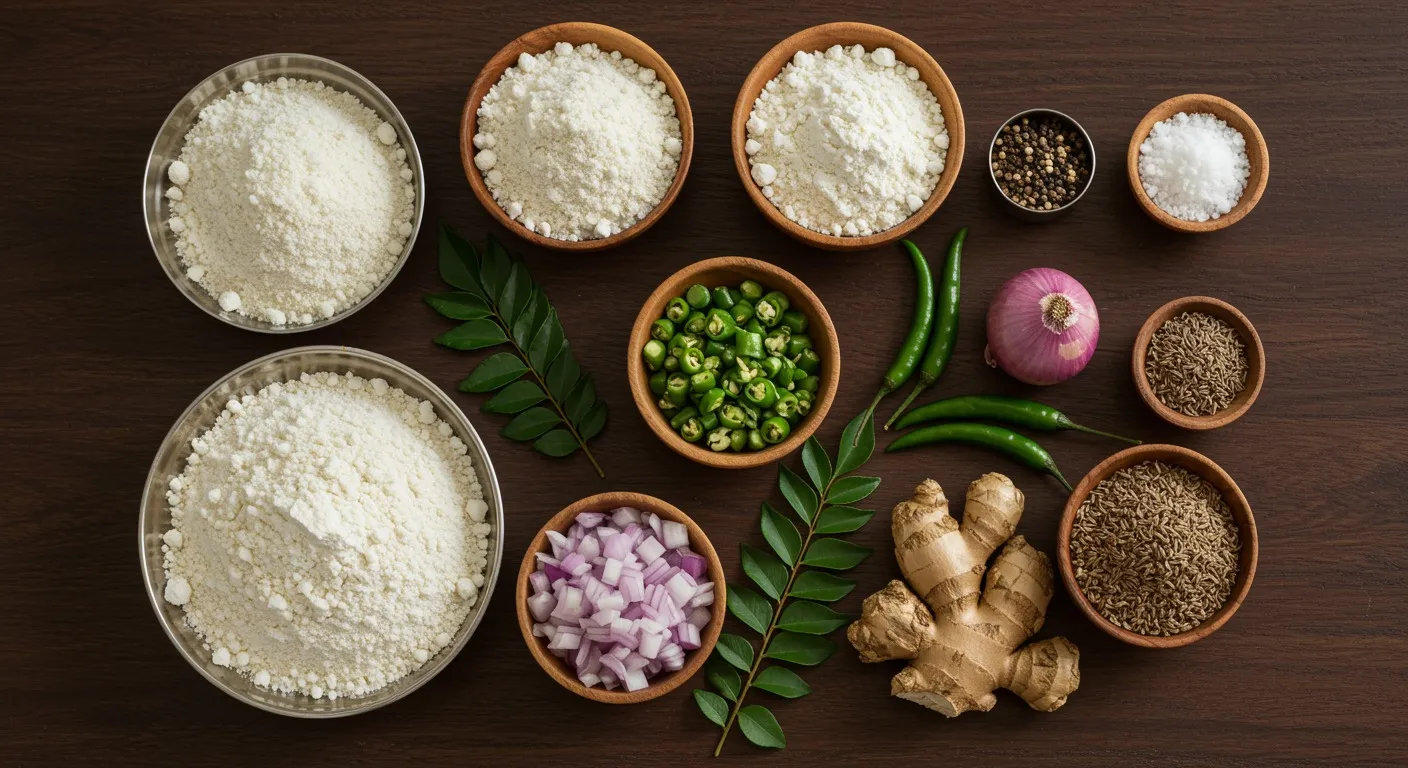
The batter rests on three flours working together: fine rava, or semolina, gives body and crispness, rice flour delivers the signature crunch, and a small amount of maida helps the dosa hold its lacy shape without tearing. Use fine rava rather than coarse so it softens fully during the short rest. A spoonful of yogurt is optional and adds a faint tang, so leave it out if you prefer. For the seasoning, fresh curry leaves, ginger, green chili, and crushed black pepper are traditional, and cumin adds warmth. If you do not have rice flour, the dosa will still cook but will be noticeably less crisp, so it is worth keeping a bag on hand.
Method And Tips
The technique that separates a great rava dosa from a soggy one comes down to two things: a very thin batter and a very hot pan. The batter should look watery and pour in a thin stream, because that thinness is what creates the open, lacy holes as the water hits the hot surface and steams away. Pour from the outer edge inward and resist the urge to spread it with the ladle, which would close up the lace. Keep the heat high when you pour, then drop it to medium so the dosa crisps without burning, and always stir the batter before each pour since the flours settle fast. Wipe the pan between dosas to keep every one releasing cleanly.
Serving Suggestions
Serve onion rava dosa hot off the pan, while the edges are at their crispest, with coconut chutney and a bowl of sambar for dipping. It also pairs beautifully with tomato chutney or a simple potato masala if you want to make it more of a meal. Once you get the feel for the batter and the heat, this becomes the weekday breakfast you reach for again and again, so give it a try this week.
Recipe
Onion Rava Dosa
A crispy, lacy South Indian dosa made from a thin semolina, rice flour and maida batter studded with onion, green chili, ginger and curry leaves. No fermentation or grinding required.
- Prep
- 30min
- Cook
- 25min
- Total
- 55min
- Servings
- 4servings
- Calories
- 210kcal
Ingredients
- For the batter
- 1/2 cup fine rava (semolina)
- 1/2 cup rice flour
- 1/4 cup all-purpose flour (maida)
- 1 tbsp plain yogurt (optional)
- 2.5 cups water
- 1 tsp salt
- For the seasoning
- 1 medium onion, finely chopped
- 2 green chilies, finely chopped
- 1 tbsp ginger, finely chopped
- 1 tbsp curry leaves, chopped
- 2 tbsp cilantro (coriander leaves), chopped
- 1 tsp cumin seeds
- 1/2 tsp crushed black pepper
- For cooking
- 3 tbsp ghee
Instructions
- 1 In a large bowl, whisk together the rava, rice flour, maida, yogurt if using, and salt. Pour in the water a little at a time, whisking constantly, until you have a very thin, lump-free batter about the consistency of buttermilk.
- 2 Stir in the chopped onion, green chilies, ginger, curry leaves, cilantro, cumin seeds, and crushed black pepper. Let the batter rest for 20 minutes so the rava softens and swells.
- 3 After resting, the batter will have thickened as the rava absorbs water. Add a few tablespoons of water and stir well so it returns to a thin, flowing consistency. The batter should pour easily and look watery, not pourable like a pancake.
- 4 Heat a flat tawa or nonstick skillet over medium-high until it is very hot. Drizzle a little ghee and wipe the surface with a paper towel.
- 5 Stir the batter, then pour a ladleful onto the hot pan starting from the outer edge and working toward the center, filling gaps as you go. Do not spread the batter with the ladle; let it find its own lacy pattern.
- 6 Drizzle about a teaspoon of ghee around the edges, lower the heat to medium, and cook undisturbed until the dosa turns deep golden and crisp and lifts from the pan, about 2 to 3 minutes.
- 7 Fold the dosa over and serve immediately. Stir the batter before each pour and wipe the pan between dosas so they stay crisp. Serve hot with coconut chutney and sambar.
Notes
- The single most important step is a thin, watery batter. If the batter is too thick the dosa turns soft and bready instead of lacy and crisp.
- Always stir the batter just before pouring, since the rava and rice flour settle to the bottom quickly.
- Keep the pan very hot when you pour, then lower the heat to crisp the dosa. A pan that is not hot enough is the main reason rava dosa sticks.
- Wipe the pan with a halved onion or a paper towel between dosas to prevent sticking and keep every dosa crisp.