Authentic Melukote Puliyogare Recipe (Temple-Style Tamarind Rice)
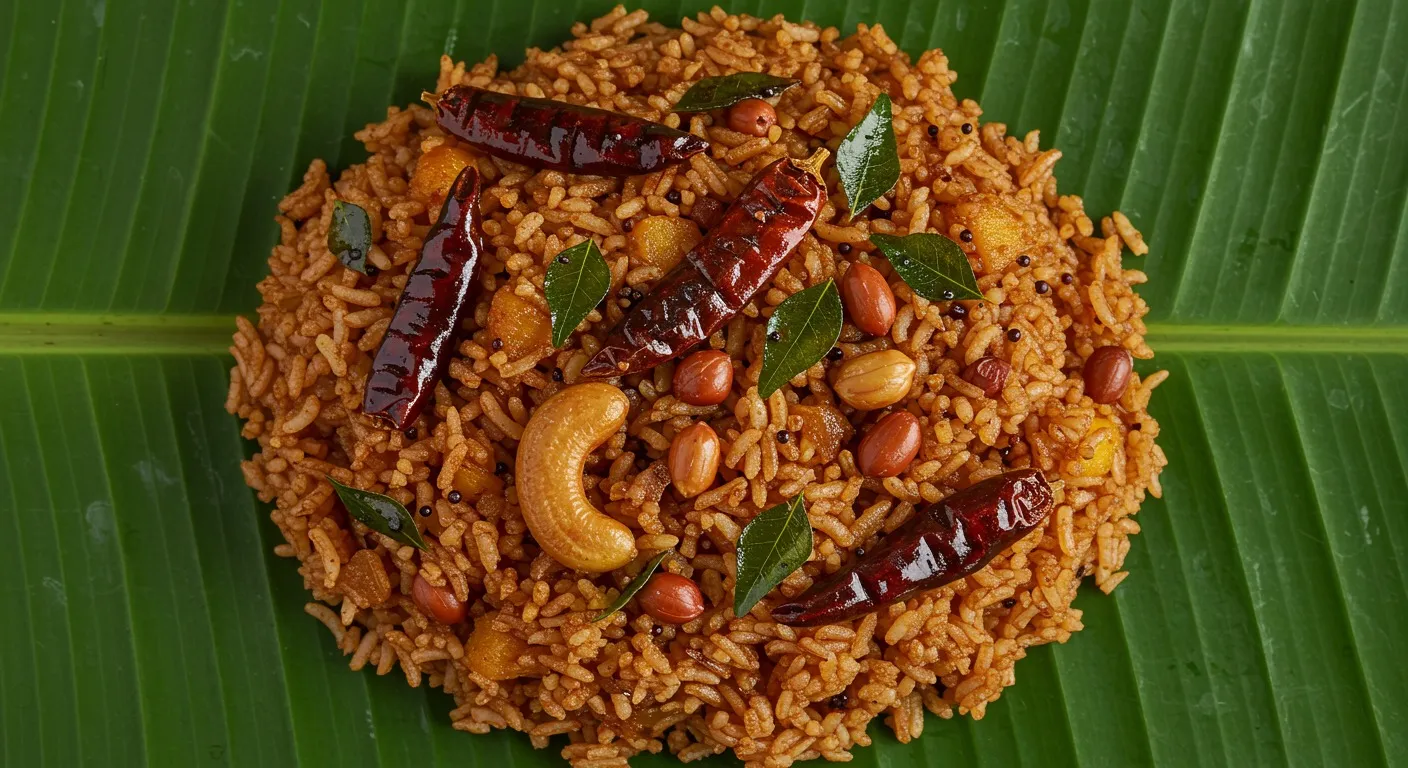
Some tamarind rice is just a quick lunchbox fix, and then there is Melukote puliyogare, the temple-style version that people travel for. Named after the temple town of Melukote (also spelled Melkote) in Karnataka, this Iyengar-style tamarind rice has been having a real moment online, with home cooks chasing the exact balance of tangy, spicy, and faintly sweet that the temple kitchens are famous for. What sets it apart is the gojju, a thick roasted spice paste that coats every grain instead of a thin watery sauce. One bite and you understand why it is considered the gold standard of puliyodarai.
About This Dish
Puliyogare, sometimes written puliyodarai, is one of the oldest prepared rice dishes in South India, valued historically because the tamarind and oil let it keep for a day or two without refrigeration, making it ideal temple prasadam and travel food. The Melukote version belongs to the Iyengar Brahmin tradition of Karnataka and Tamil Nadu, where the spice blend is roasted and ground fresh rather than poured from a bottle. The town of Melukote itself has become so associated with this dish that packaged puliyogare mixes now carry its name.
Ingredient Notes
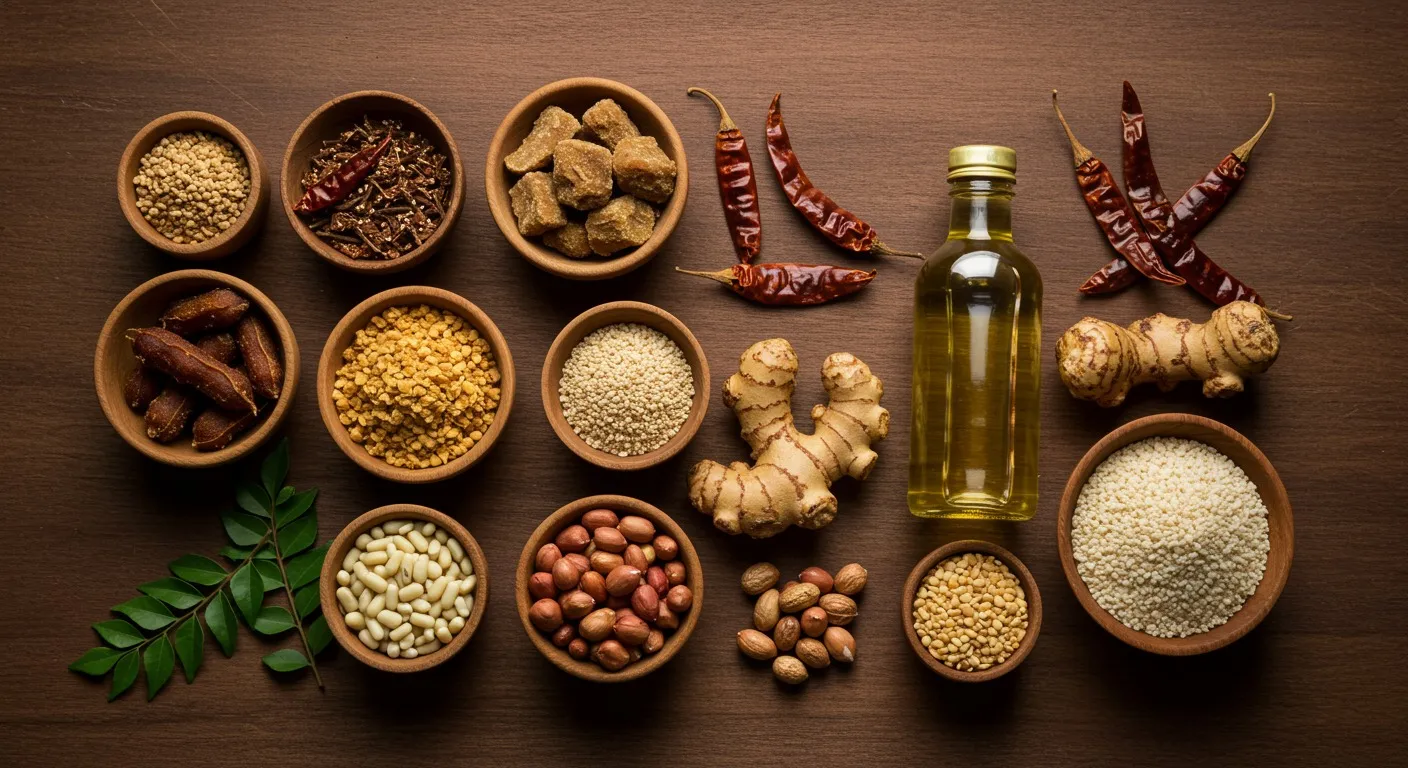
The heart of the recipe is the puliyogare pudi, the roasted spice powder. Coriander seeds, chana dal, urad dal, sesame seeds, dry coconut, cumin, peppercorns, a pinch of fenugreek, and dry red chilies are each toasted and ground together, which gives the gojju its nutty depth and gentle heat. Tamarind brings the signature tang and jaggery rounds it out with a whisper of sweetness. Sesame oil, also called gingelly oil, is essential here and is the traditional fat for this dish, lending an aroma that no other oil matches. If you cannot find dry coconut, desiccated coconut works, and any dry red chili stands in fine for a regional variety.
Method And Tips
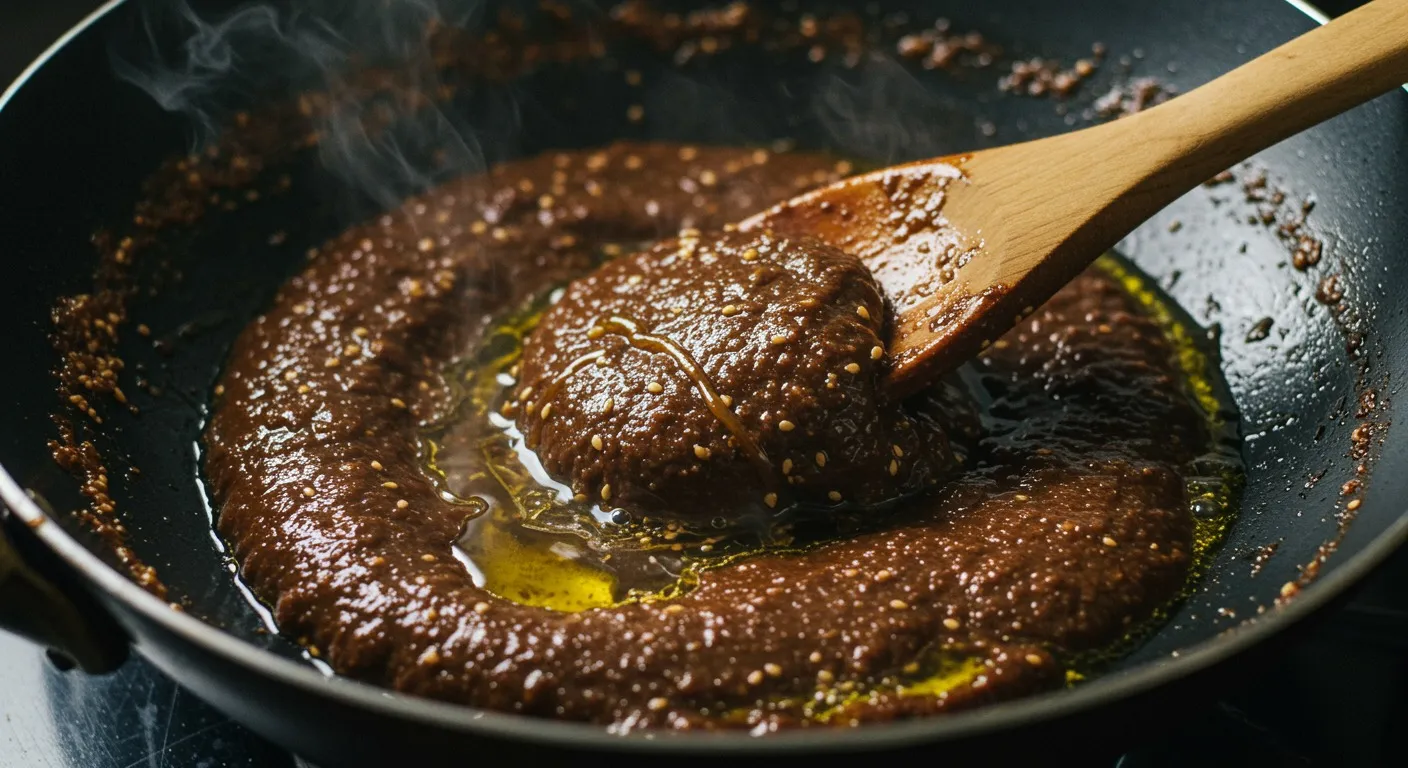
Two small things separate a great puliyogare from a soggy one. First, use fully cooled or day-old rice so the grains stay distinct when you fold in the gojju. Second, roast each spice separately on low heat until just fragrant, because burnt fenugreek or chilies will make the whole batch bitter. Cook the gojju patiently until it thickens into a glossy paste and the oil beads at the edges, then add it to the rice a little at a time so you control the tang. Letting the mixed rice rest for 15 to 20 minutes before serving lets the flavors soak into every grain.
Serving Suggestions
Melukote puliyogare is wonderful warm or at room temperature, which makes it a perfect lunchbox, picnic, or travel meal. Serve it with a side of plain yogurt, a handful of crisp fried papad, or potato chips to balance the tang. Make a jar of the gojju ahead and you have temple-style tamarind rice ready in minutes any day of the week. Give it a try and see why this one earns its reputation.
Recipe
Melukote Puliyogare
A Karnataka temple-style tamarind rice where cooled cooked rice is folded into a thick, roasted tamarind gojju spiced with sesame, dry coconut, peppercorns, and red chilies, then finished with a peanut tempering. Tangy, spicy, and lightly sweet.
- Prep
- 15min
- Cook
- 30min
- Total
- 45min
- Servings
- 4servings
- Calories
- 340kcal
Ingredients
- For the rice
- 3 cups cooked rice, cooled (preferably day-old)
- For the spice powder (puliyogare pudi)
- 1 tablespoon coriander seeds
- 1 tablespoon chana dal
- 1 tablespoon urad dal
- 7 whole dry red chilies
- 1 tablespoon white sesame seeds
- 1 tablespoon dry coconut, grated
- 1 teaspoon cumin seeds
- 1 teaspoon black peppercorns
- 1/4 teaspoon fenugreek seeds
- For the tamarind gojju
- 3 tablespoons tamarind, tightly packed (1 lemon-sized ball)
- 2 tablespoons jaggery, grated
- 1/2 teaspoon turmeric powder
- 1 teaspoon salt
- 3 tablespoons sesame oil (gingelly)
- For the tempering
- 3 tablespoons sesame oil (gingelly)
- 1 teaspoon mustard seeds
- 1 tablespoon chana dal
- 1 teaspoon urad dal
- 3 tablespoons raw peanuts
- 3 whole dry red chilies
- 1/2 teaspoon asafoetida (hing)
- 1 sprig curry leaves
Instructions
- 1 Spread the cooked rice on a wide plate or tray and let it cool completely. Day-old or fully cooled rice keeps the grains separate so they do not turn mushy when mixed.
- 2 Soak the tamarind in 1 cup of hot water for 10 minutes, then squeeze and strain to extract a thick tamarind juice. Discard the fibers and seeds.
- 3 Make the spice powder. In a dry pan over medium-low heat, separately roast the coriander seeds, chana dal, urad dal, dry red chilies, sesame seeds, dry coconut, cumin seeds, peppercorns, and fenugreek seeds until each is fragrant and lightly golden. Cool, then grind everything to a slightly coarse powder.
- 4 Make the gojju. In a heavy pan, bring the tamarind juice to a boil with the turmeric and salt and simmer for 5 minutes. Stir in the grated jaggery until it dissolves.
- 5 Add the ground spice powder to the simmering tamarind and mix well, breaking up any lumps. Pour in 3 tablespoons sesame oil and cook on low heat, stirring often, until the mixture thickens to a glossy, spreadable paste and the oil starts to separate at the edges, about 8 to 10 minutes.
- 6 Make the tempering. In a small pan, heat 3 tablespoons sesame oil. Add the mustard seeds and let them splutter, then add the chana dal, urad dal, and peanuts and fry until golden. Add the dry red chilies, asafoetida, and curry leaves and fry for a few more seconds.
- 7 Stir most of the tempering into the gojju, reserving a little for garnish. The gojju can be cooled and stored, or used right away.
- 8 Place the cooled rice in a large bowl. Add the gojju a few tablespoons at a time, folding gently, until the rice is evenly coated to your preferred tang and spice level. Top with the reserved tempering and let it rest for 15 to 20 minutes before serving so the flavors settle in.
Notes
- The gojju (puliyogare paste) keeps in an airtight jar in the refrigerator for up to 2 weeks. Make a batch and mix with fresh rice anytime.
- Roast the spices on low heat and separately so nothing burns. Burnt fenugreek or chilies will turn the whole mix bitter.
- Start with less gojju than you think you need. You can always add more, but over-mixed rice cannot be undone.
- Use sesame (gingelly) oil for the authentic flavor. It is traditional to this dish and gives the gojju its signature aroma.