Authentic Mango Pachadi Recipe (Tamil Maangai Pachadi)
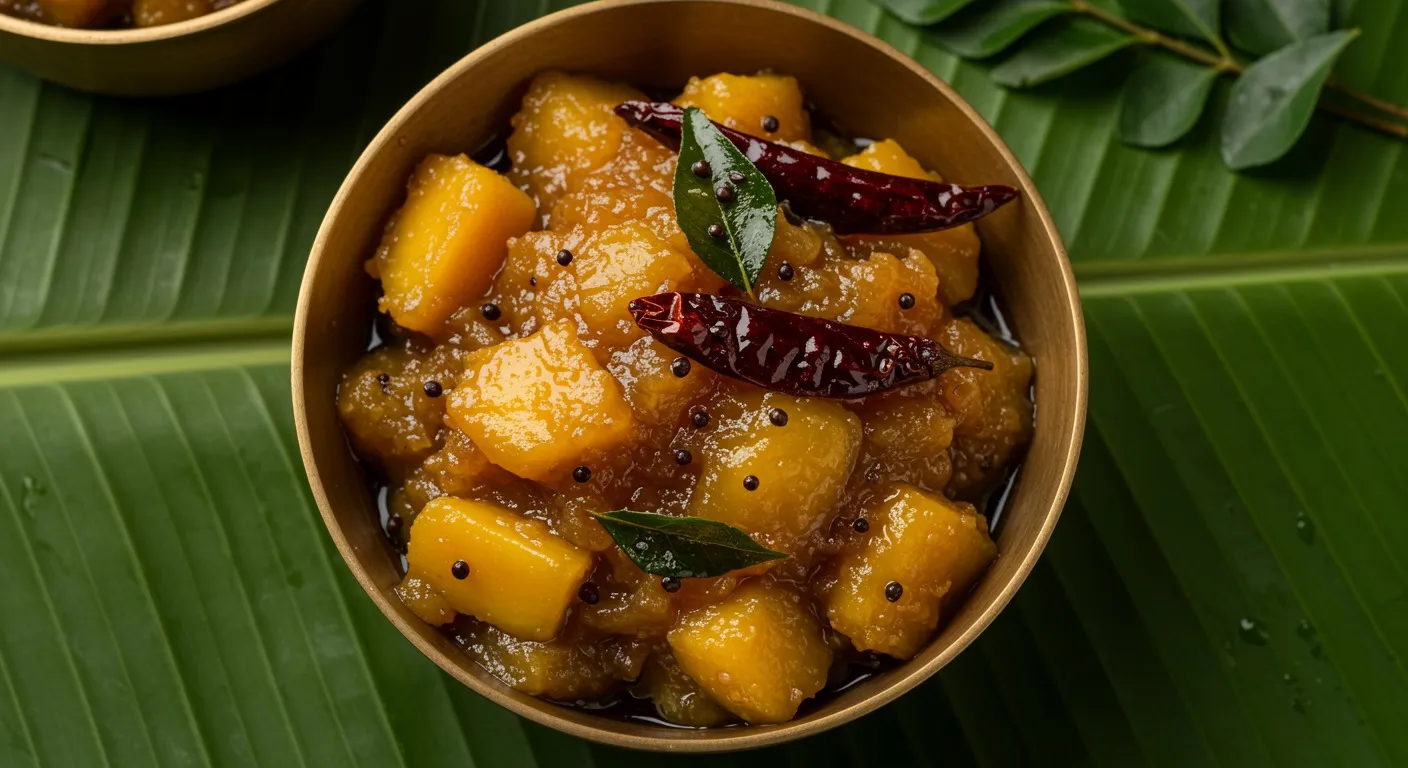
Mango pachadi is the kind of dish that disappears from the plate before anything else, and it is having a real moment online as raw mango season comes around. In a single spoonful you get sour, sweet, and a gentle hit of spice, which is exactly the contrast that makes mango recipes go viral across Instagram and Pinterest each summer. It is quick to make, needs only a handful of pantry staples, and turns a few firm raw mangoes into something that tastes far more special than the effort suggests. If you have only ever eaten raw mango as pickle or in rice, this sweet-and-tangy version is a revelation.
About This Dish
Pachadi in Tamil and Telugu kitchens refers to a small, intensely flavored side dish, and the mango version is closely tied to the spring harvest and to New Year celebrations like Ugadi and Tamil Puthandu. The traditional festival pachadi is meant to carry all the tastes of life at once, sweet from jaggery, sour from raw mango, bitter from neem flowers, and a touch of heat, as a reminder that the year ahead holds all of them. The everyday home version keeps the sweet, sour, and spicy notes and usually leaves the neem out. It has been made the same simple way in South Indian homes for generations.
Ingredient Notes
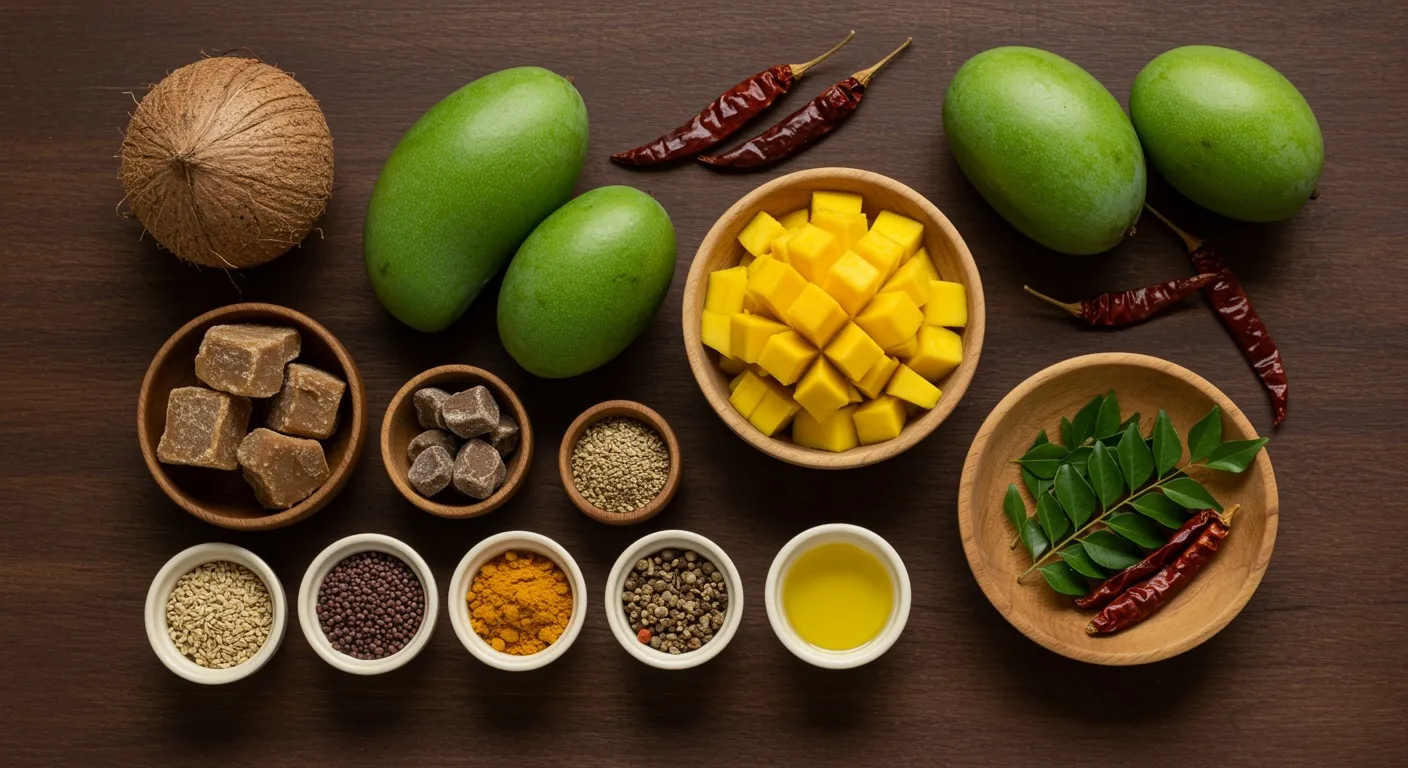
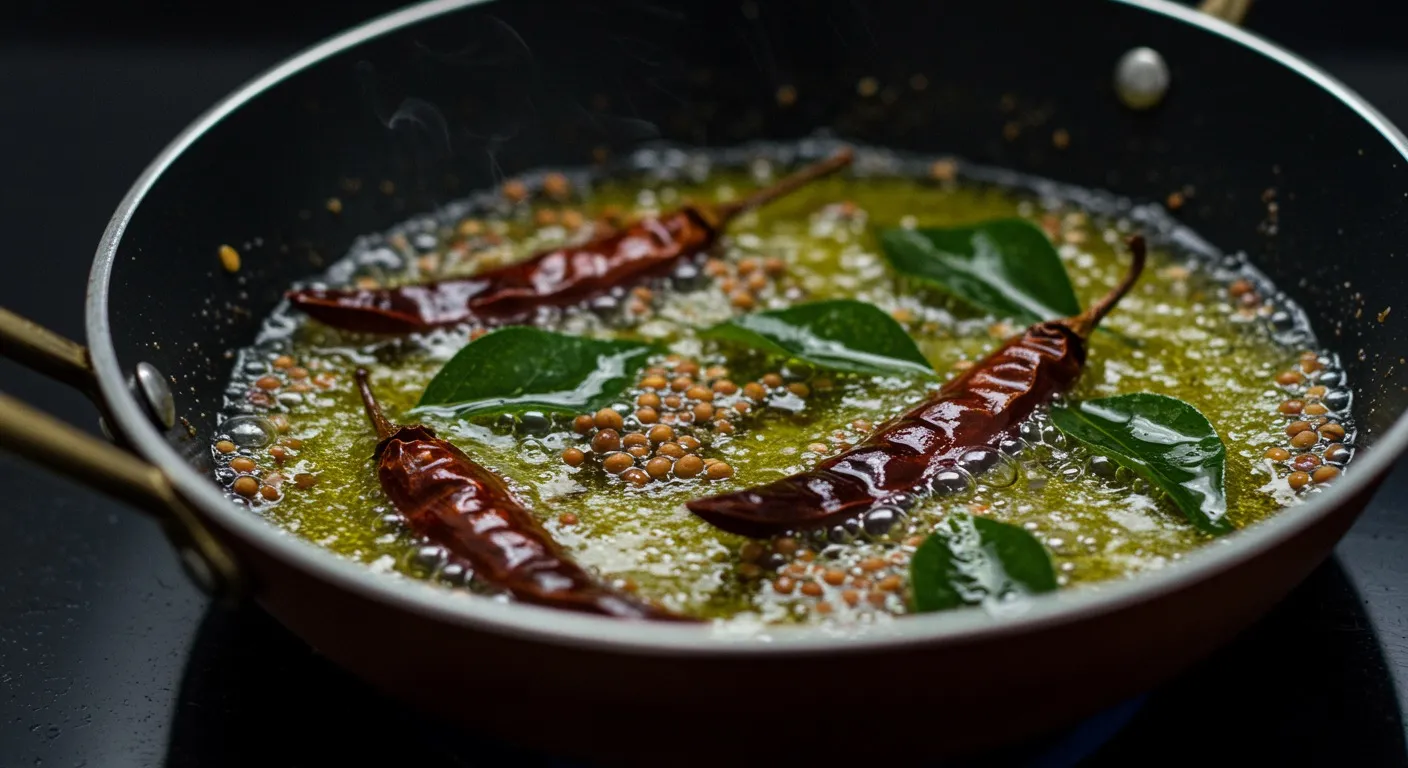
The two ingredients that matter most are the raw mango and the jaggery. Choose firm, sour green mangoes rather than ripe ones, since the sourness is what balances the jaggery and keeps the dish from turning cloying. Jaggery brings a deep, mineral sweetness that plain sugar cannot match, so use it if you can find it, powdered or grated so it dissolves quickly. The mustard seeds, dried red chilies, curry leaves, and a pinch of asafoetida make up the tempering that lifts the whole dish, and coconut oil suits its South Indian roots. If your mangoes are extremely sour you may need a little more jaggery, and if they are only mildly tart you can ease back.
Method And Tips
The technique is forgiving, but two things make the difference. First, cook the mango until it is genuinely soft before it meets the jaggery, because once sugar is in the pan the pieces stop softening. Second, always strain the melted jaggery, since unrefined jaggery often carries small bits of grit and sand that you do not want in a finished dish. Simmer the mango and syrup together just long enough to thicken into a soft, jammy consistency, and if it stays too thin a teaspoon of rice flour slurry will pull it together. Finish with a fresh, hot tempering poured over the top so the mustard seeds and curry leaves stay aromatic.
Serving Suggestions
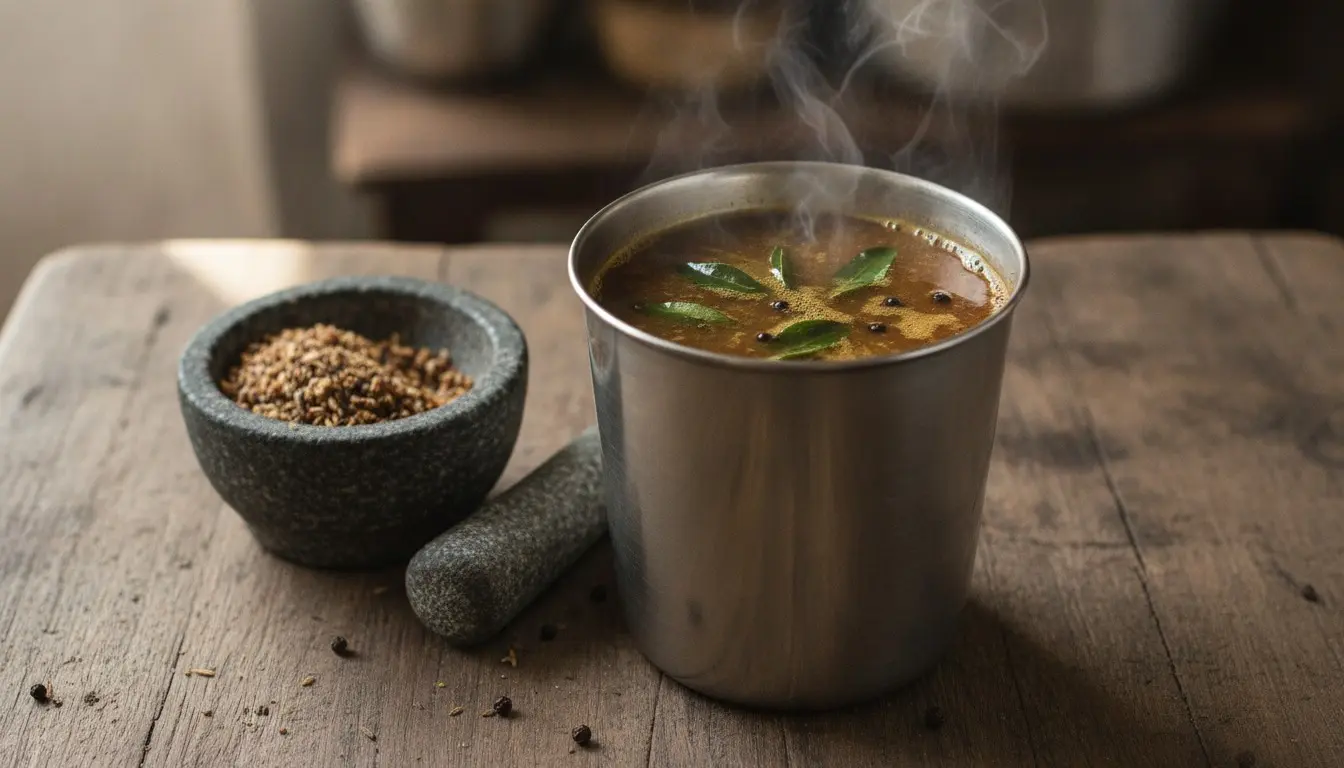
Mango pachadi is served as a small side alongside a South Indian rice meal, and it pairs especially well with curd rice, sambar rice, or a simple plate of rice and rasam. A spoonful on the side of an otherwise spicy meal works like a sweet-sour chutney and resets the palate. Make a batch while raw mangoes are in season, keep it in the fridge, and try a spoonful with your next rice plate.
Recipe
Mango Pachadi
A Tamil-style raw mango side dish that balances sour, sweet, and spicy in one spoonful. Soft raw mango is simmered in jaggery and finished with a mustard seed tempering.
- Prep
- 15min
- Cook
- 20min
- Total
- 35min
- Servings
- 4servings
- Calories
- 135kcal
Ingredients
- For the pachadi
- 2 cups raw mango, peeled and chopped
- 1/2 cup jaggery, powdered or grated
- 1/4 tsp turmeric powder
- 1.25 cups water
- 1/4 tsp salt
- For the tempering
- 1 tbsp coconut oil
- 1 tsp mustard seeds
- 2 dried red chilies
- 1 sprig curry leaves
- 1 pinch asafoetida (hing)
Instructions
- 1 Wash, peel, and chop the raw mangoes into small bite-sized pieces. You need about 2 cups of chopped mango, which is roughly 2 small to medium mangoes.
- 2 Add the chopped mango to a saucepan with the turmeric powder and 3/4 cup of the water. Simmer over medium heat for 8 to 10 minutes, until the mango turns soft and can be mashed easily. Add a splash more water if it dries out.
- 3 While the mango cooks, make the jaggery syrup. In a separate pan, combine the jaggery with the remaining 1/2 cup water and heat until the jaggery fully dissolves. Strain the syrup through a fine sieve to remove any grit.
- 4 Add the cooked soft mango to the strained jaggery syrup. Simmer together for 3 to 4 minutes, mashing the mango lightly with the back of a spoon, until the mixture thickens to a soft, jammy consistency.
- 5 Stir in the salt and taste. The pachadi should be sweet, sour, and a little spicy all at once. Add a little more jaggery if your mangoes are very sour. Turn off the heat.
- 6 Make the tempering. Heat the coconut oil in a small pan over medium heat. Add the mustard seeds and let them splutter, then add the dried red chilies, curry leaves, and a pinch of asafoetida. Fry for a few seconds until fragrant.
- 7 Pour the hot tempering over the pachadi and mix well. Serve warm or at room temperature.
Notes
- If the pachadi looks too thin, dissolve 1 teaspoon rice flour in 2 tablespoons water and stir it in at the end of step 5, then simmer for 1 minute to thicken.
- Jaggery varies in sweetness and the mangoes vary in sourness, so adjust the jaggery to taste rather than following the amount blindly.
- For a Tamil or Telugu New Year touch, a small pinch of dried neem flowers can be added to the tempering, but it is entirely optional.
- Stored in an airtight container in the refrigerator, mango pachadi keeps well for 3 to 4 days.