Authentic Mango Falooda Recipe
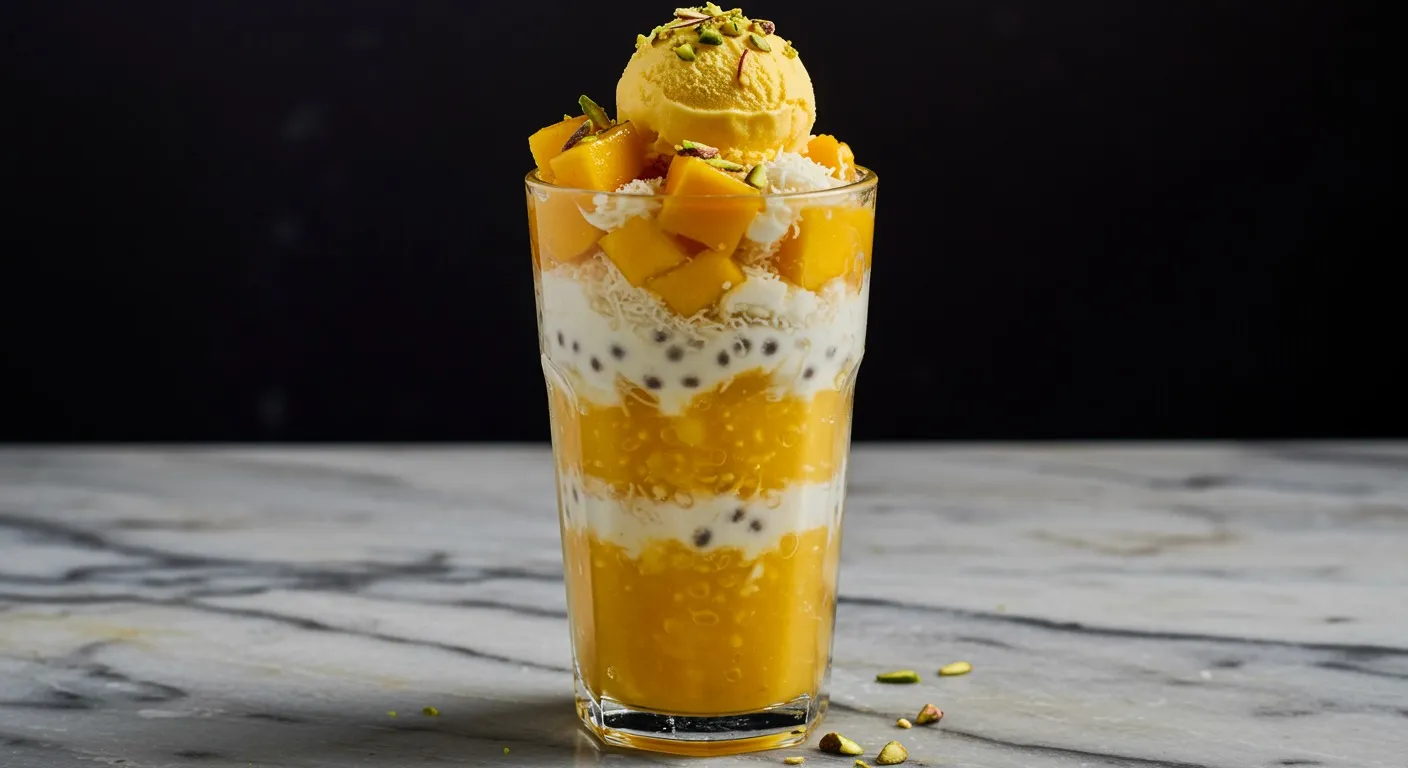
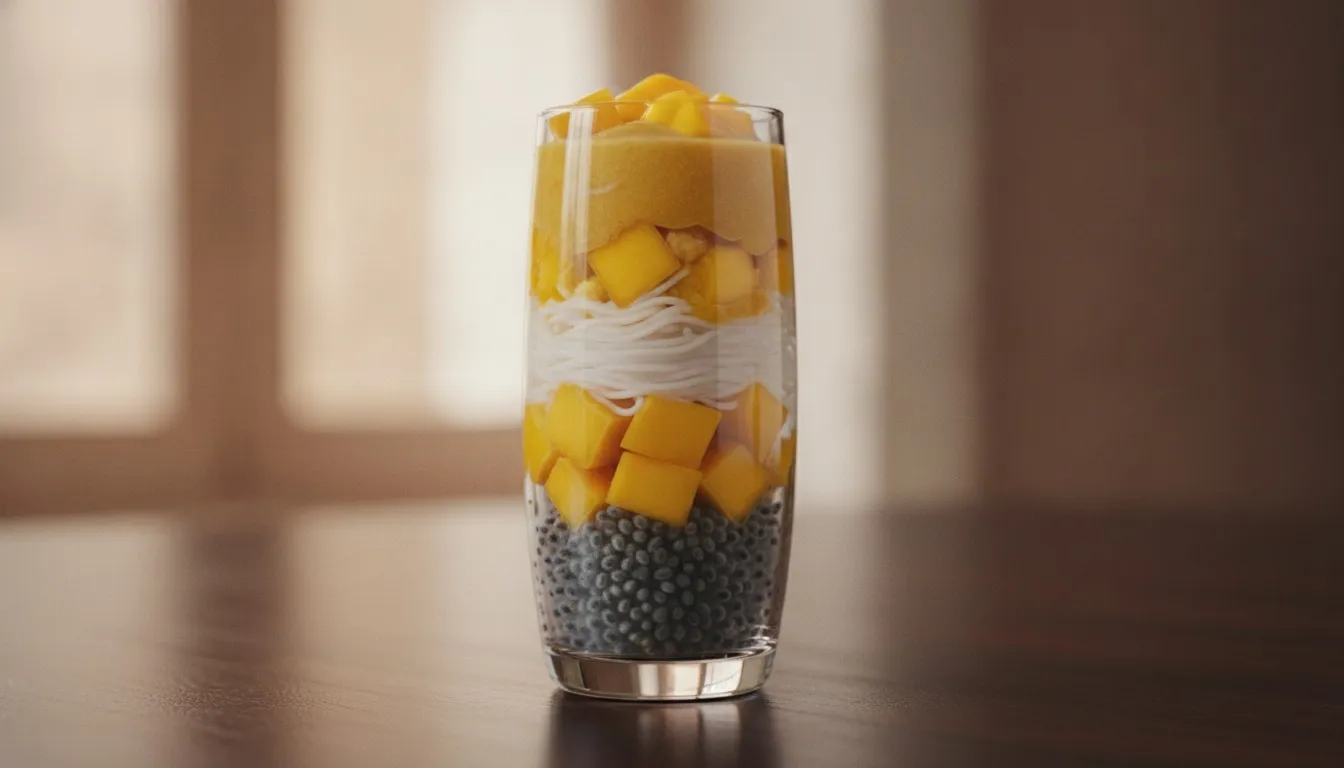
Mango falooda is the most photogenic Indian dessert of the summer, and it is having a real moment online. Tall, chilled glasses layered with golden mango puree, jet-black sabja seeds, ivory falooda sev, and a melting scoop of ice cream are everywhere on Instagram and Pinterest right now, with creators making it the centerpiece of their mango-season content. It is part dessert, part drink, and somehow tastes even better than it looks. The good news is that nothing about it is difficult: each layer is simple, the work is mostly chilling and assembling, and a home cook can put two glasses together in about thirty minutes.
About This Dish
Falooda traces back to the Persian dish faloodeh, which was brought to the Indian subcontinent during the Mughal era and gradually evolved into the milk-and-vermicelli dessert beloved across India, Pakistan, and Bangladesh. The classic Indian version is built on rose syrup, but as the dish spread, regional variations took hold. Mango falooda, swapping the rose for ripe seasonal mango, is now the most popular variation across the country during summer. It is on the menu at almost every Indian restaurant from Mumbai to Madras and is a fixture at Iftar tables and family gatherings when mangoes are in season.
Ingredient Notes
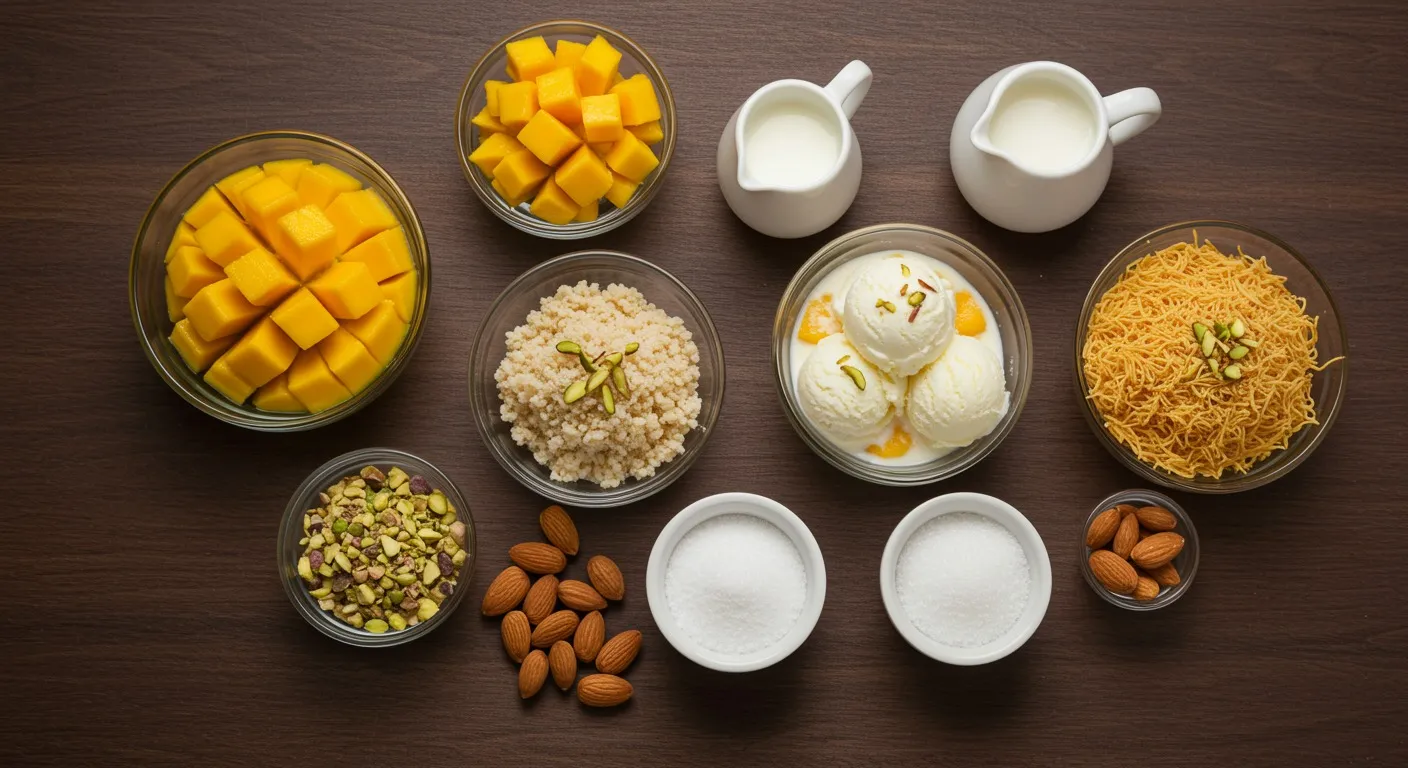
The four building blocks are all easy to find at an Indian grocer. Sabja seeds, also called sweet basil seeds or takmaria, swell up into jelly-coated dots when soaked in water and give falooda its signature texture. Falooda sev is a thin cornstarch or wheat noodle; if you can’t find it, fine vermicelli or semiya works the same way. Ripe Alphonso or Kesar mango gives the best color and flavor, but any sweet Indian mango variety is fine, and canned mango pulp is a perfectly good shortcut when fresh ones are not at their best. For the ice cream on top, vanilla is the classic choice, but mango ice cream doubles down on the flavor and is what most online versions use right now.
Method And Tips
The technique is really just chilling and stacking, but the order matters. Soak the sabja seeds in plenty of water so they bloom fully. Cook the falooda sev until just tender, then shock it in cold water so it does not turn gummy. Blend most of the mango into a smooth puree and reserve a few chopped chunks for texture and visual contrast. The single biggest tip is to keep every component cold and to chill the serving glasses themselves before building the falooda, because a warm glass will melt the ice cream before it ever reaches the table. Layer slowly with the back of a spoon so each band stays distinct and you get that magazine-worthy cross-section.
Serving Suggestions
Serve the falooda the moment it is built, with a long spoon for scooping the ice cream and sev and a thick straw for the milk and mango at the bottom. It works as a standalone dessert after a heavy Indian meal, as a sweet finish to a summer dinner party, or simply as an afternoon treat on a hot day. Once you make it at home, the restaurant version starts to feel needlessly expensive. Give it a try while mango season is in full swing.
Recipe
Mango Falooda
A chilled, layered Indian dessert built in a tall glass with sweetened mango puree, soaked sabja seeds, cooked falooda sev, cold milk, and a scoop of ice cream on top.
- Prep
- 15min
- Cook
- 15min
- Total
- 30min
- Servings
- 2servings
- Calories
- 480kcal
Ingredients
- For the mango layer
- 2 cups ripe alphonso or kesar mango, peeled and chopped
- 1 tbsp sugar
- For the falooda base
- 1/3 cup falooda sev or fine vermicelli
- 1 tbsp sabja seeds (sweet basil seeds)
- 1 cup full-fat milk, chilled
- 1 tbsp sugar (for the milk)
- For topping
- 2 scoops vanilla or mango ice cream
- 2 tbsp chopped pistachios and almonds
- 2 tsp rose syrup (optional)
Instructions
- 1 Soak the sabja seeds in 1/2 cup of water for 10 to 15 minutes until they swell and turn jelly-like. Drain and set aside.
- 2 Bring 2 cups of water to a boil in a small pot. Add the falooda sev and cook for 3 to 5 minutes until soft. Drain, rinse under cold water to stop the cooking, and set aside.
- 3 Reserve about 1/3 cup of chopped mango for layering. Blend the remaining mango with 1 tablespoon of sugar into a smooth puree. Chill until ready to assemble.
- 4 Stir 1 tablespoon of sugar into the chilled milk until dissolved. Keep refrigerated.
- 5 Chill two tall serving glasses in the freezer for 10 minutes.
- 6 If using rose syrup, swirl 1 teaspoon around the inside of each glass.
- 7 Build the falooda in this order: 2 tablespoons of mango puree at the bottom, a layer of soaked sabja seeds, a layer of cooked falooda sev, a few reserved mango chunks, then pour in the sweetened cold milk until the glass is about three-quarters full.
- 8 Top each glass with another spoonful of mango puree and the remaining mango chunks.
- 9 Place a scoop of vanilla or mango ice cream on top, sprinkle with chopped pistachios and almonds, and serve immediately with a long spoon and a straw.
Notes
- Use the ripest, sweetest mangoes you can find. Alphonso and Kesar give the best flavor and color, but any ripe Indian variety works. Canned mango pulp is a fine substitute when fresh mangoes are out of season.
- Adjust the sugar based on how sweet the mango is. Very ripe Alphonsos may not need any added sugar in the puree.
- Keep every component cold before assembling. Warm milk or warm sev will melt the ice cream and ruin the layered look.
- Falooda sev is sold as thin cornstarch or wheat noodles in Indian grocery stores. If you can't find it, very fine vermicelli (semiya) works well too.