Authentic Kumbakonam Kadappa Recipe (Thanjavur Idli Dosa Side)
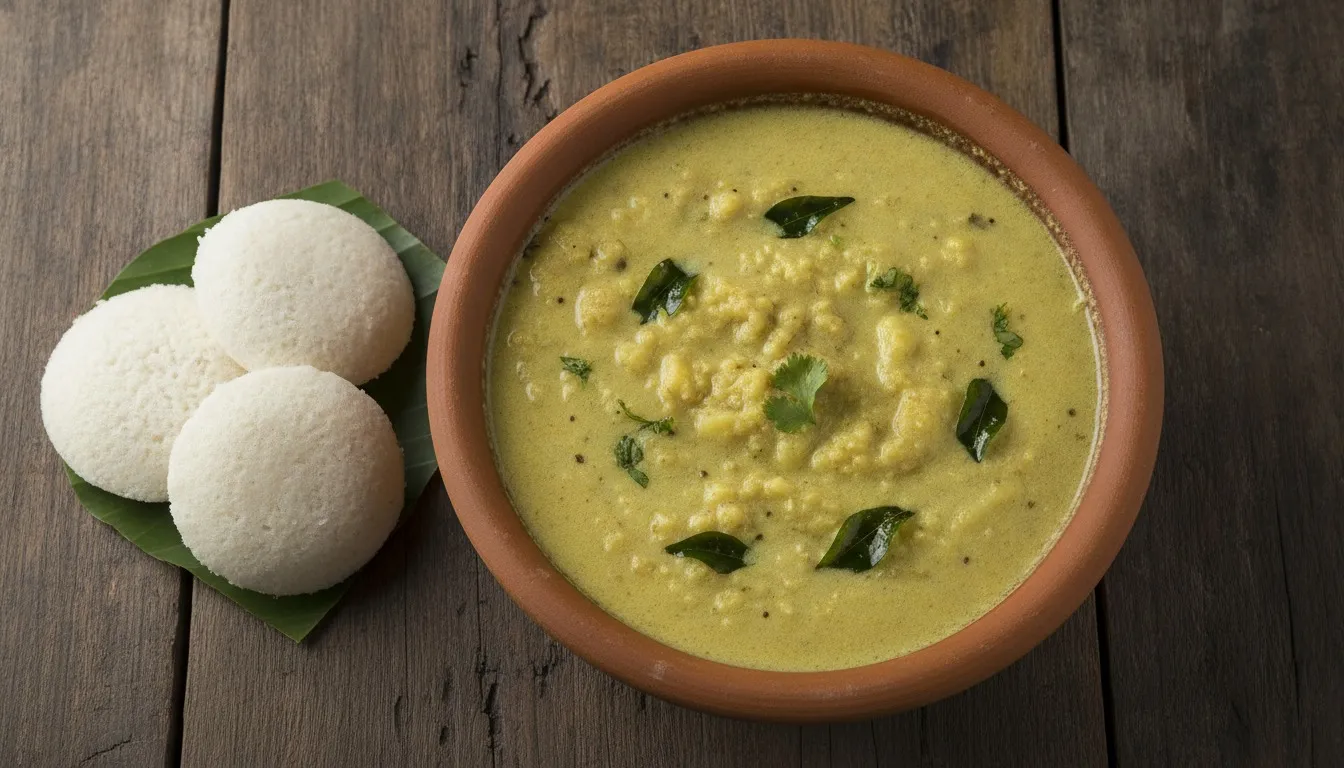
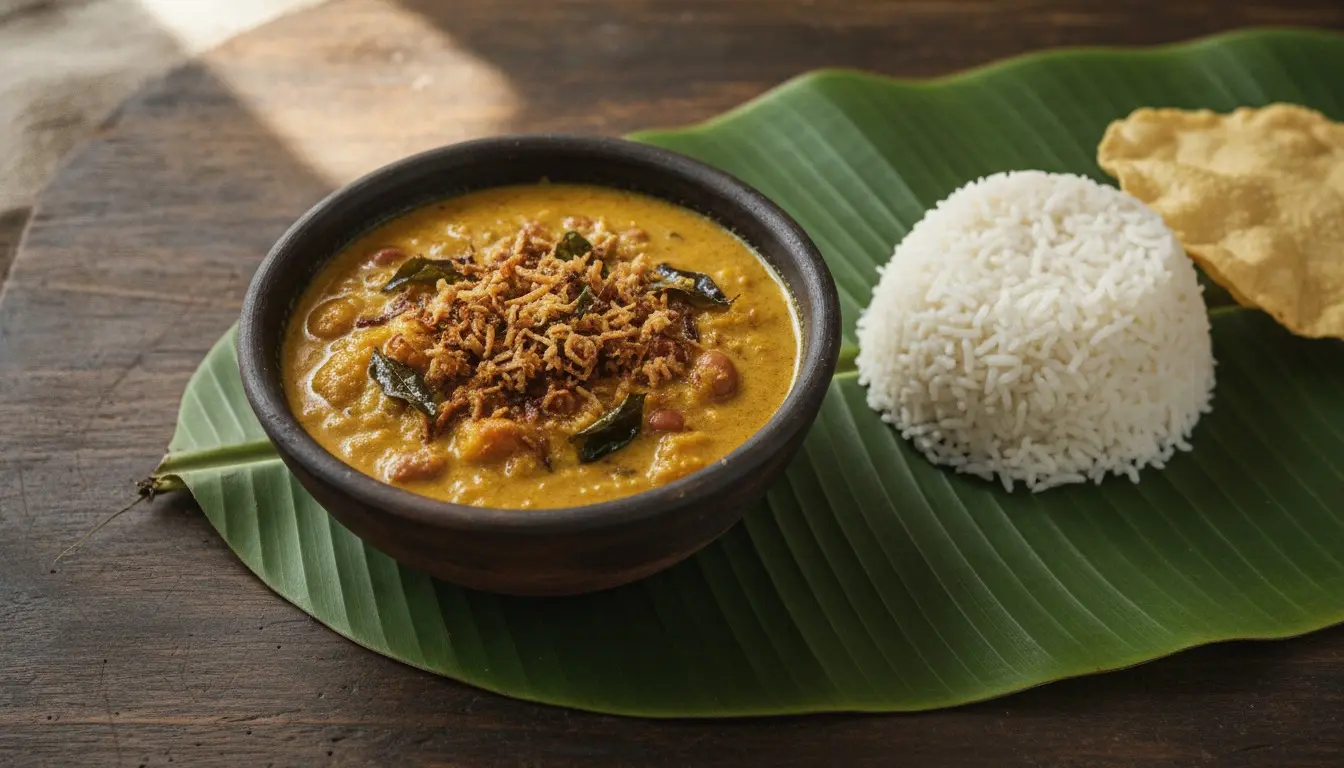
If you have scrolled through South Indian breakfast reels lately, you have probably noticed home cooks reaching past the usual sambar and chutney for something creamier and more regional to spoon over their idlis. Kumbakonam kadappa is exactly that dish, and it is having a real moment online. It is a soft, pale, comforting stew of moong dal and potato ground with fresh coconut and fennel, mild enough for children yet fragrant enough to make a plain idli feel special. Unlike a heavy kurma, kadappa is gentle and almost soupy, made to soak into every pocket of a dosa. Once you taste it, you understand why the Thanjavur delta guards this recipe so proudly.
About This Dish
Kadappa comes from the temple town of Kumbakonam and the surrounding Thanjavur region of Tamil Nadu, an area famous for its rice, its degree coffee, and its distinctive tiffin culture. It was traditionally served at small Kumbakonam eateries as a side for idli, dosa, and pongal, and it carries the delta region’s love of coconut and fennel. The defining rule, passed down in local kitchens, is restraint: no tomato and only the lightest touch of whole spice, so the coconut and moong dal stay in the foreground. That simplicity is exactly what sets kadappa apart from the many kurmas of the South.
Ingredient Notes
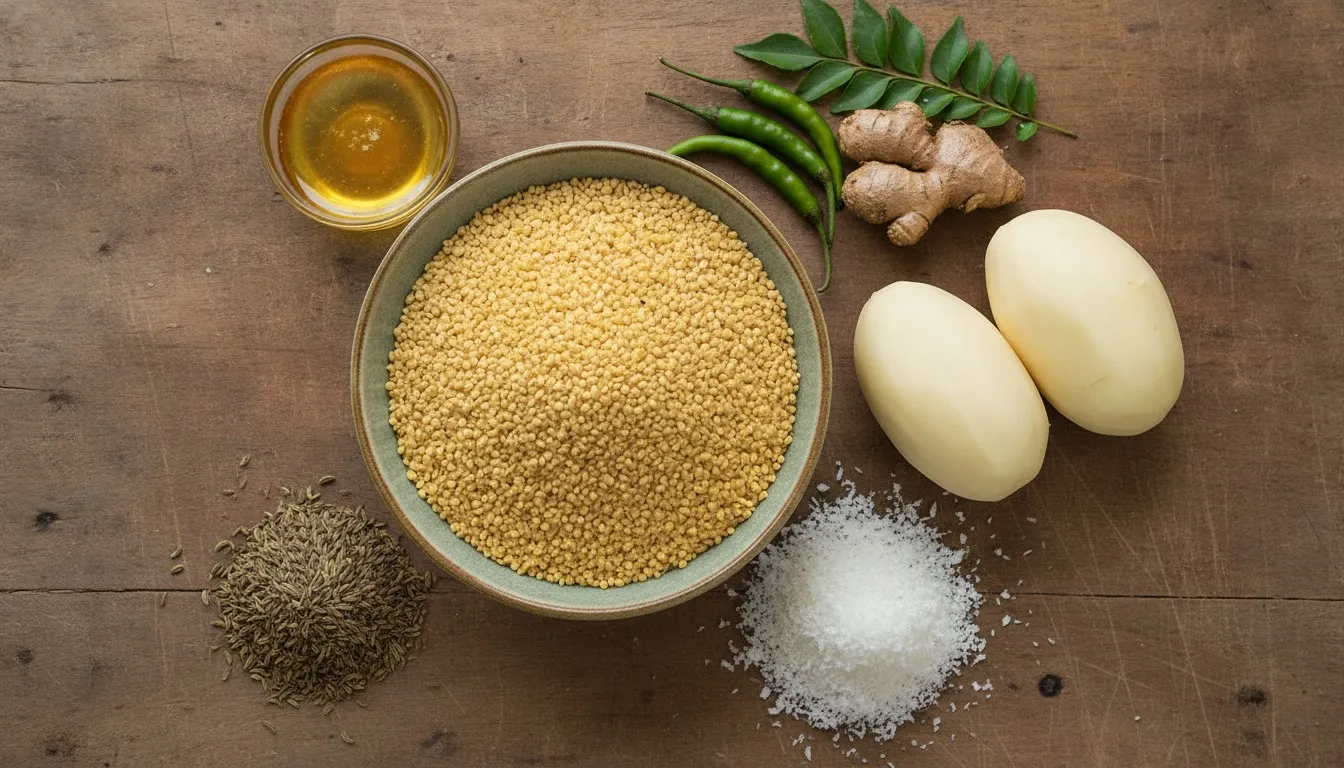
The heart of kadappa is yellow split moong dal, which cooks down soft and gives the stew its creamy body, and boiled potato, which is mashed in to thicken it further. The ground paste of fresh coconut, fennel seeds, green chilies, and a little garlic and ginger is where the flavor lives, so use fresh or frozen grated coconut rather than desiccated for the best texture. A few cashews in the paste are optional but add a lovely richness. If you want the most authentic sweetness, use small shallots in place of regular onions. Keep tomato, poppy seeds, and roasted gram out of it; those are variations from other regions and they change the character of the dish.
Method And Tips
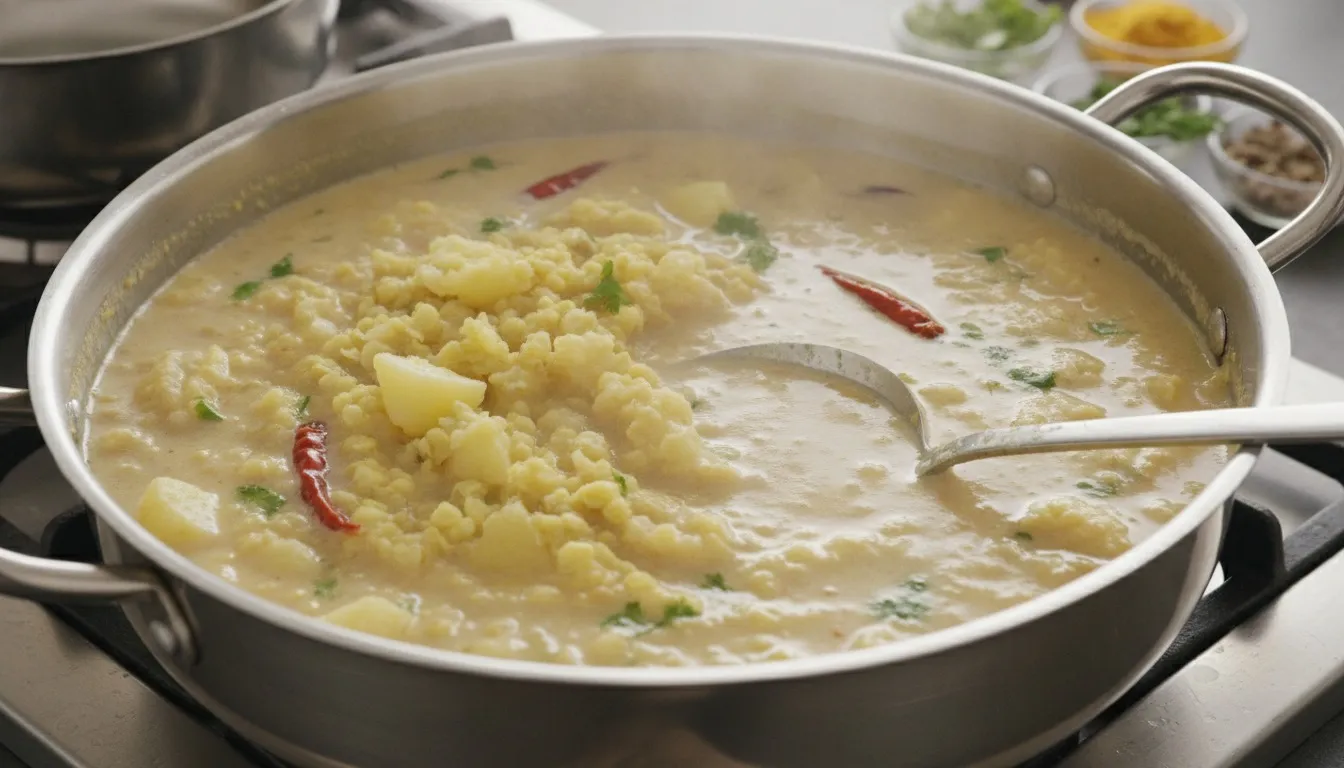
The technique is forgiving, which is part of kadappa’s charm. Pressure cook the dal and potato together so both turn tender in one step, then mash them well before the coconut paste goes in. The most important tip is to add the ground coconut toward the end and simmer only gently, stirring often, since coconut scorches quickly and can turn the stew grainy. Aim for a pourable, lightly thick consistency; kadappa firms up as it cools, so keep a little hot water handy to loosen it before serving. A final squeeze of lemon is optional but brightens the whole pot.
Serving Suggestions
Serve Kumbakonam kadappa hot, ladled generously over soft idlis or alongside a crisp dosa, with a spoon of coconut chutney on the side if you like. It also pairs beautifully with pongal, poori, or plain steamed rice for a simple lunch. Make a batch on a weekend morning and you will see why this quiet Thanjavur classic is winning over a whole new audience. Give it a try and let it become a regular on your breakfast table.
Recipe
Kumbakonam Kadappa
A creamy, mildly spiced South Indian stew of moong dal and potato ground with fresh coconut and fennel, served as a side for idli and dosa. This Thanjavur-style version skips tomato and heavy whole spices to keep its signature gentle flavor.
- Prep
- 15min
- Cook
- 30min
- Total
- 45min
- Servings
- 4servings
- Calories
- 190kcal
Ingredients
- For cooking the dal and potato
- 1/2 cup yellow split moong dal
- 2 medium potatoes
- 1/4 tsp turmeric powder
- 1.5 cups water
- For the coconut masala paste
- 1/2 cup fresh grated coconut
- 1.5 tsp fennel seeds
- 3 green chilies
- 3 cloves garlic
- 1 inch piece ginger
- 6 cashews (optional, for creaminess)
- 1/2 cup water
- For tempering and finishing
- 2 tbsp coconut oil
- 1/2 tsp mustard seeds
- 1/2 tsp cumin seeds
- 1 inch piece cinnamon
- 1 sprig curry leaves
- 2 medium onions
- 2 green chilies, slit (optional)
- 1.25 tsp salt
- 2 tbsp coriander leaves, chopped
- 1/2 lemon (optional)
Instructions
- 1 Rinse the moong dal well. Add it to a pressure cooker along with the whole potatoes, turmeric powder, and 1.5 cups water. Pressure cook for 3 to 4 whistles on medium heat, until the dal is soft and the potatoes are fully tender.
- 2 Once the pressure releases naturally, peel the potatoes and roughly mash them. Mix the mashed potato into the cooked dal so you have a soft, lumpy mixture. Set aside.
- 3 In a blender, grind the grated coconut, fennel seeds, green chilies, garlic, ginger, and cashews with 1/2 cup water into a smooth paste. Set the coconut masala aside.
- 4 Heat the coconut oil in a wide pan or kadai over medium heat. Add the mustard seeds and let them splutter, then add the cumin seeds, cinnamon piece, and curry leaves.
- 5 Add the chopped onions and the slit green chilies. Saute for 4 to 5 minutes until the onions turn soft and translucent.
- 6 Add the mashed dal and potato mixture, then pour in 1.5 to 2 cups water and the salt. Stir well and bring to a gentle boil, breaking up any large potato pieces.
- 7 Pour in the ground coconut masala and stir to combine. The kadappa should be pourable and slightly thick, like a light kurma; add a little hot water if it is too thick.
- 8 Lower the heat and simmer for 5 to 7 minutes, stirring often so the coconut does not stick or scorch at the bottom.
- 9 Turn off the heat, stir in the chopped coriander leaves, and squeeze in the lemon juice if using. Serve hot with idli or dosa.
Notes
- Traditional Kumbakonam kadappa does not use tomato. The fresh coconut and fennel give it its distinctive mild, sweet flavor.
- Keep the whole spices minimal. Too many warm spices will make it taste like a kurma instead of kadappa.
- Kadappa thickens as it sits. Loosen it with a splash of hot water before serving and adjust salt.
- For a sweeter, more authentic taste, swap the regular onions for about 15 peeled shallots (small onions).