Authentic Kori Gassi Recipe (Mangalorean Chicken Curry)
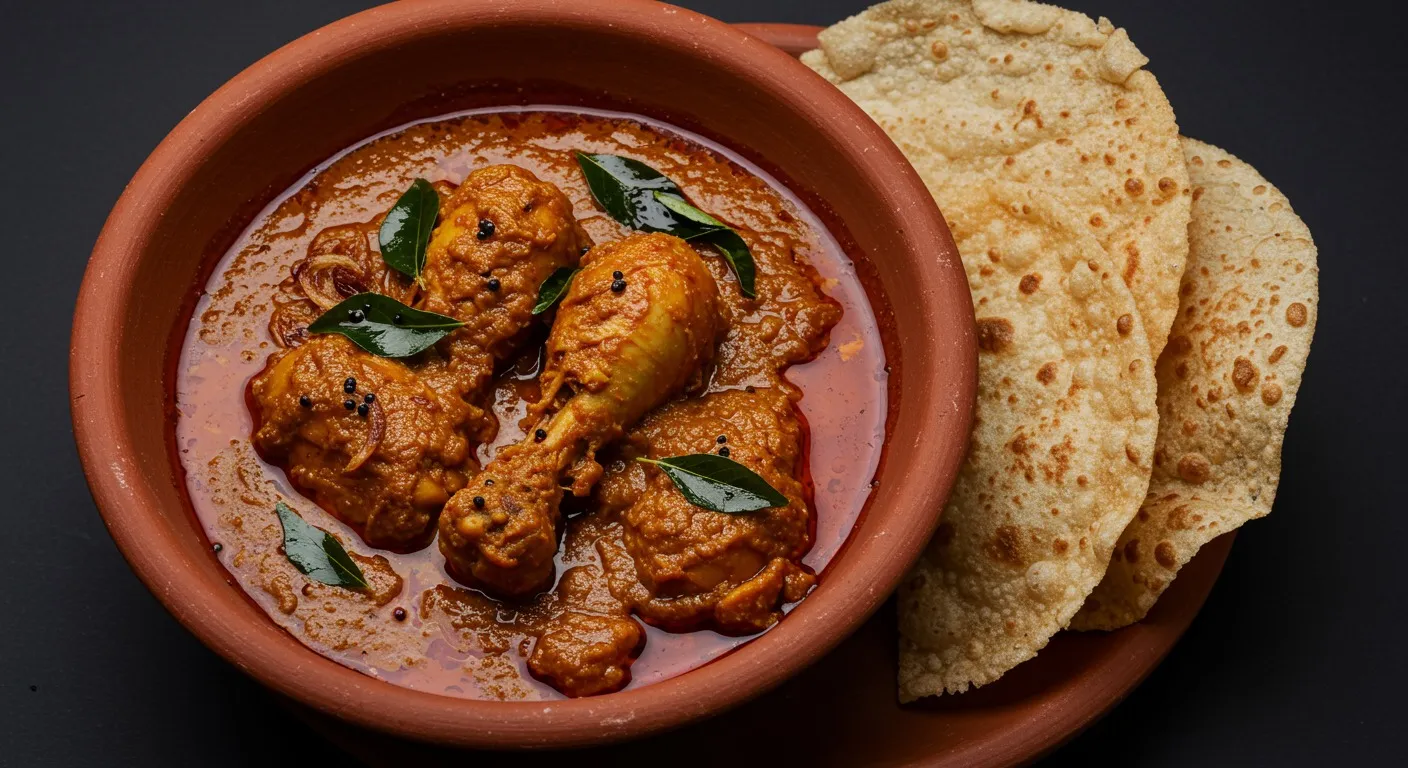
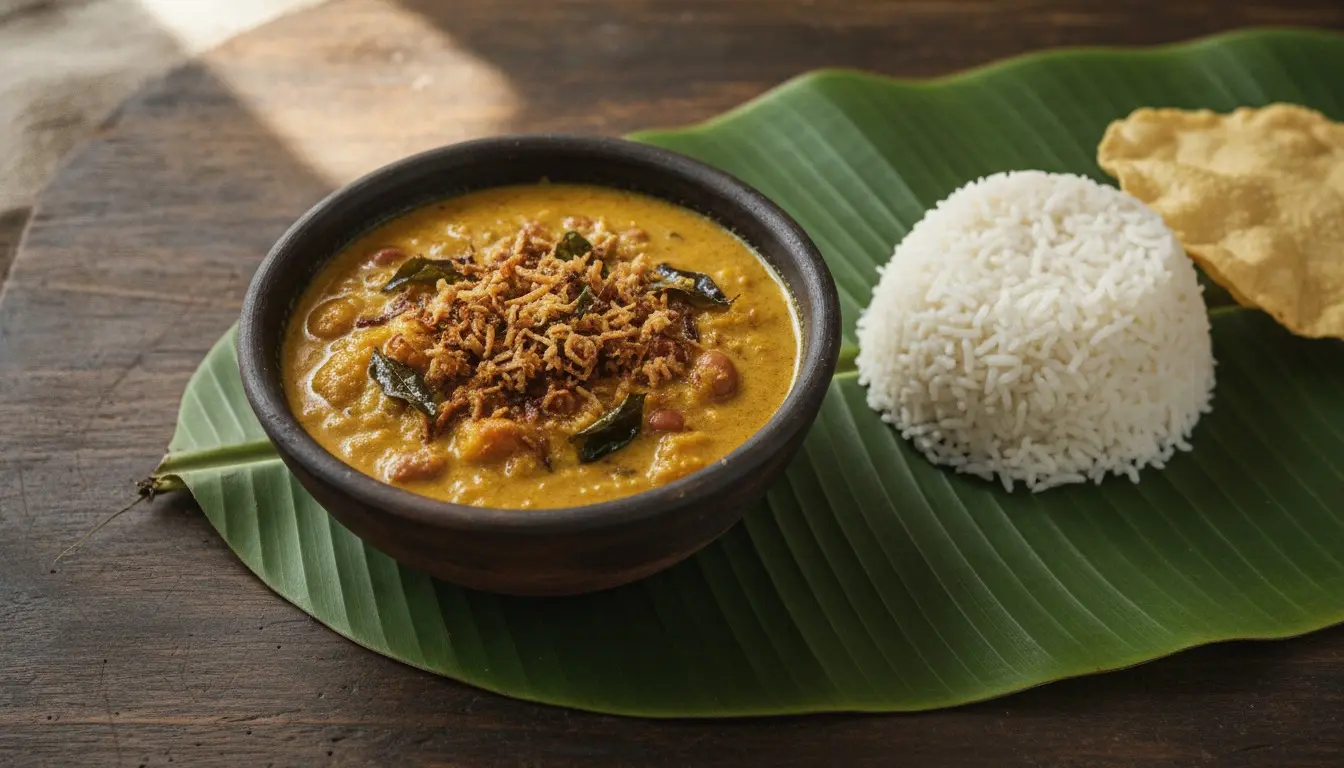
Kori Gassi is the dish that finally puts coastal Karnataka on the map for curry lovers, and it is having a real moment online as cooks reach past the usual butter chicken and tikka masala toward bold, hyperlocal regional flavors. The name comes from Tulu, the language of the Mangalore region, where kori means chicken and gassi means curry. What makes it special is the masala: dried byadgi chillies and fresh coconut roasted until deeply fragrant, then ground into a thick, rust-red paste that coats every piece of chicken. Finished with creamy coconut milk and a sizzling curry leaf tempering, it is spicy, tangy, and unmistakably coastal.
About This Dish
This curry belongs to the Bunt and Tuluva communities of the Mangalore and Udupi coast, where coconut grows in abundance and forms the backbone of nearly every dish. Traditionally Kori Gassi is paired with kori rotti, brittle wafers of baked rice flour that soak up the gravy and soften into a uniquely textured bite. For generations it was a festive and celebratory dish served at weddings and family gatherings, and only recently has it spread beyond the region to home kitchens and restaurants across the country and abroad.
Ingredient Notes
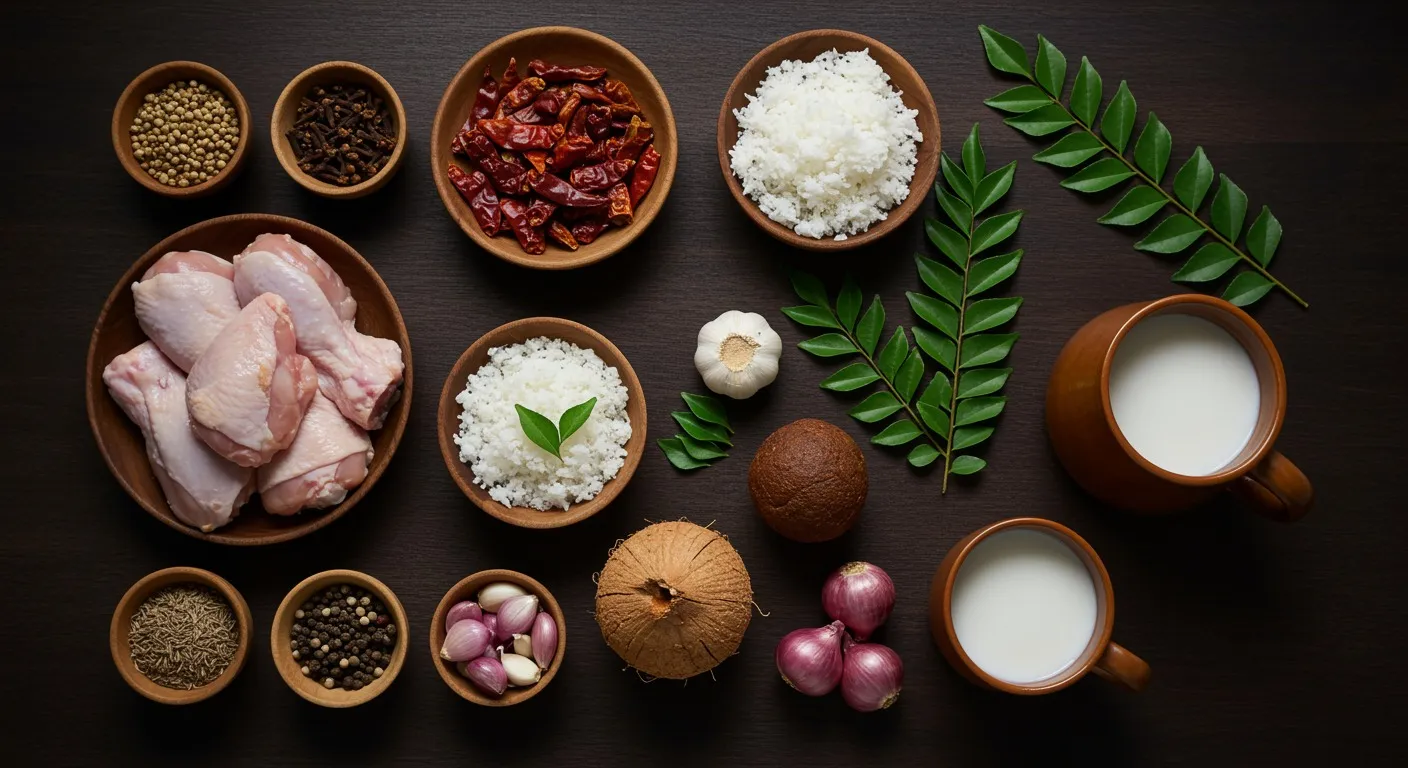
The heart of this recipe is the roasted masala, so the two ingredients to get right are the chillies and the coconut. Byadgi chillies are prized for the deep red color and gentle heat they lend; kashmiri chillies are the easiest substitute if byadgi are hard to find. Fresh grated coconut delivers the truest flavor, but unsweetened desiccated coconut soaked briefly in warm water works in a pinch. Tamarind brings the signature tang, and shallots give a sweeter, mellower base than regular onions, though a small onion will do. Coconut milk, both a thinner pour for simmering and a thicker pour to finish, ties everything together into a silky gravy.
Method And Tips
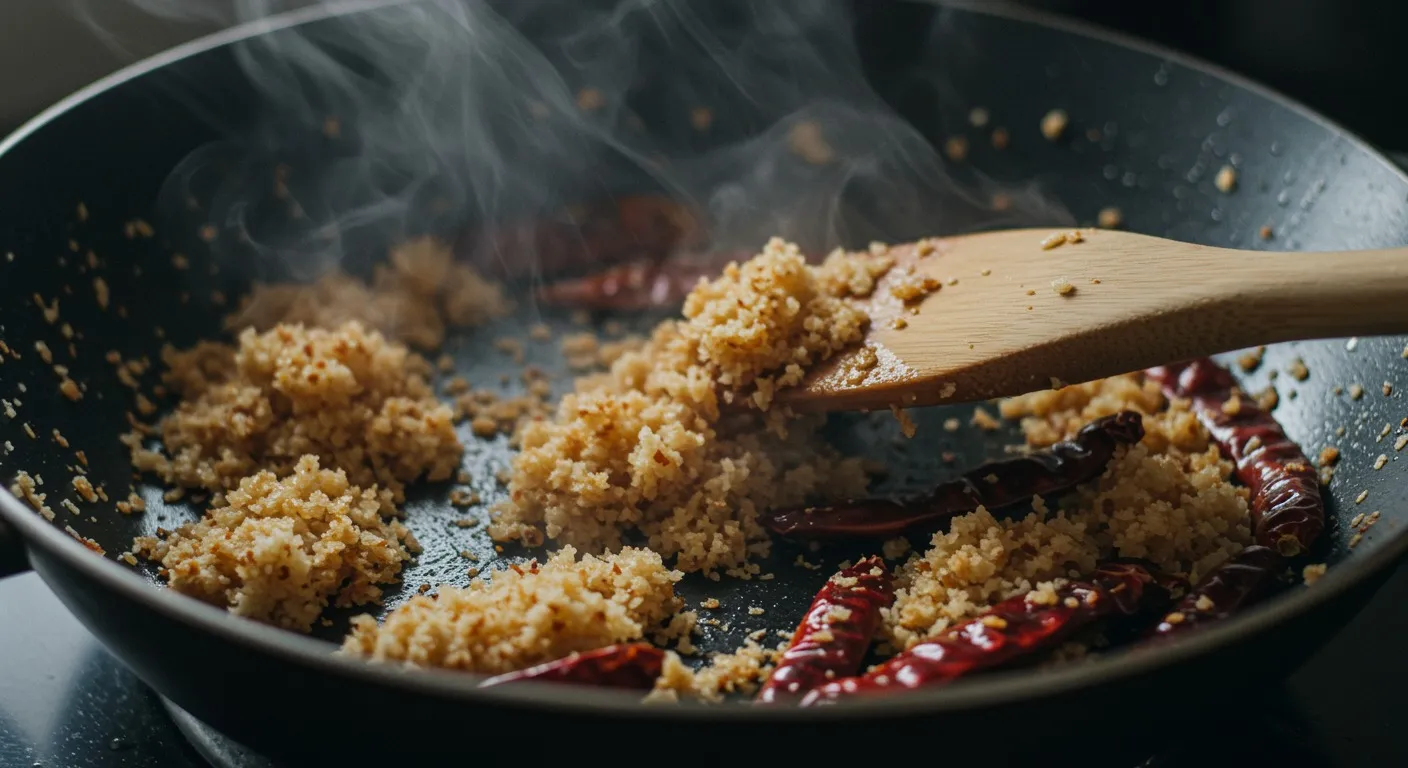
The technique that separates a good Kori Gassi from a flat one is patient roasting. Toast the whole spices and chillies first on low heat until aromatic, then add the coconut and aromatics and roast until the coconut is genuinely golden, not pale, because that browning is where the nutty depth comes from. Grind to a smooth paste and cook it down until the oil separates before the chicken goes in. One key tip: once the thick coconut milk is added, keep the heat gentle and never let it reach a rolling boil, or the curry can split. A second tip is to let the finished curry rest for a few minutes so the flavors settle and deepen.
Serving Suggestions
Serve Kori Gassi the classic way with kori rotti, or with neer dosa, appam, steamed rice, or even crusty bread to mop up the gravy. It tastes even better the next day once the spices have melded. If you have been wanting to explore South Indian cooking beyond idli and dosa, this fiery, fragrant coastal curry is a rewarding place to start.
Recipe
Kori Gassi (Mangalorean Chicken Curry)
A spicy, tangy coastal Karnataka chicken curry where bone-in chicken simmers in a roasted coconut and byadgi chilli masala, finished with thick coconut milk and a curry leaf tempering.
- Prep
- 20min
- Cook
- 35min
- Total
- 55min
- Servings
- 4servings
- Calories
- 430kcal
Ingredients
- For the chicken
- 2 lb bone-in chicken, curry cut
- 1/2 tsp turmeric powder
- 1 tsp salt
- For the roasted masala paste
- 1 tbsp coconut oil
- 10 dried byadgi or kashmiri red chillies
- 2 tbsp coriander seeds
- 1 tsp cumin seeds
- 1 tsp black peppercorns
- 1/4 tsp fenugreek seeds
- 1 inch piece cinnamon stick
- 4 cloves
- 1 cup fresh grated coconut
- 8 garlic cloves
- 10 shallots, peeled
- 1 tbsp tamarind
- 1 cup water, for grinding
- For the curry
- 1 tbsp coconut oil
- 1 medium onion, finely chopped
- 1 sprig curry leaves
- 1 cup thin coconut milk
- 1 cup thick coconut milk
- For the tempering
- 1 tbsp ghee
- 1 small onion, thinly sliced
- 1 sprig curry leaves
Instructions
- 1 Pat the chicken pieces dry and toss them with the turmeric and salt. Set aside while you prepare the masala.
- 2 Heat 1 tablespoon coconut oil in a pan over medium-low heat. Add the byadgi chillies, coriander seeds, cumin, peppercorns, fenugreek, cinnamon, and cloves. Roast, stirring, until fragrant and the chillies darken slightly, about 2 to 3 minutes. Take care not to burn the fenugreek, which turns bitter.
- 3 Add the grated coconut, garlic, and shallots to the same pan. Roast, stirring often, until the coconut turns deep golden brown, about 5 to 6 minutes. Let the mixture cool slightly.
- 4 Transfer the roasted mixture to a blender along with the tamarind and about 1 cup water. Grind to a smooth, fairly thick paste.
- 5 In a heavy pot, heat 1 tablespoon coconut oil over medium heat. Add the chopped onion and 1 sprig curry leaves and saute until the onion is soft and translucent, about 4 minutes.
- 6 Add the ground masala paste and cook on medium heat until the raw smell disappears and the oil begins to separate, about 5 to 7 minutes. Add a splash of water if it sticks.
- 7 Add the chicken and stir to coat well in the masala. Cook for 5 minutes, then pour in the thin coconut milk. Cover and simmer until the chicken is cooked through and tender, about 18 to 20 minutes, stirring occasionally.
- 8 Stir in the thick coconut milk and simmer gently for 3 to 4 minutes. Do not let it boil hard or the coconut milk may split. Taste and adjust salt and tamarind.
- 9 For the tempering, heat the ghee in a small pan. Fry the sliced onion until golden, then add the curry leaves and let them crackle. Pour this over the curry.
- 10 Rest the curry for 5 minutes, then serve hot with kori rotti, neer dosa, steamed rice, or appam.
Notes
- Byadgi and kashmiri chillies give a deep red color with mild heat. For a spicier curry, add 1 or 2 hotter dried chillies to the roast.
- Fresh coconut gives the best flavor. If unavailable, soak unsweetened desiccated coconut in a little warm water before roasting.
- Never boil the curry vigorously after adding the thick coconut milk, as that can cause it to split and turn grainy.