Authentic Kambu Koozh Recipe (Tamil Pearl Millet Summer Cooler)
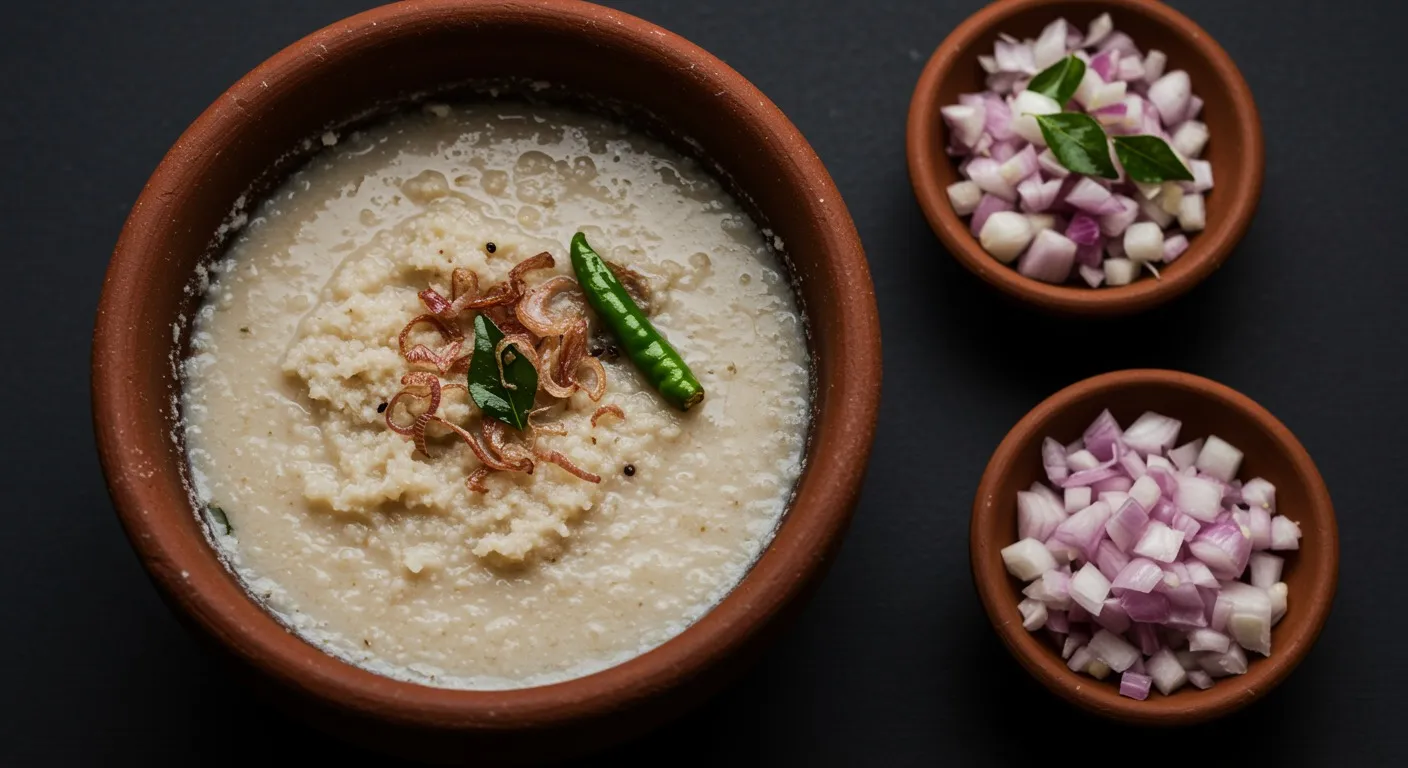
When the heat really sets in, few things bring as much relief as a bowl of kambu koozh, the fermented pearl millet cooler that has fed Tamil Nadu’s countryside for generations. It is having a real moment online right now, popping up across Instagram reels and Pinterest summer-drink boards as people rediscover it as a probiotic, gut-friendly way to beat the heat. The appeal is easy to understand: it is humble, cheap, deeply cooling, and packed with fiber and slow energy. Unlike a sugary cooler, it actually keeps you full and steady through a long, hot afternoon. One taste of that gentle sourness and you understand why farmers have relied on it for centuries.
About This Dish
Pearl millet, called kambu in Tamil, bajra in Hindi, sajja in Telugu, and sajje in Kannada, is a drought-tolerant grain that thrives where little else will. In rural Tamil Nadu, it is traditionally cooked down into a porridge, left to ferment overnight in an earthen pot, and then loosened with buttermilk or curd the next day. It was the original working lunch, carried to the fields and eaten with raw onions, green chilies, and a piece of pickle. Versions of the same idea exist across the millet belt, from Rajasthan to Karnataka, each region giving it a slightly different name and accompaniment.
Ingredient Notes
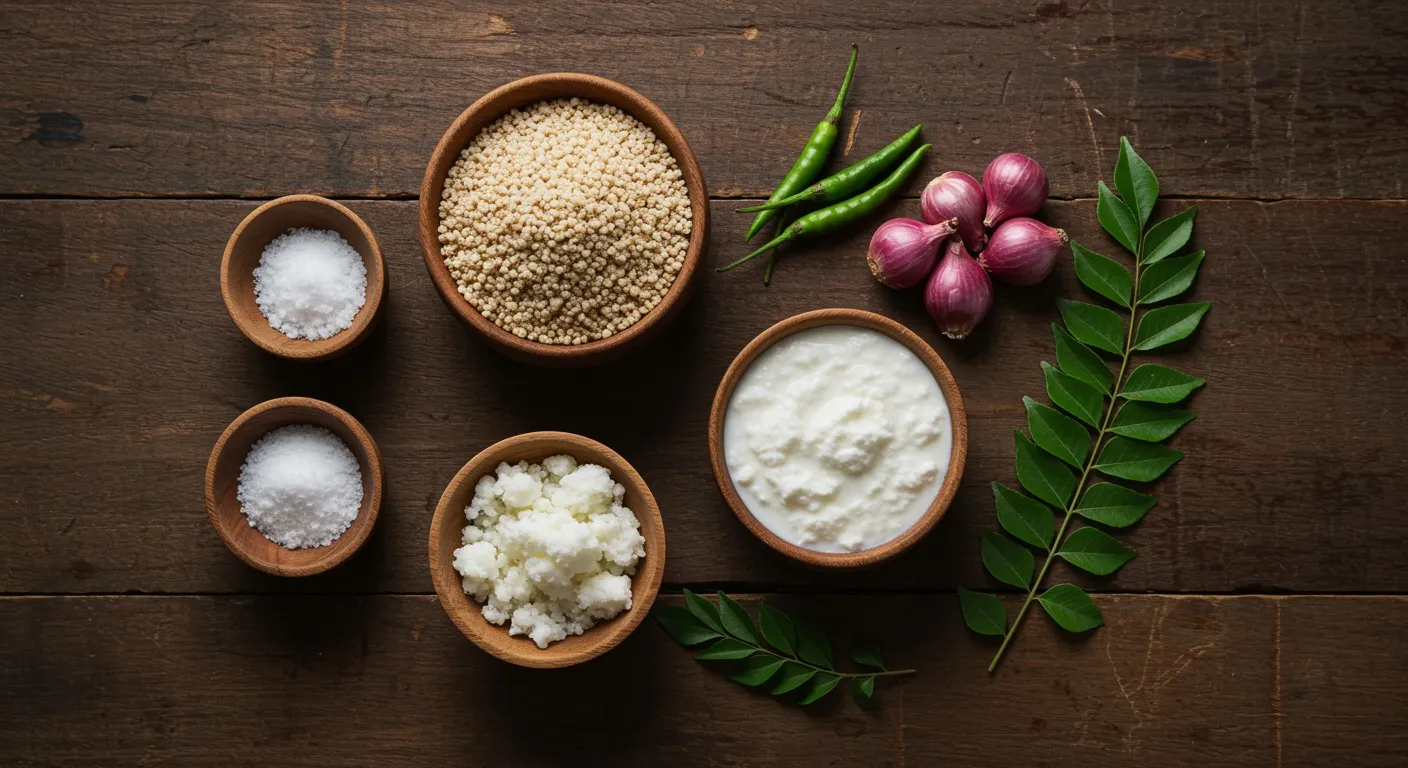
The grain itself is the only specialty ingredient, and most Indian grocers and many health-food stores carry whole pearl millet or kambu flour. Whole millet, soaked and simmered, gives the most authentic body and texture, while the flour is a genuine time-saver when you want koozh the same day. Sour curd is essential, since its tang balances the earthy millet and adds the probiotic punch the dish is known for; let your curd sit out a bit if it is too fresh and mild. Small shallots, or sambar onions, are traditional and sweeter than regular onions, but a finely chopped red onion works in a pinch. Green chilies, curry leaves, and salt round it out, and that is truly all you need.

Method And Tips
The two things that make kambu koozh come out right are patience and consistency. Cook the millet long and slow until the grains are completely soft and mashable, because undercooked millet stays gritty no matter how much you thin it later. Let it cool fully before fermenting, then give it a real overnight rest so the natural sourness develops; in very warm weather it ferments faster, so taste as you go. When you mix in the curd, add water gradually and stop when it pours the way you like, thick enough to eat with a spoon or thin enough to sip. A tip from the villages: serve it in a clay pot, which keeps it naturally cool and lends a subtle earthy aroma.
Serving Suggestions
Kambu koozh is best enjoyed cold, with extra chopped shallots and a fried mor milagai or a spoon of pickle on the side. It makes a wonderful light breakfast, a midday cooler, or a restorative drink after time in the sun. If you have never tried a savory fermented millet drink, give this one a chance when the season comes around. It might just become your favorite way to stay cool.
Recipe
Kambu Koozh (Pearl Millet Porridge)
A traditional Tamil Nadu summer cooler of pearl millet simmered soft, fermented overnight, then thinned with sour curd, shallots, and green chili and served chilled. Tangy, light, and naturally probiotic.
- Prep
- 15min
- Cook
- 40min
- Total
- 55min
- Servings
- 4servings
- Calories
- 150kcal
Ingredients
- For the porridge
- 1 cup pearl millet (kambu / bajra)
- 5 cups water
- 1/2 tsp salt
- To serve
- 1 cup sour plain yogurt (curd)
- 8 shallots (small onions), finely chopped
- 2 green chilies, finely chopped
- 1 sprig curry leaves
- 1 cup water, to thin
Instructions
- 1 Rinse the pearl millet 2 to 3 times in cold water until the water runs clear, then soak it in plenty of water for 6 to 8 hours or overnight.
- 2 Drain the soaked millet and add it to a heavy-bottomed pot with 5 cups of fresh water. Bring to a boil, then simmer on low heat for 35 to 45 minutes, stirring occasionally and adding a splash more water if it sticks, until the grains are very soft and mashable. To save time, pressure cook with 4 cups water for 4 to 5 whistles instead.
- 3 Lightly mash the cooked millet with the back of a ladle for a smoother texture, then let it cool completely to room temperature.
- 4 Cover the pot and leave it on the counter overnight, about 8 hours, to ferment. The porridge will turn pleasantly tangy. In a warm kitchen this happens faster, so check the smell and taste.
- 5 When ready to serve, whisk the sour curd with the salt until smooth. Stir in about 1 cup of water, or more, to loosen it to a pourable, drinkable consistency.
- 6 Combine the fermented millet with the curd mixture and stir well, adding extra water until it reaches the thickness you like, from a thick porridge to a sippable cooler.
- 7 Stir in the chopped shallots, green chilies, and torn curry leaves. Serve chilled or at room temperature, ideally in an earthen pot, with extra raw shallots and green chili on the side.
Notes
- Quick flour version: cook 1/4 cup pearl millet flour with 1 1/4 cups water on low heat, whisking until lump-free and thick, then cool and ferment 5 to 6 hours before mixing with curd.
- Make the porridge base ahead and store it in the fridge without the curd for up to 3 days. Add the curd, water, and aromatics only just before serving.
- For a sweet version, skip the salt, shallots, and chili and stir the fermented millet with cold milk and jaggery or sugar to taste.
- Serving it in a clay pot keeps it cool and adds the earthy note that makes this drink so refreshing in peak summer.