Fresh Ginger Tea (Adrak Chai) for Mild Nausea, Motion Sickness, and Indigestion
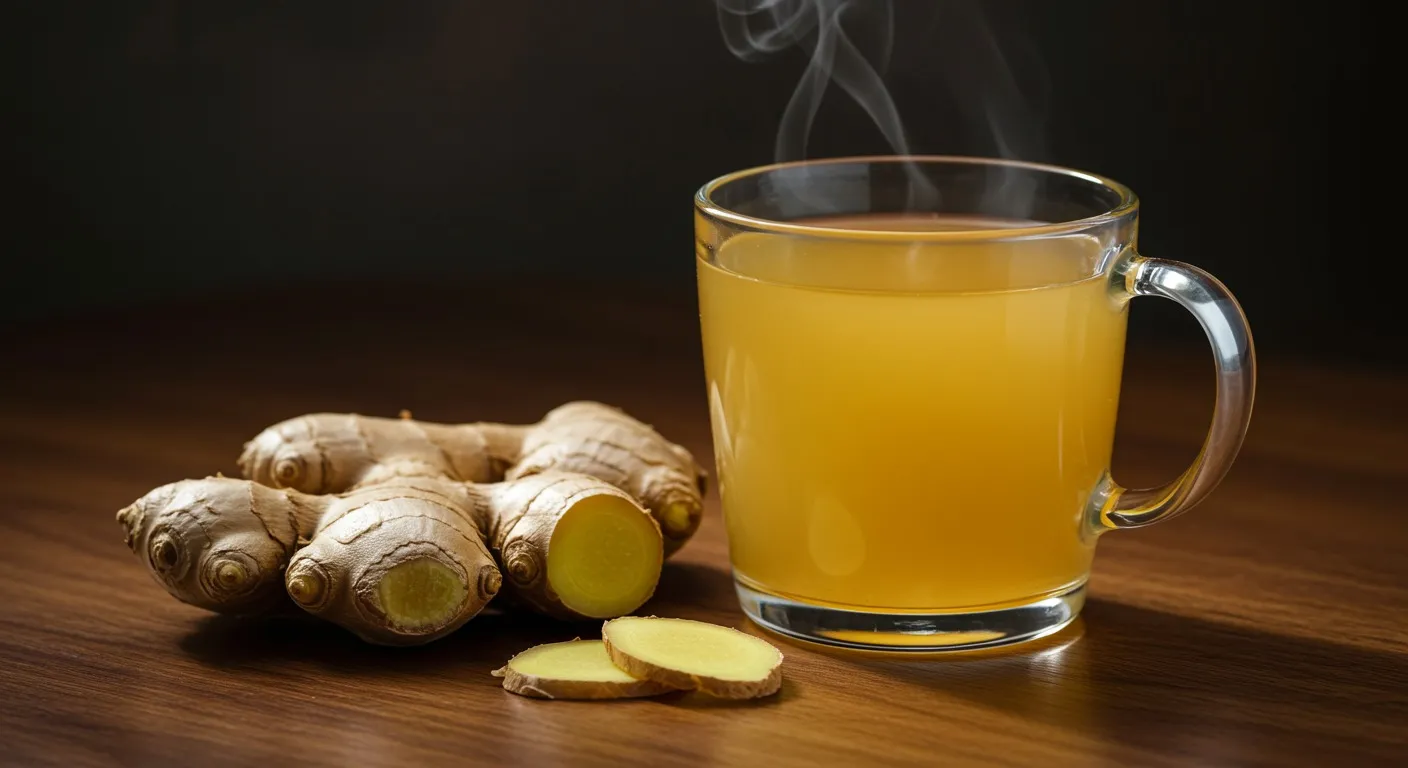
A queasy stomach after a big meal, the slow churn of indigestion, or the wave of nausea that hits on a winding car ride are among the most common discomforts almost everyone deals with from time to time. Most are mild and pass on their own, but they can still derail an afternoon or a road trip. Long before anti-nausea tablets, kitchens across India reached for a single knob of fresh ginger simmered in hot water. This simple ginger tea remains one of the most reliable and best-studied kitchen remedies for a mildly upset stomach.
The Ayurvedic Perspective
In Ayurveda, ginger is so esteemed that the Charaka Samhita calls it vishwabhesaja, the universal medicine, and mahaushadha, the great remedy. Fresh ginger is known as ardraka and dried ginger as shunthi. Ayurveda reads mild nausea, bloating, and sluggish digestion as signs of weak agni, the digestive fire, and a buildup of ama, undigested residue, often tied to aggravated kapha and vata. Ginger is classified as deepana, meaning it kindles agni, and pachana, meaning it helps digest ama, with a pungent taste, a heating potency, and a sweet post-digestive effect. Taken warm, it is meant to rekindle digestion, settle the stomach, and move stagnation, which is why it is traditionally sipped before meals to spark appetite or after a heavy meal to ease fullness.
What Modern Biology Says
Modern chemistry traces ginger’s effects mainly to gingerols and, in cooked or dried ginger, shogaols. These compounds act on both the gut and the nervous system: human studies show ginger speeds gastric emptying and stimulates the muscular contractions that move food through the stomach, and laboratory studies suggest it blunts nausea partly by acting on serotonin (5-HT3) receptors involved in the vomiting reflex. A 2000 systematic review of randomized trials in the British Journal of Anaesthesia concluded that ginger is a promising antiemetic, but cautioned that the trials were too few and too varied to be conclusive, with the pooled results for postoperative nausea falling short of statistical significance. A classic 1982 Lancet trial found that powdered ginger eased laboratory-induced motion sickness in a tilted rotating chair, doing better than both placebo and a standard motion-sickness drug, and a 2019 systematic review of clinical trials in Food Science and Nutrition supports ginger’s role in dyspepsia and nausea. The evidence is encouraging though not uniform, since ginger preparations and doses varied widely across studies.
How And When To Use It
Reach for ginger tea at the first sign of a queasy stomach, mild indigestion, or before a trip likely to bring on motion sickness. A practical dose is a 1 inch piece of fresh ginger, roughly a tablespoon grated, simmered in about a cup and a half of water and sipped warm. For digestion, a small cup 20 to 30 minutes before meals can spark appetite, or one after a heavy meal can ease fullness; for travel nausea, sip a cup 30 to 60 minutes before setting off and again as needed. Most studies used the equivalent of about 1 to 1.5 grams of ginger a day, which one or two cups of this tea comfortably provides. Relief from mild queasiness is usually felt within an hour.
Cautions And A Note On Medical Care
Ginger is safe for most healthy adults, but a few people should take care. Because it can mildly thin the blood, anyone taking blood thinners such as warfarin or aspirin, or who is about to have surgery, should check with a doctor before using it medicinally. Large amounts can cause heartburn or mild reflux, and those with gallstones or on diabetes or blood pressure medication should speak with their doctor first. Add honey only to warm, not boiling, tea, and never give honey to children under one year old. See a doctor if nausea, vomiting, or indigestion lasts more than two to three days, keeps returning, or comes with severe pain, blood, or signs of dehydration. This is traditional wisdom and not a substitute for medical care, but for an ordinary queasy stomach, a warm cup of fresh ginger tea is a time-tested place to start.
Recipe
Fresh Ginger Digestive Tea
A warming tea of fresh ginger simmered in hot water, traditionally sipped for mild nausea, motion sickness, and after-meal indigestion.
- Prep
- 2min
- Cook
- 10min
- Total
- 12min
- Servings
- 1doses
Ingredients
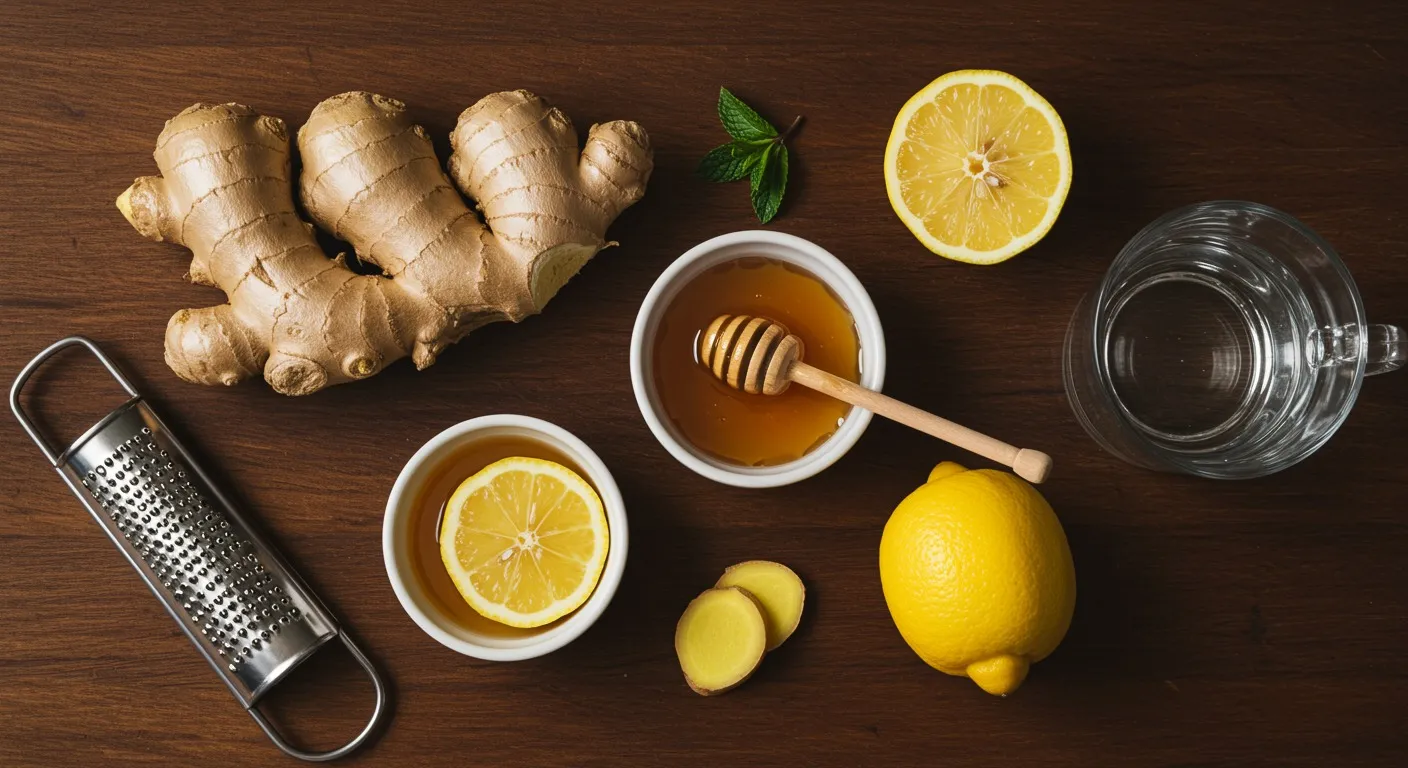
- 1 inch piece fresh ginger root, grated or thinly sliced
- 1.5 cups water
- 1 tsp honey, optional
- 1 tsp lemon juice, optional
Instructions
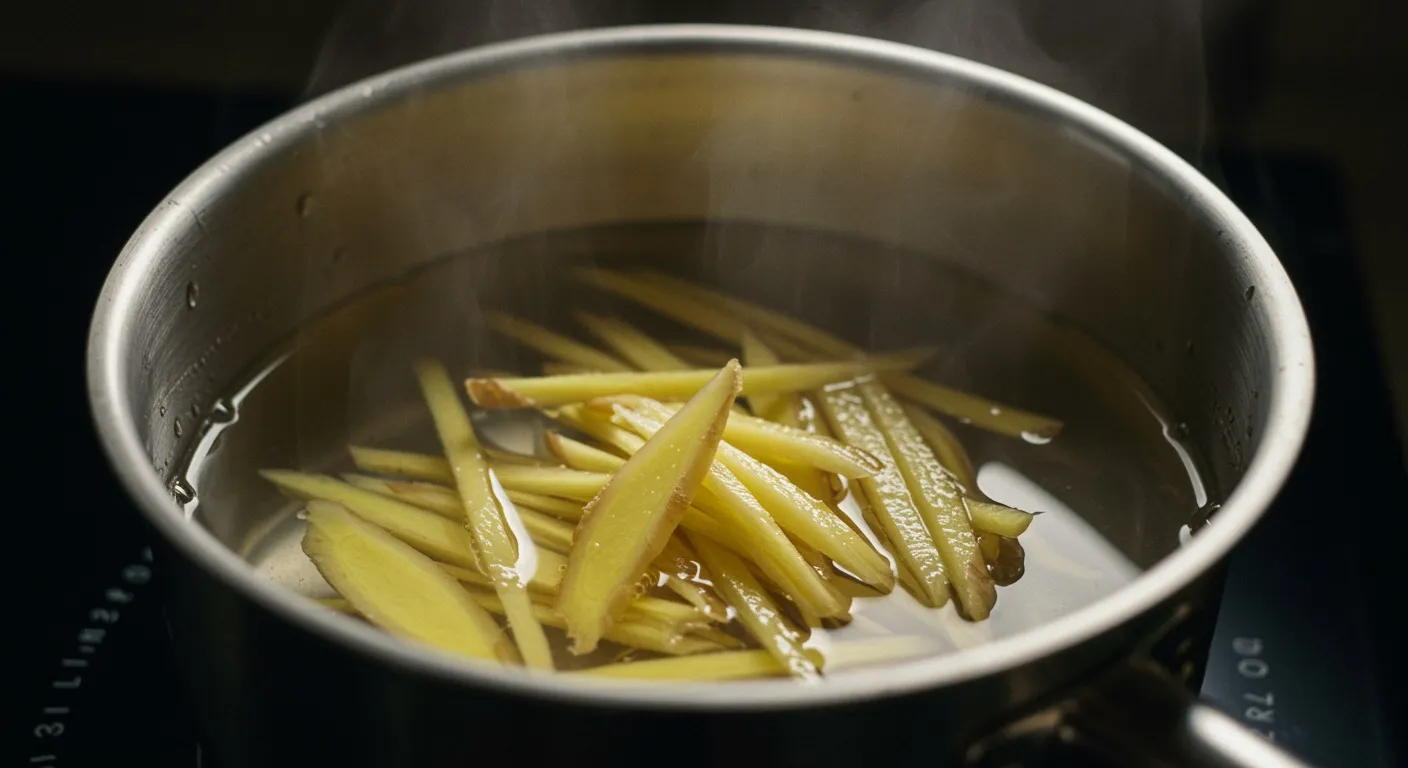
- 1 Peel and grate or thinly slice a 1 inch piece of fresh ginger root.
- 2 Bring 1.5 cups of water to a boil, add the ginger, lower the heat, and simmer gently for 8 to 10 minutes, until the water turns pale gold and smells strongly of ginger.
- 3 Strain into a cup, pressing the ginger against the strainer to extract its juice.
- 4 If using, stir honey and lemon into the tea once it has cooled slightly. Add honey only to warm, not boiling, tea, and never give honey to children under one year old.
- 5 Sip slowly. For indigestion, drink a small cup about 20 to 30 minutes before meals to spark appetite, or after a heavy meal to ease fullness. For nausea or motion sickness, sip a cup 30 to 60 minutes before travel and again as needed.
Notes
- If you take blood thinners such as warfarin, aspirin, or clopidogrel, or are scheduled for surgery, talk to your doctor before using ginger medicinally, as it may add to bleeding risk.
- Large amounts of ginger can cause heartburn, mild reflux, or mouth irritation; reduce the dose if this happens. Those with gallstones should consult a doctor, since ginger stimulates bile flow.
- Ginger may modestly lower blood sugar and blood pressure, so if you take medication for diabetes or blood pressure, monitor and check with your doctor first.
- Add honey only to warm, not boiling, tea, and never give honey to children under one year old. If pregnant, consult your doctor before using ginger medicinally.
- Consult your doctor if nausea, vomiting, or indigestion persists beyond 2 to 3 days or worsens, or if it comes with severe abdominal pain, blood, or signs of dehydration. This is traditional wisdom and not a substitute for medical care.