Ghee in Warm Milk for Mild Constipation and a Sluggish Morning
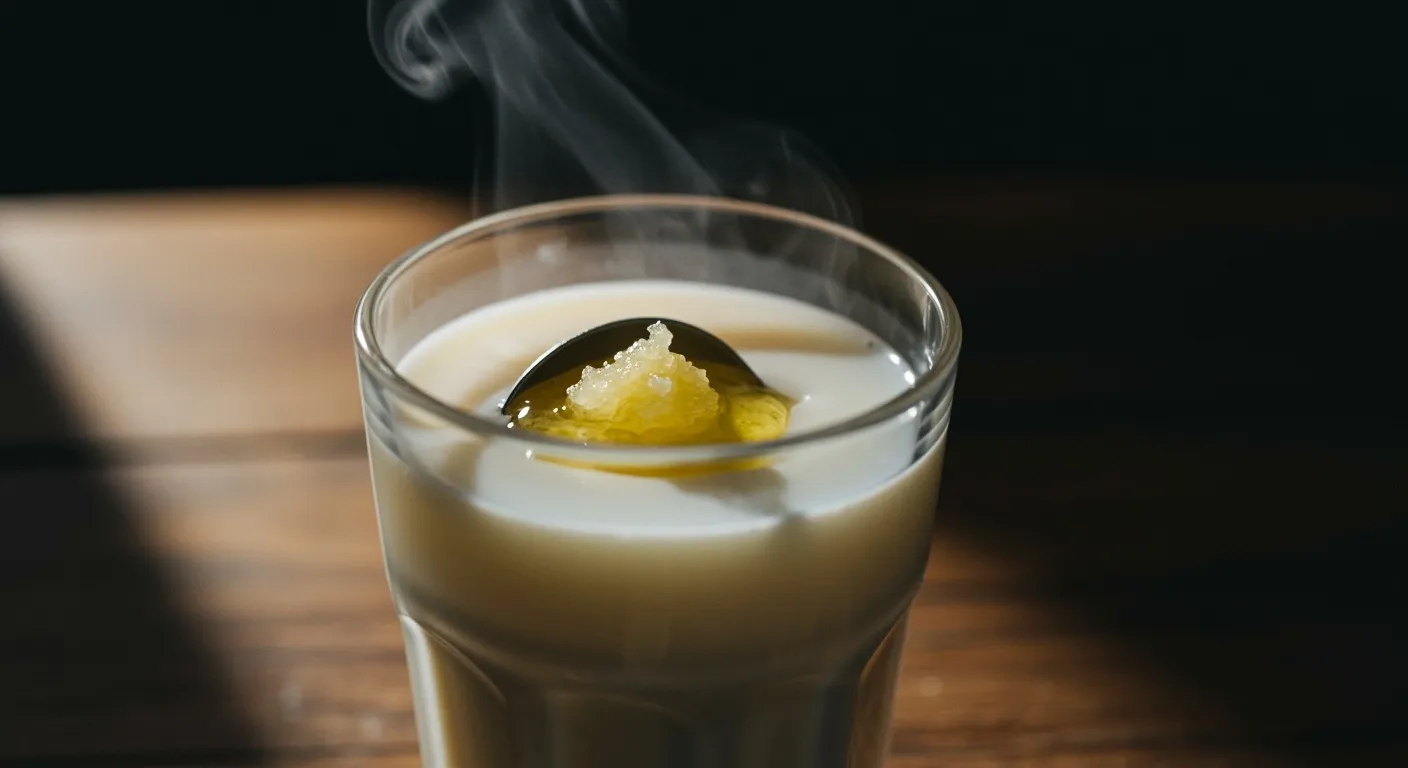
Almost everyone has the occasional sluggish morning where things just will not move, especially after travel, a few days of low water and low fiber, or a stretch of irregular meals. When the stool is hard and dry rather than simply infrequent, the body is usually short on warmth, fluid, and lubrication in the gut. One of the gentlest kitchen-based traditions for exactly this is a cup of warm milk with a spoonful of ghee taken at bedtime, a remedy many Indian households reach for before anything stronger.
The Ayurvedic Perspective
In Ayurveda, ordinary constipation is most often a vata problem. Vata carries the cold, dry, and mobile qualities, and when it builds up in the colon it dries out the stool so it becomes hard and difficult to pass. The classical answer is to counter dryness with its opposites: oiliness, warmth, and moisture. Ghee, known as ghrita, is singled out in the Charaka Samhita as the best of the sneha or oleation substances, the ideal agent for pacifying vata and re-lubricating the body’s tissues. Warm milk, or ksheera, adds the gentle warmth and hydration that vata lacks, which is why the warm-milk-and-ghee drink became a standard household form of mild internal oleation.
What Modern Biology Says
Modern biology offers a plausible explanation, with one common point worth getting right. Ghee does contain butyrate, a short-chain fatty acid that the cells lining the colon burn for fuel, and low colonic butyrate is associated with sluggish bowels: people with slow-transit constipation tend to show lower levels of fecal butyrate that track with how severe their symptoms are, and butyrate appears to speed transit partly through serotonin (5-HT) signaling in the gut wall. The catch is that most butyrate you eat is absorbed high in the small intestine, so the spoonful in your milk is unlikely to reach the colon in any meaningful amount; the butyrate that matters there is made on site when gut bacteria ferment fiber. The more straightforward reasons this drink can help are that the fat triggers the gastrocolic reflex, the normal urge to move the bowels that follows eating or drinking, that fat helps lubricate and soften the stool, and that the warm fluid itself supports motility. The direct trial evidence for this specific drink is limited and mostly mechanistic, so it is best treated as a low-risk, gentle aid rather than a guaranteed laxative.

How And When To Use It
Reach for this on the nights when you feel backed up, not as a permanent habit. Warm a cup of milk, stir in a teaspoon of ghee, and sip it slowly 30 to 60 minutes before bed, ideally a couple of hours after dinner. If a single teaspoon does nothing after a few nights, you can go up to two, but more is not better. Most people notice an easier, more complete bowel movement the following morning. Keep drinking water through the day and eating fiber, since this drink works best as a nudge alongside the basics, not a replacement for them.
Cautions And A Note On Medical Care
A few cautions keep this safe. It is meant for mild, occasional constipation only: if you have gone several days with no movement along with belly pain, bloating, vomiting, or no gas, treat that as a possible blockage and see a doctor rather than self-treating. Anyone who is lactose intolerant or dairy-sensitive may want to skip it, since the milk is the usual culprit, and because ghee is rich and calorie-dense it is worth using in moderation if you watch your cholesterol or weight. See a doctor if constipation lasts beyond a week or two, keeps coming back, or comes with blood in the stool or unexplained weight loss. This is traditional wisdom and not a substitute for medical care, but for an ordinary off morning it is a soothing, time-tested place to start.
Recipe
Bedtime Ghee and Warm Milk
A cup of warm cow's milk stirred with a spoonful of ghee, taken before bed to gently ease mild, occasional constipation and soften hard stools by morning.
- Prep
- 1min
- Cook
- 4min
- Total
- 5min
- Servings
- 1doses
Ingredients
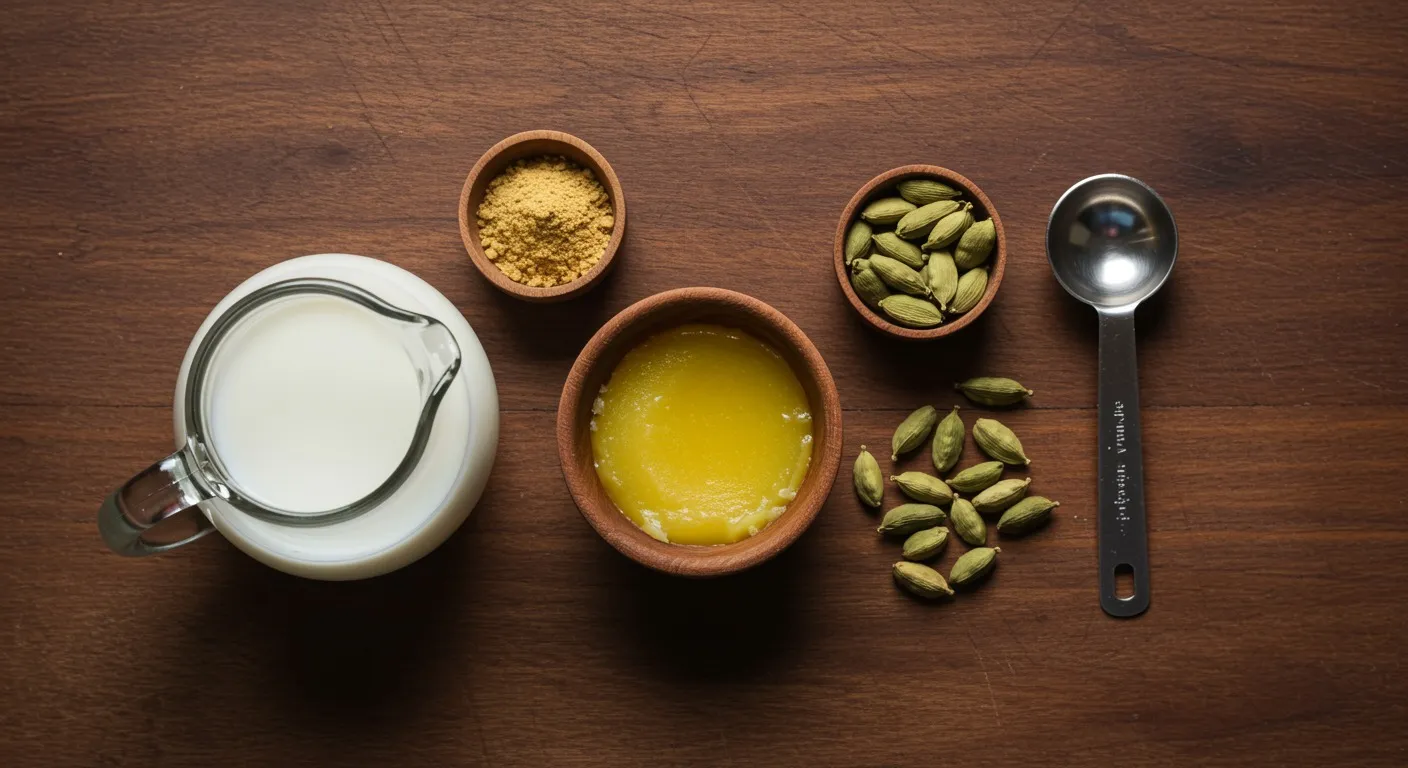
- 1 cup cow's milk
- 1 tsp ghee
- 1 pinch ground cardamom, optional, for flavor
Instructions
- 1 Pour 1 cup of cow's milk into a small saucepan and warm it gently over low to medium heat until it is hot but not boiling over, about 3 to 4 minutes.
- 2 Take the milk off the heat, add 1 teaspoon of ghee (up to 2 teaspoons if 1 has not helped after a few nights), and stir until the ghee melts in completely. Stir in a pinch of cardamom if you like.
- 3 Let it cool to a comfortable sipping temperature, then drink it warm 30 to 60 minutes before bed, ideally 1 to 3 hours after your last meal.
- 4 Expect a gentle, natural bowel movement the next morning. Use it on the nights you need it rather than indefinitely, and pair it with good daytime hydration and fiber.
Notes
- Not for severe or persistent constipation: if you have had no bowel movement for several days along with abdominal pain, bloating, vomiting, or no passing of gas, do not self-treat, as this can signal a blockage that needs urgent care.
- Skip or adapt if you are lactose intolerant or sensitive to dairy; the milk, not the ghee, is usually the trigger.
- Ghee is calorie-dense and high in saturated fat, so keep to 1 to 2 teaspoons and use in moderation if you are watching cholesterol or weight.
- This remedy has no significant common drug interactions, but if you take prescription laxatives or stool softeners, check with your pharmacist before combining.
- Consult your doctor if constipation persists beyond 1 to 2 weeks, recurs often, or is accompanied by blood in the stool, unexplained weight loss, or a sudden change in bowel habits.
- This is traditional wisdom and not a substitute for medical care.