Garlic Milk (Lashuna Ksheerapaka) for Mild Cough and Chest Congestion
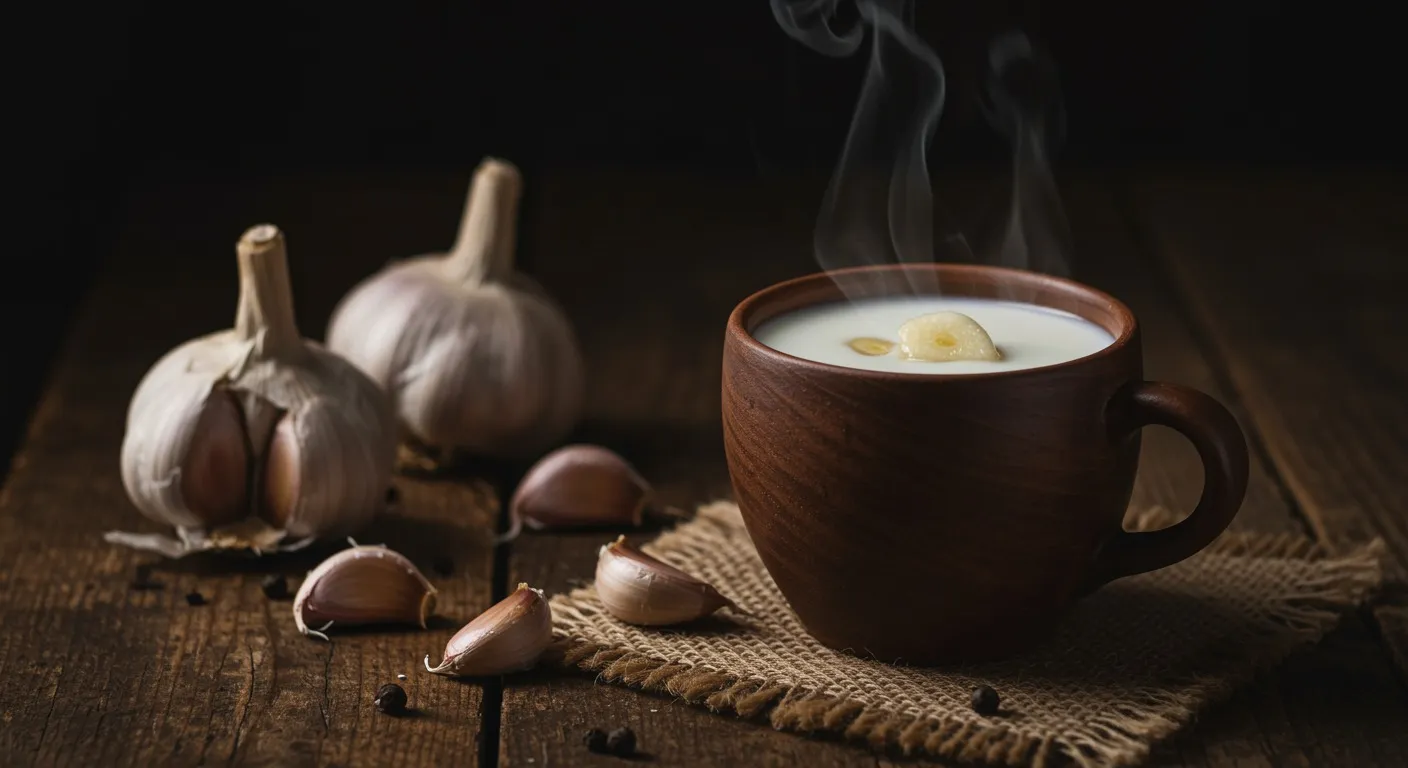
A mild cough that lingers after a cold has mostly passed, a tickle that flares up in the evening, or a wet, heavy feeling in the chest when the seasons change are familiar to almost everyone. When the cough is mild, the chest feels a little congested, and there is no fever, the kitchen often has the answer before the pharmacy does. Garlic gently simmered in warm milk, a preparation called Lashuna Ksheerapaka in classical Ayurveda, is one of those quiet remedies that has been used in Indian households for generations. It uses two ingredients almost everyone already has, takes about ten minutes, and works on the kind of cough that is annoying without being alarming.
The Ayurvedic Perspective
In Ayurvedic terms, a productive cough with congestion is most often a kapha imbalance. Kapha has cool, heavy, sticky, and slow qualities, and when it accumulates in the chest and respiratory channels, mucus thickens and does not clear easily. Garlic, known in Sanskrit as lashuna, has the opposite qualities: hot, pungent, light, and slightly oily. Used alone it can be too sharp for daily home use, especially for those with a pitta tendency or a sensitive stomach. The classical answer is the Ksheerapaka method, a slow simmer in milk and water that softens the bite of the herb while preserving its kapha-mobilizing effect. The Charaka Samhita and the Bhavaprakasha Nighantu both praise lashuna for clearing channels and easing chest heaviness, and the milk-decoction format is the safest way to bring that effect into a home kitchen.
What Modern Biology Says
When garlic is crushed, an enzyme called alliinase rapidly produces allicin, which then converts into a family of organosulfur compounds including ajoene and diallyl disulfide. Laboratory work suggests these compounds have mild antimicrobial activity and can help hydrate the airway surface liquid that supports mucus clearance, although most of that research is preclinical rather than from human trials. A 2014 Cochrane review by Lissiman and colleagues looked specifically at garlic for the common cold, and was only able to include a single small randomized trial of 146 participants. That trial reported fewer colds with daily garlic, but the reviewers concluded that the overall evidence was insufficient and that more high-quality studies were needed. Heating garlic gently in milk takes the edge off the sharper irritant compounds while keeping enough sulfur chemistry in play to produce a warming, mildly decongestant effect. The human evidence is preliminary rather than airtight, but it is broadly consistent with the traditional use for mild respiratory complaints.
How And When To Use It
Reach for Lashuna Ksheerapaka when a mild cough has settled in for a day or two without fever, especially when the chest feels heavy and the cough sounds wet. One mug in the early evening is the standard dose, taken about an hour before bed so the warmth has time to work before sleep. Most people will use it for two to four nights as the cough resolves on its own. If turmeric and black pepper are added, the preparation feels noticeably more warming, but they are optional family variations rather than essential to the classical recipe, and turmeric should be skipped by anyone already cautious about blood thinning concerns.
Cautions And A Note On Medical Care
Garlic can mildly increase the effect of blood thinning medications, so anyone taking warfarin, clopidogrel, or daily aspirin should skip this remedy or check with their doctor first. People with active acid reflux may find concentrated garlic aggravating, and readers who are lactose intolerant or allergic to milk should choose a different remedy entirely. If the cough lasts beyond 7 to 10 days, comes with fever above 101 F, or is accompanied by shortness of breath, wheezing, or blood in the sputum, it is time to see a doctor rather than another mug. This is traditional wisdom and not a substitute for medical care. Within those limits, Lashuna Ksheerapaka is one of the simplest, kindest things a kitchen can offer at the tail end of a cold.
Recipe
Lashuna Ksheerapaka Garlic Milk
Crushed garlic cloves simmered gently in milk and water until lightly reduced, a classical Ayurvedic Ksheerapaka preparation used as a warming home remedy for mild cough with chest congestion.
- Prep
- 3min
- Cook
- 10min
- Total
- 13min
- Servings
- 1doses
Ingredients
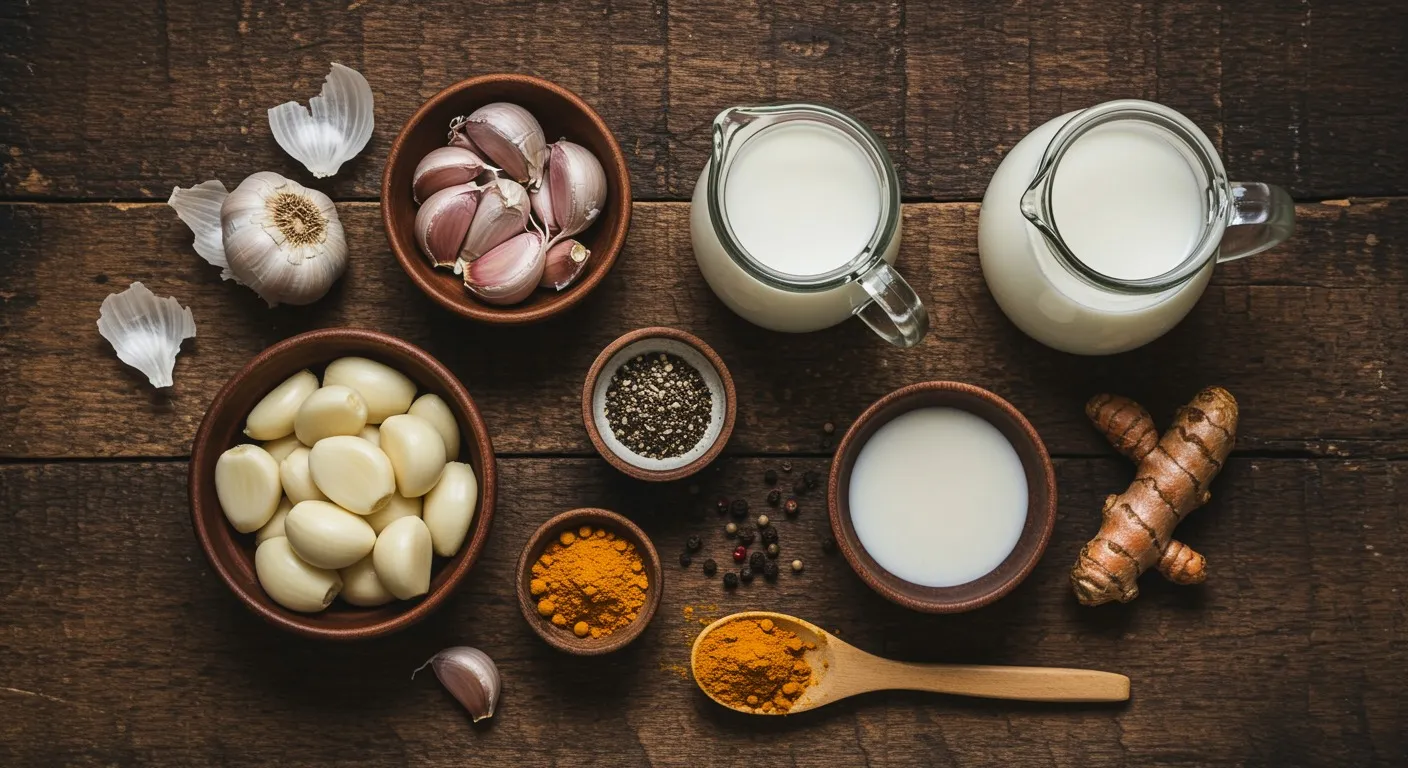
- 3 cloves garlic cloves, peeled and lightly crushed
- 1 cup whole milk
- 1/2 cup water
- 1 pinch black pepper, freshly ground (optional)
- 1 pinch turmeric powder (optional)
Instructions
- 1 Peel 3 garlic cloves and lightly crush them with the flat side of a knife or in a small mortar so they break open but stay roughly whole.
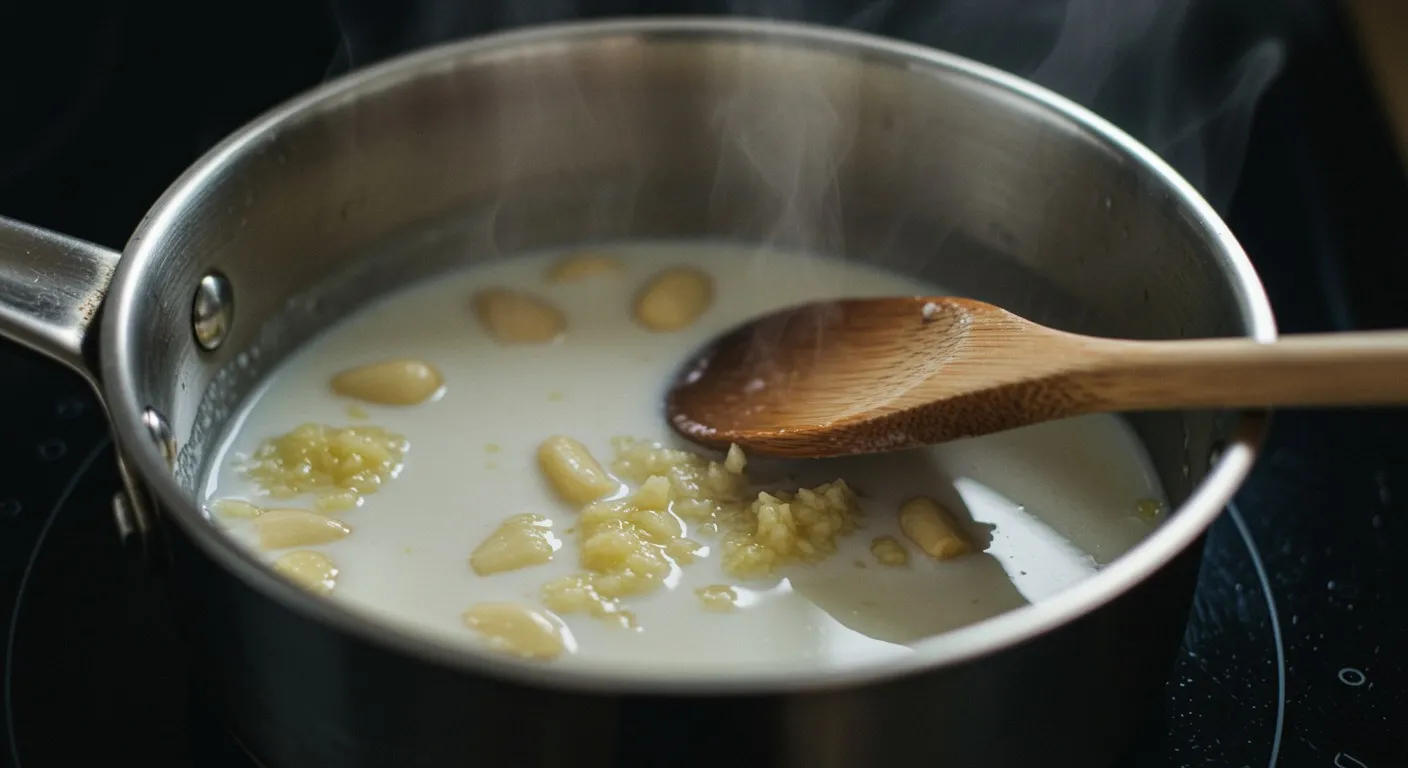
- 2 Combine the crushed garlic, 1 cup of whole milk, and 1/2 cup of water in a small saucepan.
- 3 Bring slowly to a gentle simmer over medium low heat, stirring once or twice. Do not let the milk boil over.
- 4 Simmer for 8 to 10 minutes until the liquid reduces back to about 1 cup and the kitchen smells distinctly of garlic and warm milk.
- 5 If you want extra warming effect, stir in a pinch of black pepper and a pinch of turmeric in the last minute of simmering.
- 6 Strain through a fine sieve into a mug. You can discard the cooked garlic pieces or eat them if you enjoy the mellow flavor.
- 7 Sip slowly while warm, ideally in the early evening or about an hour before bed when a cough tends to disturb sleep. Use for 2 to 4 nights as the cough resolves.
Notes
- Skip this remedy if you take blood thinning medication such as warfarin, clopidogrel, or daily aspirin, since garlic can mildly increase bleeding risk.
- Garlic can worsen acid reflux or heartburn in sensitive people; reduce the quantity or choose another remedy if it upsets your stomach.
- Not suitable if you are lactose intolerant or have a milk allergy, as the milk is part of the classical preparation.
- Consult your doctor if the cough persists beyond 7 to 10 days, comes with fever above 101 F, shortness of breath, wheezing, or blood in the sputum.
- This is traditional wisdom and not a substitute for medical care.