Curry Leaf (Karuveppilai) Water for Mild Indigestion, Gas, and Nausea
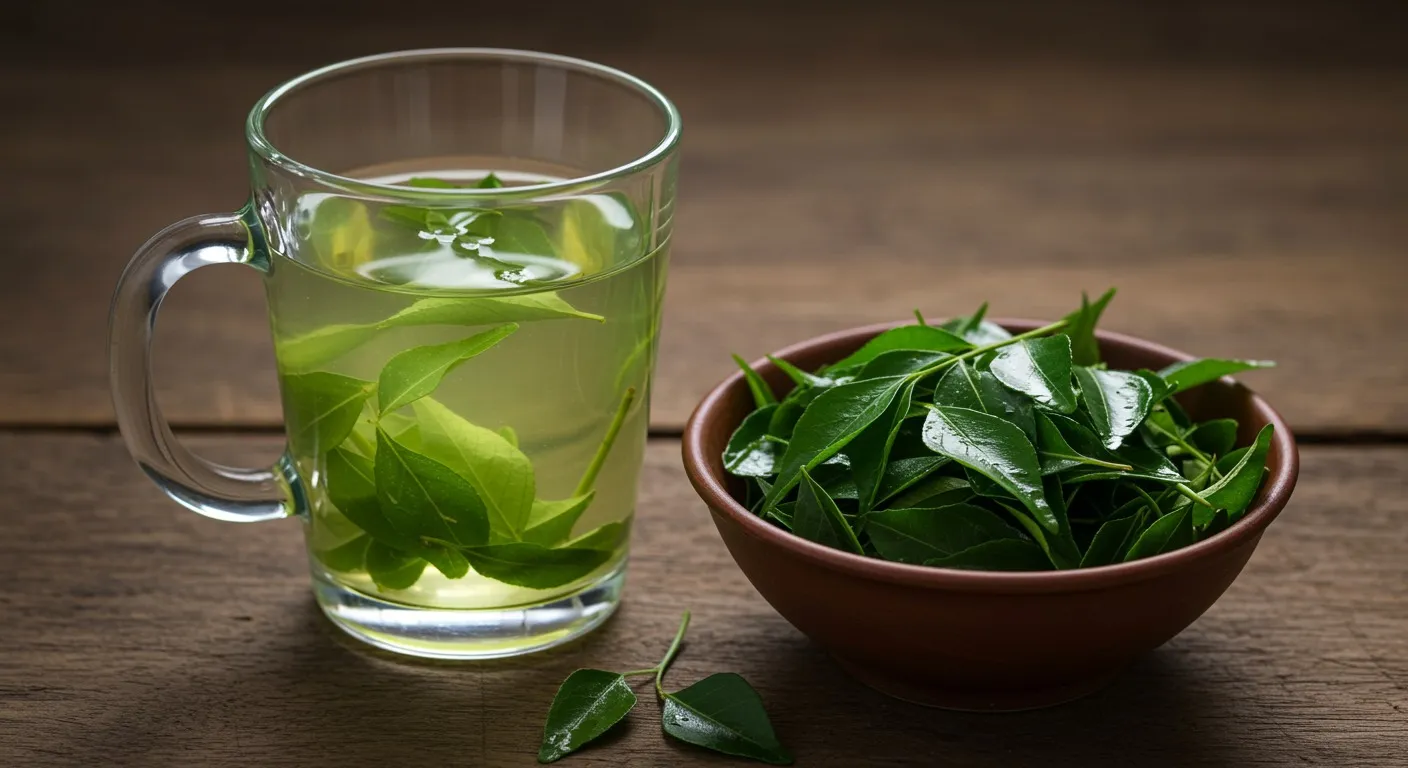
That heavy, gassy, slightly queasy feeling after a big meal is something almost everyone knows. Food sits like a stone, the stomach feels tight, and a wave of mild nausea can follow. Before reaching for anything from the pharmacy, South Indian kitchens have long turned to the humble curry leaf, the karuveppilai tempered into nearly every dal and sambar. A warm cup of curry leaf water, or simply a few leaves chewed slowly, is a time-tested way to settle the stomach.
The Ayurvedic Perspective
In Ayurveda, this kind of sluggish, bloated, queasy digestion points to weak Agni, the digestive fire that breaks food down cleanly. When Agni is low, food ferments instead of digesting, producing gas, heaviness, and nausea that Ayurveda links to aggravated kapha and vata. Curry leaf, known in Sanskrit as Surabhinimba and recorded in classical nighantu texts, is described as pungent, bitter, and lightly warming with deepana and pachana qualities, meaning it stokes the digestive fire and helps process what sits undigested. Classical sources also note it as stomachic and antiemetic, which is the traditional basis for using it against nausea and morning queasiness.
What Modern Biology Says
Modern analysis backs up why the leaf is more than a flavoring. Curry leaves are rich in carbazole alkaloids such as mahanimbine and koenigine and an aromatic essential oil high in linalool and terpinenes, compounds with well-documented antioxidant and anti-inflammatory activity in laboratory studies. The fragrant oils are the likely reason for the traditional carminative and anti-nausea effect, as aromatic plant volatiles tend to relax gut smooth muscle and prompt digestive secretions. To be honest about the evidence, most of this comes from phytochemical and animal work, with limited human trials aimed specifically at digestion, so curry leaf water is best understood as a gentle, low-risk traditional aid rather than a proven cure.
How And When To Use It
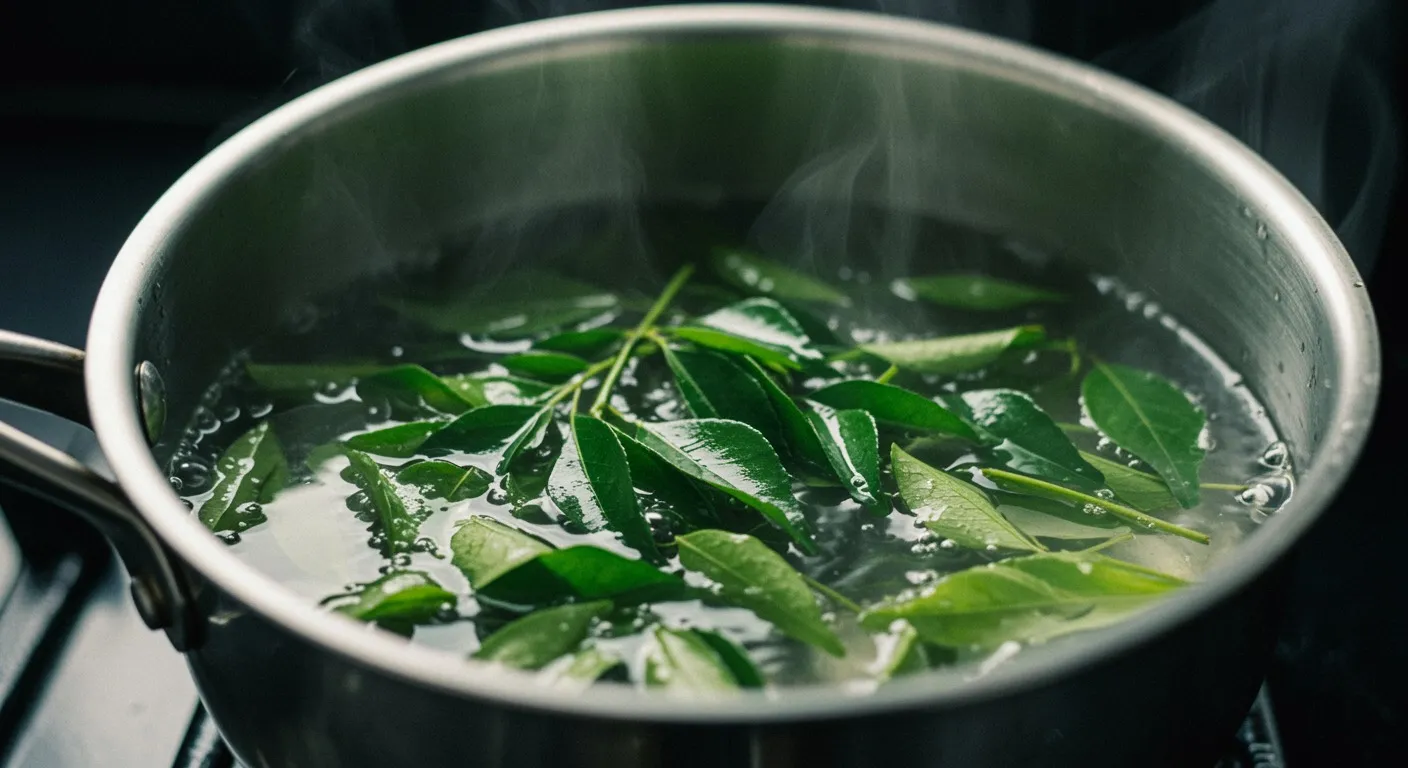
Reach for this at the first sign of post-meal heaviness or when a touch of nausea sets in. Simmer about fifteen fresh leaves in a cup and a half of water for a few minutes, strain, and sip it warm. Many people also drink it on an empty stomach in the morning, or simply chew five or six clean leaves slowly, which is the easiest version of all. Once a day, or after a heavy meal, is plenty. Expect a mild settling effect rather than a dramatic one.
Cautions And A Note On Medical Care
A few cautions keep this safe. Curry leaves can nudge blood sugar downward, so anyone on diabetes medication should monitor for lows and check with a doctor before daily use, and because classical texts describe a binding action, very large amounts may feel mildly constipating. Stick to ordinary culinary-to-tea quantities, and use only normal cooking amounts during pregnancy or breastfeeding. See a doctor if indigestion or nausea lasts beyond three to five days, keeps returning, or comes with vomiting, fever, severe pain, or blood. This is traditional wisdom and not a substitute for medical care, but as a kitchen habit it is an easy, fragrant one to try.
Recipe
Curry Leaf Digestive Water
A simple warm infusion of fresh curry leaves, plus the option to chew a few leaves on an empty stomach, to ease mild indigestion, gas, and after-meal queasiness.
- Prep
- 2min
- Cook
- 5min
- Total
- 7min
- Servings
- 1doses
Ingredients
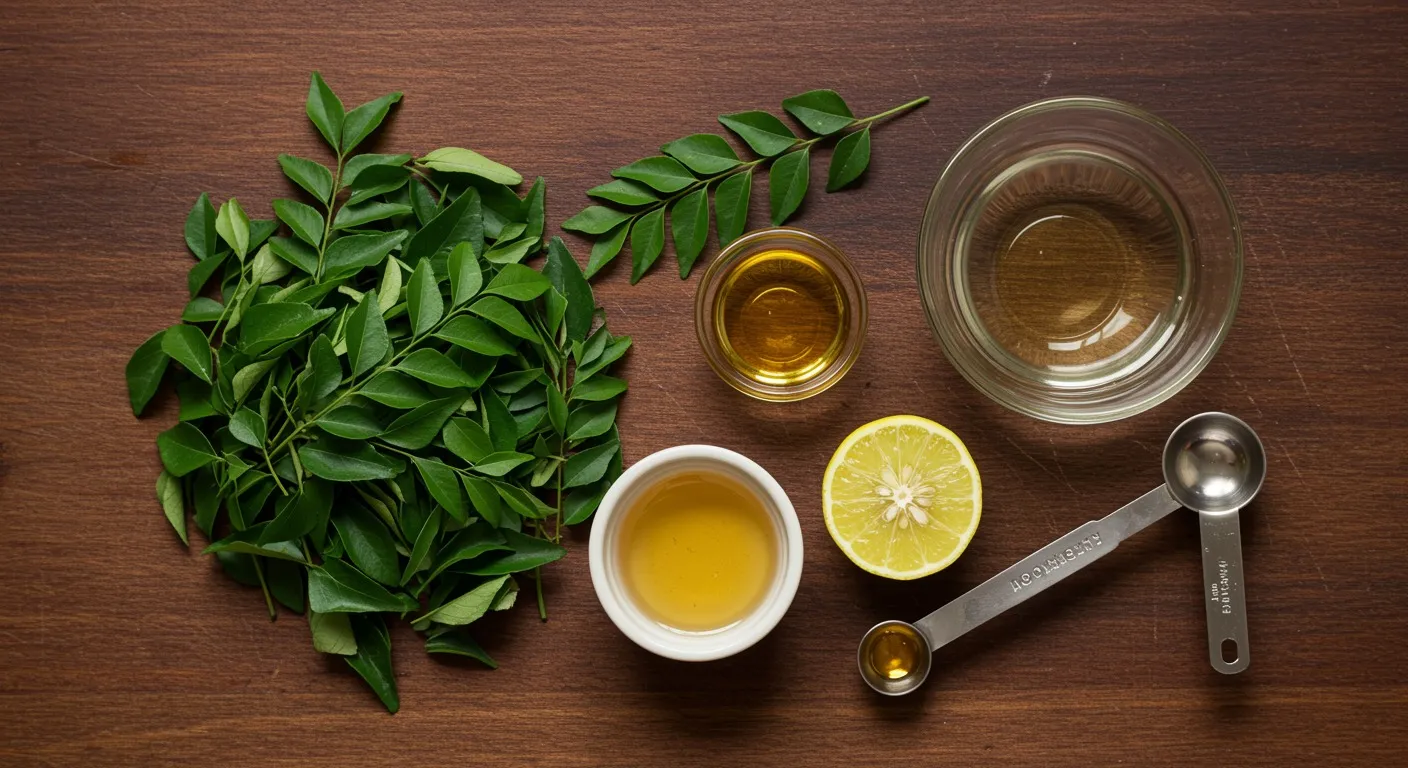
- 15 leaves fresh curry leaves
- 1.5 cups water
- 1 tsp lemon juice (optional)
- 1 tsp honey (optional, for adults only)
Instructions
- 1 Rinse the fresh curry leaves well under running water to remove any dust or grit.
- 2 Bring 1.5 cups of water to a boil in a small saucepan, add the curry leaves, and lower the heat.
- 3 Simmer gently for 4 to 5 minutes until the water turns pale green and smells fragrant, then turn off the heat.
- 4 Strain into a cup and let it cool to a comfortable warm temperature. Stir in the optional lemon juice and honey for taste once it is no longer hot.
- 5 Sip slowly after a heavy meal when you feel bloated or queasy, or drink it warm on an empty stomach in the morning to support digestion.
- 6 As an even simpler option, chew 5 to 6 clean fresh curry leaves slowly on an empty stomach instead of making the water.
Notes
- Curry leaves may have a mild blood-sugar-lowering effect, so if you take diabetes medication, monitor for low blood sugar and check with your doctor before using daily.
- Classical Ayurveda describes a binding (grahi) action, so very large amounts could feel mildly constipating in some people; keep to ordinary culinary-to-tea amounts.
- Use only normal culinary amounts if pregnant or breastfeeding, and avoid concentrated medicinal doses without professional advice.
- Consult your doctor if indigestion, nausea, or stomach discomfort persists beyond 3 to 5 days, recurs often, or is accompanied by vomiting, fever, severe pain, or blood.
- This is traditional wisdom and not a substitute for medical care.