Coriander Seed Water (Dhania Pani) for Mild Heartburn and Summer Heat
Mild heartburn after a heavy meal, the slow simmer of summer heat behind the breastbone, the thirsty discomfort of a hot afternoon: these are everyday irritations rather than emergencies, and most kitchens already hold the answer. Coriander seeds, used daily in Indian cooking, double as one of Ayurveda’s gentlest cooling tonics. Soaked overnight in water and sipped in the morning, they become dhania pani, a quiet little drink that calms the burn before it builds. Generations of households across South Asia have reached for it in the weeks before the monsoon, and the classical Ayurvedic texts describe it in those same terms.
The Ayurvedic Perspective
Ayurveda groups everyday complaints by the dosha out of balance, and dhania pani belongs squarely to the pitta family. Pitta is the heat, sharpness, and acidity of the body; it spikes in hot weather, after spicy or fermented meals, and in people who run intense and goal-driven. When pitta climbs, the body answers with burning sensations, mild heartburn, hot flushes, and irritability. Coriander, known as dhanyaka in Sanskrit, is classified in Bhavaprakasha Nighantu and Charaka Samhita as sheeta virya, of cold potency, with a bitter, sweet, astringent rasa combination that pacifies pitta without aggravating vata. Soaking the seeds in cool water rather than boiling them is the traditional choice; it preserves the cooling action rather than warming it away.
What Modern Biology Says
The active chemistry of coriander seeds is dominated by linalool, which makes up roughly 60 to 70 percent of the essential oil, alongside alpha-pinene, gamma-terpinene, and quercetin. Linalool has documented anti-inflammatory and smooth-muscle-relaxing effects in laboratory studies. A small pilot trial by Vejdani and colleagues in 2006, published in Digestive Diseases and Sciences, tested a three-herb formula called Carmint, which combines coriander with lemon balm (Melissa officinalis) and spearmint (Mentha spicata), in 32 patients with irritable bowel syndrome over eight weeks; the Carmint group had significantly less abdominal pain and bloating than the placebo group. Because lemon balm and spearmint are themselves well-known antispasmodics, the trial cannot tell us how much of the benefit comes from coriander itself. Most other evidence for coriander seed is animal or in vitro, suggesting modest antispasmodic effects on the gastrointestinal tract and a mild reduction in oxidative stress markers. The overall human evidence is preliminary, lines up with the traditional Ayurvedic indication for digestive heat and mild burning, but does not yet rise to clinical-grade certainty.
How And When To Use It
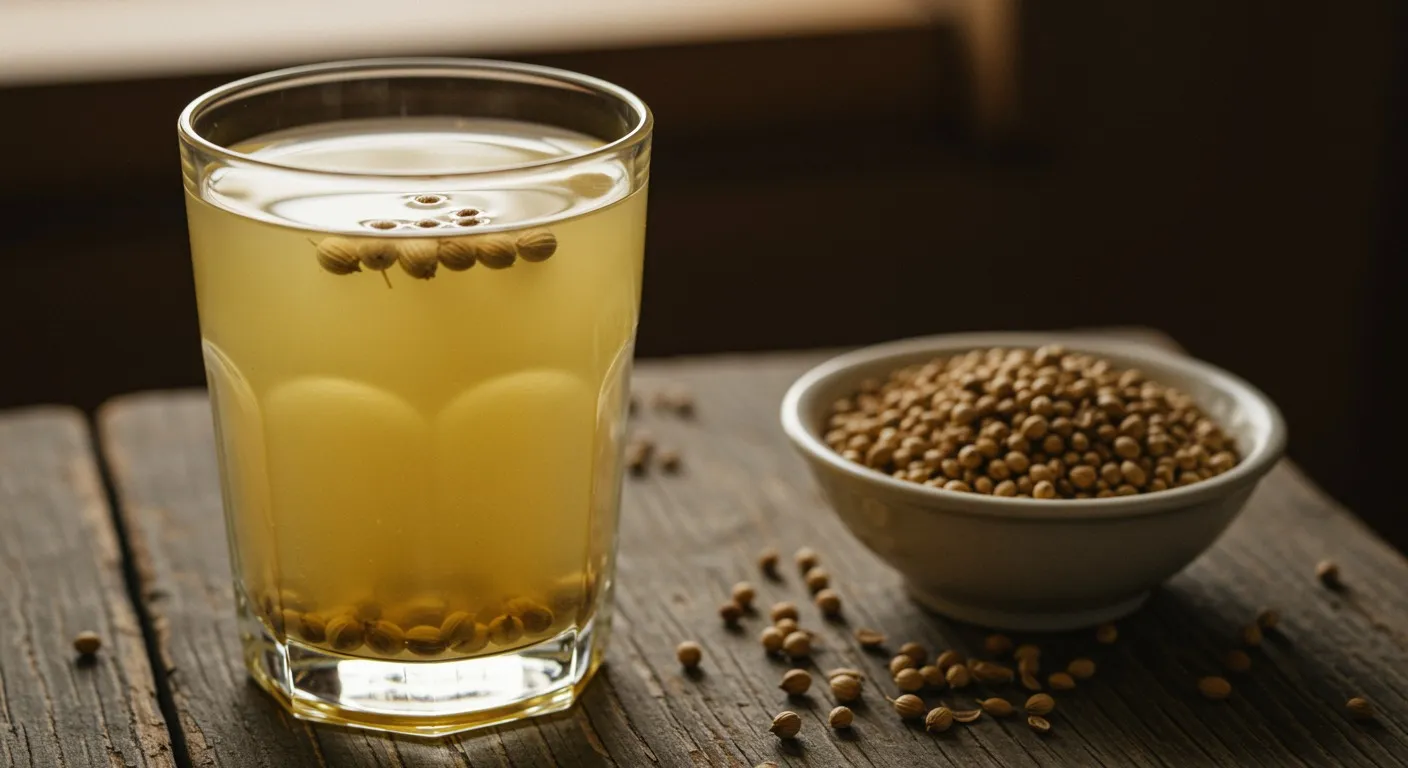
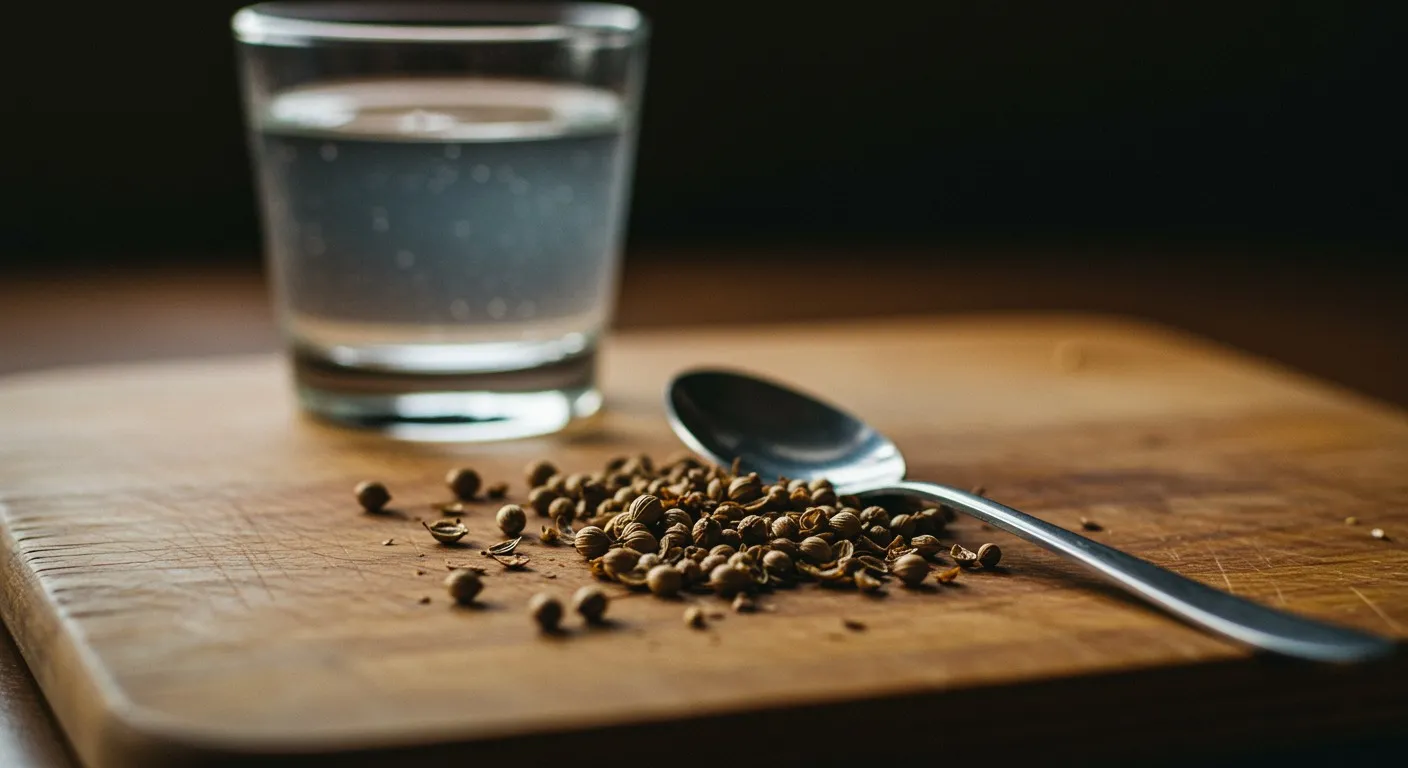
Make dhania pani the night before you plan to drink it. Lightly crush a teaspoon of whole coriander seeds, drop them into a cup of cool filtered water, cover, and leave to infuse at room temperature overnight. In the morning, strain the pale yellow liquid into a glass and sip it slowly about twenty to thirty minutes before breakfast. One cup a day is enough; classical Ayurveda treats cooling herbs as gentle correctives, not all-day beverages. Most people who try it for seasonal heat or after a few too many spicy meals notice the difference within two or three days.
Cautions And A Note On Medical Care
Anyone with a known allergy to coriander or other Apiaceae family plants such as cumin, fennel, celery, parsley, or dill should skip this drink. Coriander has a mild blood-pressure-lowering effect in some studies, so if you are already on antihypertensive medication, mention this daily habit to your doctor before adopting it. Heartburn that lasts longer than a week, returns more than twice a week, or comes with chest pain, vomiting, weight loss, or difficulty swallowing needs medical attention, not a kitchen remedy. Dhania pani is traditional wisdom and not a substitute for medical care. On the hottest mornings of the year, pair it with shade, electrolytes, and an unhurried pace, and let the seeds do their quiet work.
Recipe
Dhania Pani (Coriander Seed Water)
An overnight cold infusion of whole coriander seeds in water, used in Ayurveda to cool pitta dosha and ease mild heartburn, urinary burning, and the discomfort of hot weather. One dose is sipped slowly in the morning on an empty stomach.
- Prep
- 5min
- Cook
- 0min
- Total
- 485min
- Servings
- 1doses
Ingredients
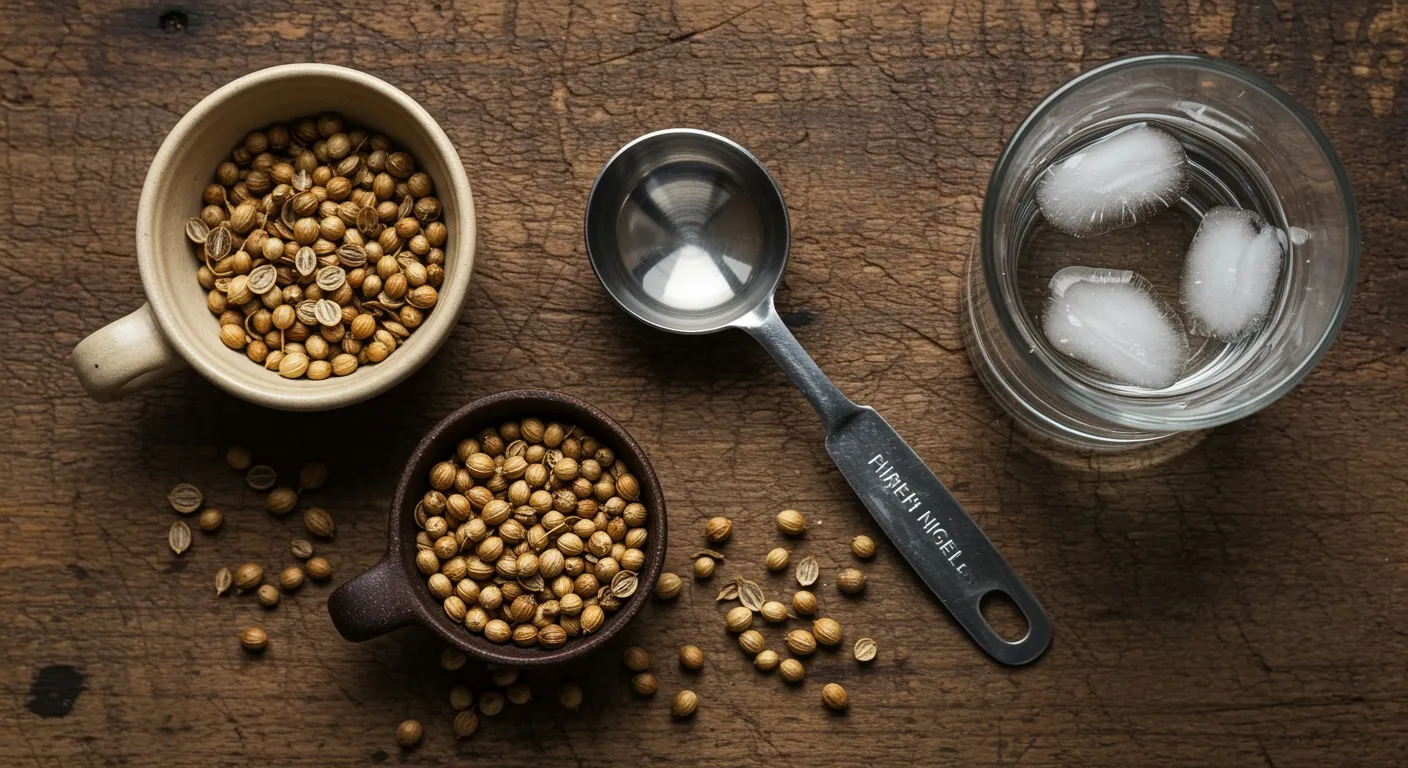
- 1 tsp whole coriander seeds
- 1 cup filtered water, room temperature
Instructions
- 1 In the evening, lightly crush 1 teaspoon of whole coriander seeds with the back of a spoon to release the aromatic oils. Whole seeds work too if you prefer not to crush them.
- 2 Add the seeds to 1 cup of room-temperature filtered water in a clean glass or ceramic vessel and stir once.
- 3 Cover the vessel and leave it on the counter to infuse overnight, ideally for 6 to 8 hours.
- 4 In the morning, strain the pale yellow infusion into a glass through a fine sieve and discard the soaked seeds.
- 5 Sip slowly on an empty stomach about 20 to 30 minutes before breakfast. For pitta-driven heartburn or summer heat, repeat once daily for 5 to 7 days. If symptoms have not eased by then, see a doctor rather than continuing indefinitely.
Notes
- Skip this remedy if you have a known allergy to coriander, cumin, fennel, or other plants in the Apiaceae family such as celery, parsley, and dill.
- Coriander may have a mild blood-pressure-lowering effect; if you are on antihypertensive medication, mention this daily drink to your doctor before adopting it long term.
- Drink one cup in the morning rather than several throughout the day; even gentle cooling herbs can be overdone in cool or post-monsoon weather and may aggravate vata.
- Consult your doctor if heartburn persists beyond five to seven days, occurs more than twice a week, or is accompanied by chest pain, vomiting, weight loss, or difficulty swallowing.
- This is traditional wisdom and not a substitute for medical care.