Amla (Indian Gooseberry) Water for Acidity, Heartburn, and Indigestion
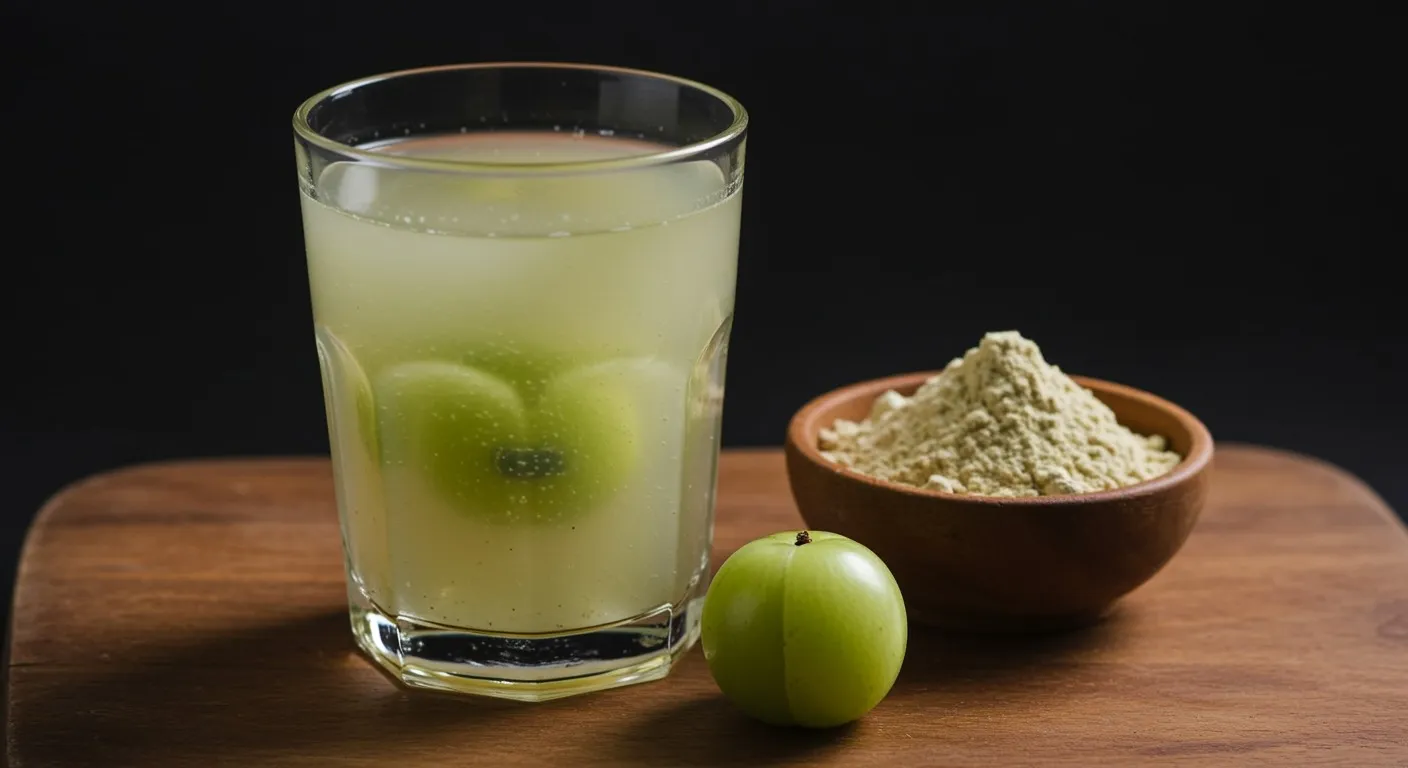
Almost everyone knows the feeling: a burning sensation behind the chest, a sour taste creeping up the throat, or a heavy, gassy stomach an hour after a rich or spicy meal. Occasional acidity and heartburn are some of the most common everyday complaints, especially in hot weather or after a late, oily dinner. One of the oldest kitchen answers in Indian homes is amla, the Indian gooseberry, known as nellikai in Tamil and amalaki in Sanskrit. A teaspoon of amla powder or the juice of one fresh fruit, stirred into a glass of water, is a gentle traditional way to take the edge off.
The Ayurvedic Perspective
In Ayurveda, acidity and heartburn are classic signs of aggravated Pitta dosha, the principle of heat and transformation that governs digestion. When Pitta runs high from spicy food, heat, stress, or skipped meals, it shows up as burning, sourness, and irritation in the stomach and food pipe. Most sour foods make Pitta worse, but amla is a famous exception. The Charaka Samhita, one of Ayurveda’s foundational texts, praises Amalaki as the foremost rasayana, or rejuvenative. Its potency is cooling and its post-digestive effect is sweet, so it calms the very heat that drives acidity while gently strengthening digestion over time.
What Modern Biology Says
Modern chemistry helps explain the old reputation. Amla is one of the richest natural sources of vitamin C and also carries hydrolyzable tannins called emblicanin A and B, along with gallic acid and flavonoids that act as antioxidants and appear to protect and soothe the stomach lining. In a 2018 randomized, double-blind, placebo-controlled trial published in the Journal of Integrative Medicine, 68 people with non-erosive reflux disease took two 500 mg amla tablets twice a day after meals, about 2 grams daily, for four weeks, and their heartburn and regurgitation eased significantly more than with placebo, by close to half, with no reported side effects. This is encouraging human evidence, though it rests on a single small study, so it is best seen as promising rather than proven.
How And When To Use It
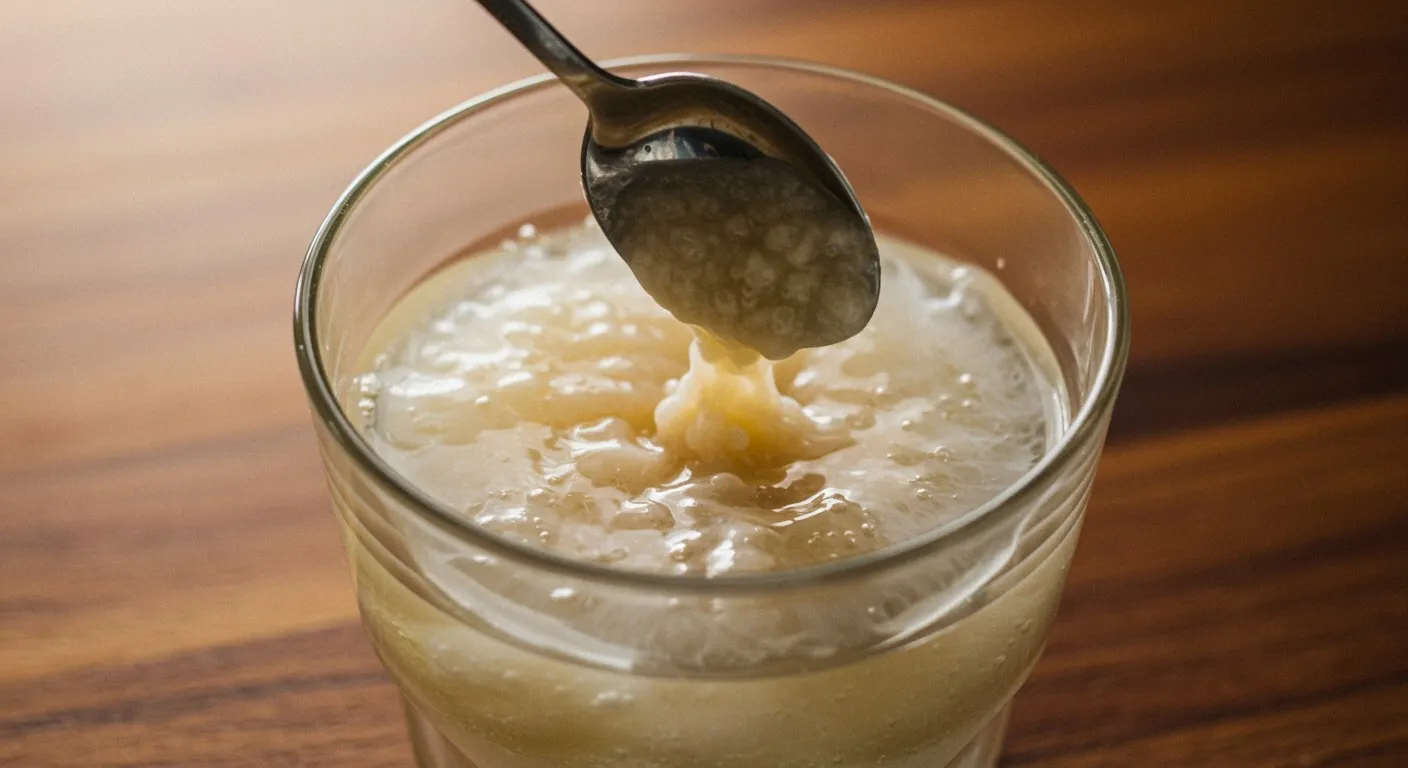
Reach for amla water when you feel the first signs of acidity, or take it once in the morning on an empty stomach as a daily settler during a stretch of heavy eating or hot weather. Use about one teaspoon of plain amla powder, or the juice of one fresh gooseberry, in half a cup of water, with a little honey if the sour taste is too sharp. Keep it to once a day. Many people find the burning eases within a few minutes, while the gentle digestive benefits build with regular use.
Cautions And A Note On Medical Care
A few cautions keep this safe. Amla has mild blood-thinning activity, so check with your doctor if you take warfarin, aspirin, or other blood thinners, and it can modestly lower blood sugar, which matters if you are on diabetes medication. Its astringency can be drying, so go easy if you are prone to constipation and drink enough water. See a doctor if acidity, heartburn, or indigestion lasts beyond two weeks, keeps coming back, or worsens, since persistent reflux deserves a proper evaluation. This is traditional wisdom and not a substitute for medical care, but for the occasional sour stomach, a simple glass of amla water is a time-tested place to start.
Recipe
Amla Water for Acidity
A glass of amla (Indian gooseberry, nellikai) stirred into water and taken on an empty stomach to cool everyday acidity, heartburn, and sour indigestion. Made from plain amla powder or one fresh fruit.
- Prep
- 3min
- Cook
- 0min
- Total
- 3min
- Servings
- 1doses
Ingredients
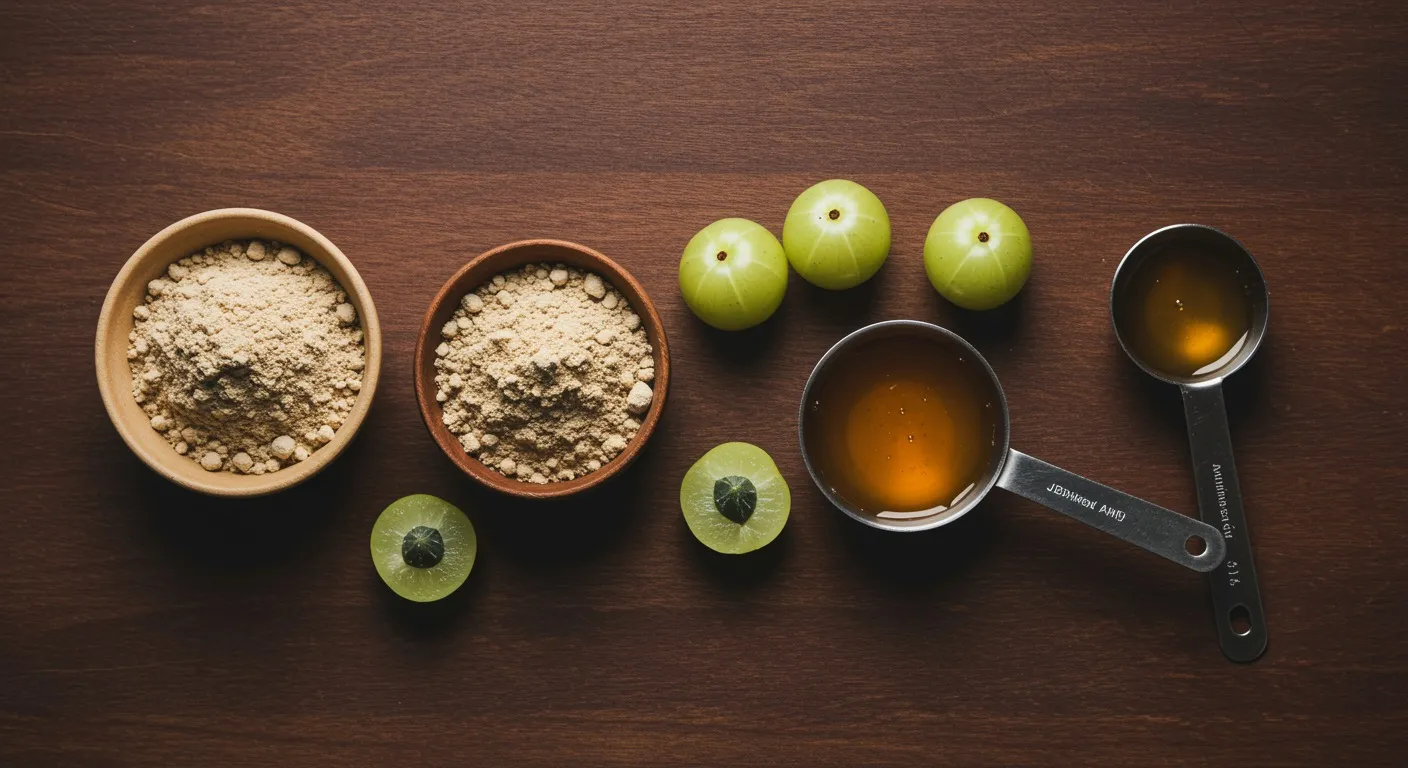
- 1 tsp amla powder (or 1 fresh amla, grated)
- 1/2 cup warm or room-temperature water
- 1 tsp raw honey, optional
Instructions
- 1 If using fresh amla (nellikai), grate one medium fruit and press out about a teaspoon of juice. Otherwise measure 1 teaspoon of plain amla powder.
- 2 Stir the amla powder or juice into half a cup of warm or room-temperature water until it is well mixed and slightly cloudy.
- 3 Add honey if you want to soften the sour, astringent taste, and stir again. The honey is optional.
- 4 Drink it on an empty stomach in the morning, or sip it slowly between meals at the first sign of acidity or heartburn.
- 5 Use once a day and do not exceed about 1 teaspoon of powder or 30 ml of fresh juice daily.
Notes
- Amla has mild blood-thinning (antiplatelet) activity. If you take warfarin, aspirin, or other blood thinners, check with your doctor before using it regularly.
- Amla may modestly lower blood sugar. If you take diabetes medication, monitor your levels and consult your doctor.
- Its astringency can be drying. If you are prone to constipation or very dry skin, do not overdo it and drink enough water.
- Skip sugary amla candy or murabba as a substitute, since the added sugar works against you for acidity.
- Consult your doctor if acidity, heartburn, or indigestion persists beyond 2 weeks or worsens, or if you have frequent reflux. This is traditional wisdom and not a substitute for medical care.