Turmeric Golden Milk (Haldi Doodh) for Mild Seasonal Sniffles and Restful Sleep
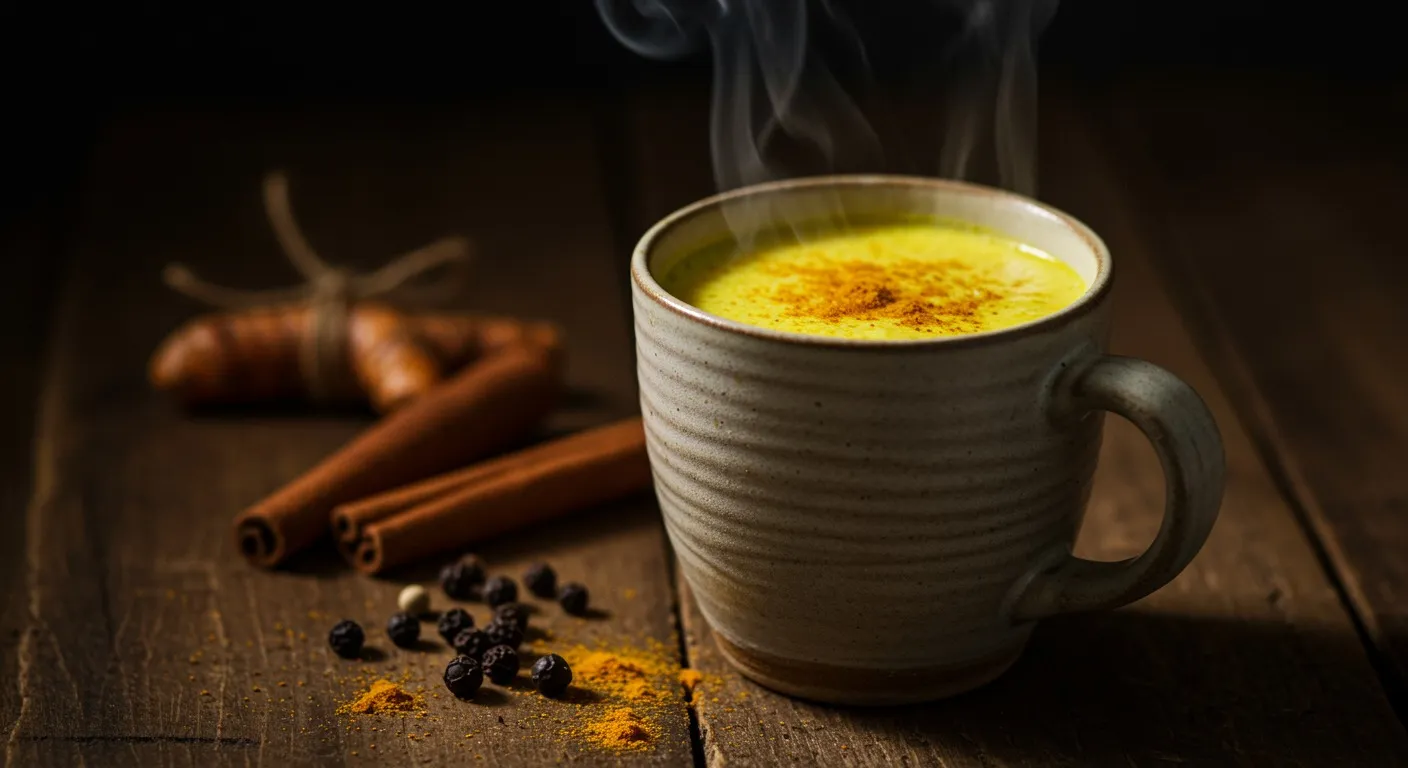
Most of us know the feeling of a scratchy throat that arrives with the first cool morning, or a restless mind that simply refuses to settle once the lights go out. These low-grade discomforts rarely call for medication, yet they can drag on for days and leave the body run down. For centuries, Indian households have reached for the same warm answer at the end of such a day, a small mug of golden milk made from kitchen turmeric and a few common spices. It is a simple, gentle, kitchen-based traditional option, not a cure, but a quiet ritual that bridges the gap between feeling slightly off and feeling well again.
The Ayurvedic Perspective
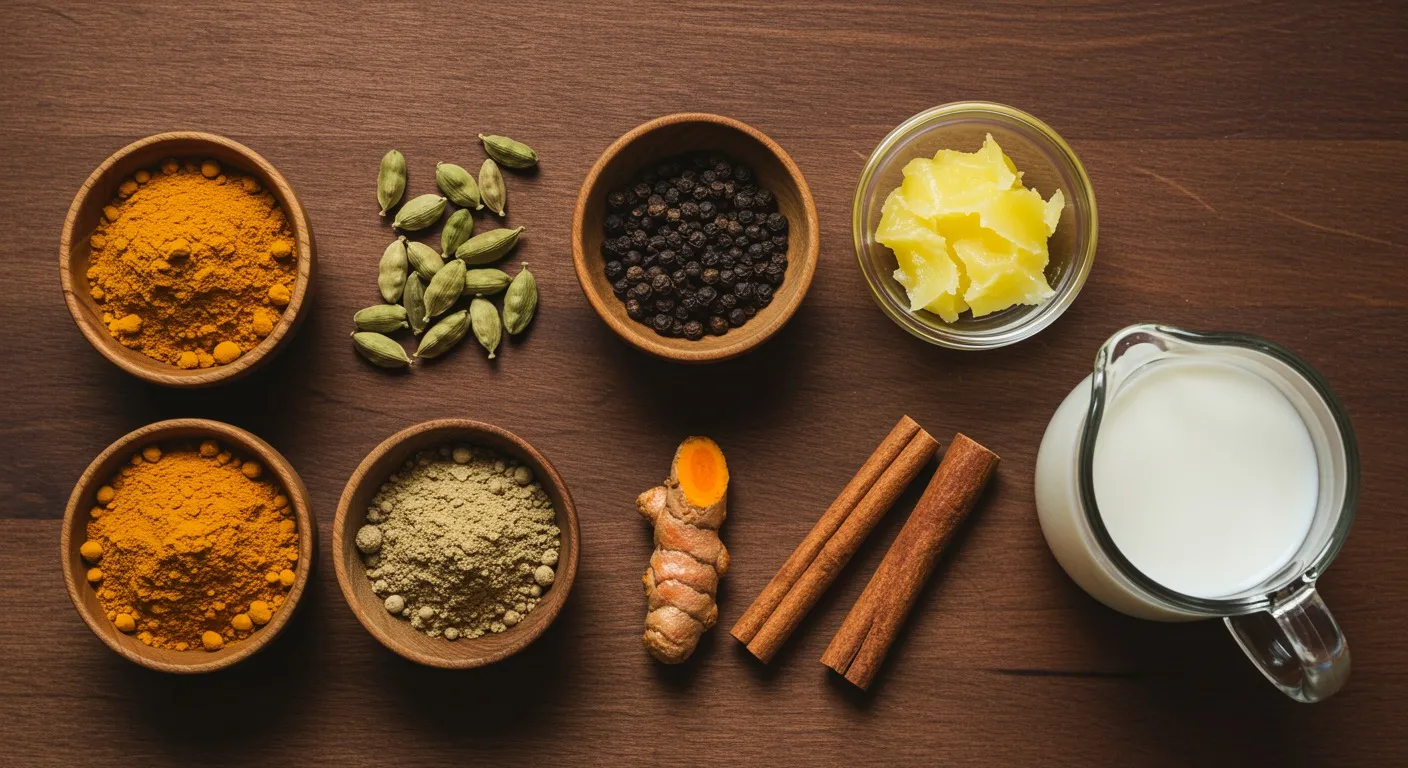
In the Ayurvedic view, the underlying disturbance is an excess of kapha and vata dosha. Cool, dry weather and cold foods aggravate kapha in the chest and vata in the nervous system, producing the familiar mix of congestion, throat irritation, and a mind that will not slow down. Turmeric, called Haridra in Sanskrit, is described in the Charaka Samhita and the Bhavaprakasha Nighantu as warming, bitter, and astringent, with the ability to clear ama, the sticky metabolic residue that Ayurveda blames for many seasonal complaints. Milk and ghee serve as anupana, the carriers that escort the herb’s qualities into the deeper tissues. The combination, known classically as Haridra Kshira, has been given to children with mild coughs, to adults during seasonal transitions, and at bedtime to support ojas, the essence Ayurveda associates with vitality and calm sleep.
What Modern Biology Says
Turmeric’s striking yellow color comes from curcumin, the most studied of its curcuminoids. Human meta-analyses, including reviews in journals such as Foods and Phytotherapy Research, show modest but real anti-inflammatory and antioxidant effects, especially when curcumin is paired with absorption enhancers. Curcumin on its own is poorly absorbed in the gut, but piperine from a pinch of black pepper increases its bioavailability by an estimated 2000 percent, and its fat solubility means warm milk fat and ghee meaningfully improve uptake. The evidence that warm milk itself helps sleep is softer and more cultural than clinical, although milk does contain a small amount of tryptophan and a warm bedtime drink has a well-documented calming effect on the nervous system. The evidence for golden milk as a specific cold remedy is preliminary, but it is consistent with turmeric’s broad anti-inflammatory profile.
How And When To Use It
Reach for a cup of golden milk in the evening, ideally 30 to 60 minutes before bed, or earlier in the day at the very first sign of a mild cold, scratchy throat, or after a chilly outing. One cup a day during a cold or an unsettled stretch is enough; this is not a drink that benefits from heroic doses. Sip it slowly while it is still warm. Most people notice a soft, soothing warmth as the spices kick in, and an easier transition into sleep. When used during a mild cold, the goal is comfort and support, not a cure; rest, fluids, and time are still doing the heavy lifting.
Cautions And A Note On Medical Care
Turmeric in food amounts is well-tolerated by most healthy adults, but it can mildly thin the blood, so anyone on warfarin, aspirin, or other blood thinners should keep their daily intake modest and check with a doctor before turning this into a nightly ritual. Those with known gallstones, active gallbladder disease, or active stomach ulcers should also be careful, since turmeric stimulates bile flow and can irritate inflamed gut tissue. Skip honey entirely for children under 1 year, and never add honey to very hot milk; let the cup cool to a comfortable warmth first. If a cold drags on past 10 days, sleep stays broken for more than two or three weeks, or symptoms worsen, see your doctor. This is traditional wisdom and not a substitute for medical care, but on a cool, restless night, a quiet cup of golden milk has earned its place in countless kitchens for good reason.
Recipe
Turmeric Golden Milk
A warming evening drink of whole milk briefly simmered with turmeric, black pepper, ghee, and a whisper of cardamom and cinnamon. Soothes the throat during mild colds and supports restful sleep.
- Prep
- 2min
- Cook
- 5min
- Total
- 7min
- Servings
- 1doses
Ingredients
- 1 cup whole milk
- 1/2 tsp ground turmeric
- 1 tsp ghee
- 1 pinch freshly ground black pepper
- 1 pinch ground cardamom (optional)
- 1 pinch ground cinnamon (optional)
- 1 tsp raw honey or jaggery, to taste (optional)
Instructions
- 1 Pour the milk into a small saucepan and place over medium-low heat.
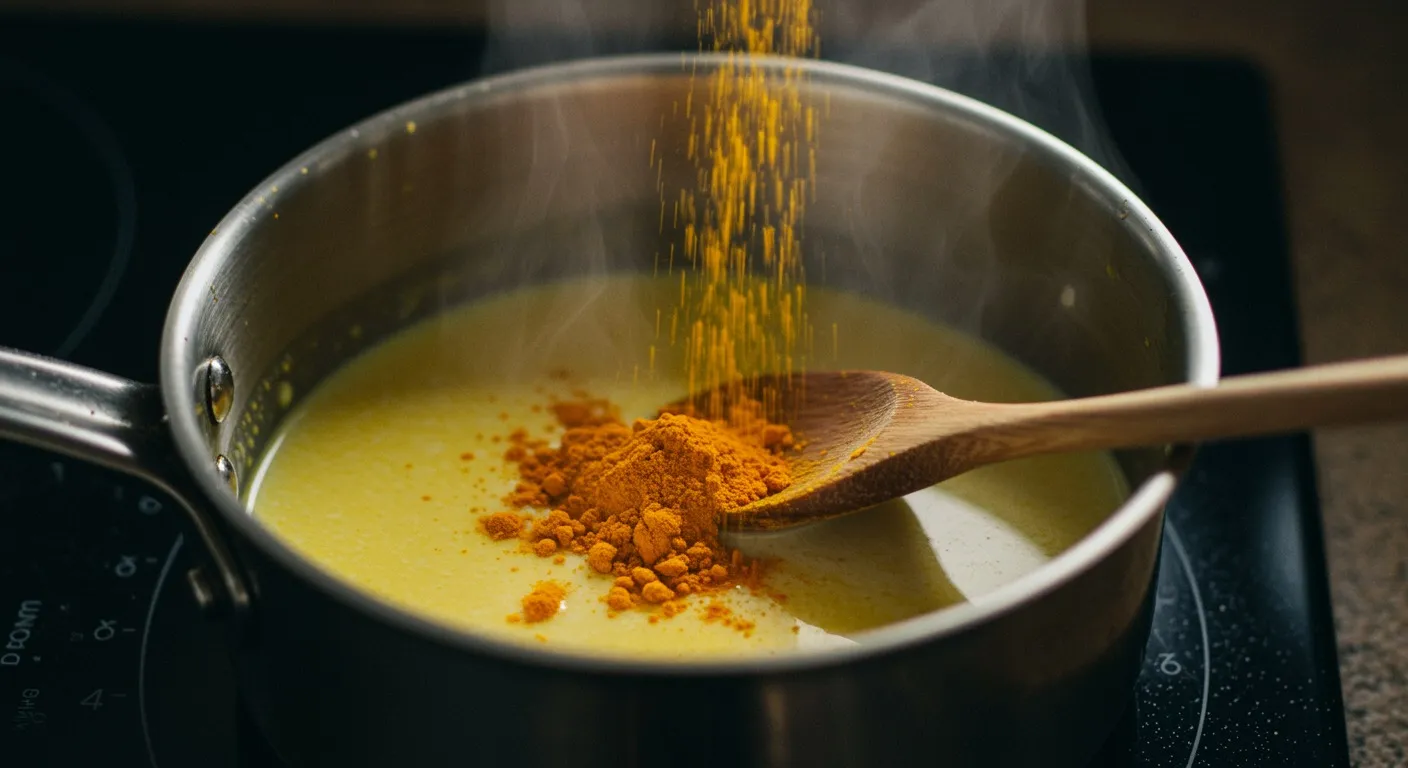
- 2 Add the ground turmeric, black pepper, cardamom, and cinnamon. Whisk gently to combine so the spices do not clump.
- 3 Add the ghee and bring the mixture to a gentle simmer, not a rolling boil. Simmer for 3 to 4 minutes, stirring occasionally so the spices do not settle at the bottom.
- 4 Remove from heat and let the milk cool for 1 to 2 minutes until comfortably warm rather than hot.
- 5 If using honey, stir it in only after the milk has cooled to drinkable warmth, never into very hot liquid (traditional Ayurvedic guidance). Jaggery may be added during simmering.
- 6 Sip the cup slowly about 30 to 60 minutes before bed, or earlier in the day at the first sign of a scratchy throat or mild cold.
Notes
- If you take blood thinners such as warfarin, aspirin, or clopidogrel, or have a bleeding disorder, keep turmeric to small culinary amounts and consult your doctor before making this a nightly ritual, as turmeric can mildly thin the blood.
- Avoid if you have known gallstones, active gallbladder disease, or active stomach ulcers, since turmeric stimulates bile flow and can irritate already inflamed gut tissue.
- Do not give honey to children under 1 year due to infant botulism risk; for older children use a small amount of jaggery or no sweetener at all.
- Do not add honey to hot milk; let the cup cool to comfortably warm first. If you are lactose intolerant, substitute with whole coconut milk or unsweetened almond milk.
- Consult your doctor if cold symptoms persist beyond 10 days, sleep difficulty persists beyond 2 to 3 weeks, or symptoms worsen. This is traditional wisdom and not a substitute for medical care.