Soaked Raisin Water (Munakka) for Mild Constipation and Morning Sluggishness

Most adults have had a stretch of slow mornings: a heavy feeling in the lower belly, a bit of bloating, a couple of days where things just do not move. It is rarely an emergency, but it makes everything else feel off. Ayurveda has a kitchen-shelf answer that predates fiber supplements by a couple of millennia. Eight to ten raisins, soaked overnight in warm water and eaten first thing in the morning along with the soak water, is one of the gentlest and oldest remedies for mild, occasional constipation.
The Ayurvedic Perspective
Constipation, called vibandha in Ayurveda, is most often a disturbance of vata dosha: the principle of dryness, movement, and irregularity in the colon. When vata is aggravated by stress, travel, dehydration, or eating in a rush, the colon becomes dry and the natural downward movement (apana vata) weakens. Draksha, the Sanskrit name for the dried grape, is praised in the Bhavaprakasha Nighantu, a 16th century materia medica still cited daily by Ayurvedic practitioners, as madhura (sweet), snigdha (unctuous), and mridurechaka (a gentle laxative). Soaking the dried fruit overnight rehydrates it and restores the snigdha quality that aggravated vata is missing. The warm soak water carries small amounts of the fruit’s water-soluble compounds and is taken along with the raisins themselves, not discarded.
What Modern Biology Says
Modern food science explains the same effect through three compounds in raisins: insoluble fiber, sorbitol, and tartaric acid. Insoluble fiber, around 2 grams per 50 gram serving, bulks up the stool. Sorbitol, a sugar alcohol that the small intestine does not fully absorb, draws water into the colon and softens the stool. Tartaric acid, present in higher concentrations in grapes and raisins than in most other fruits, has been shown in human dietary studies to shorten gut transit time even when total fiber intake is held constant. A small dose-response trial by Spiller and colleagues (Journal of Medicinal Food, 2003) in 16 healthy adults found that daily raisin consumption increased fecal weight and shortened intestinal transit time, and the polyphenols in raisins are now being studied as prebiotics for beneficial gut bacteria. The clinical evidence is still preliminary in scale, but it is consistent with both the classical Ayurvedic claim and basic dietary fiber science.
How And When To Use It
Reach for this on the second or third day of feeling backed up, or as a daily ritual through a stretch of irregularity. Eight to ten raisins is the dose that classical sources and modern wellness writers tend to converge on, with about half a cup of warm water for the soak. Take the soaked raisins and the soak water on an empty stomach in the morning, chewing the raisins thoroughly, and wait roughly thirty minutes before breakfast. Most people feel an effect within twenty four to seventy two hours; some need a full week of daily use before things settle into a regular pattern.
Cautions And A Note On Medical Care
Raisins are concentrated natural sugar, so anyone managing diabetes or watching blood glucose should count these in their daily carbohydrate budget. If loose stools or cramping appear, drop the dose to four or five raisins. Constipation that lasts longer than a week, comes with abdominal pain, unexplained weight loss, blood in the stool, or starts suddenly after age fifty deserves a medical evaluation, not a home remedy. This is traditional wisdom, not a substitute for medical care. For the ordinary slow morning, though, this is one of the simplest and kindest things a kitchen can offer: a small handful of fruit, a glass of warm water, and a little patience overnight.
Recipe
Soaked Munakka Morning Drink
Eight to ten black raisins soaked overnight in warm water and eaten first thing in the morning, with the soak water, to ease mild, occasional constipation and morning sluggishness.
- Prep
- 2min
- Cook
- 0min
- Total
- 2min
- Servings
- 1doses
Ingredients
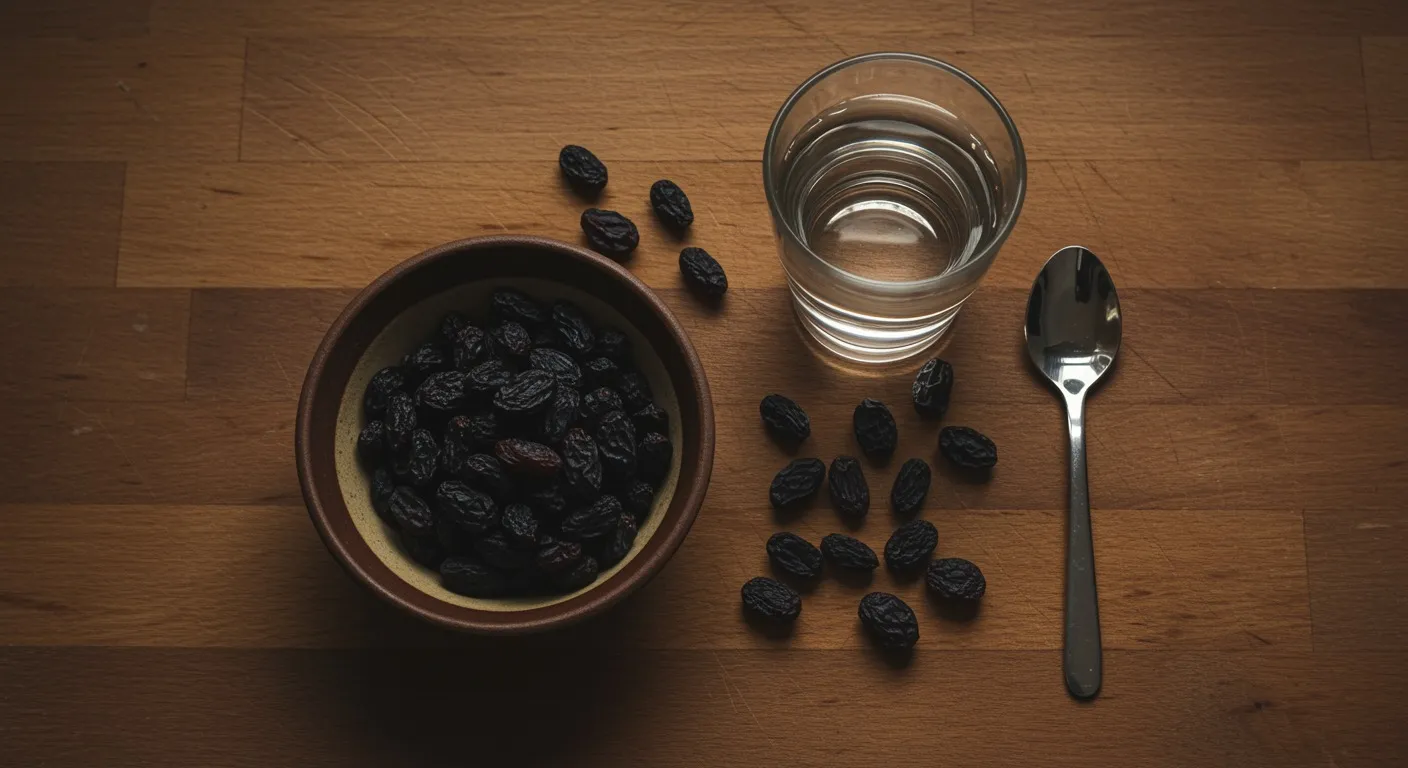
- 8 to 10 whole raisins black raisins (munakka if available, otherwise regular dark raisins)
- 1/2 cup warm (not hot) water
Instructions
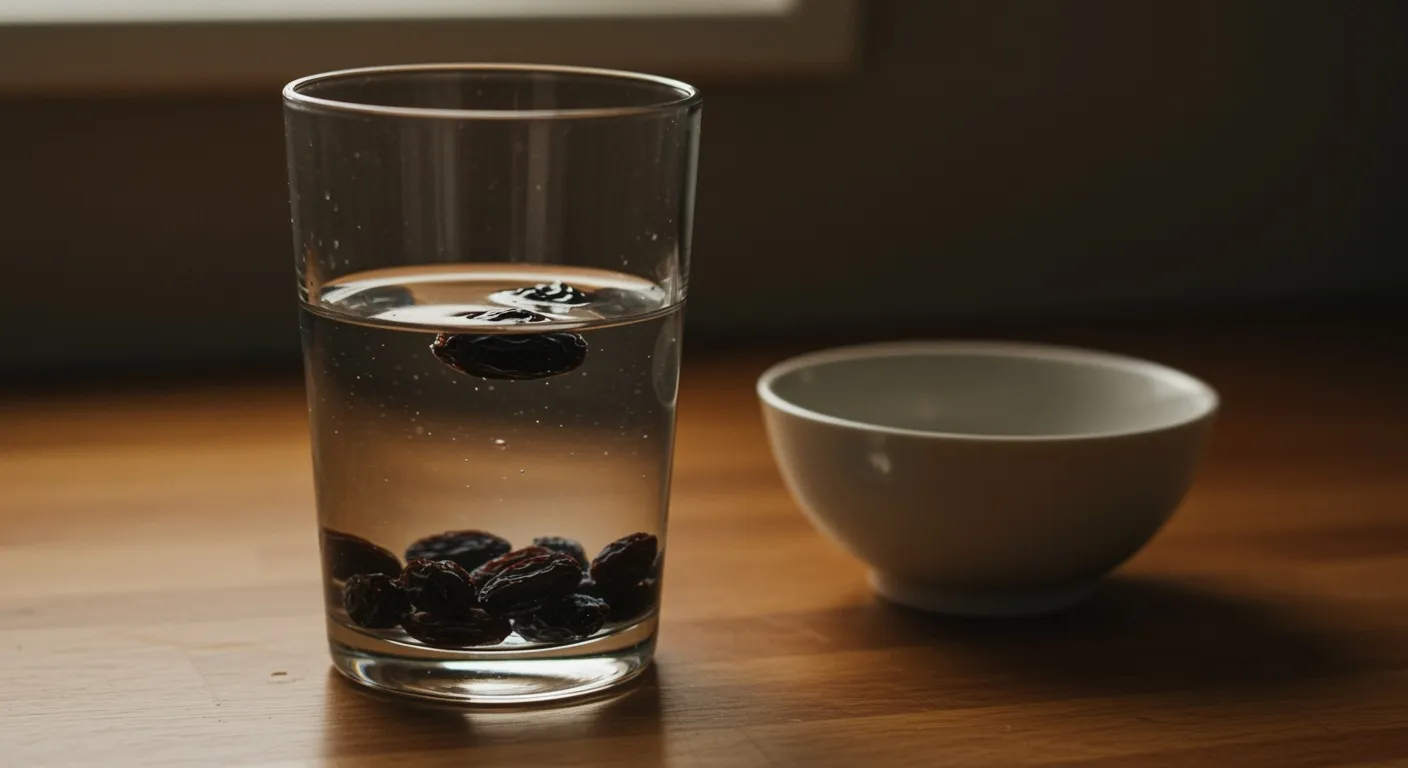
- 1 Place 8 to 10 black raisins in a small bowl or glass tumbler and pour over enough warm water to fully cover them, about half a cup.
- 2 Cover the bowl and let the raisins soak overnight, ideally 6 to 8 hours, at room temperature.
- 3 First thing in the morning, on an empty stomach, eat the soaked raisins one by one, chewing each one thoroughly, then drink the soaking water at room temperature or gently warmed.
- 4 Wait at least 30 minutes before having breakfast, tea, or coffee. Repeat daily for up to two weeks for occasional constipation.
Notes
- If you are managing diabetes or blood sugar, count these raisins in your daily carbohydrate intake. Eight to ten raisins is roughly 60 calories of natural sugar.
- If you develop loose stools or stomach cramping, reduce the dose to four or five raisins.
- This remedy is for occasional, mild constipation. Constipation that lasts longer than a week, comes with abdominal pain, unexplained weight loss, blood in the stool, or starts suddenly after age fifty, needs medical evaluation, not a home remedy.
- Consult your doctor if symptoms persist beyond seven days or worsen.
- This is traditional wisdom and not a substitute for medical care.