Sesame Oil Pulling (Kavala Graha) for Bad Breath and Oral Hygiene
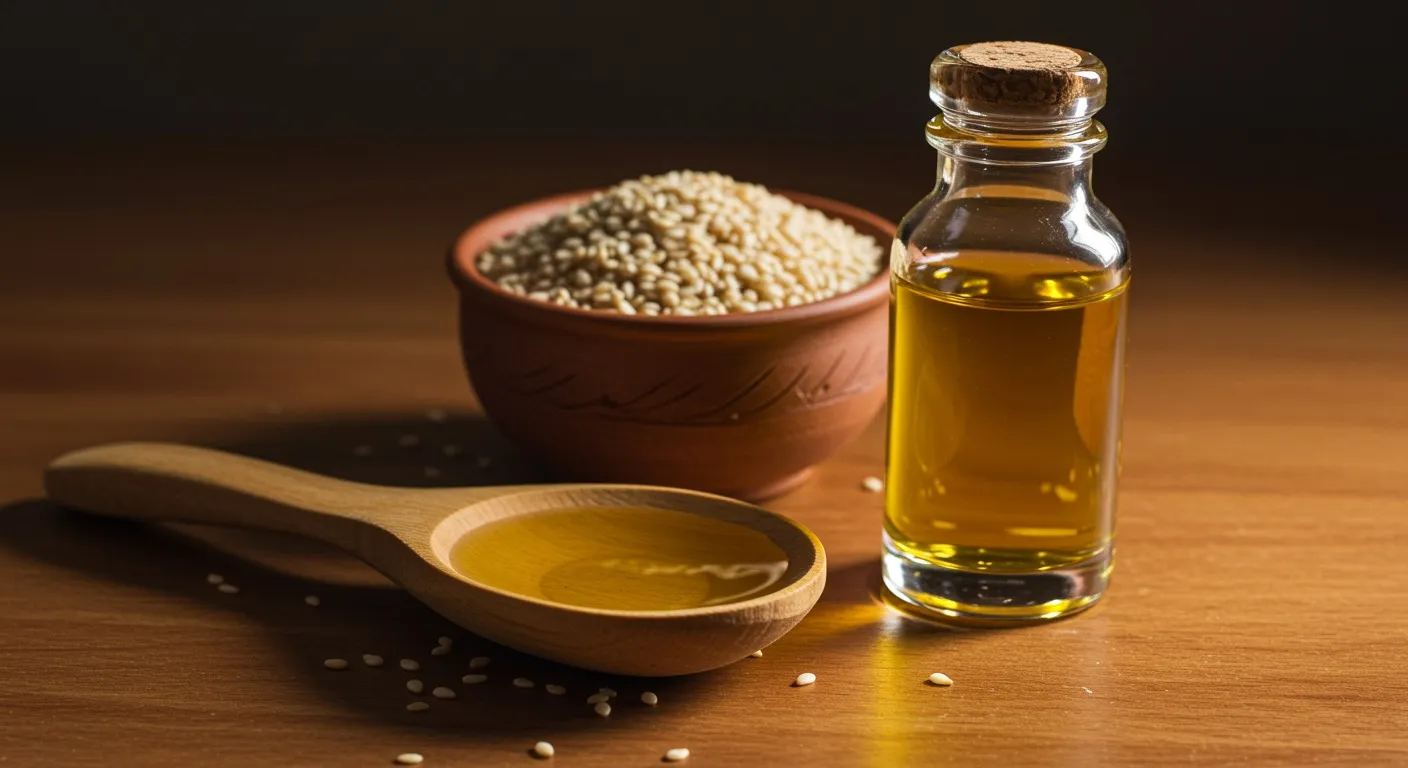
Most of us know the feeling of waking up with a coated tongue, a slightly stale taste, and breath we would not want to share with the world before brushing. Even with diligent brushing and flossing the night before, a thin film of bacteria, food particles, and shed cells settles along the tongue, the gum line, and between the teeth overnight, and that film is the most common everyday cause of morning breath. Long before fluoride toothpaste and electric brushes, Indian households kept the mouth clean with a quiet morning practice: swishing a spoonful of warm sesame oil through the teeth for several minutes and then spitting it out. Ayurveda calls it kavala graha, and the modern world has rediscovered it as oil pulling. The only ingredient lives in almost every Indian kitchen already.
The Ayurvedic Perspective
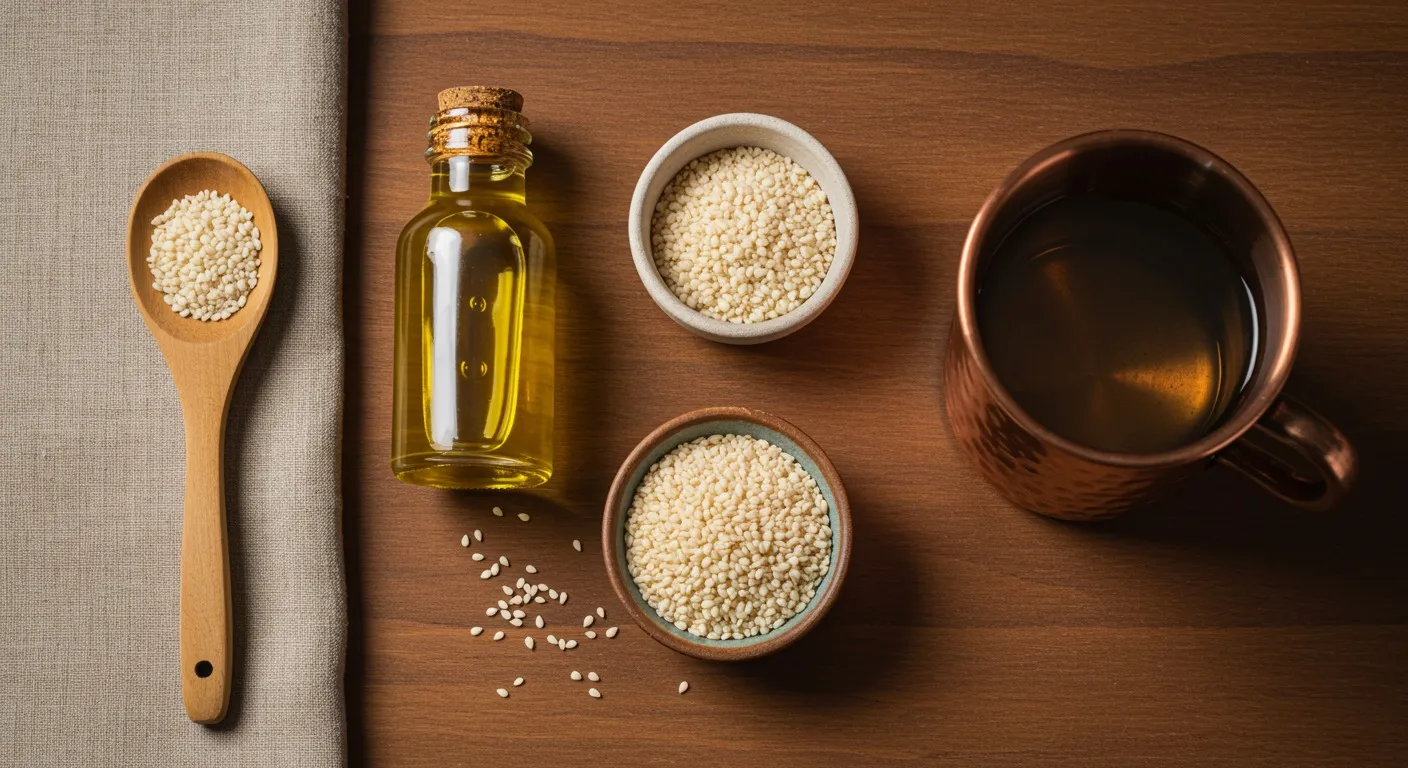
Classical Ayurvedic texts including the Charaka Samhita and the Ashtanga Hridayam place oil swishing among the dinacharya, the daily self-care routines that keep the body in balance. Two related forms appear in the texts: kavala graha, where a comfortable mouthful of oil is swished and gargled at the teeth, and gandusha, where the mouth is filled completely and the oil is held still so that swishing is not possible. Both are recommended for what Ayurveda views as kapha and vata imbalances in the mouth, expressed as the overnight film, sticky saliva, gum sensitivity, and dullness of breath that most people quietly accept as normal. Sesame oil, called tila taila, is the oil Charaka names first for this practice because its warm, penetrating quality is thought to draw stagnant doshas out of the gums and to strengthen the teeth, jaw, and voice. The instruction in the texts is simple: do it in the morning, before eating, as part of your daily care.
What Modern Biology Says
Sesame oil is unusually rich in lignans, primarily sesamin, sesamolin, and the antioxidant sesamol, along with phenolic compounds and vitamin E. While swishing, the oil emulsifies with saliva and physically loosens the bacterial biofilm (dental plaque) clinging to teeth and gums; the phenolic compounds also show antimicrobial activity against several oral bacteria in lab studies. A 2022 meta-analysis in the journal Healthcare found a significant reduction in overall salivary bacterial counts with oil pulling, but it did not find a significant difference in plaque index or gingival index versus controls. A 2024 systematic review in the International Journal of Dental Hygiene reached a similar verdict: oil pulling improved gingival scores compared with non-chlorhexidine mouthwashes, but chlorhexidine still outperformed it on plaque, and the overall certainty of the evidence was rated very low. In other words, the evidence supports oil pulling as a gentle complement to ordinary brushing and flossing that may help with general oral bacterial load and freshness of breath, rather than a proven replacement for them. Claims about whole-body detox or tooth whitening have no good human evidence behind them.
How And When To Use It
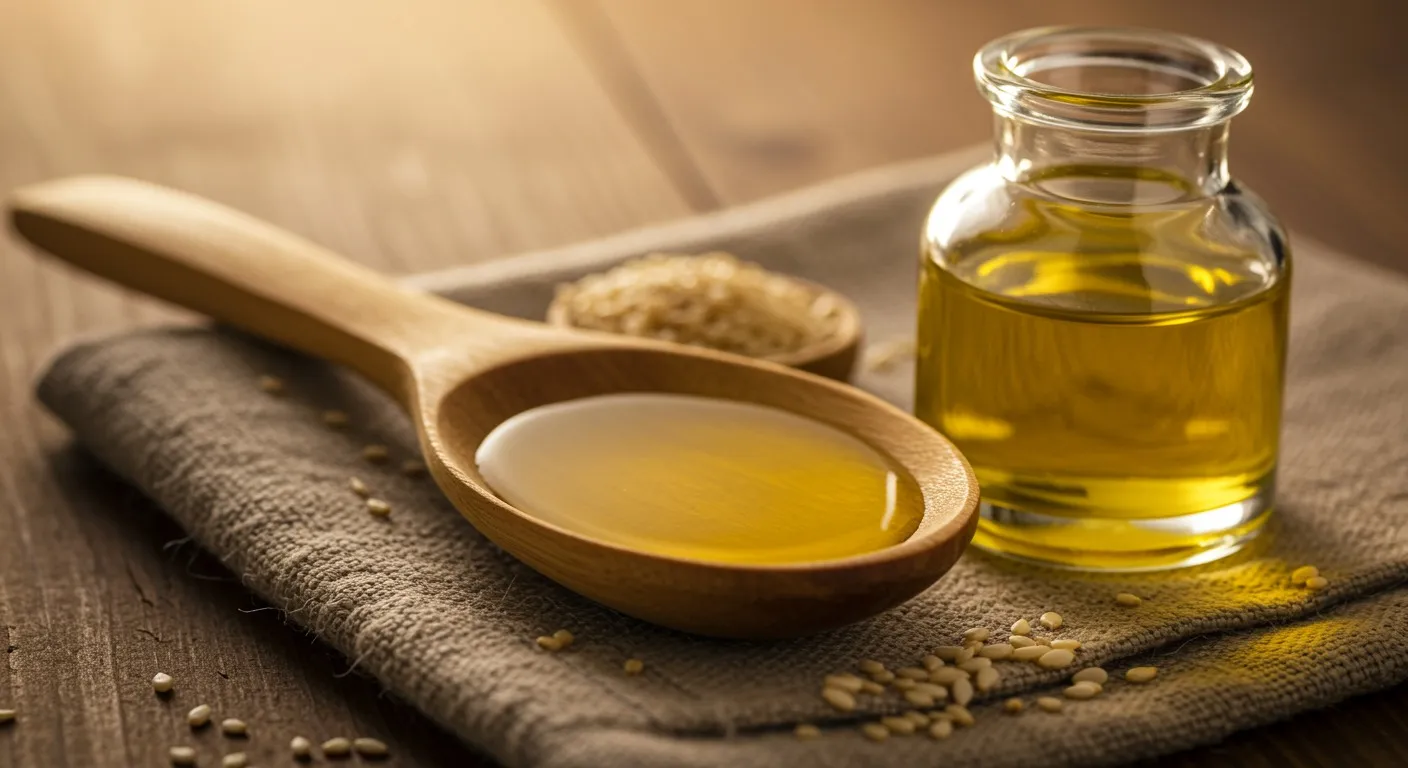
The practice fits naturally into the first few minutes of the morning. Take one tablespoon of plain cold-pressed sesame oil into the mouth before eating, drinking, or brushing, and swish it gently through and around the teeth without gargling at the throat. Aim for 10 to 20 minutes; if that sounds long at first, start at 5 minutes and add a minute or two each week until a comfortable duration is found. The oil thins and turns whitish as it mixes with saliva, which is the sign that it is working as intended. Spit it into the trash or a paper towel, not the sink, rinse the mouth with warm water, and then brush and floss as usual.
Cautions And A Note On Medical Care
A few practical safeguards keep this remedy completely safe. Never swallow the oil, since by the end of the swish it carries loosened bacteria and oral debris. Skip the practice if you have a sesame seed allergy. Treat oil pulling as a complement to brushing, flossing, and routine dental visits rather than a replacement, and see a dentist for bleeding gums, loose teeth, severe sensitivity, or any tooth pain, since oil pulling cannot fix structural problems. If bad breath persists beyond two weeks despite good oral hygiene, check in with your doctor or dentist, because chronic halitosis can sometimes reflect sinus, digestive, or other systemic issues. This is traditional wisdom and not a substitute for medical care, but it is also one of the gentlest, lowest cost ways to begin the day with a cleaner mouth, and a single tablespoon of sesame oil from your own pantry is all the equipment you need.
Recipe
Sesame Oil Pulling (Kavala Graha)
A one ingredient morning Ayurvedic practice for fresher breath and cleaner gums: swish a tablespoon of plain sesame oil through the teeth for several minutes, then spit, rinse, and brush as usual.
- Prep
- 1min
- Cook
- 0min
- Total
- 15min
- Servings
- 1applications
Ingredients
- 1 tbsp cold-pressed edible sesame oil (gingelly oil or til oil), not the dark toasted variety
- 1 cup warm water, for rinsing afterward
Instructions
- 1 Choose plain cold-pressed edible sesame oil, sometimes labeled gingelly oil or til oil. Avoid the dark toasted sesame oil used for stir-fries; its flavor is too strong for swishing.
- 2 First thing in the morning, before eating, drinking, or brushing, take 1 tablespoon of sesame oil into the mouth.
- 3 If you prefer it slightly warm, hold the spoon under warm running water for a few seconds before pouring the oil in. Body temperature is plenty; the oil should never feel hot.
- 4 Swish the oil gently and steadily through your teeth and along the gum line. Do not gargle at the throat. The oil will gradually thin and turn whitish as it mixes with saliva, which is normal.
- 5 Aim for 10 to 20 minutes of swishing. If 20 feels long, start at 5 minutes and add a minute or two each week until you reach a comfortable duration.
- 6 Spit the oil into a trash bin or onto a paper towel and discard. Never spit into the sink, because cooled sesame oil can solidify and clog drains.
- 7 Rinse the mouth thoroughly with warm water, then brush and floss as you normally would.
- 8 Practice daily as part of your morning routine for steady results, or 3 to 4 times a week if daily feels like too much at first. Expect noticeably fresher breath in a week or two and gum tone improvements over about a month.
Notes
- Never swallow the oil, since by the end of the swish it carries loosened bacteria and oral debris. Spit into a trash bin or paper towel rather than the sink, because cooled sesame oil can solidify and clog drains.
- Do not use this practice if you have a known sesame seed allergy.
- Oil pulling does not replace brushing, flossing, or regular dental visits. See a dentist for bleeding gums, loose teeth, severe sensitivity, or any tooth pain, since oil pulling will not fix structural dental problems.
- Consult your doctor or dentist if bad breath persists beyond two weeks despite good oral hygiene, because chronic halitosis can sometimes reflect sinus, digestive, or other systemic issues.
- This is traditional wisdom and not a substitute for medical care.