Mor Kuzhambu Recipe (South Indian Buttermilk Curry with Ash Gourd)
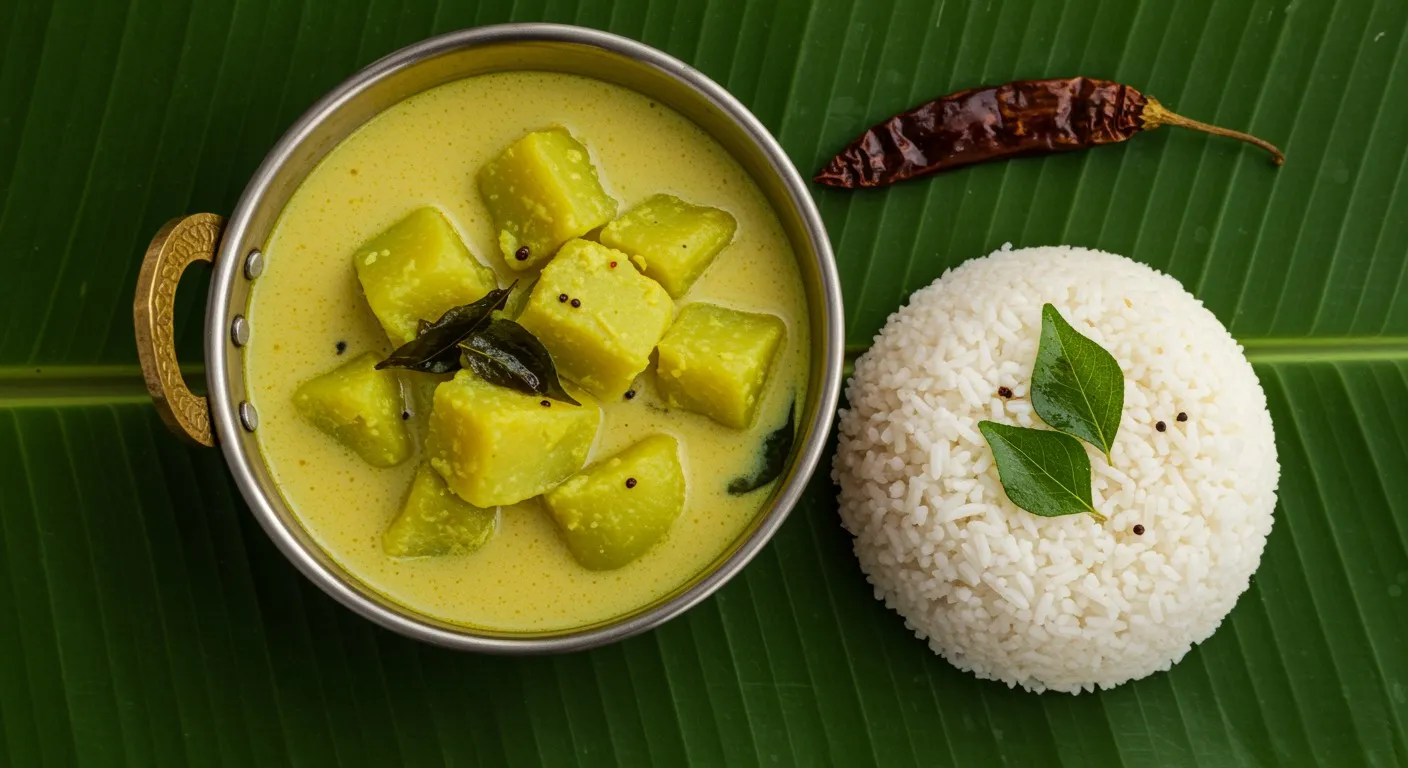
Mor kuzhambu is a cooling Tamil buttermilk curry that has been quietly having a moment online, with South Indian creators sharing reels of the gentle, pale yellow gravy poured over a mound of steamed rice. It belongs to that category of dishes that feels like a relief in hot weather: light, tangy, mildly spiced, and built around yogurt and ground coconut rather than rich tomato or onion. Ash gourd cubes float in a buttermilk and coconut paste perfumed with curry leaves and a coconut oil tempering. Once tasted, it becomes one of those weeknight curries you return to over and over when the days are long and you want something nourishing without being heavy.
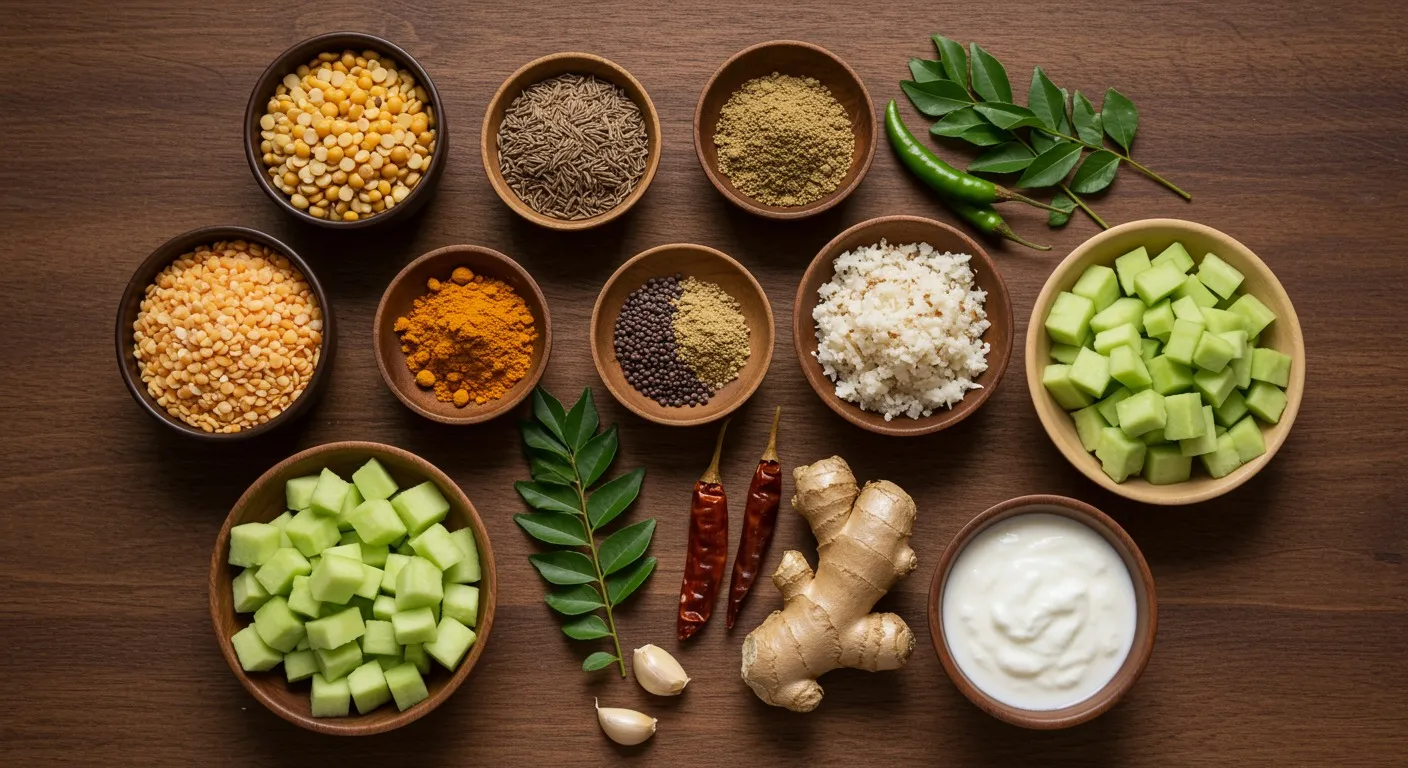
About This Dish
The name translates plainly: mor means buttermilk and kuzhambu means curry in Tamil, and the dish is a fixture of Tamil Brahmin and Iyengar cooking, with close cousins across South India. Karnataka knows it as majjige huli, Kerala as moru curry or kaalan, and Andhra households make a thinner perugu pulusu in the same spirit. Across all the variants the principle is identical: a fermented dairy base, a freshly ground coconut and spice paste, and a single seasonal vegetable simmered in the gravy. It is everyday food, the kind of dish a Paatti would make when the heat is rising and the family wants something gentle on the stomach.
Ingredient Notes
Ash gourd, also called white pumpkin or winter melon, is the traditional vegetable here and is worth seeking out at an Indian or Asian grocery for its cooling properties and the way it absorbs the yogurt gravy. If ash gourd is unavailable, yellow pumpkin, chayote, okra, or cubed eggplant all slip into the recipe well. The yogurt should be plain whole-milk yogurt with a little tang to it; if yours is bland, leave it on the counter for a few hours before whisking. Fresh grated coconut beats frozen or desiccated for the cleanest flavor, but frozen grated coconut (thawed) is a perfectly good substitute. Use ghee for the tempering if you prefer a richer flavor, though coconut oil is the most traditional choice and ties the dish together beautifully.
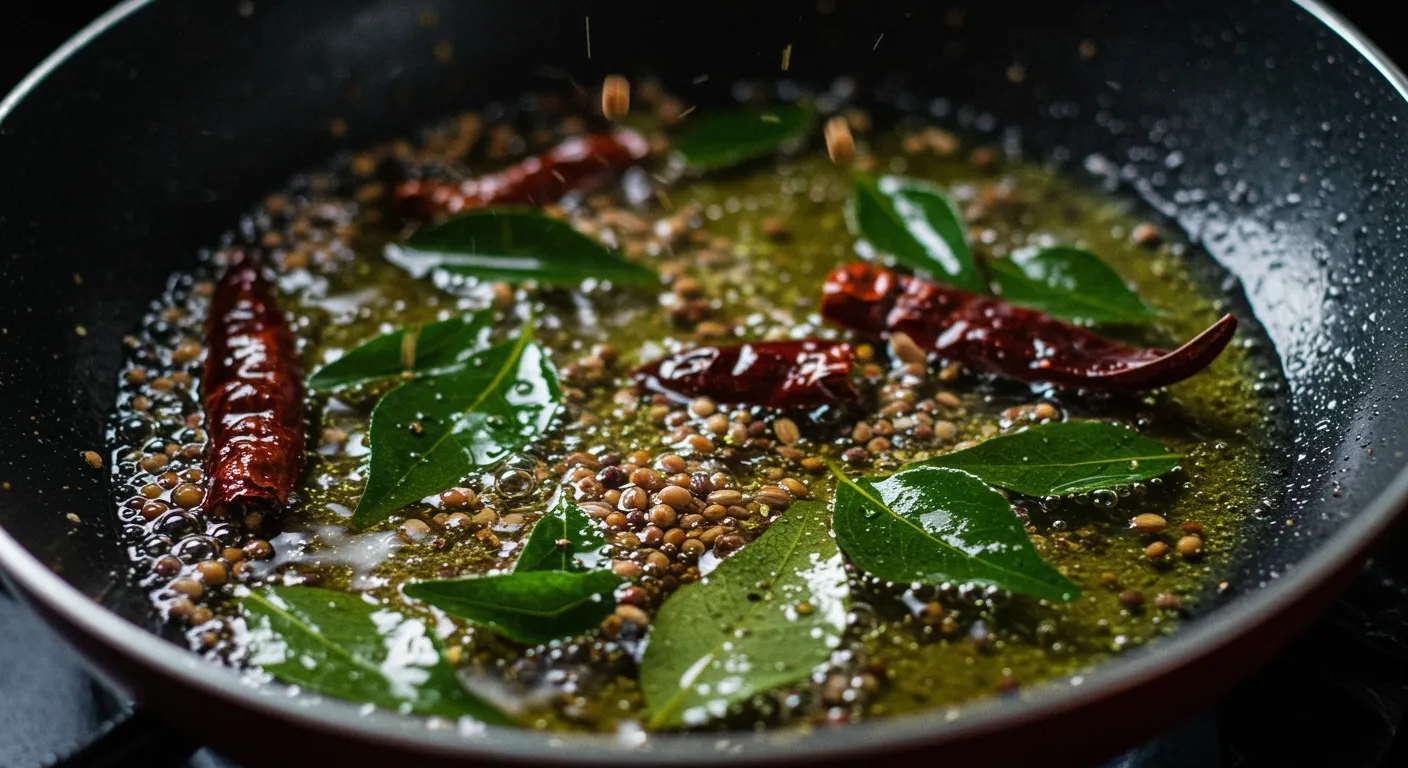
Method And Tips
The technique that makes or breaks mor kuzhambu is heat management once the yogurt goes into the pan. Yogurt curdles the moment it sees a rolling boil, so the curry must be warmed only until it turns hot and slightly frothy on top, stirring constantly the whole time. Whisking the yogurt smooth before it ever touches heat is the second key step, since any lumps in the cold yogurt will translate to a grainy, broken curry. A third small trick is to soak the dal and rice together so they grind into a silky paste with the coconut, which gives the gravy its characteristic body without needing flour or any other thickener. If a coconut paste seems too thick when blending, add a splash of water rather than milk or cream.
Serving Suggestions
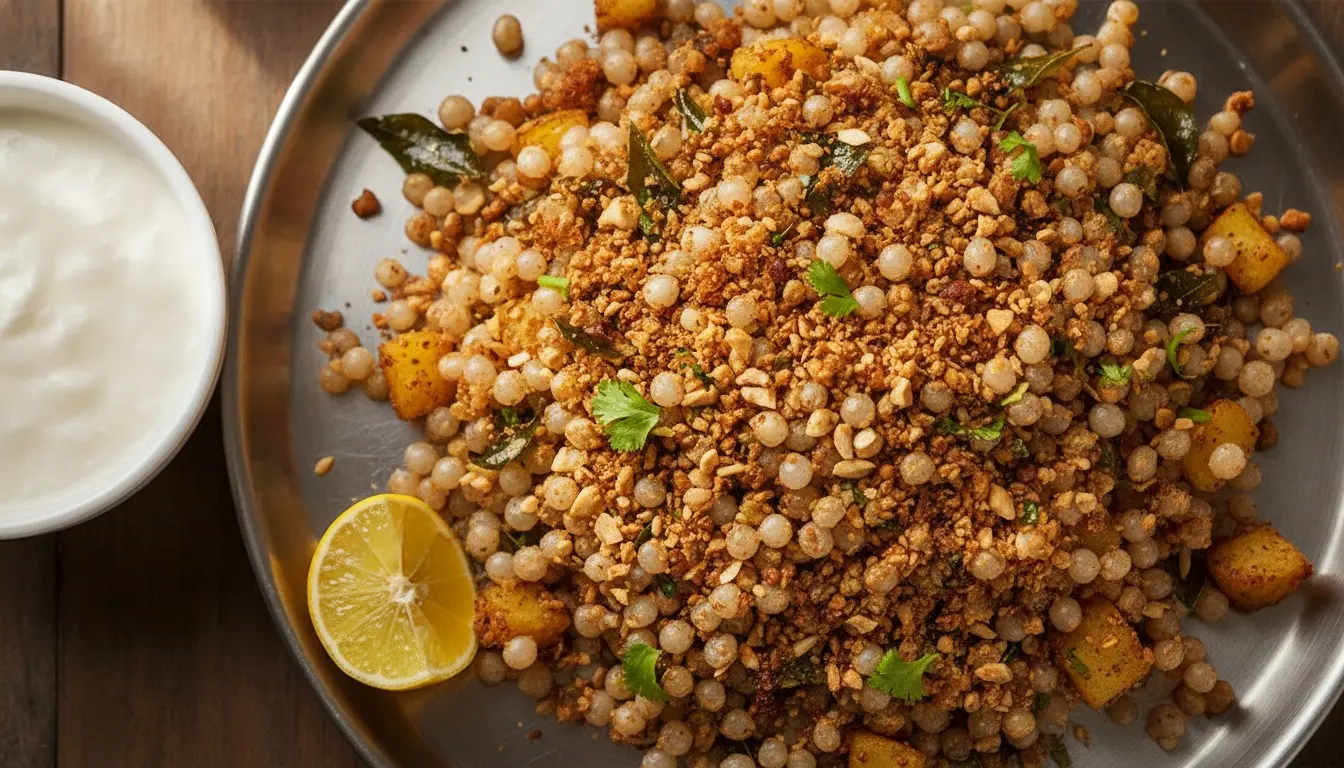
Mor kuzhambu is best served piping hot, ladled generously over plain steamed rice, with a dry side dish to round out the meal. A simple potato curry, beans poriyal, or paruppu usili (steamed lentil crumble) all complement it beautifully, as does a crisp papadam on the side. It is the kind of recipe that gets easier and more intuitive every time, so try it once and let the rhythm settle in. By the second or third batch, it will be in regular rotation through every hot stretch of the year.
Recipe
Mor Kuzhambu
A traditional Tamil buttermilk curry made with ash gourd simmered in a spiced yogurt and coconut gravy, finished with a coconut oil tempering of mustard seeds, curry leaves, and dried red chilies.
- Prep
- 30min
- Cook
- 20min
- Total
- 50min
- Servings
- 4servings
- Calories
- 180kcal
Ingredients
- For the coconut paste
- 1 tablespoon toor dal
- 1 teaspoon raw rice
- 1/2 teaspoon cumin seeds
- 3 green chilies
- 1 inch piece fresh ginger, chopped
- 1/2 cup fresh grated coconut
- 8 leaves curry leaves
- For the curry
- 1.5 cups ash gourd (white pumpkin), peeled and cubed
- 1 cup water
- 1/4 teaspoon turmeric powder
- 1.5 cups plain yogurt, slightly sour, whisked
- 1 teaspoon salt
- For the tempering
- 2 teaspoons coconut oil
- 1/2 teaspoon mustard seeds
- 2 dried red chilies, broken
- 1/4 teaspoon asafoetida
- 10 leaves curry leaves
Instructions
- 1 Soak the toor dal and raw rice together in 1/4 cup of hot water for 30 minutes, until both are softened.
- 2 While the dal soaks, peel the ash gourd, scoop out the seeds and spongy center, and cut the flesh into 1/2 inch cubes.
- 3 Drain the soaked dal and rice and transfer to a blender. Add the cumin seeds, green chilies, ginger, grated coconut, curry leaves, and 1/4 cup of fresh water. Grind to a smooth paste, adding a splash more water if needed.
- 4 Place the cubed ash gourd in a saucepan with 1 cup of water and the turmeric. Cover and cook over medium heat for 8 to 10 minutes, until the pieces are fork-tender but still hold their shape.
- 5 In a separate bowl, whisk the yogurt until completely smooth with no lumps. Stir in the ground coconut paste and salt and whisk again to combine into a uniform mixture.
- 6 Reduce the heat under the cooked ash gourd to low. Slowly pour in the yogurt and coconut paste mixture, stirring gently to combine.
- 7 Warm the curry on low heat, stirring continuously, for 4 to 5 minutes until it becomes hot and slightly frothy on top. Do not let it come to a boil, or the yogurt will curdle. Turn off the heat as soon as it is warm through.
- 8 In a small tempering pan, heat the coconut oil over medium heat. Add the mustard seeds and wait until they crackle, about 20 seconds.
- 9 Add the broken dried red chilies, asafoetida, and curry leaves to the oil and let them sizzle for 5 seconds, just until the curry leaves crisp up.
- 10 Pour the hot tempering over the mor kuzhambu, give it a gentle stir, and cover the pan with a lid for 2 minutes to let the aromas infuse.
- 11 Serve hot, ladled over steamed white rice, with a side of poriyal or a simple potato curry.
Notes
- Use slightly sour yogurt for the best traditional flavor. If your yogurt is fresh and sweet, leave it at room temperature for 3 to 4 hours to develop a gentle tang before whisking.
- Ash gourd is the most traditional vegetable for mor kuzhambu, but yellow pumpkin, chayote (chow chow), okra (sauté lightly first), or cubed eggplant all work beautifully.
- Never let the curry come to a rolling boil after adding the yogurt. Keeping the heat low and pulling the pan off as soon as it is hot through is the single most important technique for a smooth, lump-free gravy.
- Whisk the yogurt thoroughly before mixing it with the coconut paste. Any lumps in the yogurt will translate to a broken, grainy curry.