Mambazha Pulissery Recipe (Kerala Ripe Mango Curry)
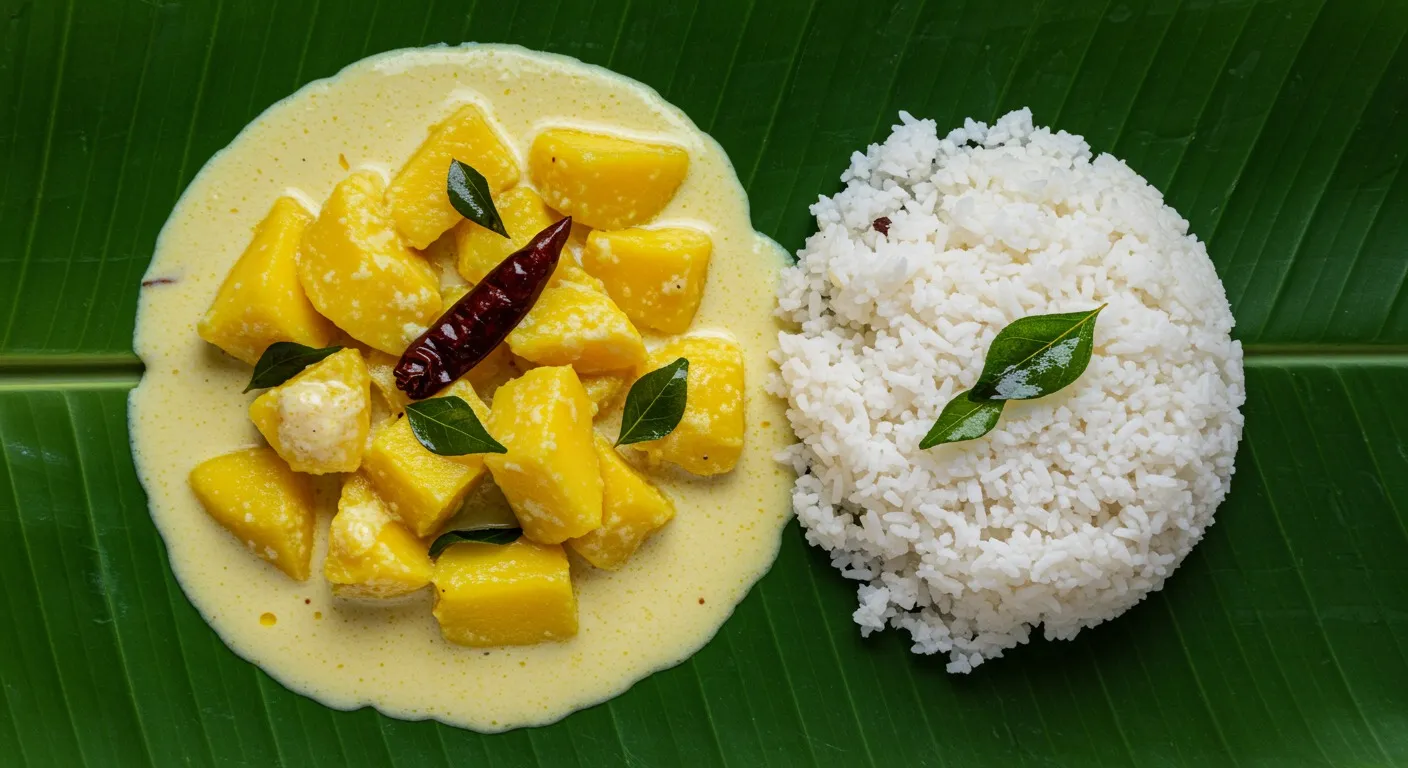
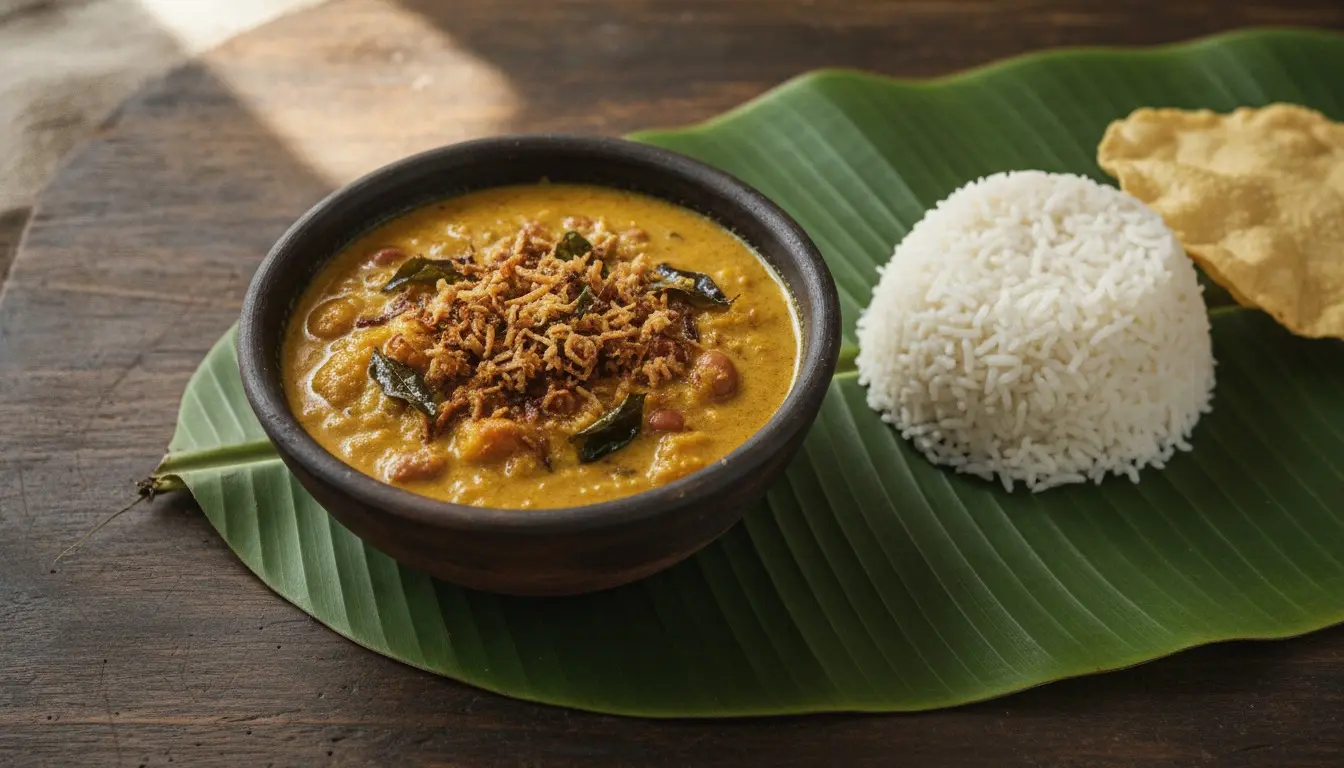
Mambazha Pulissery is one of those Kerala curries that captures the essence of mango season in a single bowl. Peeled ripe mangoes are gently simmered in a sweet, tangy gravy of fresh coconut and yogurt, then finished with a fragrant tempering of mustard seeds, fenugreek, and curry leaves crackled in coconut oil. It is mild, creamy, and perfumed with green chilies and cumin, the kind of dish that feels like comfort food and celebration food at the same time. The curry has been having a real moment online, with reels of golden mango chunks bobbing in coconut gravy filling food feeds whenever mango season comes around.
About This Dish
This curry is a beloved part of the Kerala sadya, the traditional vegetarian feast served on a banana leaf during Onam and Vishu. Pulissery itself refers to a family of yogurt-based curries from Kerala, where the gravy is mellowed with ground coconut and finely tempered. When ripe mangoes are in season, cooks across Kerala swap in the small, fragrant local varieties to make this version, often called mambazha pulissery, with mambazham simply meaning ripe mango in Malayalam. Many families guard their own version, passed down with small differences in spicing and the shape of the mango pieces.
Ingredient Notes
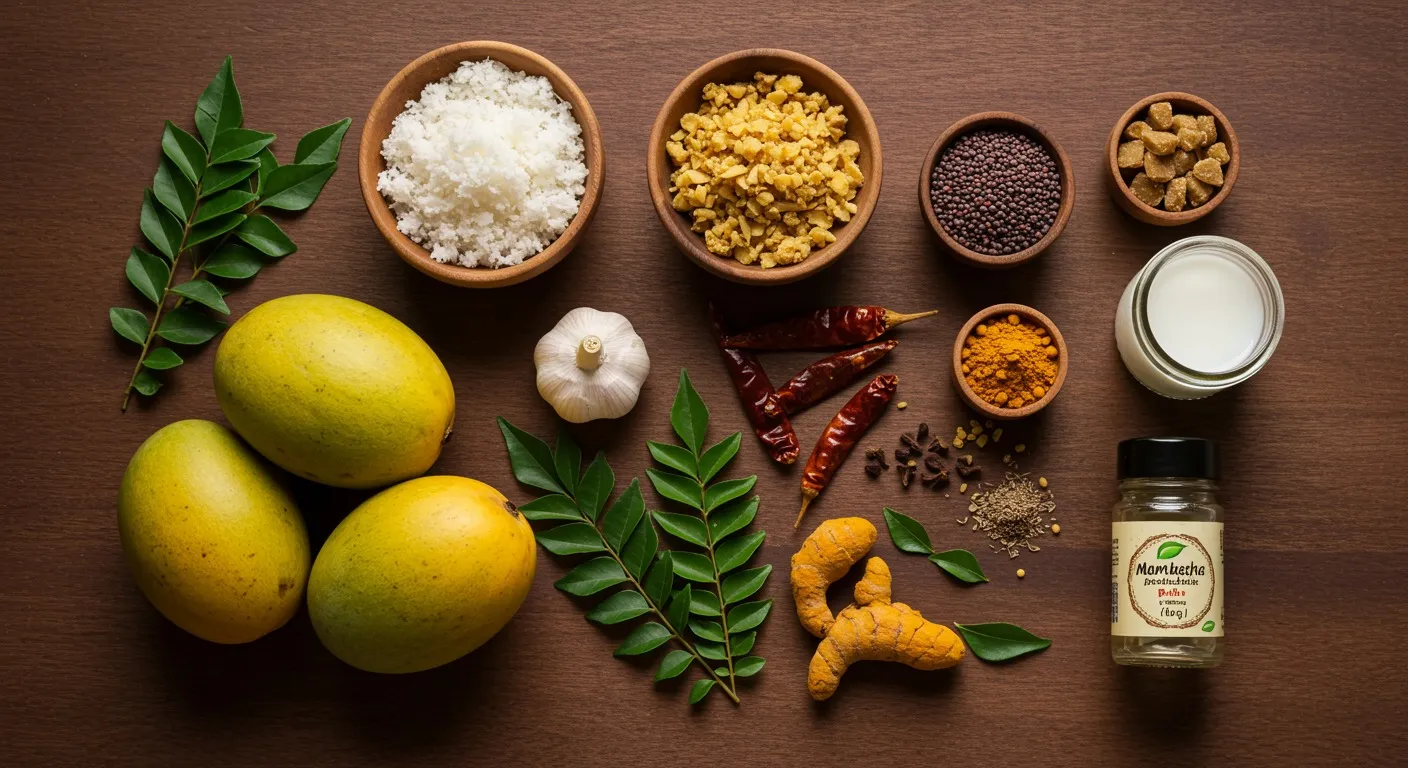
The star here is the mango. Small, fragrant varieties like kili mooku, totapuri, or even Indian sour mangoes work beautifully because they hold their shape and bring a tart edge that balances the yogurt. If you only have larger Alphonso or Kesar mangoes, simply peel and cube them and reduce the jaggery slightly since they are sweeter. Fresh grated coconut gives the gravy its silky body, and frozen grated coconut is a fine substitute when fresh is not on hand. Whole-milk yogurt that is thick but not too sour creates the right tangy backdrop without overpowering the mango. Use jaggery rather than refined sugar wherever possible because it adds a soft caramel note that fits the dish.
Method And Tips
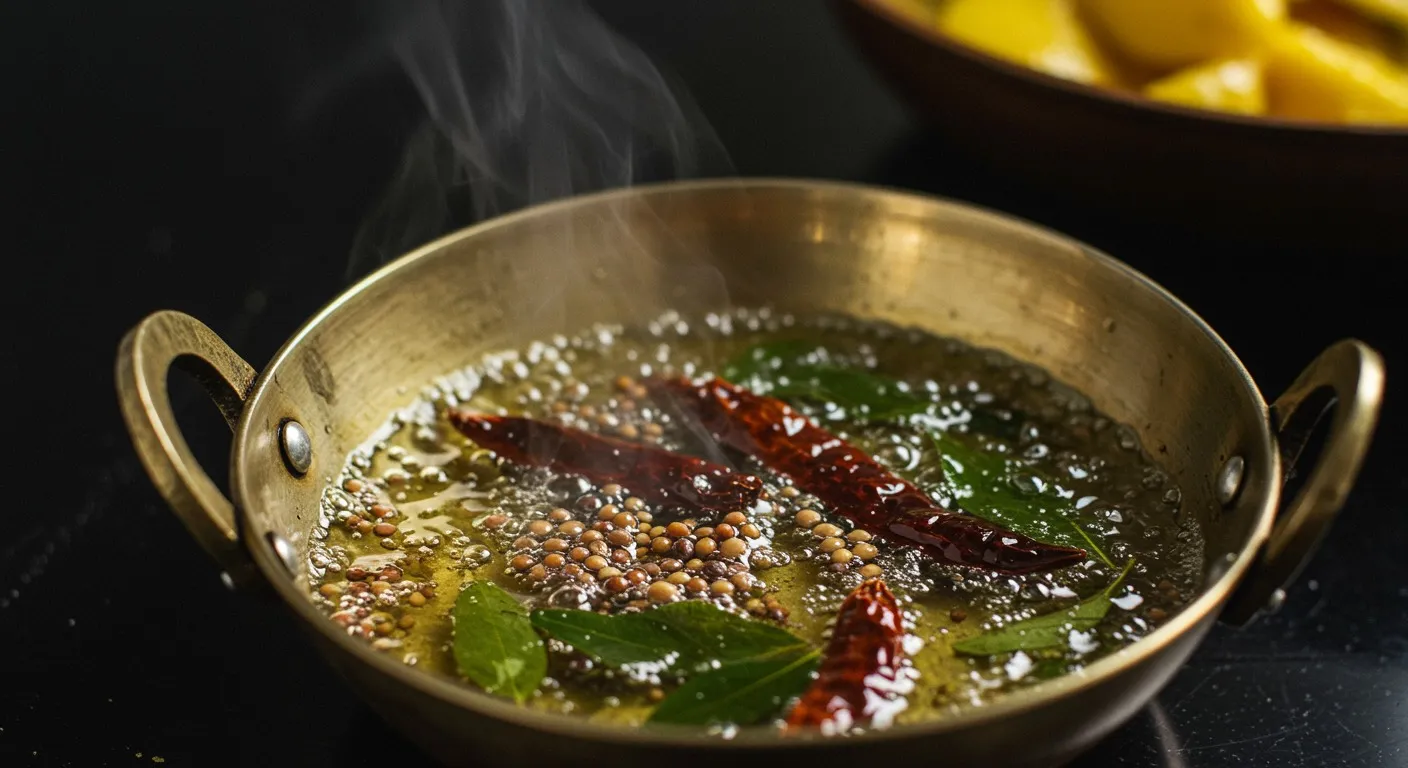
The single most important technique with any pulissery is to keep the heat low after the yogurt goes in. Yogurt curdles instantly at a rolling boil, so once you stir it in, the curry only needs to warm through for a minute and then the heat goes off. Whisking the yogurt smooth before adding it helps even more. Two small tips that make a big difference: cook the mangoes just until tender so they keep their shape, and let the tempering rest for a few minutes after pouring it on so the curry leaves perfume the gravy.
Serving Suggestions
Mambazha pulissery is traditionally served with steamed Kerala matta rice, but any short or medium-grain rice works wonderfully. It pairs beautifully with a simple cabbage thoran, a crisp papadum, and a spoonful of pickle on the side for a complete sadya-style meal. The curry tastes even better the next day, after the flavors have settled together overnight. If mangoes are in season where you live, this is the recipe to try first.
Recipe
Mambazha Pulissery
A traditional Kerala ripe mango curry where peeled mangoes simmer in a coconut paste and tangy yogurt gravy, finished with a fragrant coconut oil tempering of mustard seeds, fenugreek, and curry leaves.
- Prep
- 10min
- Cook
- 20min
- Total
- 30min
- Servings
- 4servings
- Calories
- 210kcal
Ingredients
- For the curry
- 3 cups ripe small mangoes, peeled and cubed
- 1.5 cups water
- 1/2 tsp turmeric powder
- 1 tbsp jaggery, grated
- 1 tsp salt
- 1 cup plain whole-milk yogurt, whisked smooth
- For the coconut paste
- 1 cup fresh grated coconut
- 1 tsp cumin seeds
- 3 green chilies
- 1/4 cup water, for grinding
- For the tempering
- 2 tbsp coconut oil
- 1/2 tsp mustard seeds
- 1/4 tsp fenugreek seeds
- 2 dry red chilies
- 12 leaves curry leaves
Instructions
- 1 Peel the ripe mangoes and cut them into large bite-size cubes, reserving any juice that runs off. If using very small mangoes such as totapuri or kili mooku, you can leave them whole after peeling for a more traditional look.
- 2 Add the mango pieces to a heavy saucepan or kadai along with the water, turmeric powder, jaggery, and salt. Bring to a gentle simmer over medium heat and cook uncovered for 8 to 10 minutes, until the mangoes are soft and tender but still hold their shape.
- 3 While the mangoes simmer, add the grated coconut, cumin seeds, and green chilies to a blender with 1/4 cup of water. Grind to a smooth, thick paste, scraping down the sides as needed.
- 4 Whisk the yogurt in a small bowl until completely smooth and lump-free. This step is important so the curry does not split when the yogurt is added.
- 5 Lower the heat under the mango mixture and stir in the coconut paste. Simmer gently for 2 to 3 minutes, just enough for the raw coconut smell to mellow. Do not let the curry come to a hard boil from this point on.
- 6 Turn the heat to the lowest setting and slowly pour in the whisked yogurt while stirring constantly. Warm it through for about 1 minute until the curry looks creamy and just barely steams, then turn off the heat. Boiling at this stage will curdle the yogurt.
- 7 Heat the coconut oil in a small tempering pan over medium heat. Add the mustard seeds and let them crackle, then add the fenugreek seeds, dry red chilies, and curry leaves. Fry for 5 to 10 seconds until the curry leaves crisp up and the fenugreek turns a shade darker, taking care not to burn the seeds.
- 8 Pour the hot tempering over the curry and stir gently to combine. Cover and rest for 5 minutes so the flavors settle, then serve warm with steamed rice.
Notes
- Use ripe but firm mangoes that hold their shape when simmered. Overripe, stringy mangoes will dissolve into the gravy and turn it pulpy.
- If your mangoes are very sweet, reduce the jaggery to 1 tsp; if they are on the tart side, add up to 2 tbsp.
- The curry tastes even better the next day once the flavors meld. Reheat very gently on the lowest flame, or just bring it to room temperature before serving.