Honey-Ginger Tonic for Sore Throat and Mild Cough
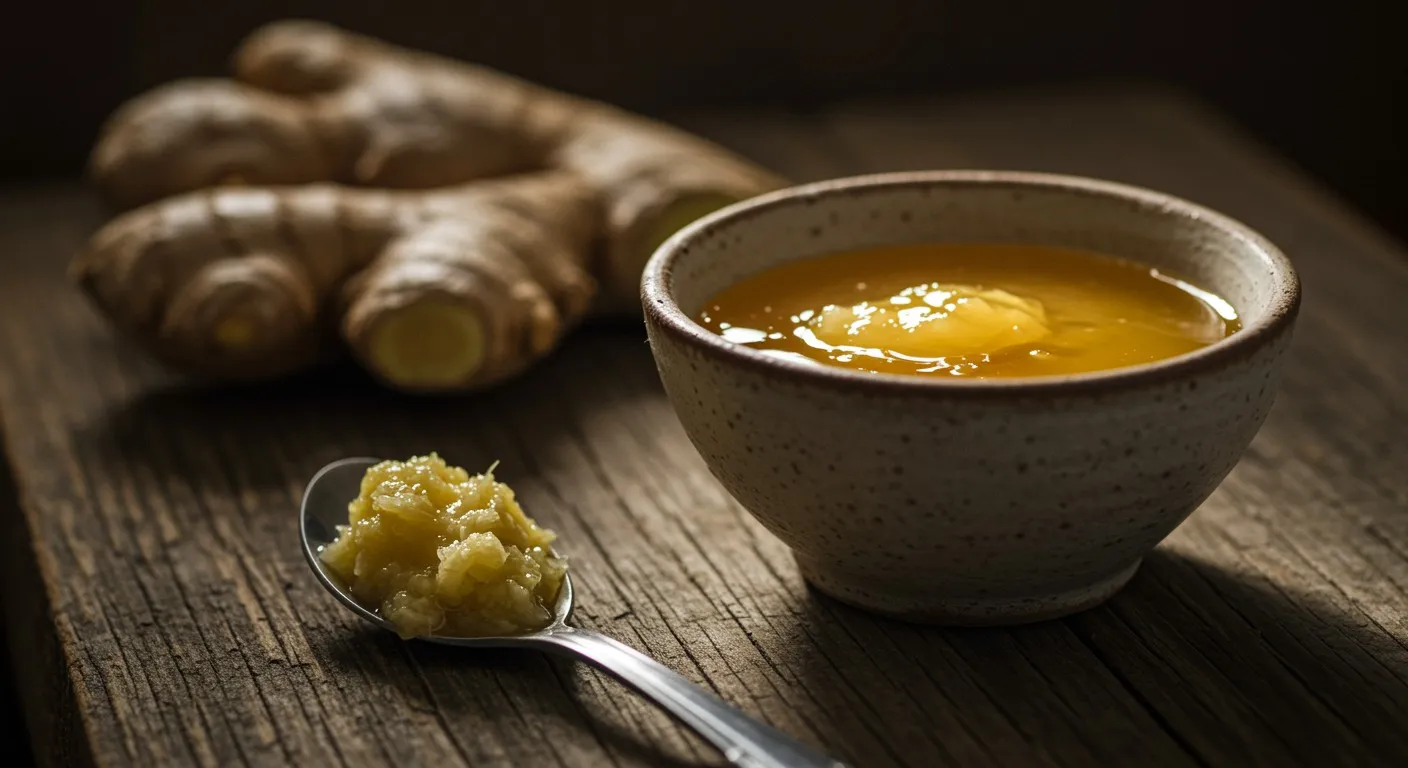
A scratchy throat that nags through the morning, a dry cough that wakes you at night, the slow start of a cold you can already feel coming. Most of us have been there, and most of the time it is not really a doctor visit, just a body that needs a little something kind to the throat. Ayurveda has, for centuries, reached for the same two things almost everyone already keeps in the kitchen: a fresh knob of ginger and a jar of raw honey. Together they make a small, spoonable tonic that works on irritated tissue right where the discomfort sits.
The Ayurvedic Perspective
In Ayurvedic terms, a sore throat with thick mucus and a productive cough is usually seen as a kapha disturbance, an excess of the damp, heavy quality settling into the upper respiratory tract. A dry, tickly cough that will not let up is more often a vata pattern, the result of dryness and irritation in delicate tissue. Fresh ginger, called Ardraka in Sanskrit, is described in the Bhavaprakasha Nighantu and the Charaka Samhita as warming, sharp, and ideal for breaking up kapha while kindling agni, the digestive and metabolic fire that Ayurveda links to overall vitality. Honey, or Madhu, is described in the Ashtanga Hridayam as itself kapha-pacifying when taken raw, and as yogavahi, a carrier that deepens the action of whatever it is paired with. Combining the two is meant to address both the mucus and the inflamed dryness in the same spoonful, which is why classical and household traditions alike call this their go-to throat tonic.
What Modern Biology Says
The bite of fresh ginger comes largely from gingerols, with smaller amounts of shogaols forming when the rhizome is dried or gently warmed, and these compounds have measurable anti-inflammatory and mild antitussive activity in human studies. Honey works on the throat in a more physical way: it forms a viscous protective film over irritated mucosa, dampening the cough reflex, and contains hydrogen peroxide along with phenolic compounds that have direct antimicrobial action. A 2018 Cochrane Review by Oduwole and colleagues, looking at honey for acute cough in children over one year of age, found honey was probably more effective than no treatment, better than diphenhydramine and salbutamol, and at least as effective as dextromethorphan, with the World Health Organization listing honey as a recommended demulcent for cough. Evidence specifically for the combined honey-ginger preparation in adults remains preliminary, so this is best understood as two well-supported single ingredients used together, rather than a pair tested as a single product.
How And When To Use It
Reach for this tonic at the first hint of a sore throat or a tickly cough, not after symptoms have been building for a week. A dose is about half a teaspoon of the mixture, taken slowly so it actually coats the throat, two to three times a day and ideally between meals. For most mild irritation, two to three days is enough to feel a real difference, and the tonic should not be used longer than about a week without checking in with a clinician. If the straight mixture is too sharp for your taste, stir one dose into 2 tablespoons of warm, not hot, water and sip it.
Cautions And A Note On Medical Care
A few sensible cautions matter here. Honey should never be given to children under 1 year of age, because of the risk of infant botulism. Anyone on a daily blood thinner such as warfarin, aspirin, or clopidogrel should check with their doctor before using ginger regularly, since ginger has mild antiplatelet activity, and anyone whose acid reflux flares with ginger should simply skip this one. See your doctor if symptoms last more than 7 days, if the cough brings up colored or bloody mucus, if you run a high fever, or if breathing becomes difficult. This is traditional wisdom and not a substitute for medical care, but for the everyday scratchy throat it is one of the simplest, most quietly effective things in the Ayurvedic repertoire, well worth knowing the next time the seasons turn.
Recipe
Honey-Ginger Throat Tonic
Freshly squeezed ginger juice stirred into raw honey, taken by the spoonful at the first sign of a sore throat or a scratchy cough.
- Prep
- 5min
- Cook
- 0min
- Total
- 5min
- Servings
- 4doses
Ingredients
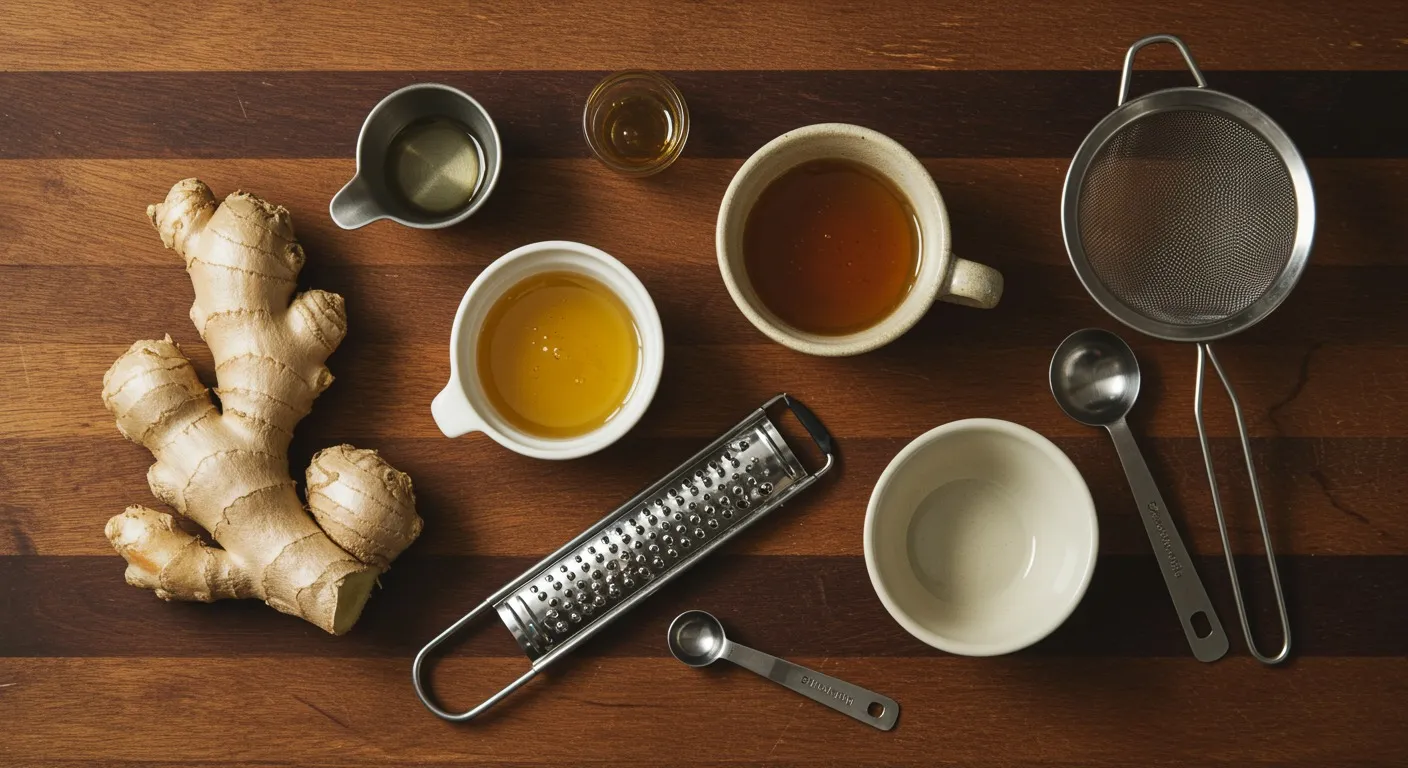
- 1 inch piece fresh ginger root, peeled
- 2 tsp raw honey (unheated, unpasteurized if possible)
- 2 tbsp warm (not hot) water, optional, for diluting
- 0.25 tsp freshly squeezed lemon juice, optional
Instructions
- 1 Grate the peeled ginger finely using a microplane or fine grater. You should end up with roughly 1 teaspoon of grated pulp.
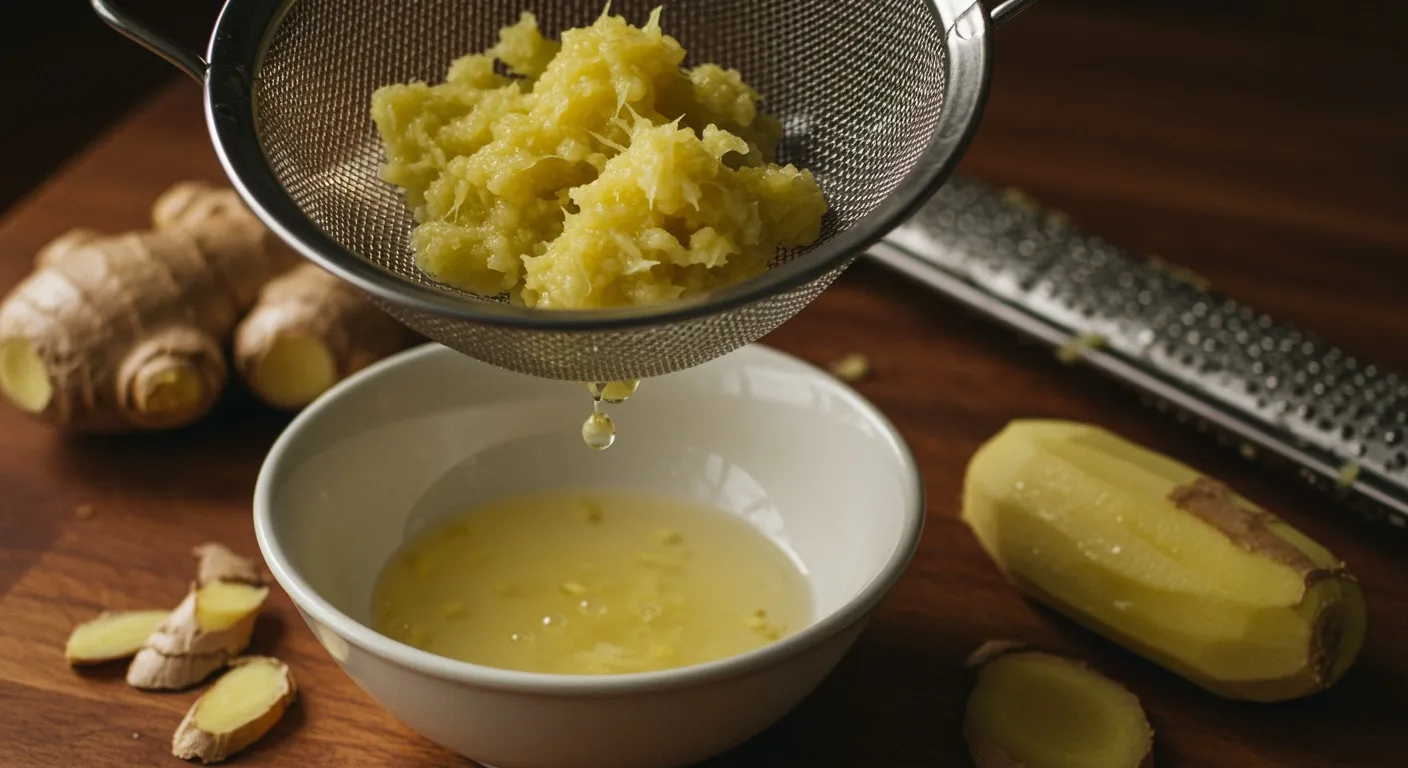
- 2 Transfer the grated ginger into a clean square of muslin or a fine mesh strainer placed over a small bowl, then squeeze firmly to extract the juice. You will get about 1/2 teaspoon of fresh ginger juice.
- 3 Add the raw honey to the ginger juice and stir gently with a small spoon until smooth. Do not warm the honey, as classical Ayurveda specifically advises against heating raw honey, and high heat alters its properties.
- 4 If using lemon, stir in the few drops now. The mixture keeps for the day at room temperature in a covered bowl, or up to 2 days refrigerated; bring back to room temperature before taking.
- 5 Take 1/2 teaspoon slowly at the first sign of throat irritation, letting it coat the back of the throat before swallowing. Repeat up to 3 times a day, between meals, for no more than 5 to 7 days. For a gentler version, stir one dose into 2 tablespoons of warm (not hot) water and sip.
Notes
- Do not give honey to children under 1 year of age, because of the risk of infant botulism.
- If you take a daily blood thinner such as warfarin, aspirin, or clopidogrel, check with your doctor before using ginger regularly, since ginger has mild antiplatelet activity.
- Skip this remedy if ginger reliably worsens your acid reflux or heartburn.
- Consult your doctor if symptoms persist beyond 7 days or worsen, if the cough produces colored or bloody mucus, if you have a high fever, or if breathing becomes difficult.
- This is traditional wisdom and not a substitute for medical care.