Authentic Davangere Benne Dosa Recipe
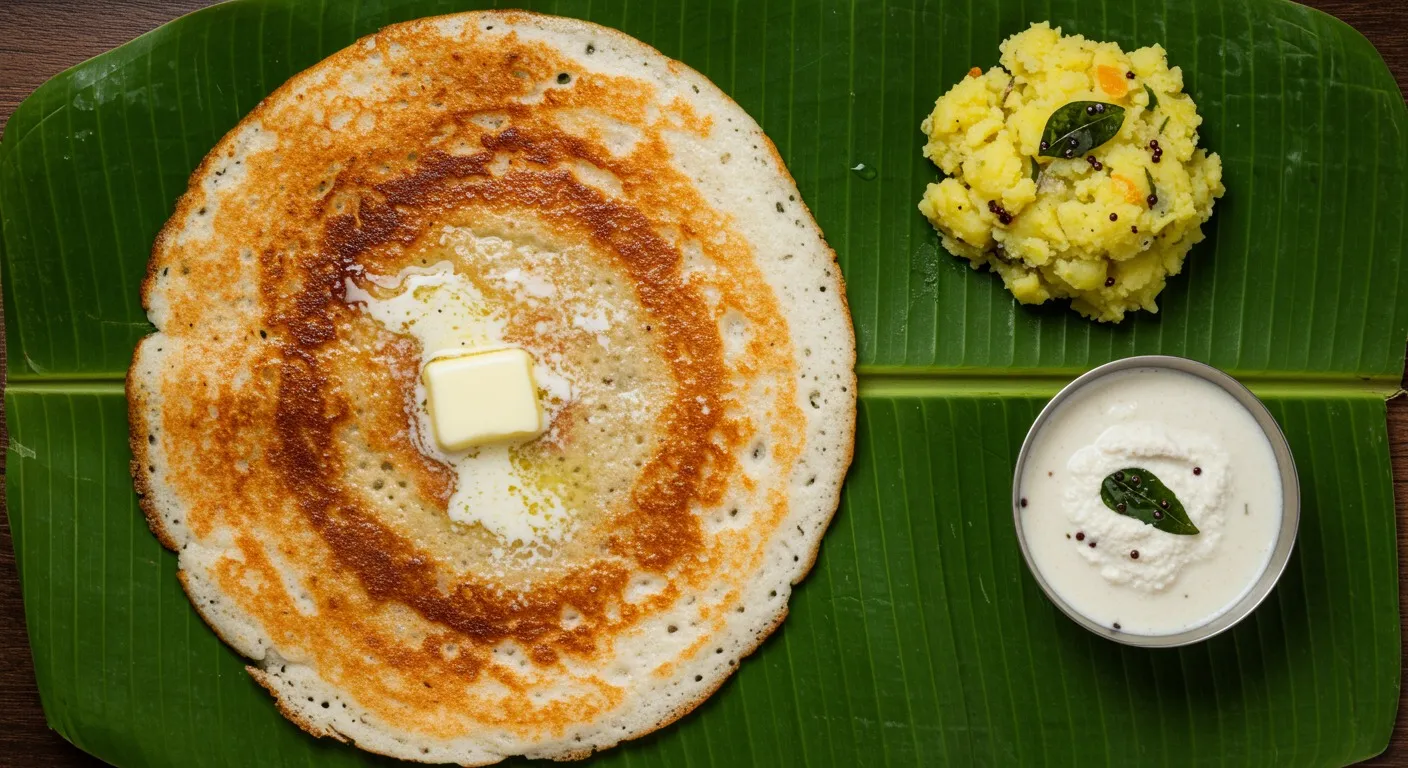
Davangere Benne Dosa is the buttery, spongy, golden-crisp dosa from the small Karnataka town of Davangere, and right now it is the most talked about South Indian dish in the country. Mumbai’s Benne darshini opened a Delhi outlet in Greater Kailash this winter, and people stood in two-hour queues in the cold just to taste it. Bollywood regulars like Deepika Padukone, Anushka Sharma, and Virat Kohli have all stopped by, and reels of butter melting over a thick golden dosa have spread across Instagram and YouTube. What sets this dosa apart is the generous use of fresh white butter, called benne in Kannada, which gives every bite a soft, melt-in-the-mouth richness that ordinary dosa does not have.
About This Dish
Benne Dosa originated in Davangere, a town in central Karnataka famous for its dairy and its iconic darshini-style breakfast joints. Generations of cooks there perfected the technique of using puffed rice in the batter to create a soft, almost cloud-like interior, while cooking the dosa low and slow in pools of butter for that crackling crisp base. The dish was a closely held regional specialty for decades, mostly enjoyed by travelers passing through the town, until food creators and modern darshini chains began bringing it to bigger cities. Today it has become a symbol of the new wave of regional Indian food taking center stage.
Ingredient Notes
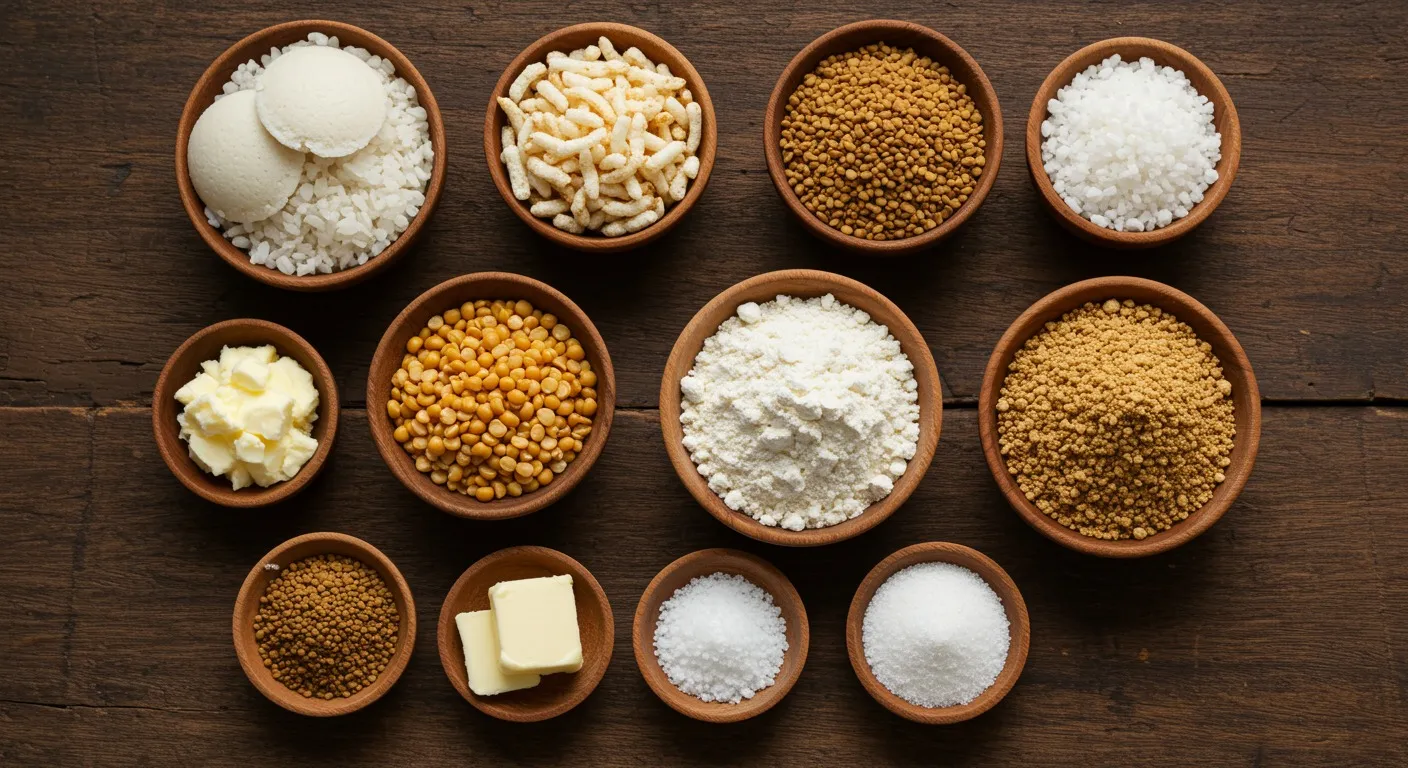
The batter is the heart of this dosa, and the ingredients are simple. Idli rice or any parboiled rice gives the body, urad dal provides protein and fermentation lift, and a generous amount of puffed rice (murmura or pori) creates the signature spongy interior. A small spoon of maida helps the dosa crisp up evenly, and a teaspoon of sugar aids browning and gives a faint caramel note.The butter must be unsalted and ideally fresh white butter churned from cream, but a good quality cultured butter works well too. If puffed rice is unavailable, thick poha can be substituted in the same volume, though the texture will be slightly less airy.
Method And Tips
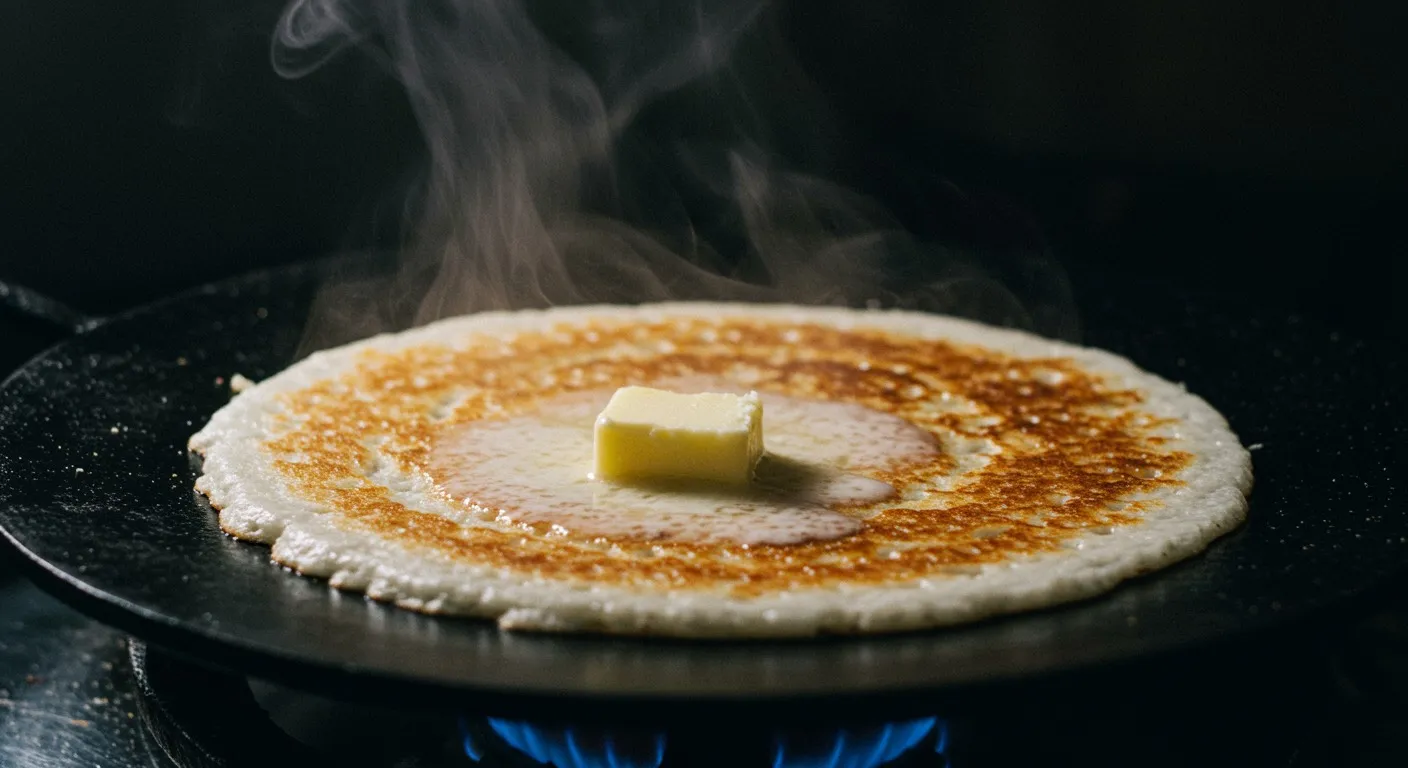
Two techniques make or break this dosa: a properly fermented batter and a hot, well-seasoned cast iron tawa. The batter should rise visibly and smell pleasantly tangy before you cook with it, which usually takes 8 to 10 hours in a warm spot. When you pour the batter, spread it thicker than a standard dosa and resist the urge to thin it out, because that thickness is what gives you the soft spongy center. Cover the dosa briefly after adding butter so the inside steams while the bottom crisps, and only flip if you want both sides golden, otherwise serve it open-faced like they do in Davangere. A halved onion rubbed across the hot tawa between dosas keeps the surface seasoned and prevents sticking.
Serving Suggestions
Serve Benne Dosa hot off the tawa with a simple potato palya tucked inside and a fresh coconut chutney on the side. A small bowl of spicy red chutney or a thin sambar rounds out the meal beautifully. Make this one weekend morning and you will understand why people are willing to wait two hours in line for it.
Recipe
Davangere Benne Dosa
A buttery, spongy-centered, crisp-edged Karnataka-style dosa made from a fermented batter of rice, urad dal, and puffed rice, cooked generously with white butter on a hot tawa.
- Prep
- 20min
- Cook
- 30min
- Total
- 50min
- Servings
- 4servings
- Calories
- 260kcal
Ingredients
- For the batter
- 2 cups idli rice or parboiled rice
- 1/2 cup urad dal (split white)
- 1.5 cups puffed rice (murmura or pori)
- 1/2 tsp fenugreek seeds (methi)
- 2 tbsp all-purpose flour (maida)
- 1 tsp sugar
- 1.5 tsp salt
- 1 cup water for grinding
- For cooking
- 1/2 cup unsalted white butter, softened
- 2 tbsp ghee
- For the potato palya (filling)
- 3 medium potatoes, boiled and roughly mashed
- 1 medium onion, finely chopped
- 1 small green chili, finely chopped
- 1 tbsp ghee
- 1/2 tsp salt
Instructions
- 1 Rinse the idli rice, urad dal, and fenugreek seeds together in plenty of water until the water runs clear, then drain.
- 2 Soak the rinsed rice, dal, and methi in 4 cups of fresh water for 5 to 6 hours.
- 3 About 20 minutes before grinding, rinse the puffed rice once and soak it in just enough water to cover. The puffed rice will swell and soften quickly.
- 4 Drain the soaked rice and dal, reserving the soaking water. Add them to a wet grinder or a high-powered blender along with the soaked puffed rice and the maida.
- 5 Grind to a smooth, slightly thick batter, adding about 1 cup of fresh water in small additions. The batter should be the consistency of pancake batter.
- 6 Transfer the batter to a large bowl, leaving room for it to rise. Cover loosely and ferment in a warm place for 8 to 10 hours, or until almost doubled and bubbly.
- 7 Once fermented, gently stir in the salt and sugar without deflating the batter. If it looks very thick, add a few tablespoons of water.
- 8 For the potato palya, heat 1 tbsp ghee in a small pan, sauté the chopped onion and green chili until soft, then add the mashed potatoes and salt. Mix well and keep warm.
- 9 Heat a heavy cast iron tawa or griddle over medium heat until very hot. Lightly rub it with a halved onion or a few drops of ghee to season the surface.
- 10 Lower the heat to medium-low. Pour a generous ladle of batter onto the center of the tawa and gently spread it with the back of the ladle into a thick, slightly uneven round, about 6 to 7 inches across. Do not spread it thin.
- 11 Drizzle 1 tsp of ghee around the edges, then spread 1 to 2 tbsp of softened white butter over the top of the dosa. Cover with a lid for about 30 seconds to help the inside cook through.
- 12 Uncover and cook until the underside turns deep golden brown and crisp and the top looks set, about 2 to 3 minutes. The center should remain soft and spongy.
- 13 Place a small mound of potato palya on one half, fold the dosa over, and slide it onto a plate. Serve immediately.
- 14 Repeat with the remaining batter, adjusting the heat between dosas so the tawa stays hot but not smoking.
Notes
- Use fresh white butter (homemade malai butter) for the most authentic flavor. Good quality unsalted cultured butter is the next best option.
- A well-seasoned cast iron tawa is essential for the signature crisp edges and even browning. Wipe it with a damp cloth between dosas if it gets too hot.
- Davangere benne dosas are meant to be thicker than a standard masala dosa. Resist the urge to spread the batter thin.
- If the weather is cold, place the batter in an oven with the light on to help it ferment.
- Leftover batter keeps in the refrigerator for up to 3 days. Bring it to room temperature before cooking the next batch.