Coconut Oil Scalp Massage (Shiroabhyanga) for Dry Hair and Itchy Scalp
Dry, brittle hair and an itchy, flaky scalp are some of the most common everyday hair complaints, and they tend to flare up exactly when the weather shifts, during the dry pre-monsoon heat or the cold months when indoor heating sucks moisture out of the air. Almost everyone with long or coarse hair has lived through the straw-like phase where the ends snap off in the comb. One of the gentlest answers comes straight from the kitchen: a weekly warm scalp massage with plain coconut oil, a ritual that has been part of Indian households for centuries.
The Ayurvedic Perspective
Ayurveda calls regular head oiling murdha taila or shiroabhyanga, and lists it among the daily self-care rituals (dinacharya) in Charaka Samhita Sutrasthana, Chapter 5. The classical view is that the head holds the seat of the senses and tends to accumulate vata, the dry, cold, mobile quality, alongside overheated pitta, especially in summer. Both imbalances show up at the scalp as dryness, brittleness, itching, and a burning sensation. Warm coconut oil, described in classical sources as cooling and unctuous, is meant to soothe both doshas at once, which is why it became the default daily-use oil across Kerala and much of South India.
What Modern Biology Says
Modern science has caught up to part of this picture. Coconut oil is unusual among plant oils because it is rich in lauric acid, a medium-chain fatty acid whose small, linear molecules can penetrate the hair shaft itself rather than only coating the cuticle. A widely cited 2003 study in the Journal of Cosmetic Science by Rele and Mohile found that coconut oil reduced protein loss from hair both before and after washing, while sunflower and mineral oils did not. Subsequent reviews support its conditioning effect and a mild antimicrobial action on the scalp from compounds like monolaurin. The evidence base is modest rather than overwhelming, but it is consistent with what generations of households have observed.
How And When To Use It
Reach for this remedy when the hair feels rough and the scalp feels tight, itchy, or hot. A weekly application is enough for most adults; very dry or coarse hair can take it twice a week. Warm the oil gently, focus the massage on the scalp itself rather than only the lengths, and leave it in for at least 30 minutes, or overnight wrapped in a soft cotton cloth. Do not expect an overnight transformation. Most people notice softer hair after the first wash, and a meaningful drop in breakage and itch over 3 to 4 weeks of consistent use.
Cautions And A Note On Medical Care
A few practical cautions are worth keeping in mind. Skip the oil over broken skin, active scalp infections, or open sores, and always wash it out within 24 hours, because trapped oil in humid weather can encourage fungal growth. People with dandruff or seborrheic dermatitis should use it sparingly, since oil can sometimes feed scalp yeast. If scalp itch, flaking, or hair loss persists beyond 3 weeks or worsens, see a dermatologist, because conditions like seborrheic dermatitis or fungal infections need targeted treatment. This is traditional wisdom, not a substitute for medical care, but it is also one of the easiest, kindest things to do for the scalp on a quiet Sunday afternoon.
Recipe
Warm Coconut Oil Scalp Massage
A simple weekly Ayurvedic self-massage using warm coconut oil to soften dry hair, soothe an itchy scalp, and calm heat in the head.
- Prep
- 5min
- Cook
- 0min
- Total
- 35min
- Servings
- 1applications
Ingredients
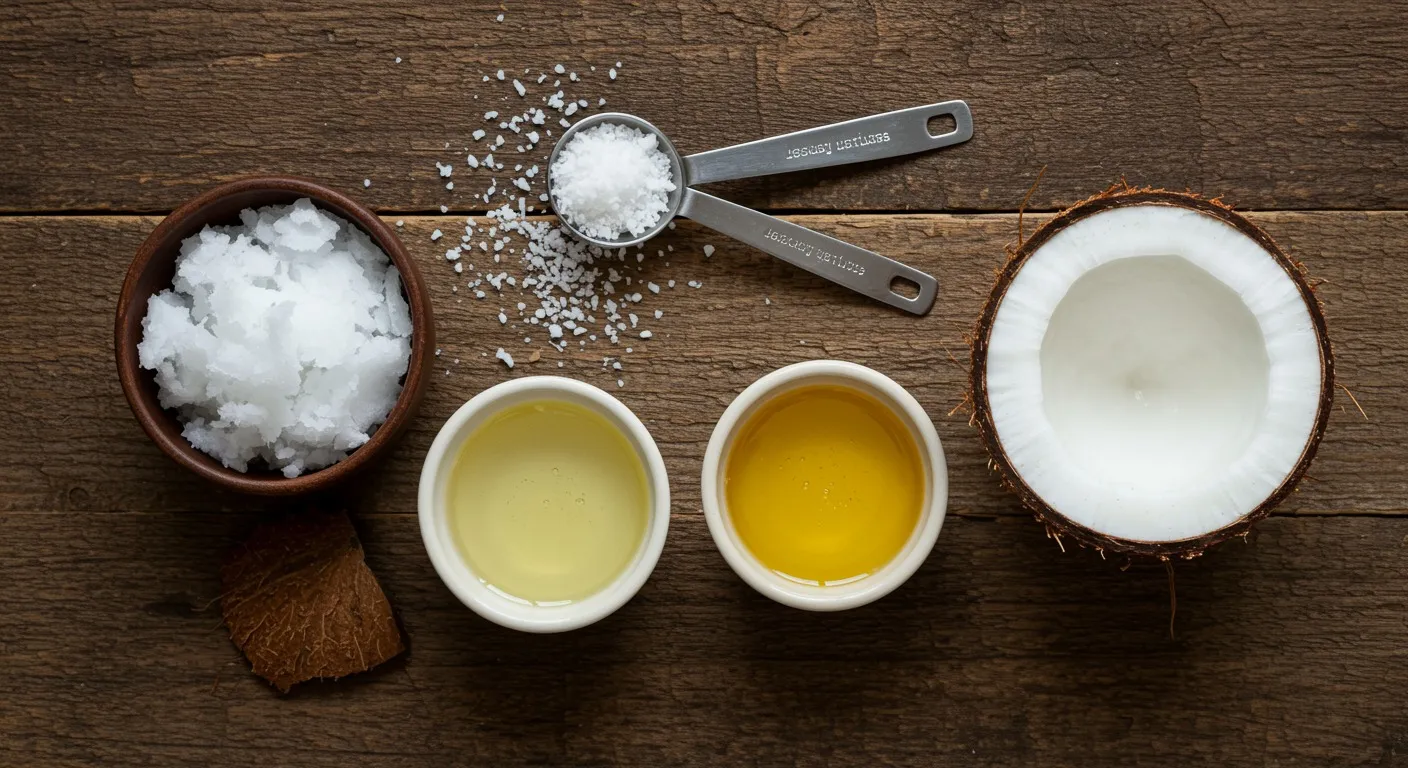
- 3 tbsp virgin coconut oil
Instructions
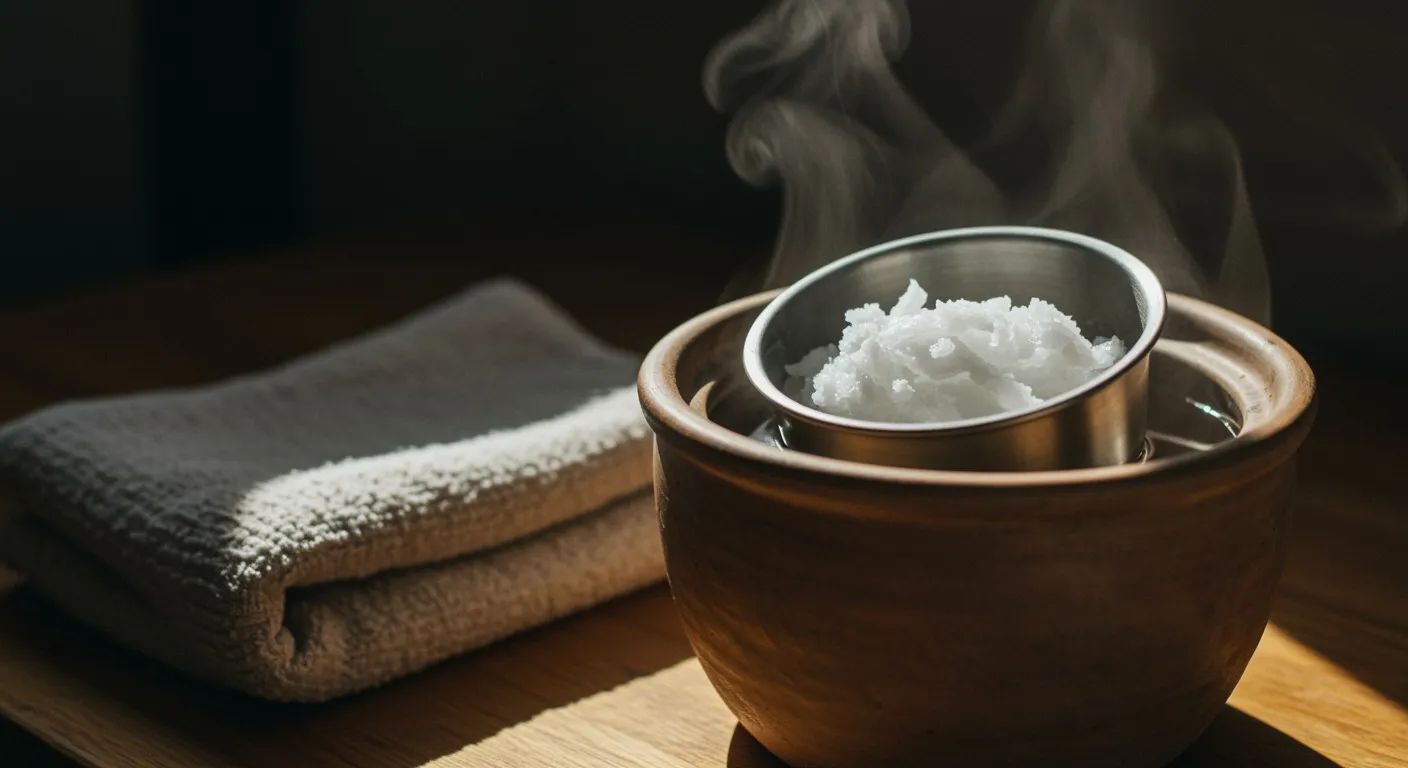
- 1 Place 3 tablespoons of coconut oil in a small steel bowl. If the oil is solid, set the bowl inside a larger bowl of hot water for 2 to 3 minutes until it melts and feels comfortably warm to the touch, never hot.
- 2 Section the hair with the fingers and dip the fingertips into the warm oil. Apply directly to the scalp in small zones rather than pouring it over the hair.
- 3 Massage the scalp in slow, firm circles with the pads of the fingers for 5 to 10 minutes, covering the crown, temples, the area behind the ears, the back of the head, and the nape of the neck.
- 4 Run any leftover oil down the lengths of the hair, paying extra attention to the dry mid-lengths and ends.
- 5 Leave the oil in for at least 30 minutes. For deeper conditioning, wrap the hair in a soft cotton cloth and leave it overnight.
- 6 Wash out with a gentle shampoo, working the shampoo into the dry oiled hair first before adding water, which lifts the oil more effectively. Repeat once a week for dry, brittle hair, or twice a week during very dry weather.
Notes
- Do a small patch test on the inner forearm first if you have never used coconut oil topically.
- Do not apply to broken skin, active scalp infections, weeping eczema, or open sores.
- Wash the oil out within 24 hours; trapped oil in humid weather can encourage fungal overgrowth.
- If you have a tendency to dandruff or seborrheic dermatitis, use sparingly and stop if flaking worsens, as oil can sometimes feed Malassezia yeast.
- Consult your doctor if scalp itch, flaking, or hair loss persists beyond 3 weeks or worsens. This is traditional wisdom and not a substitute for medical care.