CCF Tea (Cumin, Coriander, Fennel) for Bloating and After-Meal Gas
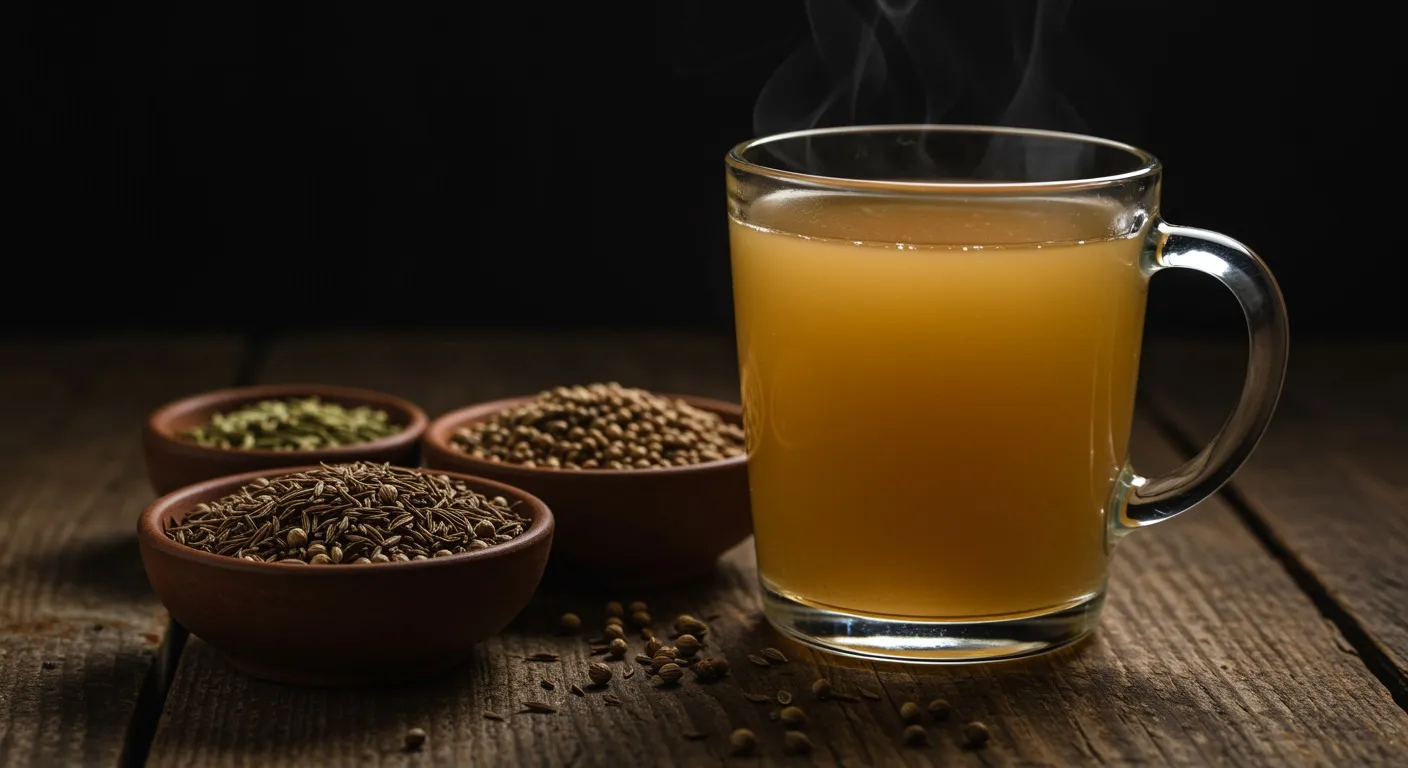
Bloating, gas, and that heavy, sluggish feeling after a meal is something almost everyone has felt. Maybe lunch sat too long, dinner had too many rich dishes back to back, or a string of restaurant meals caught up. Long before bloating became a wellness buzzword, Ayurvedic households kept a thermos of CCF tea, cumin, coriander, and fennel, on the counter for exactly these moments. It is the most accessible kitchen remedy in the entire tradition: just three seeds, hot water, and a few minutes.
The Ayurvedic Perspective
In Ayurveda, the body’s digestive fire is called agni, and most everyday digestive complaints are framed as agni running too low or too erratic. When agni is weak, food does not fully break down and leaves a residue called ama, which feels like heaviness, gas, and a kind of post-meal mental fog. CCF tea is the classical answer because each of its three seeds is described in Bhavaprakasha and the Charaka Samhita as both deepana, meaning it kindles digestive fire, and pachana, meaning it digests existing ama. The blend is also considered tridoshic, gentle enough not to aggravate vata, pitta, or kapha. That balanced quality is why Ayurvedic practitioners reach for it across constitutions, ages, and seasons.
What Modern Biology Says
Modern phytochemistry lines up surprisingly well with the classical use. Cumin is rich in cuminaldehyde and thymol, fennel is dominated by trans-anethole, and coriander supplies linalool and geraniol. In laboratory and animal work, these compounds have antispasmodic and carminative effects on intestinal smooth muscle, meaning they relax cramping and help trapped gas pass. Human evidence is more limited but encouraging: a 2013 open-label case series in the Middle East Journal of Digestive Diseases reported that 4 weeks of cumin essential oil drops eased abdominal pain and bloating in patients with IBS, and randomized trials of fennel seed oil emulsion have reduced crying time in infantile colic, supported by a meta-analysis pointing the same way. Evidence for fennel alone in adult functional dyspepsia is thinner; most positive dyspepsia trials use fennel as part of a multi-herb blend rather than on its own. The CCF mixture itself has not been formally trialed, so the case rests on each component individually rather than on the mixture, which is honest but reasonably strong.
How And When To Use It
The most common way to use CCF tea is to brew a pot in the morning, keep it warm in a thermos, and sip it across the day, especially 15 to 20 minutes after meals when bloating tends to set in. About 4 cups across the day is a typical amount. Most people notice gas and heaviness easing within 30 to 60 minutes. The flavor is mild, slightly licorice and earthy, and it grows on you fast. It can be used daily as a regular beverage, though many people use it just on heavy-meal days or when digestion feels off.
Cautions And A Note On Medical Care
A few cautions are worth knowing. If you are pregnant, keep fennel intake moderate, since anethole has mild estrogen-like activity at higher doses. If you take blood-sugar medications, watch for slightly lower readings; cumin can produce a small additive effect. Anyone with allergies to celery, parsley, or carrots should start with a small amount, as cross-reactivity within the Apiaceae family is uncommon but possible. If bloating is severe, persistent beyond 2 weeks, or comes with weight loss, blood, or significant pain, that is a doctor visit, not a kitchen tea. This is traditional wisdom and not a substitute for medical care, just a gentle, time-tested place to start.
Recipe
CCF Digestive Tea
A simple Ayurvedic tea of equal parts cumin, coriander, and fennel seeds steeped in hot water. Sipped warm through the day to ease bloating, after-meal gas, and a heavy post-meal feeling.
- Prep
- 2min
- Cook
- 5min
- Total
- 7min
- Servings
- 4servings
Ingredients
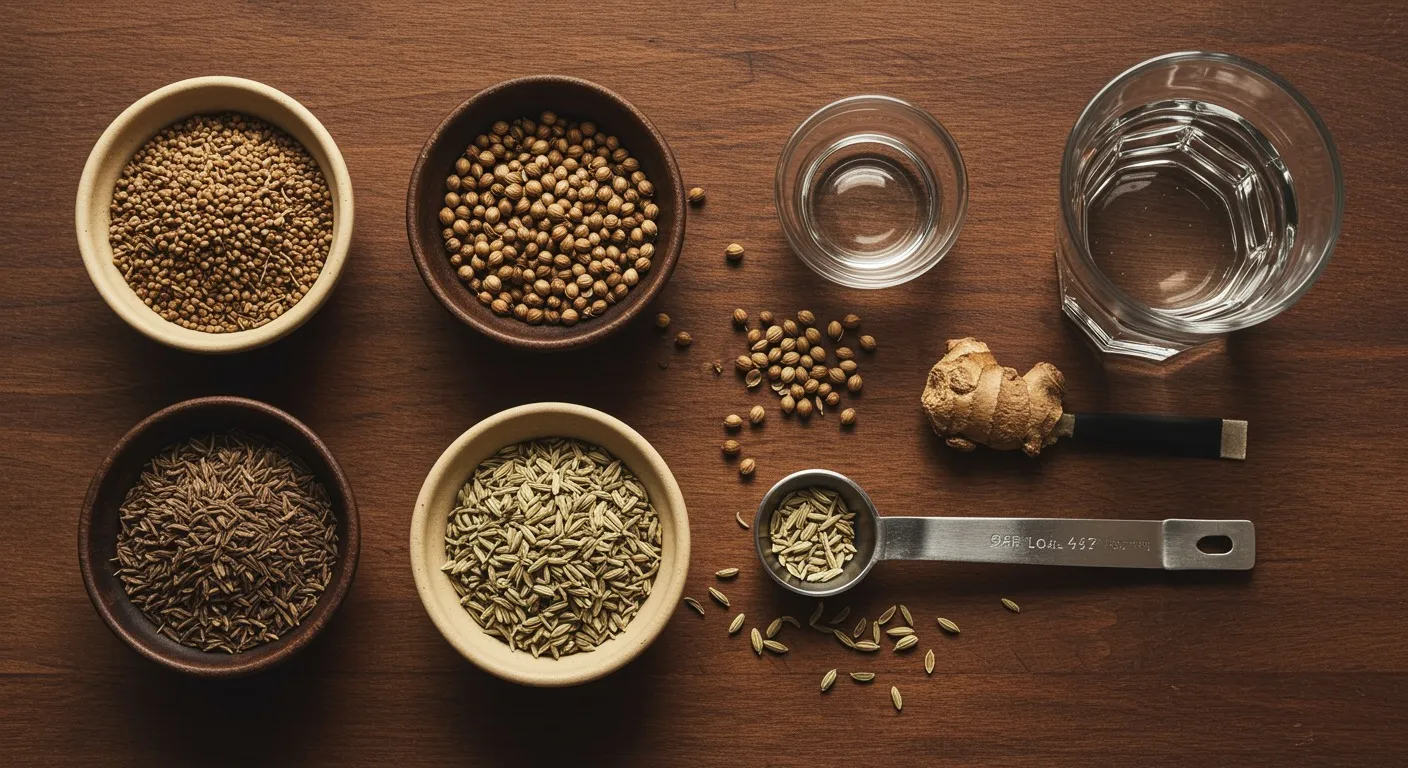
- 1/2 tsp cumin seeds (whole)
- 1/2 tsp coriander seeds (whole)
- 1/2 tsp fennel seeds (whole)
- 4 cups water
Instructions
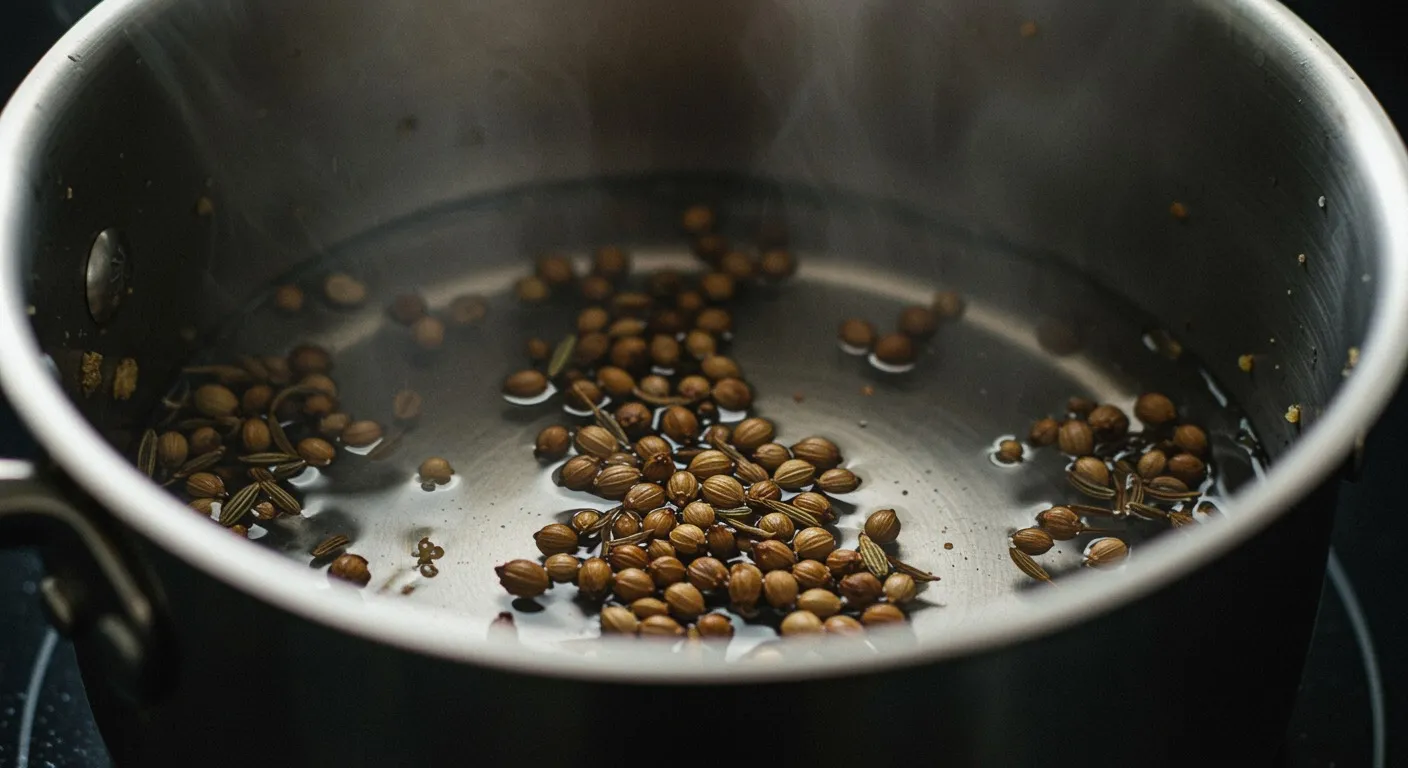
- 1 Add cumin, coriander, and fennel seeds to a small saucepan with the water.
- 2 Bring to a gentle boil, then lower the heat and simmer for 5 minutes.
- 3 Turn off the heat and let the tea steep for another 2 to 3 minutes so the seeds release their oils.
- 4 Strain the tea into a thermos or mug.
- 5 Sip warm through the day, especially 15 to 20 minutes after meals when bloating tends to set in. A typical day's intake is about 4 cups.
Notes
- If you are pregnant, keep fennel intake moderate; anethole has mild estrogen-like activity at high doses.
- If you take blood-sugar medications, monitor for lower readings; cumin can produce a small additional blood-sugar-lowering effect.
- If you have a known allergy to celery, parsley, carrots, or other plants in the Apiaceae family, start with a small amount as cross-reactivity is uncommon but possible.
- Consult your doctor if bloating persists beyond 2 weeks, worsens, or is accompanied by weight loss, blood in stool, vomiting, or significant pain.
- This is traditional wisdom and not a substitute for medical care.