Spiced Buttermilk (Takra) with Roasted Cumin for Mild Indigestion and Summer Heat
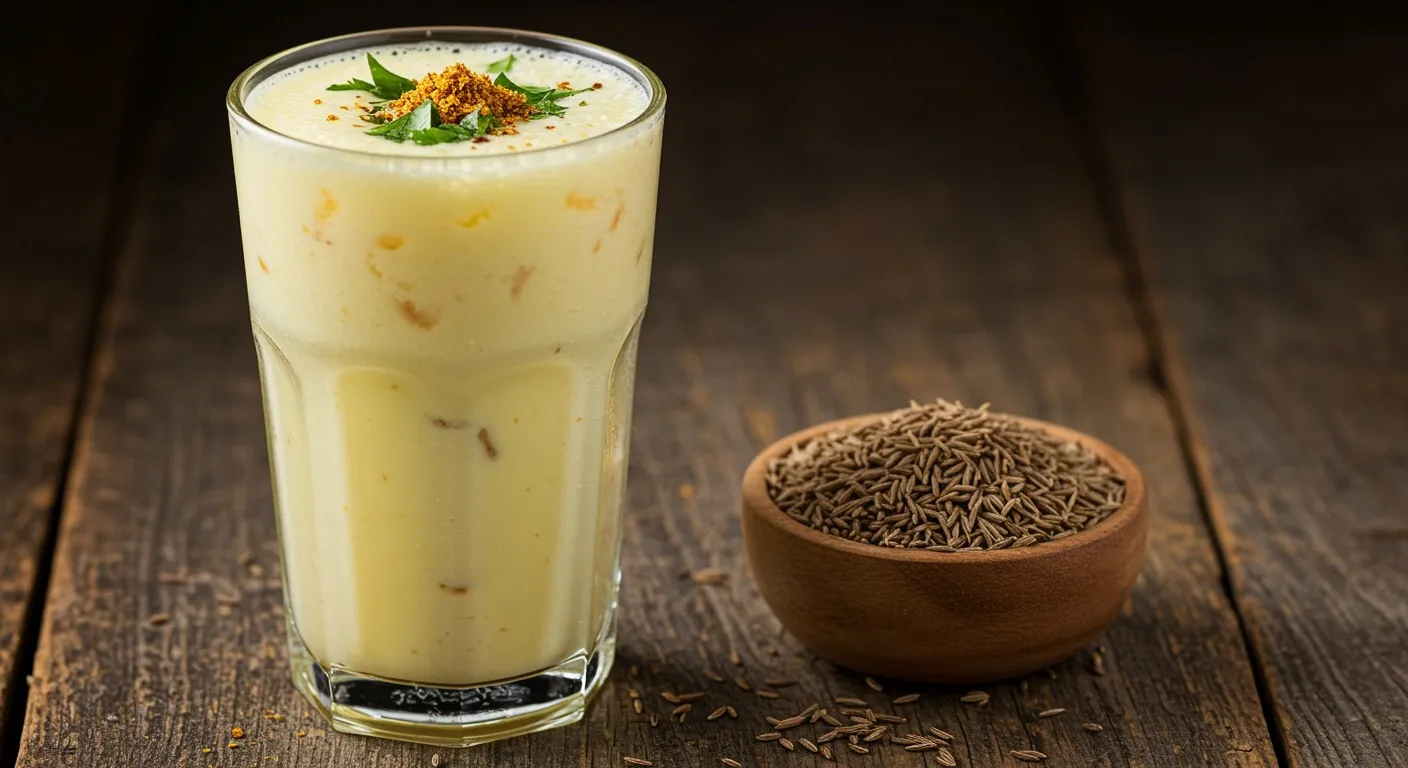
You know the feeling. Lunch was a little richer than planned, maybe a second helping of biryani or a heavier than usual sambar rice, and now the afternoon feels sluggish, the belly tight, and even water seems to sit oddly in the stomach. Across South Asian kitchens the classical response to that exact moment is not an antacid but a glass of takra: plain yogurt whisked with water, seasoned with roasted cumin and a pinch of black salt, sipped slowly after the meal.
The Ayurvedic Perspective
Ayurveda treats post-meal heaviness as a sign that agni, the digestive fire, has been dampened by food that is too oily, too heavy, or too much. Takra is described in the Charaka Samhita’s Grahani Chikitsa chapter and again in Vagbhata’s Ashtanga Hridayam as one of the surest ways to reignite that fire. Properly thinned with water it is light, slightly sour, slightly astringent, and easy to digest. Vagbhata’s famous line, that takra is to humans what amrita is to the gods, sums up the reverence the texts hold for it. The drink pacifies kapha and vata, and with cooling spices added it stays friendly to pitta even in the hot months.
What Modern Biology Says
Modern science gives the same recipe a different vocabulary. Whisked yogurt-water carries live cultures, mostly Lactobacillus and Streptococcus thermophilus, and a 2020 meta-analysis on probiotics in functional dyspepsia, along with several trials of fermented milks for IBS-type symptoms, points to modest improvements over placebo. The roasted cumin contributes cuminaldehyde and a family of monoterpenes that relax intestinal smooth muscle in laboratory work, and a small 2013 case series by Agah and colleagues in the Middle East Journal of Digestive Diseases reported that an oral cumin essential oil preparation reduced IBS symptom scores after four weeks of use, though the study had no placebo arm and was uncontrolled. The black salt adds trace minerals and a faintly sulfurous note that traditional households associate with easing gas. Evidence on each piece is preliminary rather than definitive, but the picture is coherent with what the classical texts have been saying for centuries.
How And When To Use It
Reach for spiced takra after a heavy lunch, after a meal that was oilier or spicier than your usual, or simply on a hot afternoon when plain water no longer feels like enough. One glass is usually plenty; two on a particularly heavy day are fine. Sip rather than gulp, and serve at room temperature or only lightly cool, never with ice cubes. The optional ginger and coriander leaves brighten the drink and add their own gentle carminative effects.
Cautions And A Note On Medical Care
A few cautions are worth keeping in mind. Skip takra entirely if you are lactose intolerant or have a dairy allergy. Classical Ayurveda also recommends avoiding buttermilk at night, when you are congested, or while you have an active cold or cough, since fermented dairy can aggravate kapha and mucus. Anyone advised to limit sodium for blood pressure, heart, or kidney reasons should use very little or no added salt. If indigestion persists beyond a week, if pain becomes severe, or if there is blood in stool or vomit, persistent vomiting, unexplained weight loss, or fever, see a doctor rather than relying on home remedies. This is traditional kitchen wisdom, offered as a soft companion to good medical care, not a substitute for it. Whisk a glass tomorrow afternoon and notice how your body feels by the next hour.
Recipe
Spiced Buttermilk (Takra) Digestive Drink
A light, frothy after-meal drink of plain yogurt thinned with water and seasoned with roasted cumin, black salt, and fresh coriander. Sipped slowly after a heavy or oily lunch to settle indigestion and cool the body in summer.
- Prep
- 3min
- Cook
- 2min
- Total
- 5min
- Servings
- 1doses
Ingredients
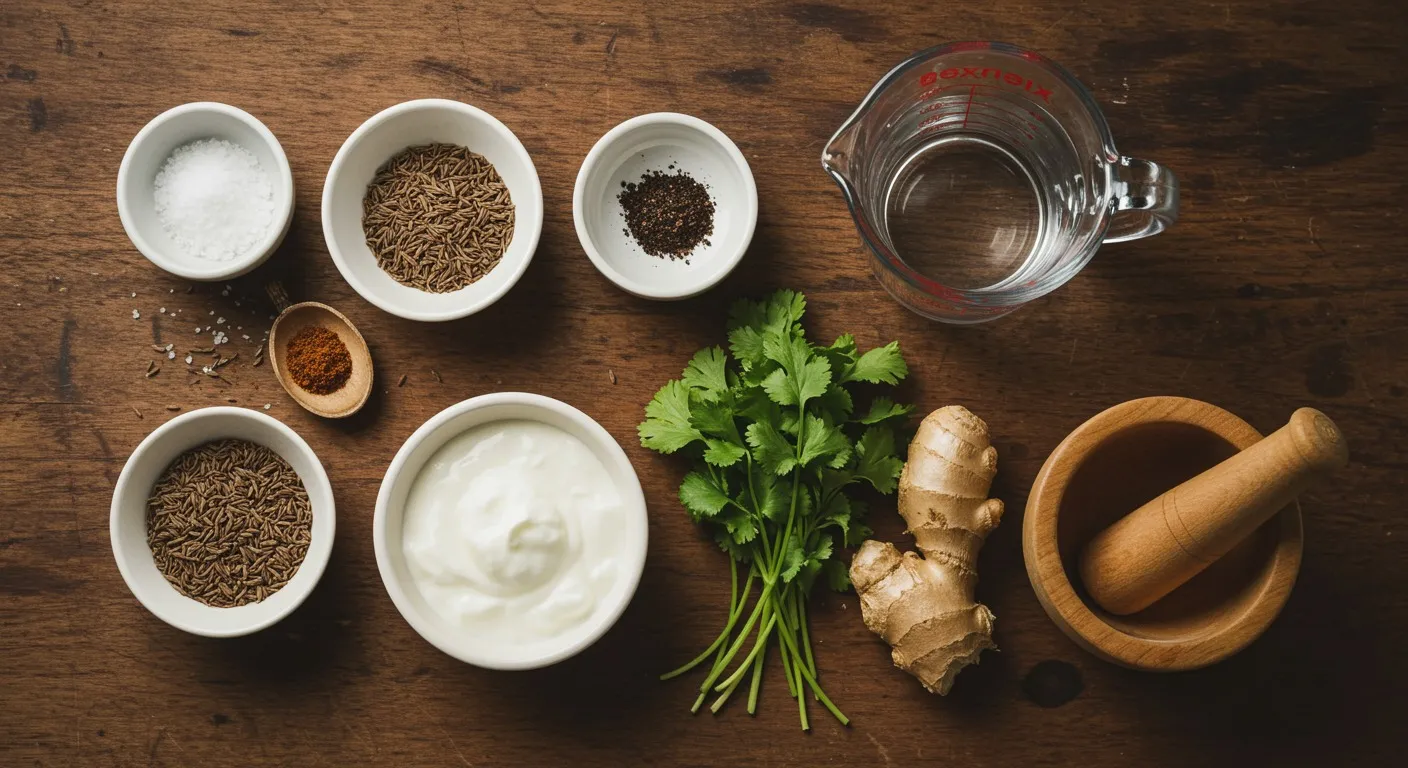
- 1/2 cup plain whole milk yogurt
- 1 cup room temperature water
- 1/2 tsp cumin seeds, for roasting and crushing
- 1 pinch black salt (kala namak), or regular salt
- 1 pinch freshly ground black pepper (optional)
- 1 tbsp fresh coriander leaves, finely chopped (optional)
- 1/4 tsp fresh ginger, finely grated (optional)
Instructions
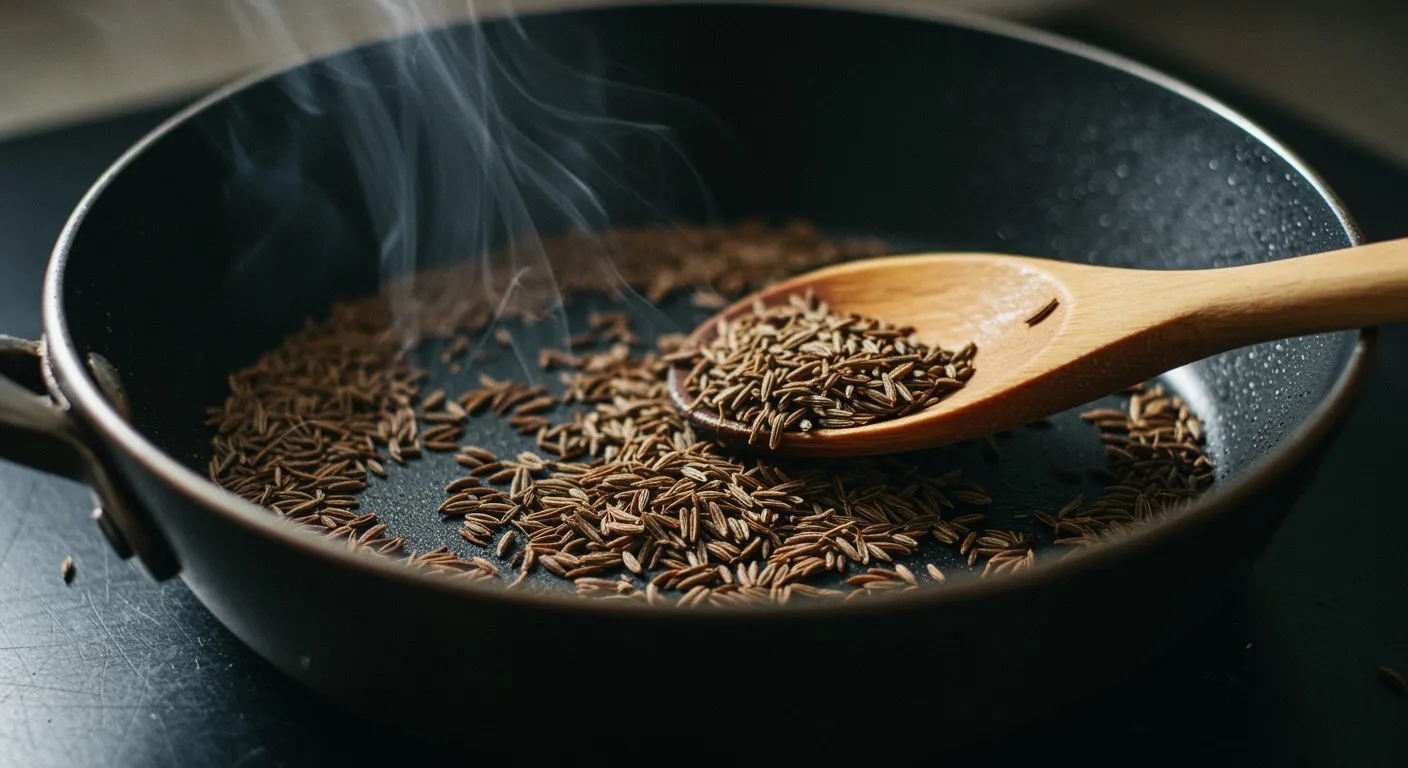
- 1 Dry roast the cumin seeds in a small pan over low heat for about a minute, stirring constantly, until they darken slightly and smell toasty. Cool, then crush coarsely in a mortar or with the back of a spoon.
- 2 In a tall glass or jar, whisk the yogurt with a fork or small whisk until completely smooth. Add the room temperature water in a slow stream while whisking until the drink looks frothy and pale, with no lumps.
- 3 Stir in the crushed roasted cumin, black salt, optional black pepper, optional grated ginger, and chopped coriander leaves.
- 4 Sip slowly within thirty minutes after a heavy or oily meal, especially in the afternoon. Use room temperature buttermilk rather than ice cold, since Ayurveda considers very cold drinks harder on agni.
Notes
- Skip this remedy if you are lactose intolerant or have a confirmed dairy allergy.
- Traditional Ayurveda advises against takra at night, when you are congested, or during an active cold or cough, because fermented dairy can aggravate kapha.
- Use less or no added salt if you have been told to limit sodium for blood pressure, heart, or kidney reasons.
- Consult your doctor if indigestion persists beyond one week, if pain becomes severe, or if you notice blood in stool or vomit, persistent vomiting, unexplained weight loss, or fever.
- This is traditional wisdom and not a substitute for medical care.