Ajwain (Carom Seed) Water for Bloating, Gas, and After-Meal Indigestion
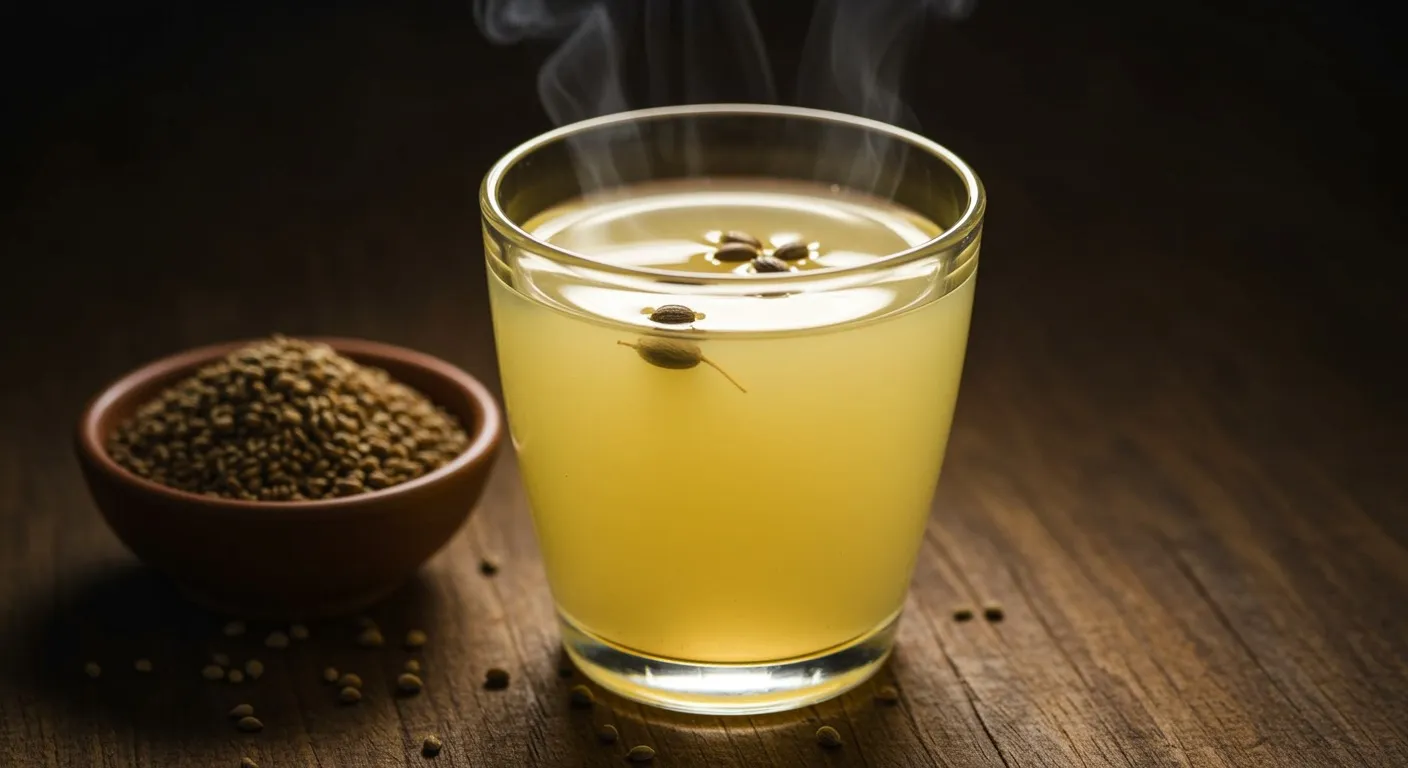
That tight, heavy, slightly grumbly feeling after a big festive lunch is something almost everyone has felt. Maybe the meal was richer than usual, eaten faster than usual, or simply too much. Trapped gas, mild bloating, and a vague discomfort in the upper belly are some of the most common everyday digestive complaints. Long before antacids and over-the-counter gas tablets, Indian kitchens reached for one tiny, sharp-smelling seed: ajwain.
The Ayurvedic Perspective
Ayurveda calls this seed yavani, and it appears in the Bhavaprakasha Nighantu and the Charaka Samhita as a classic deepana, meaning a digestive stimulant, and pachana, meaning a digestive. The traditional view is that heavy, oily, or rapidly eaten meals weaken agni, the inner digestive fire, allowing vata (the wind element) and kapha (the heavy, sticky element) to build up in the gut as gas, distension, and stagnation. Ajwain is described as warming, sharp, and light, the exact qualities needed to rekindle agni and move trapped vata downward and out. It is one of the most-used home spices for adhmana, the Sanskrit word for the bloated, drum-like belly so many of us know.
What Modern Biology Says
Modern chemistry tells a remarkably consistent story. Carom seeds carry an essential oil that is dominated by thymol, the same compound that gives thyme its signature smell, along with p-cymene and gamma-terpinene. In laboratory and animal work, thymol shows carminative and antispasmodic effects, meaning it can relax the muscular wall of the intestines and help ease the passage of trapped gas. The closest human evidence comes from a 2019 randomized controlled trial published in the Journal of Integrative Medicine, in which a Persian herbal formulation called KAASER, combining ajwain with ginger and black pepper, significantly reduced the frequency and severity of bloating compared with placebo and a standard simethicone-style remedy in 84 adults with functional bloating. There is no large standalone trial of ajwain water on its own, so the clinical evidence is best described as suggestive rather than definitive, but it lines up with the centuries of household experience behind this remedy.
How And When To Use It
Reach for ajwain water when a meal sits heavy: a rich biryani, a late-night feast, a holiday spread, or simply a day when you ate too quickly. The ideal window is within 15 to 30 minutes after eating, while symptoms are still mild. One cup is usually plenty, sipped slowly while still warm. Most people feel a gentle settling within 20 to 40 minutes as the gas begins to move and the belly softens. Use it as needed rather than as a daily habit; this is a corrective drink, not a tonic.
Cautions And A Note On Medical Care
A few cautions are worth keeping in mind. Skip this remedy if you are pregnant, since classical texts and modern guidance both flag ajwain as uterine-stimulating. People with active acid reflux, GERD, or peptic ulcers should also pass; ajwain is warming and can aggravate a burning stomach. Anyone on prescription medication, particularly for the liver or for heart rhythm, should check with their doctor first. And if your bloating or indigestion keeps coming back, lasts longer than a week, or is paired with weight loss, vomiting, or blood in the stool, please see a clinician. This is traditional wisdom and not a substitute for medical care. With those caveats noted, the next time a heavy meal leaves you uncomfortable, a small cup of warm ajwain water is one of the gentlest and most time-tested places to start.
Recipe
Ajwain Digestive Water
A warm decoction of carom seeds, sipped after a heavy meal to ease bloating, trapped gas, and abdominal heaviness.
- Prep
- 1min
- Cook
- 5min
- Total
- 6min
- Servings
- 1doses
Ingredients
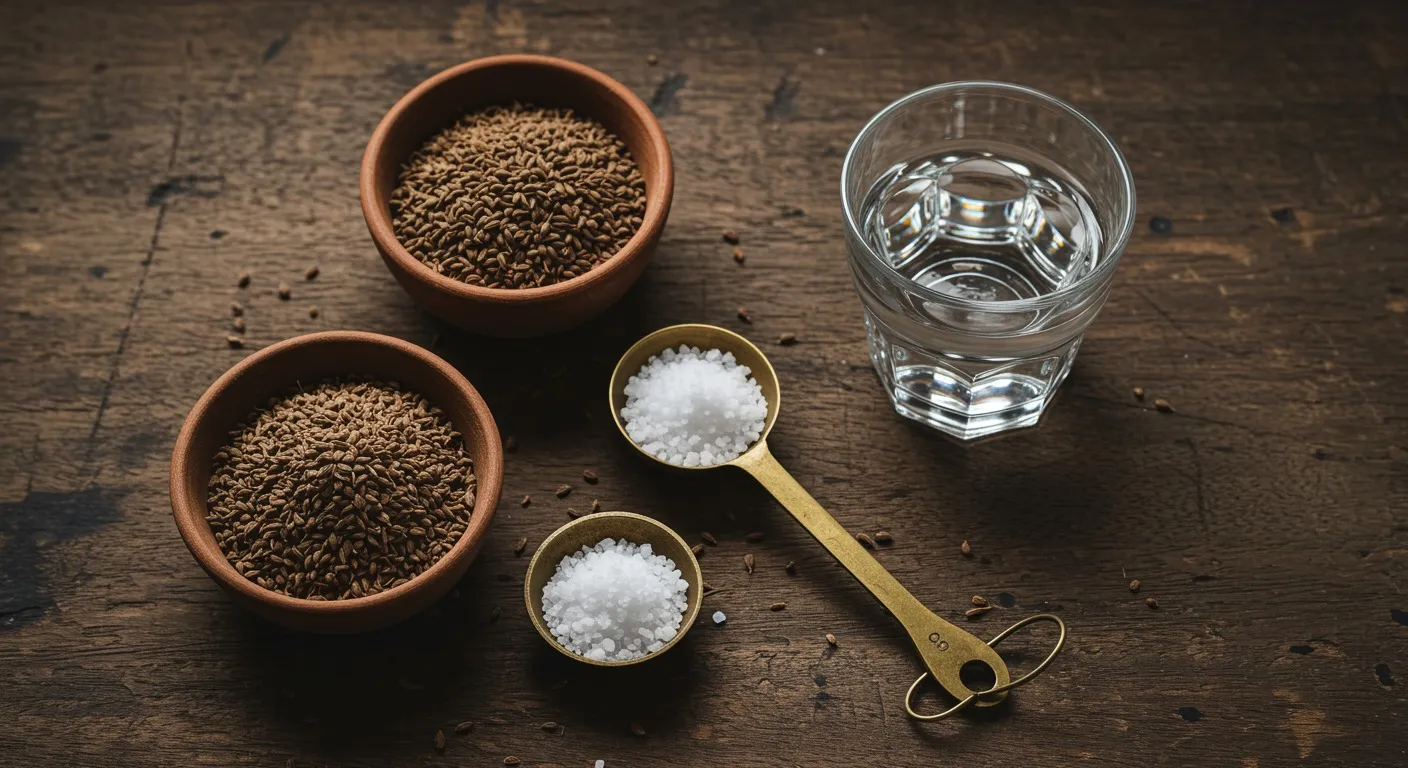
- 1 tsp ajwain (carom) seeds
- 1 cup water
- 1 pinch black salt (optional)
Instructions
- 1 Lightly crush 1 teaspoon of ajwain seeds between your palms or with the back of a spoon, just enough to bruise them and release their aromatic oil.
- 2 Bring 1 cup of water to a boil in a small saucepan.
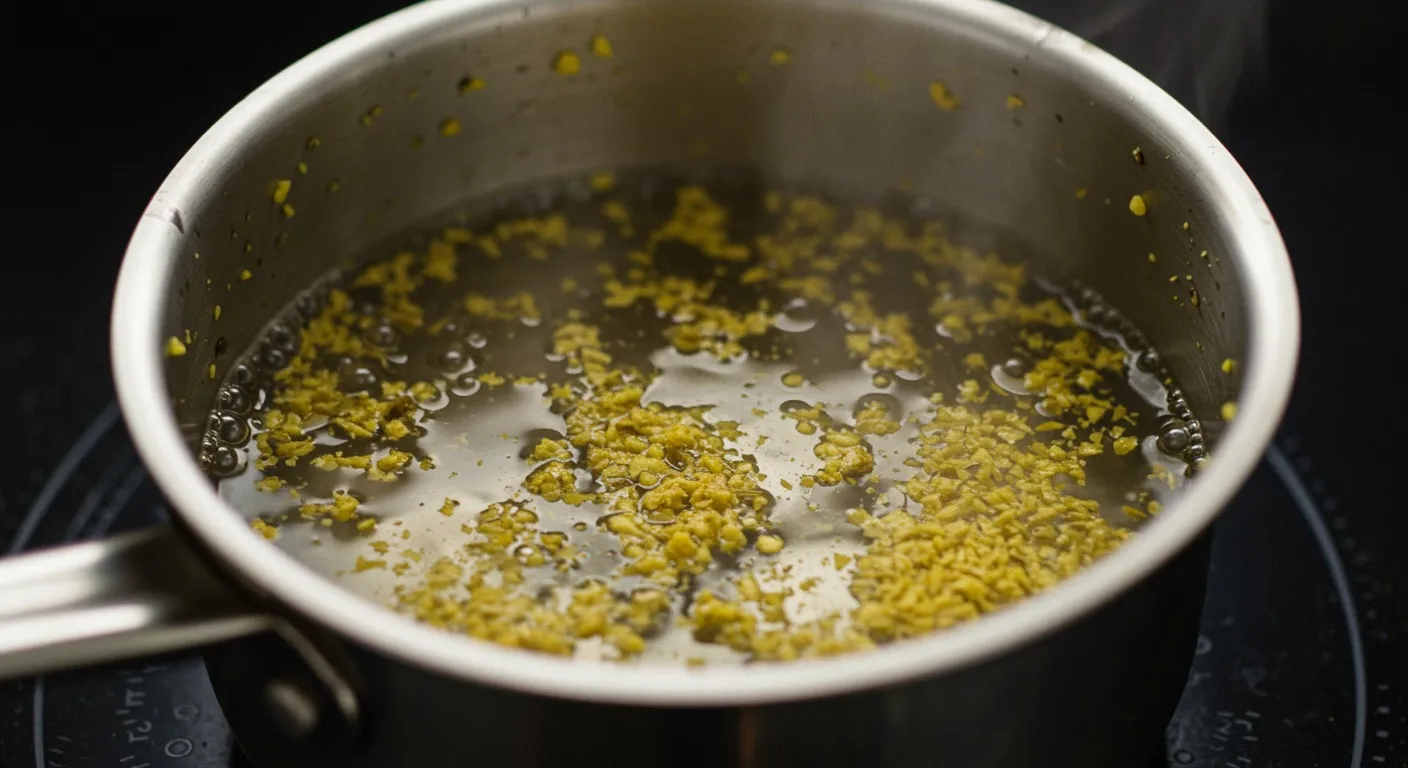
- 3 Add the crushed ajwain seeds, lower the heat, and let the water simmer for 3 to 5 minutes until it turns pale yellow and smells distinctly fragrant.
- 4 Strain the liquid into a cup, stir in a pinch of black salt if you like, and let it cool until comfortably warm to sip.
- 5 Sip slowly within 15 to 30 minutes after a heavy meal, or at the first sign of bloating or trapped gas. Do not exceed 2 cups in a day.
Notes
- Stick to 1 to 2 cups a day at most; concentrated thymol can irritate the stomach lining at high doses.
- Skip ajwain water during pregnancy; classical Ayurveda flags it as uterine-stimulating, and modern guidance is to avoid in pregnancy.
- Anyone with active acid reflux, GERD, or a known peptic ulcer should avoid this remedy as ajwain is warming and can aggravate burning sensations.
- If you take prescription medications, especially for the liver or for heart rhythm, check with your doctor before using ajwain regularly.
- Consult your doctor if bloating, gas, or indigestion persists beyond 7 days, recurs frequently, or is accompanied by weight loss, vomiting, or blood in stool.
- This is traditional wisdom and not a substitute for medical care.