Authentic Egg Kothu Parotta Recipe
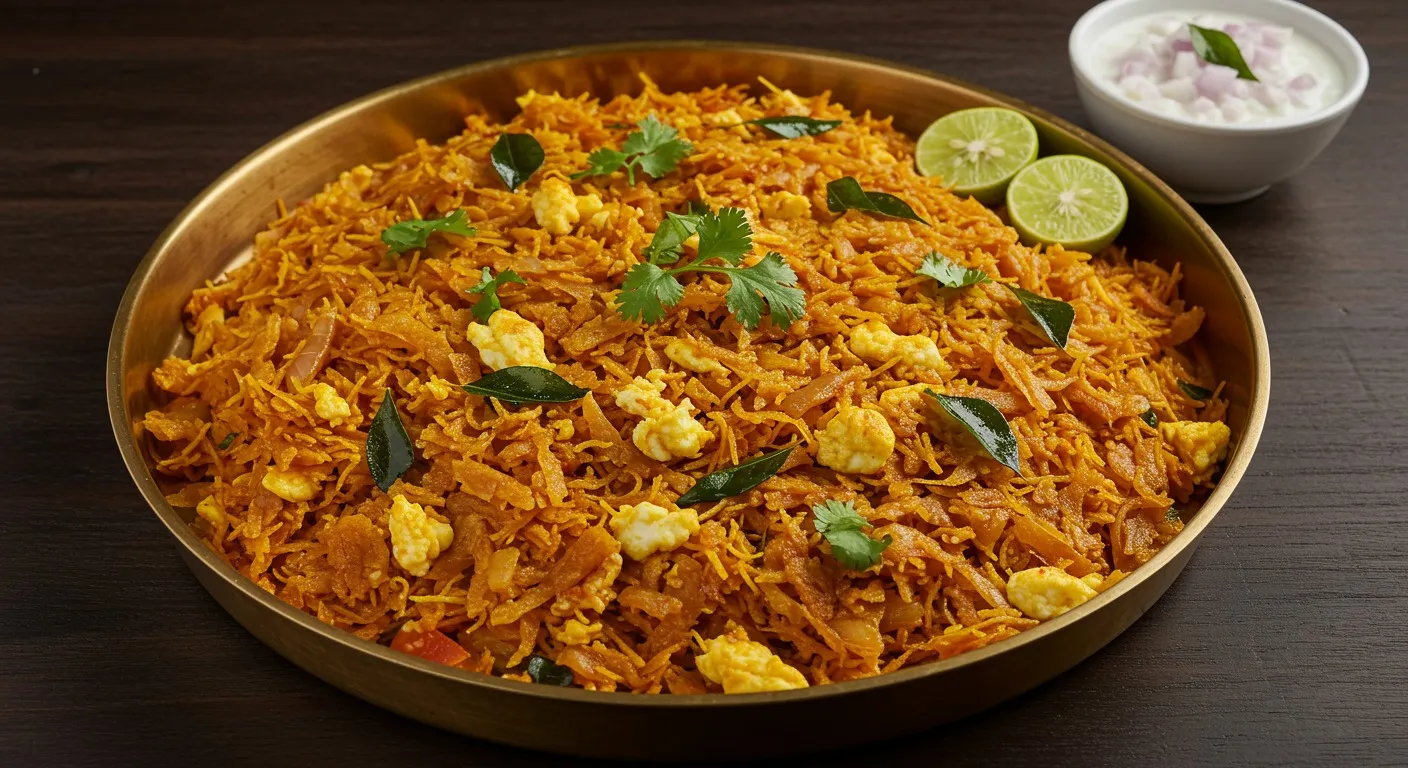
Kothu parotta is the kind of dish that sounds chaotic, because it is. Flaky Malabar parottas get shredded into ribbons, tossed with spice and eggs and a splash of salna, then chopped on a hot griddle with two metal spatulas until the whole thing turns into a fragrant, slightly crispy hash. It is the late-night signature of Tamil Nadu’s roadside parotta stalls, and clips of vendors clanging their cleavers in rhythm have been racking up millions of views online. Once you taste it, you understand why leftover parotta has its own dish, and why nobody in a Tamil household ever throws a stale one away. This home version skips the showmanship but keeps everything that makes the stall original so good, all in one pan and 30 minutes.
About This Dish
Kothu means ‘to chop’ or ‘to mince’ in Tamil, and that is exactly what defines this dish. Parotta itself is a flaky layered flatbread that came to South India through Malabar and Sri Lankan Tamil traditions, and it sits at the center of late-evening street food culture across Tamil Nadu, Sri Lanka, and Singapore. Roadside stalls would end the night with leftover parottas from the dinner rush, and started chopping them on the griddle with whatever curry was left over, usually a meat or vegetable salna. The result was so popular that kothu parotta became its own dish, ordered on its own merits, with versions for egg, chicken, mutton, and vegetable.
Ingredient Notes
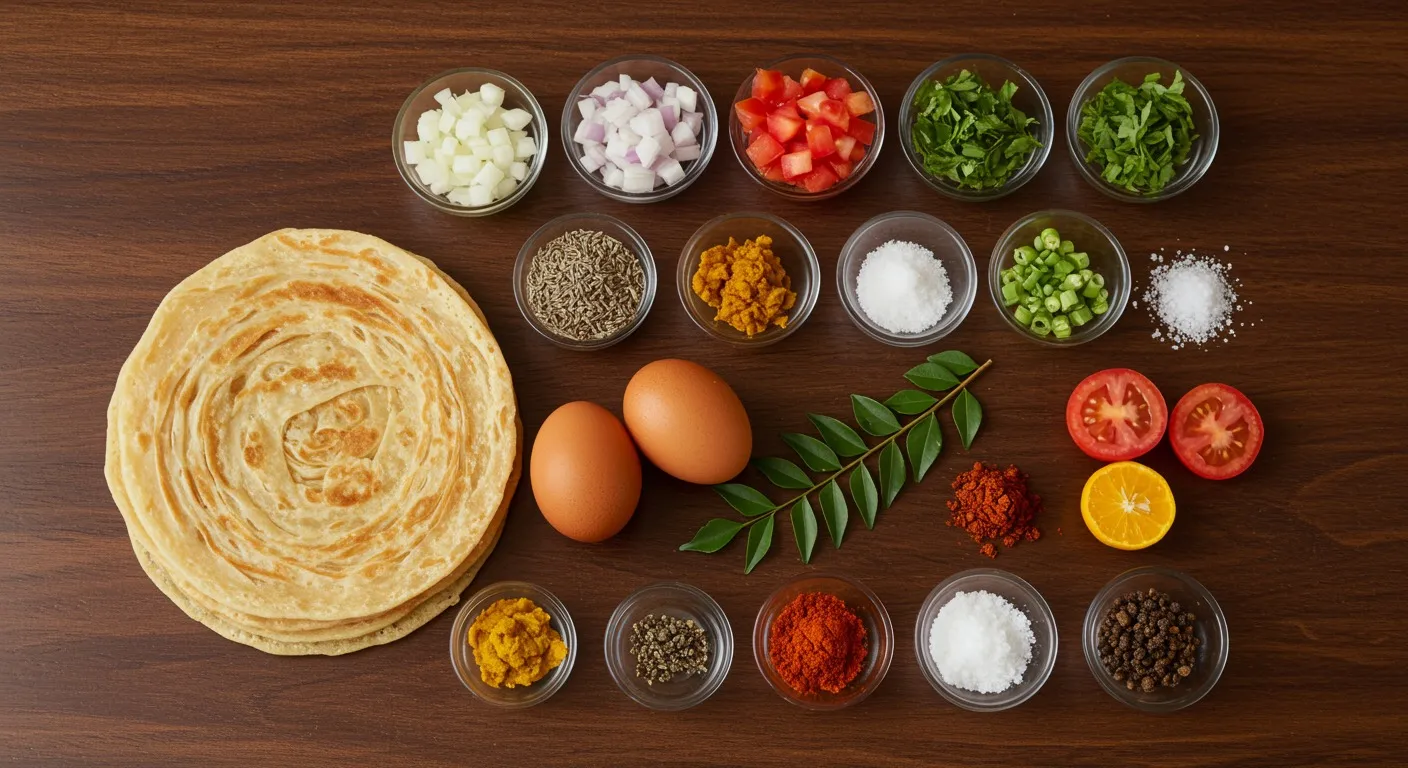
The most important ingredient is the parotta itself, and the secret is that it should not be fresh. Day-old parottas, the flaky Kerala or Malabar kind sold frozen at most Indian grocery stores, hold their layers and absorb the masala without turning to mush. Fennel seeds and curry leaves form the base of the tempering and give the dish its unmistakable Tamil street-stall aroma, while Kashmiri red chili powder brings color without overwhelming heat. Ginger-garlic paste and a single ripe tomato build the masala body, and a small pinch of garam masala plus black pepper rounds things out. The recipe calls for ghee instead of refined oil, which gives a deeper browning and the rich finish that real stall versions have. If you do not eat eggs, simply leave them out and the dish still works beautifully.
Method And Tips
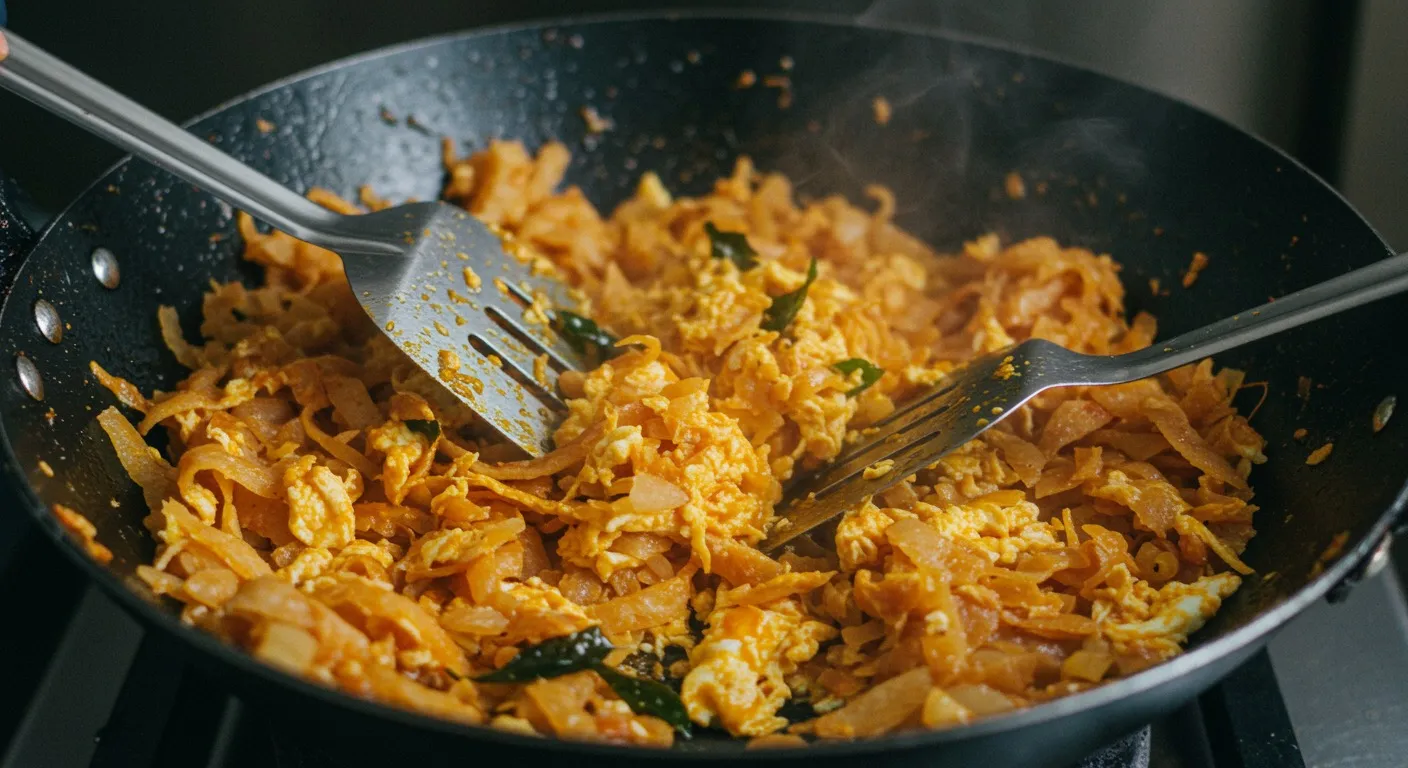
The technique is built around speed and high heat. Start by building the masala in a wide kadai or heavy skillet so the parotta has room to spread out at the end. Once the masala is cooked down to a thick base, scramble the eggs directly into one side of the pan rather than precooking them in a separate bowl, which keeps the eggs glossy and bound to the masala instead of dry. When the parotta goes in, switch to two metal spatulas or the edge of a flat ladle and start chopping and pressing as you toss. That chopping action is what creates the signature shredded texture and the crispy edges. Do not overdo the water; you want the parotta moist but not soggy, with the masala clinging to every strand. Taste at the end and adjust salt, since parottas vary in how salty they are out of the package.
Serving Suggestions
Kothu parotta is best eaten the minute it comes off the heat, with cool onion raita on the side and a squeeze of lemon over the top. If you can get hold of any kurma or salna, ladle a little on the side; it turns a quick weeknight dinner into something that genuinely tastes like a Chennai stall at midnight. Make a batch the next time you have leftover parottas in the fridge, and it will quickly become the kind of recipe you keep returning to.
Recipe
Egg Kothu Parotta
Tamil Nadu street-style stir-fry where day-old Malabar parottas are shredded and tossed on a hot tawa with scrambled eggs, onions, tomato, fennel, and Kashmiri chili. A quick one-pan meal ready in 30 minutes.
- Prep
- 10min
- Cook
- 20min
- Total
- 30min
- Servings
- 3servings
- Calories
- 420kcal
Ingredients
- For the parotta and eggs
- 4 Malabar parottas (day-old preferred), torn into bite-size pieces
- 2 large eggs
- For the masala
- 2 tbsp ghee
- 1 tsp fennel seeds
- 1 sprig curry leaves
- 1 large onion, finely chopped
- 2 green chilies, finely chopped
- 1 tbsp ginger-garlic paste
- 1 large tomato, finely chopped
- 1 tsp kashmiri red chili powder
- 1/2 tsp coriander powder
- 1/4 tsp turmeric powder
- 1/2 tsp garam masala
- 1/4 tsp black pepper powder
- 1 tsp salt (or to taste)
- 1/4 cup water
- To garnish and serve
- 2 tbsp coriander leaves, finely chopped
- 1 lemon, cut into wedges
Instructions
- 1 Tear the parottas into small bite-size pieces by hand, or shred them on a board with a knife. Day-old parottas hold their texture much better than fresh ones, so plan ahead if you can.
- 2 Heat the ghee in a wide kadai or heavy skillet over medium heat. Add the fennel seeds and let them crackle for about 10 seconds, then add the curry leaves and green chilies and stir for a few seconds until fragrant.
- 3 Add the chopped onion and saute for 3 to 4 minutes, until soft and just turning golden at the edges.
- 4 Stir in the ginger-garlic paste and cook for 1 minute, until the raw smell disappears.
- 5 Add the chopped tomato and cook for 4 to 5 minutes, mashing it down with the spatula until it breaks down completely and the masala starts pulling away from the pan.
- 6 Sprinkle in the Kashmiri chili powder, turmeric, coriander powder, garam masala, black pepper, and salt. Stir for 1 minute on low heat to bloom the spices into the masala.
- 7 Push the masala to one side of the pan. Crack the eggs into the empty space, let them set for a few seconds, then scramble them with the back of the spatula. Once the eggs are about 80 percent cooked, fold them into the masala.
- 8 Pour in the water and stir to make a slightly loose mixture that will coat the parotta evenly.
- 9 Add the torn parotta pieces and toss everything together. Use the edge of two metal spatulas, or a sturdy ladle, to chop and press the parotta into smaller shreds as it absorbs the masala. This chopping action is the kothu step that gives the dish its name.
- 10 Cook on medium-high heat for 3 to 4 minutes, tossing often, until the parotta is hot through and lightly crisp at the edges. Taste and adjust salt if needed.
- 11 Garnish with the chopped coriander leaves and serve immediately with lemon wedges and onion raita on the side.
Notes
- Day-old parottas are the secret. Fresh, hot parottas turn mushy when shredded. The easiest method is to cook a pack of frozen Malabar parottas the night before and let them rest, covered, at room temperature.
- For a richer street-stall flavor, splash in 2 to 3 tablespoons of leftover chicken or vegetable salna along with the water.
- Skip the eggs for a vegetarian version, or fold in 1/2 cup of cooked shredded chicken at the egg step for chicken kothu parotta.